tt
tt
tt
tt
tt
tt
Science
•
Principals: Stafford Sheehan
An interview with the Project Omega founder and CEO
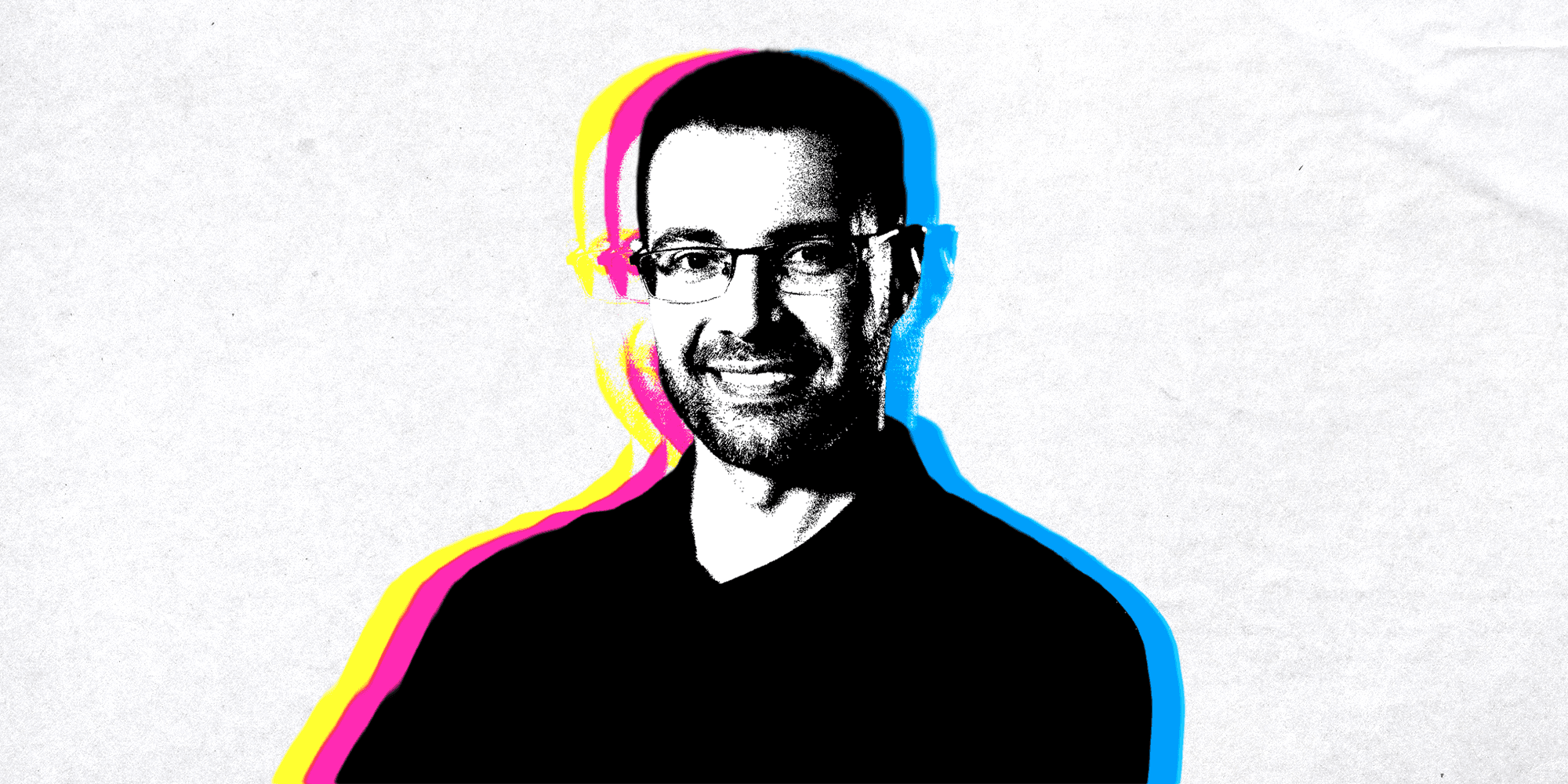

Stafford Sheehan is founder and CEO of Project Omega, a nuclear chemistry startup established in 2025, focused on recycling spent nuclear fuel and developing radioisotope power technologies. Project Omega has raised more than $12 million in funding, recently emerging from stealth with prototypes of compact nuclear “power cells” designed to deliver energy over a significant time duration in remote and strategic environments.
Project Omega is working to commercialize betavoltaic technology. By extracting valuable materials from nuclear waste and turning them into power sources, the company aims to address longstanding challenges in nuclear energy while advancing new applications in defense, space, and computing. I spoke with Sheehan about his entrepreneurial background, the economics of nuclear waste, and the future of nuclear-powered energy systems. What follows is a transcript of our conversation.
CB: I understand you started several companies. Walk me through your background and first few entrepreneurial ventures.
SS: Out of high school, I took the civil service exam, trained as a medic, and spent time as an EMT and firefighter.I didn’t initially plan on any entrepreneurial pursuit, but I was doing contract work on the side that turned into a software company. This was back in 2006, 2007, and that was what taught me how to start a business, just trial by fire. I was definitely too early with this thesis, but I realized that the software side of things didn’t have the same impact as deploying hardware. I really wanted to dedicate myself to deploying hardware that could transform the energy industry, transform manufacturing, and transform the physical world. After that business and college, I studied chemistry and physics at Yale University and got a PhD.
My second company, Catalytic Innovations, was spun out of Yale. Initially, that company focused on systems that produce hydrogen on site, but hydrogen wasn’t a huge market at that time. We pivoted into metals, and I learned a lot about the industry, zinc and aluminum smelting. We were able to sell that business, and then I started Air Company.
Air Company made synthetic jet fuel, but we started out making vodka because we needed to make our unit economics work, and fuel is $4 a gallon, but vodka is $400 a gallon for a premium product. The idea was to use that as a stepping stone. After I left that company, I started working with a handful of people who were focused on electrons for data centers, and on how we generate enough electricity for our increasing demand. With Project Omega, we aim to reduce our dependence on Russian uranium, or any sort of foreign nuclear fuel source, and solve the nuclear waste problem that we’ve had in this country for decades. The government told all the operators that they would get rid of nuclear waste by 1998, and it’s still sitting there.
CB: Could you break down the nuclear waste problem? What is it and why is it an issue? Why is it difficult to handle?
SS: Nuclear waste is a mixture of many different materials, but it’s primarily reusable uranium. 96% of it is just reusable uranium, and it still contains over 90% of the energy that it had when it went into the reactor. The colloquial term, nuclear waste, is called in the industry “used nuclear fuel.” Like a secondhand car is slightly used, pre-owned nuclear fuel is mostly reusable uranium.
What happens when you run a nuclear reactor? You split apart uranium atoms. The resulting neutrons hit other uranium atoms, and you get a lot of energy that comes out from breaking apart atomic nuclei into others called fission products. Some of those fission products absorb neutrons very efficiently, which makes the fuel only usable for a limited time. That used fuel sits next to reactors all around the country. The US had a plan to centralize it all in a repository called Yucca Mountain. That plan did not work out for many different reasons.
Now, what we do is we take that used nuclear fuel — I mentioned it’s mostly reusable materials — and we separate them out all. We use some of those fission products for things like the power sources or battery replacements that we developed and announced in January, and we take other products from that and use them as fuel in reactors.
CB: What can you do with nuclear waste and its derivatives?
SS: You have a piece of nuclear waste sitting in your house with you right now, in your smoke detector. Your smoke detector uses Americium-241, which was separated out from the nuclear waste and put into a smoke detector. It doesn’t have a very strong gamma emission, so it’s not hazardous to be around in the quantities that are sitting in your house, but the alpha particles emitted by Americium-241 will hit smoke — if you have smoke in your house — and set off your fire alarm. There are numerous applications for these fission products that come out of nuclear waste. Because 90% of the energy is still there, and you can make fresh fuel. And France does that today. They use Mixed Oxide Fuel made from nuclear waste. They reuse their spent nuclear fuel, and that bolsters their energy independence. So that’s one of the reasons that they haven’t had as many challenges with energy prices compared to, let’s say, Germany, with all of the turmoil of the war in Ukraine.
CB: What are the major limitations on battery technology in 2026?
SS: We’re limited by lithium ions right now when it comes to batteries. What we’re aiming to do with some of these fission products that come out of the spent nuclear fuel is make battery replacements. Think about an AA battery that lasts for 30 years. Those battery replacements can be used in different strategic applications. There are a lot of defense applications where a battery that doesn’t die on that timeline could be very helpful. In space, we have used radio isotope power systems to power the Voyager probes, to power satellites. It’s helpful in undersea applications as well. Getting power where it’s very hard to get power, is one of the advantages of these “nuclear batteries.” We don’t like that term too much because people think of a lithium-ion cell when they think of a battery — we call them power cells internally in our business. But battery technology is limited by chemistry, and we’re able to completely change that by using nuclear power, not the chemistry of moving ions back and forth.
CB: What do you think would be the most profound impact of this battery type?
SS: One of my favorite applications of these is for AI. A reason why nuclear is having such a resurgence right now is because the power output of a nuclear reactor is a match for the demand input of a data center. Our power cells are also really good at powering individual GPUs. One of the applications of that is edge computing: being able to do complicated computational exercises in contested logistics areas, or in places where it’s hard to get power or compute. There’s “big nuclear” powering a data center, and then there’s “little nuclear,” which is what we do in powering individual chips.
CB: How would you explain the sudden pivot in attitudes towards nuclear energy? It used to have this widespread persecution that seems to have abated.
SS: Old reactor technology, or improperly deployed reactors, have caused issues in the past. Everybody knows about Chernobyl. The challenge is communicating to the public that that sort of thing can’t happen anymore. That’s like back when electricity was in its early days, and you had people getting shocked to death by exposed wires in houses and things like that. We’ve figured out how to fix that. Radiation is similar to electricity in a lot of ways — back when we started putting electricity into houses and using electricity in a more widespread way, people were afraid of it. Radiation, when used properly, saves lives. Radiation in your smoke detector would save your life in a fire. The radiation that you get for different treatments in hospitals saves lives every day. Improperly used electricity, and improperly used radiation, are both dangerous, but I think people are more used to electricity, whereas they’re not as used to radiation.
CB: Where do you see the largest drivers of growth in terms of energy demand, and from which sectors?
SS: We need to reindustrialize in the United States. We need to mine rare earth elements and refine them. We need to manufacture parts. We need a manufacturing base in the United States. We outsourced all of that to China in the ‘80s and the ‘90s, thinking that we will be friends forever — and that’s just not the case. We’re in a situation where we still rely on, essentially, our adversaries. I think there’s going to be a huge electricity demand for manufacturing of all sorts. Nuclear is the direction we should be going, because it lets us have cleaner water and cleaner air than most other methods of electricity production. One of my favorite nuclear facts is that you get more radiation living next to a coal plant than you would living next to a nuclear power plant.
CB: Can you explain what betavoltaics are as a category and how it relates to what you guys do at Project Omega?
SS: The best way that I like to explain betavoltaics is by making an analogy to a solar panel. Light from the sun hits a solar panel, and the solar panel generates electricity. Betavoltaics operate with the same fundamental concept. Instead of radiation from the sun hitting a solar panel, you have radiation from a radioisotope hitting a radiovoltaic, and it generates electricity. You could think about a betavoltaic as a solar cell with its own sun.
CB: How saturated is the field of companies that are working on problems relating to beta voltaics at the moment?
SS: There are not many companies that are making radiovoltaics. We recently received a DARPA award, so there’s been a little bit more buzz lately. However, making reactors is probably a lot more saturated. There are also other companies that are working on radioisotope thermal generators — so, instead of a solar cell with its own sun, the radioisotope is used to generate heat, and that will heat up a heat transfer liquid or heat transfer medium. There are a number of companies that are working on different radioisotope solutions. One of our goals at Project Omega is to make these radioisotopes here in the United States. We need to manufacture the radioisotope in the first place to be able to power any of these applications.
CB: Where are they made?
SS: France makes a lot of radioisotopes because they’re the only western recycler, and China makes a lot of them, but they don’t export, and we don’t want to buy from China anyway, because we need to be more self-sufficient and produce things here in the US.
CB: How does one go about securing a DARPA grant?
SS: They’re public calls, so anybody can respond to them. We responded as part of a team — we’re a small business on that team, along with a large company, other small companies, a lab, and a university. Usually, awardees of DARPA projects are teams, groups of experts coming together to solve a problem. But there was a public call. Anybody could have submitted an application.
CB: How does the Department of Energy interact with companies like yours?
SS: The DOE signed a contract with all of the nuclear power plant operators in the ‘80s and the ‘90s called the standard contract — it’s public, you can see it. There’s an office of the standard contract in the DOE. The DOE said to all of the operators that if you build a nuclear plant, we will take all of the spent fuel, all of the waste away in 1998, and for a variety of reasons the DOE was unable to do that — and that’s where we come back to Yucca Mountain as one of the attempts to fulfill the obligations under the standard contract. Every year, the operators enter into settlements with the DOE for breach of the standard contract, because the operators still have all the spent fuel sitting on their reactor sites. The spent fuel is technically owned by the operators, but the liability is borne by the Department of Energy. We will work with both to take that spent fuel and use it for the United States and for our energy independence.
CB: Going back to the origins of the company — how did you formulate the original thesis?
SS: I think that this wouldn’t have been possible if it weren’t for all of the momentum in the nuclear industry, and specifically, the Executive Orders in May 2025 that explicitly highlight the need to recycle used nuclear fuel here in the United States. That was one of the key enablers for our business. The thesis started with recycling. There are a lot of articles that came out last year that talk about the nuclear resurgence — but what do we do with all the waste? Waste has been one of the vectors of attack from people who are anti-nuclear in general. I’d say one of the major criticisms of the nuclear industry is around its waste, even though it is very well managed today.
We started with that, and we did a lot of customer interviews. We talked to a lot of people that could utilize different aspects of the nuclear waste, whether that’s people who make fuel for reactors, or people who utilize isotopes in different ways. We found that one of the ways to make recycling economic is to utilize these fission products in power applications, and it turned out that there were a lot of strategic and critical applications that they could solve. We really took an economics-driven approach: how do we make the economics work for nuclear recycling, without just the uranium? Uranium is 96% of the mass of the waste, but uranium fluctuates the commodity market. You build a big refinery and you only have one product coming out of it, the uranium, it’s a very risky investment. We’re making sure that we have multiple products that can make money coming out of this refinery.
CB: Where are you in your product development stage?
SS: We’ve announced our first prototypes. These are small nuclear power cells that use strontium-90. We’ve announced those in partnership with Pacific Northwest National Laboratory. We’re now scaling those prototypes for specific applications for customers. Space is one example, scaling up those prototypes so that they can power a satellite. If you want to go to the dark side of the moon, you still need a power source for your satellite, or if you’re looking at going to Mars, or you’re going to deep space.
CB: On the topic of long-distance space exploration — how much have you thought about this?
SS: Realistically, it’s hard to use solar to generate power on Mars. That’s where nuclear power really comes into play. It is critical to have small, portable, and safe nuclear power for space. And that’s what we make. We’re not a reactor, but like I said, our technology has no moving parts. It’s a chunk of isotope with a chunk of semiconductor, which is robust.
CB: You’ve raised about $12 million to date. Is that number still accurate?
SS: $12 million is what we publicly announced in January, but we’ve raised more since then. We’ve brought on additional partners for our growth and building out our larger facilities.
CB: Do you have any growth plans that you’d be able to share at this time?
SS: We are building facilities; we’ll announce those very soon.
This interview has been lightly edited for length and clarity.
Science
•
Principals: Stafford Sheehan
An interview with the Project Omega founder and CEO
Stafford Sheehan is founder and CEO of Project Omega, a nuclear chemistry startup established in 2025, focused on recycling spent nuclear fuel and developing radioisotope power technologies. Project Omega has raised more than $12 million in funding, recently emerging from stealth with prototypes of compact nuclear “power cells” designed to deliver energy over a significant time duration in remote and strategic environments.
Project Omega is working to commercialize betavoltaic technology. By extracting valuable materials from nuclear waste and turning them into power sources, the company aims to address longstanding challenges in nuclear energy while advancing new applications in defense, space, and computing. I spoke with Sheehan about his entrepreneurial background, the economics of nuclear waste, and the future of nuclear-powered energy systems. What follows is a transcript of our conversation.
CB: I understand you started several companies. Walk me through your background and first few entrepreneurial ventures.
SS: Out of high school, I took the civil service exam, trained as a medic, and spent time as an EMT and firefighter.I didn’t initially plan on any entrepreneurial pursuit, but I was doing contract work on the side that turned into a software company. This was back in 2006, 2007, and that was what taught me how to start a business, just trial by fire. I was definitely too early with this thesis, but I realized that the software side of things didn’t have the same impact as deploying hardware. I really wanted to dedicate myself to deploying hardware that could transform the energy industry, transform manufacturing, and transform the physical world. After that business and college, I studied chemistry and physics at Yale University and got a PhD.
My second company, Catalytic Innovations, was spun out of Yale. Initially, that company focused on systems that produce hydrogen on site, but hydrogen wasn’t a huge market at that time. We pivoted into metals, and I learned a lot about the industry, zinc and aluminum smelting. We were able to sell that business, and then I started Air Company.
Air Company made synthetic jet fuel, but we started out making vodka because we needed to make our unit economics work, and fuel is $4 a gallon, but vodka is $400 a gallon for a premium product. The idea was to use that as a stepping stone. After I left that company, I started working with a handful of people who were focused on electrons for data centers, and on how we generate enough electricity for our increasing demand. With Project Omega, we aim to reduce our dependence on Russian uranium, or any sort of foreign nuclear fuel source, and solve the nuclear waste problem that we’ve had in this country for decades. The government told all the operators that they would get rid of nuclear waste by 1998, and it’s still sitting there.
CB: Could you break down the nuclear waste problem? What is it and why is it an issue? Why is it difficult to handle?
SS: Nuclear waste is a mixture of many different materials, but it’s primarily reusable uranium. 96% of it is just reusable uranium, and it still contains over 90% of the energy that it had when it went into the reactor. The colloquial term, nuclear waste, is called in the industry “used nuclear fuel.” Like a secondhand car is slightly used, pre-owned nuclear fuel is mostly reusable uranium.
What happens when you run a nuclear reactor? You split apart uranium atoms. The resulting neutrons hit other uranium atoms, and you get a lot of energy that comes out from breaking apart atomic nuclei into others called fission products. Some of those fission products absorb neutrons very efficiently, which makes the fuel only usable for a limited time. That used fuel sits next to reactors all around the country. The US had a plan to centralize it all in a repository called Yucca Mountain. That plan did not work out for many different reasons.
Now, what we do is we take that used nuclear fuel — I mentioned it’s mostly reusable materials — and we separate them out all. We use some of those fission products for things like the power sources or battery replacements that we developed and announced in January, and we take other products from that and use them as fuel in reactors.
CB: What can you do with nuclear waste and its derivatives?
SS: You have a piece of nuclear waste sitting in your house with you right now, in your smoke detector. Your smoke detector uses Americium-241, which was separated out from the nuclear waste and put into a smoke detector. It doesn’t have a very strong gamma emission, so it’s not hazardous to be around in the quantities that are sitting in your house, but the alpha particles emitted by Americium-241 will hit smoke — if you have smoke in your house — and set off your fire alarm. There are numerous applications for these fission products that come out of nuclear waste. Because 90% of the energy is still there, and you can make fresh fuel. And France does that today. They use Mixed Oxide Fuel made from nuclear waste. They reuse their spent nuclear fuel, and that bolsters their energy independence. So that’s one of the reasons that they haven’t had as many challenges with energy prices compared to, let’s say, Germany, with all of the turmoil of the war in Ukraine.
CB: What are the major limitations on battery technology in 2026?
SS: We’re limited by lithium ions right now when it comes to batteries. What we’re aiming to do with some of these fission products that come out of the spent nuclear fuel is make battery replacements. Think about an AA battery that lasts for 30 years. Those battery replacements can be used in different strategic applications. There are a lot of defense applications where a battery that doesn’t die on that timeline could be very helpful. In space, we have used radio isotope power systems to power the Voyager probes, to power satellites. It’s helpful in undersea applications as well. Getting power where it’s very hard to get power, is one of the advantages of these “nuclear batteries.” We don’t like that term too much because people think of a lithium-ion cell when they think of a battery — we call them power cells internally in our business. But battery technology is limited by chemistry, and we’re able to completely change that by using nuclear power, not the chemistry of moving ions back and forth.
CB: What do you think would be the most profound impact of this battery type?
SS: One of my favorite applications of these is for AI. A reason why nuclear is having such a resurgence right now is because the power output of a nuclear reactor is a match for the demand input of a data center. Our power cells are also really good at powering individual GPUs. One of the applications of that is edge computing: being able to do complicated computational exercises in contested logistics areas, or in places where it’s hard to get power or compute. There’s “big nuclear” powering a data center, and then there’s “little nuclear,” which is what we do in powering individual chips.
CB: How would you explain the sudden pivot in attitudes towards nuclear energy? It used to have this widespread persecution that seems to have abated.
SS: Old reactor technology, or improperly deployed reactors, have caused issues in the past. Everybody knows about Chernobyl. The challenge is communicating to the public that that sort of thing can’t happen anymore. That’s like back when electricity was in its early days, and you had people getting shocked to death by exposed wires in houses and things like that. We’ve figured out how to fix that. Radiation is similar to electricity in a lot of ways — back when we started putting electricity into houses and using electricity in a more widespread way, people were afraid of it. Radiation, when used properly, saves lives. Radiation in your smoke detector would save your life in a fire. The radiation that you get for different treatments in hospitals saves lives every day. Improperly used electricity, and improperly used radiation, are both dangerous, but I think people are more used to electricity, whereas they’re not as used to radiation.
CB: Where do you see the largest drivers of growth in terms of energy demand, and from which sectors?
SS: We need to reindustrialize in the United States. We need to mine rare earth elements and refine them. We need to manufacture parts. We need a manufacturing base in the United States. We outsourced all of that to China in the ‘80s and the ‘90s, thinking that we will be friends forever — and that’s just not the case. We’re in a situation where we still rely on, essentially, our adversaries. I think there’s going to be a huge electricity demand for manufacturing of all sorts. Nuclear is the direction we should be going, because it lets us have cleaner water and cleaner air than most other methods of electricity production. One of my favorite nuclear facts is that you get more radiation living next to a coal plant than you would living next to a nuclear power plant.
CB: Can you explain what betavoltaics are as a category and how it relates to what you guys do at Project Omega?
SS: The best way that I like to explain betavoltaics is by making an analogy to a solar panel. Light from the sun hits a solar panel, and the solar panel generates electricity. Betavoltaics operate with the same fundamental concept. Instead of radiation from the sun hitting a solar panel, you have radiation from a radioisotope hitting a radiovoltaic, and it generates electricity. You could think about a betavoltaic as a solar cell with its own sun.
CB: How saturated is the field of companies that are working on problems relating to beta voltaics at the moment?
SS: There are not many companies that are making radiovoltaics. We recently received a DARPA award, so there’s been a little bit more buzz lately. However, making reactors is probably a lot more saturated. There are also other companies that are working on radioisotope thermal generators — so, instead of a solar cell with its own sun, the radioisotope is used to generate heat, and that will heat up a heat transfer liquid or heat transfer medium. There are a number of companies that are working on different radioisotope solutions. One of our goals at Project Omega is to make these radioisotopes here in the United States. We need to manufacture the radioisotope in the first place to be able to power any of these applications.
CB: Where are they made?
SS: France makes a lot of radioisotopes because they’re the only western recycler, and China makes a lot of them, but they don’t export, and we don’t want to buy from China anyway, because we need to be more self-sufficient and produce things here in the US.
CB: How does one go about securing a DARPA grant?
SS: They’re public calls, so anybody can respond to them. We responded as part of a team — we’re a small business on that team, along with a large company, other small companies, a lab, and a university. Usually, awardees of DARPA projects are teams, groups of experts coming together to solve a problem. But there was a public call. Anybody could have submitted an application.
CB: How does the Department of Energy interact with companies like yours?
SS: The DOE signed a contract with all of the nuclear power plant operators in the ‘80s and the ‘90s called the standard contract — it’s public, you can see it. There’s an office of the standard contract in the DOE. The DOE said to all of the operators that if you build a nuclear plant, we will take all of the spent fuel, all of the waste away in 1998, and for a variety of reasons the DOE was unable to do that — and that’s where we come back to Yucca Mountain as one of the attempts to fulfill the obligations under the standard contract. Every year, the operators enter into settlements with the DOE for breach of the standard contract, because the operators still have all the spent fuel sitting on their reactor sites. The spent fuel is technically owned by the operators, but the liability is borne by the Department of Energy. We will work with both to take that spent fuel and use it for the United States and for our energy independence.
CB: Going back to the origins of the company — how did you formulate the original thesis?
SS: I think that this wouldn’t have been possible if it weren’t for all of the momentum in the nuclear industry, and specifically, the Executive Orders in May 2025 that explicitly highlight the need to recycle used nuclear fuel here in the United States. That was one of the key enablers for our business. The thesis started with recycling. There are a lot of articles that came out last year that talk about the nuclear resurgence — but what do we do with all the waste? Waste has been one of the vectors of attack from people who are anti-nuclear in general. I’d say one of the major criticisms of the nuclear industry is around its waste, even though it is very well managed today.
We started with that, and we did a lot of customer interviews. We talked to a lot of people that could utilize different aspects of the nuclear waste, whether that’s people who make fuel for reactors, or people who utilize isotopes in different ways. We found that one of the ways to make recycling economic is to utilize these fission products in power applications, and it turned out that there were a lot of strategic and critical applications that they could solve. We really took an economics-driven approach: how do we make the economics work for nuclear recycling, without just the uranium? Uranium is 96% of the mass of the waste, but uranium fluctuates the commodity market. You build a big refinery and you only have one product coming out of it, the uranium, it’s a very risky investment. We’re making sure that we have multiple products that can make money coming out of this refinery.
CB: Where are you in your product development stage?
SS: We’ve announced our first prototypes. These are small nuclear power cells that use strontium-90. We’ve announced those in partnership with Pacific Northwest National Laboratory. We’re now scaling those prototypes for specific applications for customers. Space is one example, scaling up those prototypes so that they can power a satellite. If you want to go to the dark side of the moon, you still need a power source for your satellite, or if you’re looking at going to Mars, or you’re going to deep space.
CB: On the topic of long-distance space exploration — how much have you thought about this?
SS: Realistically, it’s hard to use solar to generate power on Mars. That’s where nuclear power really comes into play. It is critical to have small, portable, and safe nuclear power for space. And that’s what we make. We’re not a reactor, but like I said, our technology has no moving parts. It’s a chunk of isotope with a chunk of semiconductor, which is robust.
CB: You’ve raised about $12 million to date. Is that number still accurate?
SS: $12 million is what we publicly announced in January, but we’ve raised more since then. We’ve brought on additional partners for our growth and building out our larger facilities.
CB: Do you have any growth plans that you’d be able to share at this time?
SS: We are building facilities; we’ll announce those very soon.
This interview has been lightly edited for length and clarity.
About the Author
Carson Becker is an American writer. He is on X @carsonjbecker