tt
tt
tt
tt
tt
tt
Technology
•
Principals: Matthew Kinsella
An interview with the CEO of Infleqtion.

Quantum technology is an emerging field built on the manipulation of individual atoms and their quantum properties — the unique behaviors that particles exhibit at the atomic and subatomic scale. Once matured, it will redefine the limits of computing, secure communications, networks, and sensing, among other applications. In recent years, quantum has moved from theoretical research to a rapidly advancing, strategically contested field, with numerous countries vying for major breakthroughs. Examples of this include China’s 14th and 15th Five-Year Plans, which identify quantum as a key technological priority, and Pillar II of AUKUS, signed in 2021, which aims to foster closer strategic and defense cooperation between the US, UK, and Australia. In March 2026, the UK announced a £2 billion initiative sponsoring R&D, manufacturing, software, hardware, and procurement of quantum computers, sensors, and other related infrastructure at the state level. Like electricity in the 19th century and nuclear power in the 20th century, quantum may yet prove to be one of the defining new technologies of the 21st century.
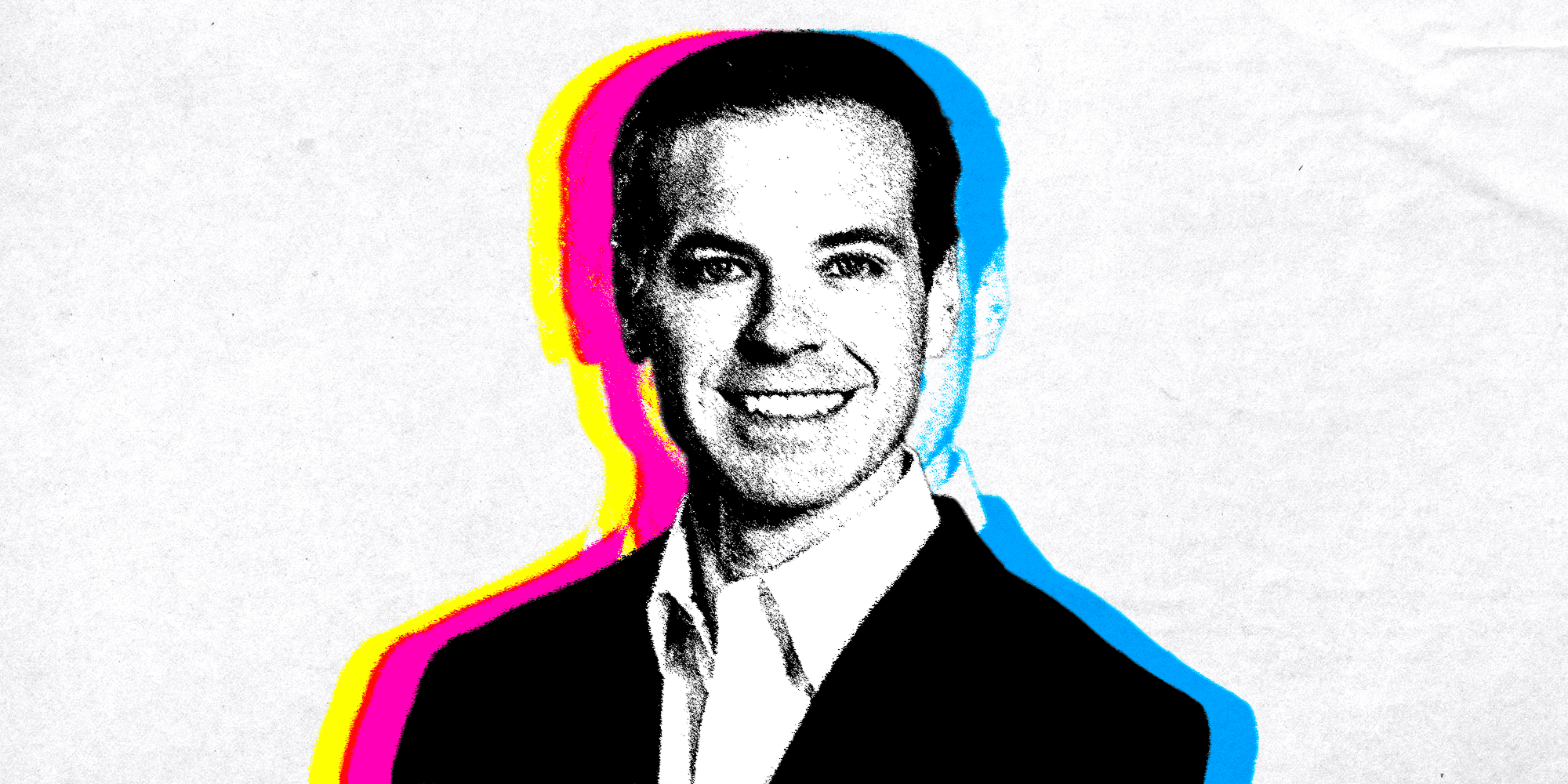
Matthew Kinsella is the Chief Executive Officer of Infleqtion, a quantum technology company based in Louisville, Colorado, that produces neutral-atom quantum computers, clocks, and sensors. Kinsella first backed Infleqtion as its lead investor in 2018, while serving as a managing director at Maverick Ventures. The company raised several rounds of capital from Boka Capital, Morgan Stanley, and In-Q-Tel, among others, and has formed partnerships with organizations including Safran, NASA, and Nvidia. After nearly two decades in venture capital, Kinsella joined Infleqtion full-time as CEO in 2024. In February 2026, he took the company public on the NYSE under the ticker INFQ at an implied valuation of $2.2 billion. I sat down with Matthew to discuss the implications of this new technology, quantum’s relationship with traditional computing, and its impact on geopolitical competition between the United States and China. What follows is a transcript of our conversation.
CB: What is quantum computing and why does it represent a massive paradigm shift?
MK: One important distinction to make: I tend to think about quantum more broadly than just computing. There are huge paradigm shifts that are taking place across multiple different technologies based upon our ability to harness the quantum properties of atoms. Computing is one of those. But there's a whole other swath of products: time keeping devices, clocks, antennas, inertial sensing equipment. These are equally as impacted by quantum as computing.
If you think about the information technology revolution, even going back to the 1870s when we figured out how to harness electricity and RF waves, you're using physics, but you're using it in a bulk sense. You're sending trillions of electrons through a conductive wire for electricity, right? And then it basically all comes from there. RF antennas are the ability to interpret what those electrons are doing based upon the vibration of an antenna. Communications are embedded signals inside of those electrons. And then finally, computing is sending electrons through bits — zeros or ones. That's the basis for all of binary computing.
With quantum, we're able to harness individual atoms and unlock their power. It's going from bulk physics to individual physics. In harnessing the power of the atom, we can start taking advantage of its quantum properties and turning those into useful products. Some of those properties are the energy transitions of atoms. An atom looks like a solar system, you've got electrons orbiting it. What does quantum mean? It's that quantum jump from one energy field to the other. The energy transition of an atom — of its electrons — is the most stable frequency reference nature has to offer. So you can build clocks that are many, many orders of magnitude more precise than traditional clocks. Because what is a clock? It's a frequency reference, right? That's gone from a pendulum swinging to the vibrations of a quartz crystal, to now the energy transition of an atom. You're just trying to find something that's stable, right? When you take that energy transition of an atom and control it with lasers and lock the laser frequency to that energy transition, you now have a very fast ticking clock that ticks super precisely and never drifts. So we can build very, very precise clocks. That's the least complex thing you can do with quantum.
You can also then turn those same atoms into antennas. The way classical communications — radio, wireless communication — work is you embed a signal in a radio wave. Then you use an antenna that vibrates to the frequency that radio wave is set to, and you extract the vibrations. You extract the electronic signal based upon the vibrations of that antenna. That's worked amazingly well for 120 years. The issue is that the antenna needs to be about the same size as the wavelength you're receiving. Otherwise, it won't receive the wavelength. It's resonant to that wavelength. We can turn these atoms and the electrons of the atoms into antennas. That fundamentally breaks that correlation. We can receive very low frequency, long wavelength signals that would normally require an antenna the size of a football field to receive, to something the size of a sugar cube. It’s absolutely game changing technology in the RF world. You can also build inertial sensors with the ability to navigate the world with such extreme precision, you would never even need to access the GPS network. GPS is increasingly prone to being spoofed or denied. There’s all sorts of GPS jamming and denial relating to Ukraine, and you lose the ability to navigate. If you can recreate that service at the precision levels of quantum, you can wean off of GPS. So that's the broad, quantum sensing umbrella that's enabled by unlocking the power of the atom.
CB: Why is it useful for computing?
MK: It goes back to that whole binary concept of computing. Even the most powerful GPU cluster on the planet — it's still boiling all problems down into binary logic. And you can do unbelievable things. Who would have ever thought of all the amazing things you can do by boiling everything down to a trillion zeros or ones. But at the end of the day, that's not how nature works. It's a heuristic for how the world works. Nature works in quantum, so if you're trying to solve the problems of nature, you can't really use a heuristic. That's why you hear things like, “in order to solve this problem, you'd need a computer the size of Jupiter.” The reason is that quantum mechanics are inherently uncertain. It's all based on probabilities. If you're trying to do things like model the electron interactions of two molecules that are combining, that's a quantum mechanical process. That's the type of thing that any classical computer would break on. Those are the types of problems that quantum computers can solve quite easily because they are quantum mechanical in nature. They utilize atoms that are in what is called superposition, which means they can simulate all potential combinations at once. And then you can now start to unlock those types of problems of nature — like drug discovery, materials science, etc. — that we've never really been able to point compute at in the past.
One misnomer people have is that quantum computers are going to come in and replace classical computers. That's not what's going to happen. They're never going to do the things classical computers do. Rather, they're going to open up a whole new set of problems working alongside classical computers. This is the heart of Infleqtion’s partnership with Nvidia. A lot of it will be solved on the classical computers, but the really sticky quantum parts will be kicked off with the quantum computers.
CB: Does this intersect with Silicon Photonics?
MK: It does, in that everything we do is based on lasers. In order to harness the quantum mechanical properties of these atoms, you have to hit them with lasers. So how do we build our clocks? We shoot a 778-nanometer laser at a rubidium atom, and that's the frequency that excites the atom and creates that stable frequency reference. We make our antennas by hitting them with a different type of laser that puts them in what's called their Rydberg state. And if you think about the electrons orbiting the atom, it's as far out in orbit as it can get before it goes away and becomes an ion. Think of a really big atom, and that makes it sensitive to that RF spectrum. And then the way we build our computers is we trap clouds of rubidium or cesium atoms inside an ultra-high vacuum cell, and then we individually address each atom with a laser. We hold those atoms in place. Each one of those atoms becomes a qubit, then we put them into superposition and then entangle them, and those are the basic building blocks of our computer. The point is, everything is based upon lasers, and as we can integrate those lasers into Silicon Photonics, we can bring the cost down and the performance of these systems. Instead of having lasers, you're actually working with photonics on silicon, which are basically just lasers that are built on silicon.
CB: What's going to change in the wider world due to this technology?
MK: For the sensing products that I mentioned, it’s more of an upgrade cycle from classical technologies. So not necessarily enabling new applications but making us resilient against the loss of GPS is an absolutely massive implication of quantum sensing. Because what is GPS? It's basically 30 satellites orbiting the Earth in geospatial orbit. And these satellites have clocks in them, and they send a very weak signal down to Earth of what time it is. It's like a nested doll situation. These clocks all synchronize with these room-size clocks on Earth's surface. You can think of it as these nodes on Earth's surface sending their best guess at time up to these less precise clocks in orbit, which then send time down to everything, ranging from your iPhone to the nodes in the electricity grid. The key service from GPS is time, and we use that time not just to figure out how to navigate the world, but to synchronize all of our critical infrastructure: the RF networks, the electricity grid, the financial markets, the air traffic control system. If these things didn't have access to GPS to figure out what time it is, they would not be able to synchronize. And if they can't synchronize, they can't work.
The implication that's most near term is resilience against the loss of GPS. With quantum you can make clocks that are more precise than those room-size clocks I was talking about, in a small form factor, and put them locally. We don't need to rely on GPS anymore for our critical infrastructure to work, or to get the timing signal to make sure your phone works when you're out in the field. So that's one very near-term implication to it. And there's all sorts of use cases in the defense world for the other quantum products. The RF sensing and communication that I was mentioning to you is absolutely game changing for a number of reasons. For example, submarines have to dangle a one-kilometer antenna off the back because the only wavelengths that will penetrate salt water are these really long wavelengths. We can shrink that down to something very small. If you're trying to communicate over large distances, you need to use those low frequency, long wavelength signals. To receive those in the field, you have to put up a huge antenna that makes you a target. We can do that with something the size of a sugar cube. And importantly, because they're not electronic in nature, they emit nothing. The average lifespan of a radar system in Ukraine is something like eight seconds. You turn it on, it's detected, it gets blown up. We turn our RF systems on — not detectable, not blown up. They continue to operate. So huge implications for national security.
Quantum computing opens up an immense range of new possibilities for what we can throw compute at. The ones I'm most excited about in the near term are in the material science world. It sounds very niche, but anything that's made of physical materials can be rethought. Imagine if the battery in your phone would last a year versus a day. It's very challenging to do the electronic and molecular modeling to recombine these photovoltaic materials to make better batteries. Those are the types of things you can do. Write out what you want, and a quantum computer will give you the recipe when they're powerful enough. With SpaceX going public, what are they spending all their time trying to figure out? It's all materials science issues. Do we have better jet fuels? What do we build Starship out of that can withstand multiple reentries? They don't have the materials right now that are lightweight but robust. Discovering new materials and utilizing them — these are things that quantum will enable.
CB: China has made it very clear that quantum is part of its technological ambitions. And apart from the cooperation on nuclear submarines which it primarily stipulates, AUKUS has a designated pillar where quantum plays a major role. What's the geopolitical conversation surrounding quantum?
MK: Well, it's very much a race, and it's divided between China and the US and allies like the UK and Australia. The UK has actually taken a leadership position in quantum. They've been really pushing hard from a national security perspective, going back to 2013. In many ways, the UK is a bit ahead of the US in its quantum journey. The UK recently announced a £2 billion investment program for quantum, called the Quantum Missions. And then at the end of it is something that they're calling ProQure — basically a billion pounds of funding, £500 million of which is for quantum computing over the next four years, £250 million of which is for quantum sensing, £150 million of which is for quantum networking, and then another £100 million for tangential stuff. And at the end is another billion pounds that's set aside to procure actual quantum systems after 2030. The US has yet to announce anything of that level. But the US has deemed quantum one of the six technologies that the US can't and will not lose from a national security perspective. They call it quantum battlefield information dominance. Because of those precision levels I was mentioning to you, the quantum sensing is probably just as important as computing, because if you can have a better grasp of position, of navigation, of timing on the battlefield, especially in absence of GPS, which is almost certainly the position we'll find ourselves during a hot war, that side will have an enormous advantage. And so that's what a lot of this push for quantum comes down to. It's enabling better precision without GPS.
CB: Where is China? Is it possible to know?
MK: They're taking a very different approach than the US. The US is betting largely on its own capital markets to win. China's taking a very top down, directed approach, allocating funds from the nation's balance sheet to quantum research and commercialization, and ultimately putting quantum sensors into the field. So where are they? It's really hard to tell. The US and our allies have a pretty open process of releasing papers when new breakthroughs happen. And what you see from China is, once we release something, a week later, they'll release something similar. So it's unclear whether they're slightly behind us or ahead. I will bet on US innovation any day of the week. I do believe we are ahead in quantum computing, and China is definitively ahead in quantum networking. They've been able to send a signal from the ground to a satellite, back to the ground, in an entirely quantum-entangled way, which makes it completely unhackable. But the US and our allies are ahead on quantum computing, I believe, and there are other areas of quantum sensing where I'm pretty sure we're ahead.
CB: What are the implications of quantum for encryption?
MK: Encryption is critical to all computing and all communication. If I were just to send a signal out into the world and try to call you, if you couldn't prove that you were Carson with your digital signature, anybody could answer.
CB: Anyone could dial in on this call right now.
MK: That's kind of the fundamental need for encryption. It's just to make sure you can trust the party who's on the other side of whatever transaction you're doing. And that can range from a bank transfer, to a zoom call, to anything. Now, the encryption standards that we've been using for decades are what are called RSA-256, or SHA-256. What it is, basically, is a large string of numbers — 256 or more bits of data — where you have two keys, a public and a private key, right? You probably heard those terms, and the public and the private key are actually the two prime numbers that when you multiply them together, you get this very long string of numbers. Multiplying those numbers together is very easy for a classical computer to perform. So once you have both the public and the private key, you can get the encryption hash. But it's impossible for you to say to a computer, “Here is this long string of numbers. Give me the two prime numbers that when you multiply them together, you get this number.” The only way a computer can figure that out is by trying every single possible combination of every single number out there to see if they multiply together. Do I get this number multiplied together to get this number? So that's why you hear about these. It would take the life of a universe for the most powerful GPU cluster to break this type of encryption, because they just have to try every possible combination.
It turns out that I'd mentioned these types of problems that are quantum mechanical in nature, where you need to simulate all sorts of different outcomes at one point in time, and superposition can enable you to do that. Well, this encryption standard isn't quantum mechanical in nature, but it's not dissimilar in that you're trying multiple chances to see if you get an outcome. You can basically simulate all those combinations at one time to get that outcome. And so you can take that life-of-the-universe-timeline for a classical computer to try to break encryption and shrink it to a week, a day, a month, depending on the power of the computer. Wer’re not there yet, but those are the types of things that quantum computers are going to be able to do, and that's why all modern day encryption is at risk. That's why everyone's talking about Q-Day. When will quantum computers be able to do this? And in the meantime, we need to get to what's called post-quantum encryption, different standards to encrypt data that are resilient against quantum computing as well.
CB: How far away are we from Q-Day?
MK: There were some interesting announcements from Google earlier this week, specifically related to Bitcoin. Bitcoin is based on a very similar type of encryption standard, and the number of qubits that we think we'll need keeps shrinking because the software and the error correction and the quality of these qubits keep getting better and better. It used to be like 20 million qubits would be needed. Now, Google just announced that they think they could do with 100,000, and we at Infleqtion have shown 1600 qubits already. And so the way I think about this is we'll have a kind of minimum viable usage of quantum computers, where they'll start to do things in that material science world that we talked about by the end of 2028. It’s not going to be like a ChatGPT moment, but it'll be like, “Oh, wow, we were able to do something that we couldn't do with a classical computer.” And then, you know, Q-Day keeps getting pulled in. But right now, I think it's probably 2030 to 2032, or something like that — you'll probably start to have quantum computers capable of breaking encryption. But don't hold me to that number. It's very uncertain, and it keeps moving around. But it's going to happen.
CB: What does that do to everyone's bank account, for example? Does that just mean that it's not safe?
MK: If we get quantum computers — the ability to break encryption — before we transition to a post quantum encryption world, the answer is yes. The good news is everyone can see it coming. NIST, the National Institute of Standards and Technology, which governs encryption standards, has said, “everybody get your act together.” They’ve put out post-quantum encryption standards to be adopted by 2030. People will migrate, but the basic way that humans behave is they wait until the last minute.
CB: Prior to becoming CEO of Infleqtion in 2024, you were actually a founding investor. What was your original thesis, from an investor’s standpoint?
MK: Back in 2018, it wasn't clear a quantum computer was ever going to work. What I found so intriguing about Infleqtion’s version of quantum was that it's a very flexible type of quantum technology that can be used for that whole swath of products that I mentioned to you before. I could see a world in which we were deploying those in the not-too-distant future. So instead of making this long-term call-option bet to seed a company that might build a quantum computer someday, we crafted a Nvidia-style monetization strategy, where we had this powerful neutral-atom core, and we started pointing it at some near-term markets to monetize and commercialize — in this case, clocks and RF antennas and inertial sensors — selling those, generating gross profit dollars, and then funding the R&D to see if quantum computing was a thing. Nvidia pointed their GPUs at gaming, then at crypto mining, then at physics problems, and ultimately, the crown jewel of large language models came along. We're addressing thesensing market today while building quantum computers that will ultimately be our crown jewel, just like large language models. It's a very different strategy than what most quantum computing companies follow. But to me, it was the intuitive one, because we could earn a return along the way, and it wasn't just this binary yes or no. It was more of an island-hopping mentality to building a company.
CB: Could you walk me through your various funding rounds?
MK: Our Series C was a $100 million raise at a $700 million post-money valuation. Before that was our Series B, and then going all the way back to my initial investment, the seed, which was a $6 million raise on a $12.5 million post money valuation. It was a big journey from the $12 million valuation we started at to the $2.2 billion valuation of the IPO.
CB: Are you the first quantum company to go public?
MK: We are not. We are the fourth quantum company to go public. Three of them went public back in 2020: IonQ, Rigetti, and D-Wave. But we are the first neutral-atom company to go public. We’re the first to be focused on anything beyond computing. And to be clear, the reason I took the company public was largely for the financing. To me, the existential risk to our business — and most deep tech businesses that have actually proven the technology works — isn’t really technology or execution, it's financing. We were well capitalized after our Series C, which we closed at the beginning of 2025, but as I thought about scenarios in which Infleqtion failed five years down the line, most of the potential scenarios came down to running out of capital. Let’s say you get to 2028, it's time to raise another round of financing, and maybe the markets aren't accommodative to deep tech. I've seen it happen multiple times in my career, so I felt like the best time to remove that existential threat was to do it from a position of strength.
CB: How do you go about courting investment?
MK: Maverick led the first round, and then, similar to how most VC-backed companies work, the CEO and the CTO of the company at the time went out and raised the capital. As an investor and a board member, I played a big role in those raises. It was not easy. The seed, the Series A, the Series B and even the Series C were all hard-fought battles. We got great investors along the way, like Boka Capital, In-Q-Tel, which is the CIA's investment fund, the National Security Strategic Capital Fund out of the UK, which is basically the In-Q-Tel of the UK. When I joined full time, raising the Series C became a primary focus. It took a long time to come together, but we were able to get some great investors, like Morgan Stanley, Counterpoint, and Glynn Capital. Maverick has invested in all of our rounds. So how do you go about doing it? You just pound the pavement and tell your story to a lot of people, and eventually you'll find somebody who resonates with your story and wants to invest.
Technology
•
Principals: Matthew Kinsella
An interview with the CEO of Infleqtion.
Quantum technology is an emerging field built on the manipulation of individual atoms and their quantum properties — the unique behaviors that particles exhibit at the atomic and subatomic scale. Once matured, it will redefine the limits of computing, secure communications, networks, and sensing, among other applications. In recent years, quantum has moved from theoretical research to a rapidly advancing, strategically contested field, with numerous countries vying for major breakthroughs. Examples of this include China’s 14th and 15th Five-Year Plans, which identify quantum as a key technological priority, and Pillar II of AUKUS, signed in 2021, which aims to foster closer strategic and defense cooperation between the US, UK, and Australia. In March 2026, the UK announced a £2 billion initiative sponsoring R&D, manufacturing, software, hardware, and procurement of quantum computers, sensors, and other related infrastructure at the state level. Like electricity in the 19th century and nuclear power in the 20th century, quantum may yet prove to be one of the defining new technologies of the 21st century.
Matthew Kinsella is the Chief Executive Officer of Infleqtion, a quantum technology company based in Louisville, Colorado, that produces neutral-atom quantum computers, clocks, and sensors. Kinsella first backed Infleqtion as its lead investor in 2018, while serving as a managing director at Maverick Ventures. The company raised several rounds of capital from Boka Capital, Morgan Stanley, and In-Q-Tel, among others, and has formed partnerships with organizations including Safran, NASA, and Nvidia. After nearly two decades in venture capital, Kinsella joined Infleqtion full-time as CEO in 2024. In February 2026, he took the company public on the NYSE under the ticker INFQ at an implied valuation of $2.2 billion. I sat down with Matthew to discuss the implications of this new technology, quantum’s relationship with traditional computing, and its impact on geopolitical competition between the United States and China. What follows is a transcript of our conversation.
CB: What is quantum computing and why does it represent a massive paradigm shift?
MK: One important distinction to make: I tend to think about quantum more broadly than just computing. There are huge paradigm shifts that are taking place across multiple different technologies based upon our ability to harness the quantum properties of atoms. Computing is one of those. But there's a whole other swath of products: time keeping devices, clocks, antennas, inertial sensing equipment. These are equally as impacted by quantum as computing.
If you think about the information technology revolution, even going back to the 1870s when we figured out how to harness electricity and RF waves, you're using physics, but you're using it in a bulk sense. You're sending trillions of electrons through a conductive wire for electricity, right? And then it basically all comes from there. RF antennas are the ability to interpret what those electrons are doing based upon the vibration of an antenna. Communications are embedded signals inside of those electrons. And then finally, computing is sending electrons through bits — zeros or ones. That's the basis for all of binary computing.
With quantum, we're able to harness individual atoms and unlock their power. It's going from bulk physics to individual physics. In harnessing the power of the atom, we can start taking advantage of its quantum properties and turning those into useful products. Some of those properties are the energy transitions of atoms. An atom looks like a solar system, you've got electrons orbiting it. What does quantum mean? It's that quantum jump from one energy field to the other. The energy transition of an atom — of its electrons — is the most stable frequency reference nature has to offer. So you can build clocks that are many, many orders of magnitude more precise than traditional clocks. Because what is a clock? It's a frequency reference, right? That's gone from a pendulum swinging to the vibrations of a quartz crystal, to now the energy transition of an atom. You're just trying to find something that's stable, right? When you take that energy transition of an atom and control it with lasers and lock the laser frequency to that energy transition, you now have a very fast ticking clock that ticks super precisely and never drifts. So we can build very, very precise clocks. That's the least complex thing you can do with quantum.
You can also then turn those same atoms into antennas. The way classical communications — radio, wireless communication — work is you embed a signal in a radio wave. Then you use an antenna that vibrates to the frequency that radio wave is set to, and you extract the vibrations. You extract the electronic signal based upon the vibrations of that antenna. That's worked amazingly well for 120 years. The issue is that the antenna needs to be about the same size as the wavelength you're receiving. Otherwise, it won't receive the wavelength. It's resonant to that wavelength. We can turn these atoms and the electrons of the atoms into antennas. That fundamentally breaks that correlation. We can receive very low frequency, long wavelength signals that would normally require an antenna the size of a football field to receive, to something the size of a sugar cube. It’s absolutely game changing technology in the RF world. You can also build inertial sensors with the ability to navigate the world with such extreme precision, you would never even need to access the GPS network. GPS is increasingly prone to being spoofed or denied. There’s all sorts of GPS jamming and denial relating to Ukraine, and you lose the ability to navigate. If you can recreate that service at the precision levels of quantum, you can wean off of GPS. So that's the broad, quantum sensing umbrella that's enabled by unlocking the power of the atom.
CB: Why is it useful for computing?
MK: It goes back to that whole binary concept of computing. Even the most powerful GPU cluster on the planet — it's still boiling all problems down into binary logic. And you can do unbelievable things. Who would have ever thought of all the amazing things you can do by boiling everything down to a trillion zeros or ones. But at the end of the day, that's not how nature works. It's a heuristic for how the world works. Nature works in quantum, so if you're trying to solve the problems of nature, you can't really use a heuristic. That's why you hear things like, “in order to solve this problem, you'd need a computer the size of Jupiter.” The reason is that quantum mechanics are inherently uncertain. It's all based on probabilities. If you're trying to do things like model the electron interactions of two molecules that are combining, that's a quantum mechanical process. That's the type of thing that any classical computer would break on. Those are the types of problems that quantum computers can solve quite easily because they are quantum mechanical in nature. They utilize atoms that are in what is called superposition, which means they can simulate all potential combinations at once. And then you can now start to unlock those types of problems of nature — like drug discovery, materials science, etc. — that we've never really been able to point compute at in the past.
One misnomer people have is that quantum computers are going to come in and replace classical computers. That's not what's going to happen. They're never going to do the things classical computers do. Rather, they're going to open up a whole new set of problems working alongside classical computers. This is the heart of Infleqtion’s partnership with Nvidia. A lot of it will be solved on the classical computers, but the really sticky quantum parts will be kicked off with the quantum computers.
CB: Does this intersect with Silicon Photonics?
MK: It does, in that everything we do is based on lasers. In order to harness the quantum mechanical properties of these atoms, you have to hit them with lasers. So how do we build our clocks? We shoot a 778-nanometer laser at a rubidium atom, and that's the frequency that excites the atom and creates that stable frequency reference. We make our antennas by hitting them with a different type of laser that puts them in what's called their Rydberg state. And if you think about the electrons orbiting the atom, it's as far out in orbit as it can get before it goes away and becomes an ion. Think of a really big atom, and that makes it sensitive to that RF spectrum. And then the way we build our computers is we trap clouds of rubidium or cesium atoms inside an ultra-high vacuum cell, and then we individually address each atom with a laser. We hold those atoms in place. Each one of those atoms becomes a qubit, then we put them into superposition and then entangle them, and those are the basic building blocks of our computer. The point is, everything is based upon lasers, and as we can integrate those lasers into Silicon Photonics, we can bring the cost down and the performance of these systems. Instead of having lasers, you're actually working with photonics on silicon, which are basically just lasers that are built on silicon.
CB: What's going to change in the wider world due to this technology?
MK: For the sensing products that I mentioned, it’s more of an upgrade cycle from classical technologies. So not necessarily enabling new applications but making us resilient against the loss of GPS is an absolutely massive implication of quantum sensing. Because what is GPS? It's basically 30 satellites orbiting the Earth in geospatial orbit. And these satellites have clocks in them, and they send a very weak signal down to Earth of what time it is. It's like a nested doll situation. These clocks all synchronize with these room-size clocks on Earth's surface. You can think of it as these nodes on Earth's surface sending their best guess at time up to these less precise clocks in orbit, which then send time down to everything, ranging from your iPhone to the nodes in the electricity grid. The key service from GPS is time, and we use that time not just to figure out how to navigate the world, but to synchronize all of our critical infrastructure: the RF networks, the electricity grid, the financial markets, the air traffic control system. If these things didn't have access to GPS to figure out what time it is, they would not be able to synchronize. And if they can't synchronize, they can't work.
The implication that's most near term is resilience against the loss of GPS. With quantum you can make clocks that are more precise than those room-size clocks I was talking about, in a small form factor, and put them locally. We don't need to rely on GPS anymore for our critical infrastructure to work, or to get the timing signal to make sure your phone works when you're out in the field. So that's one very near-term implication to it. And there's all sorts of use cases in the defense world for the other quantum products. The RF sensing and communication that I was mentioning to you is absolutely game changing for a number of reasons. For example, submarines have to dangle a one-kilometer antenna off the back because the only wavelengths that will penetrate salt water are these really long wavelengths. We can shrink that down to something very small. If you're trying to communicate over large distances, you need to use those low frequency, long wavelength signals. To receive those in the field, you have to put up a huge antenna that makes you a target. We can do that with something the size of a sugar cube. And importantly, because they're not electronic in nature, they emit nothing. The average lifespan of a radar system in Ukraine is something like eight seconds. You turn it on, it's detected, it gets blown up. We turn our RF systems on — not detectable, not blown up. They continue to operate. So huge implications for national security.
Quantum computing opens up an immense range of new possibilities for what we can throw compute at. The ones I'm most excited about in the near term are in the material science world. It sounds very niche, but anything that's made of physical materials can be rethought. Imagine if the battery in your phone would last a year versus a day. It's very challenging to do the electronic and molecular modeling to recombine these photovoltaic materials to make better batteries. Those are the types of things you can do. Write out what you want, and a quantum computer will give you the recipe when they're powerful enough. With SpaceX going public, what are they spending all their time trying to figure out? It's all materials science issues. Do we have better jet fuels? What do we build Starship out of that can withstand multiple reentries? They don't have the materials right now that are lightweight but robust. Discovering new materials and utilizing them — these are things that quantum will enable.
CB: China has made it very clear that quantum is part of its technological ambitions. And apart from the cooperation on nuclear submarines which it primarily stipulates, AUKUS has a designated pillar where quantum plays a major role. What's the geopolitical conversation surrounding quantum?
MK: Well, it's very much a race, and it's divided between China and the US and allies like the UK and Australia. The UK has actually taken a leadership position in quantum. They've been really pushing hard from a national security perspective, going back to 2013. In many ways, the UK is a bit ahead of the US in its quantum journey. The UK recently announced a £2 billion investment program for quantum, called the Quantum Missions. And then at the end of it is something that they're calling ProQure — basically a billion pounds of funding, £500 million of which is for quantum computing over the next four years, £250 million of which is for quantum sensing, £150 million of which is for quantum networking, and then another £100 million for tangential stuff. And at the end is another billion pounds that's set aside to procure actual quantum systems after 2030. The US has yet to announce anything of that level. But the US has deemed quantum one of the six technologies that the US can't and will not lose from a national security perspective. They call it quantum battlefield information dominance. Because of those precision levels I was mentioning to you, the quantum sensing is probably just as important as computing, because if you can have a better grasp of position, of navigation, of timing on the battlefield, especially in absence of GPS, which is almost certainly the position we'll find ourselves during a hot war, that side will have an enormous advantage. And so that's what a lot of this push for quantum comes down to. It's enabling better precision without GPS.
CB: Where is China? Is it possible to know?
MK: They're taking a very different approach than the US. The US is betting largely on its own capital markets to win. China's taking a very top down, directed approach, allocating funds from the nation's balance sheet to quantum research and commercialization, and ultimately putting quantum sensors into the field. So where are they? It's really hard to tell. The US and our allies have a pretty open process of releasing papers when new breakthroughs happen. And what you see from China is, once we release something, a week later, they'll release something similar. So it's unclear whether they're slightly behind us or ahead. I will bet on US innovation any day of the week. I do believe we are ahead in quantum computing, and China is definitively ahead in quantum networking. They've been able to send a signal from the ground to a satellite, back to the ground, in an entirely quantum-entangled way, which makes it completely unhackable. But the US and our allies are ahead on quantum computing, I believe, and there are other areas of quantum sensing where I'm pretty sure we're ahead.
CB: What are the implications of quantum for encryption?
MK: Encryption is critical to all computing and all communication. If I were just to send a signal out into the world and try to call you, if you couldn't prove that you were Carson with your digital signature, anybody could answer.
CB: Anyone could dial in on this call right now.
MK: That's kind of the fundamental need for encryption. It's just to make sure you can trust the party who's on the other side of whatever transaction you're doing. And that can range from a bank transfer, to a zoom call, to anything. Now, the encryption standards that we've been using for decades are what are called RSA-256, or SHA-256. What it is, basically, is a large string of numbers — 256 or more bits of data — where you have two keys, a public and a private key, right? You probably heard those terms, and the public and the private key are actually the two prime numbers that when you multiply them together, you get this very long string of numbers. Multiplying those numbers together is very easy for a classical computer to perform. So once you have both the public and the private key, you can get the encryption hash. But it's impossible for you to say to a computer, “Here is this long string of numbers. Give me the two prime numbers that when you multiply them together, you get this number.” The only way a computer can figure that out is by trying every single possible combination of every single number out there to see if they multiply together. Do I get this number multiplied together to get this number? So that's why you hear about these. It would take the life of a universe for the most powerful GPU cluster to break this type of encryption, because they just have to try every possible combination.
It turns out that I'd mentioned these types of problems that are quantum mechanical in nature, where you need to simulate all sorts of different outcomes at one point in time, and superposition can enable you to do that. Well, this encryption standard isn't quantum mechanical in nature, but it's not dissimilar in that you're trying multiple chances to see if you get an outcome. You can basically simulate all those combinations at one time to get that outcome. And so you can take that life-of-the-universe-timeline for a classical computer to try to break encryption and shrink it to a week, a day, a month, depending on the power of the computer. Wer’re not there yet, but those are the types of things that quantum computers are going to be able to do, and that's why all modern day encryption is at risk. That's why everyone's talking about Q-Day. When will quantum computers be able to do this? And in the meantime, we need to get to what's called post-quantum encryption, different standards to encrypt data that are resilient against quantum computing as well.
CB: How far away are we from Q-Day?
MK: There were some interesting announcements from Google earlier this week, specifically related to Bitcoin. Bitcoin is based on a very similar type of encryption standard, and the number of qubits that we think we'll need keeps shrinking because the software and the error correction and the quality of these qubits keep getting better and better. It used to be like 20 million qubits would be needed. Now, Google just announced that they think they could do with 100,000, and we at Infleqtion have shown 1600 qubits already. And so the way I think about this is we'll have a kind of minimum viable usage of quantum computers, where they'll start to do things in that material science world that we talked about by the end of 2028. It’s not going to be like a ChatGPT moment, but it'll be like, “Oh, wow, we were able to do something that we couldn't do with a classical computer.” And then, you know, Q-Day keeps getting pulled in. But right now, I think it's probably 2030 to 2032, or something like that — you'll probably start to have quantum computers capable of breaking encryption. But don't hold me to that number. It's very uncertain, and it keeps moving around. But it's going to happen.
CB: What does that do to everyone's bank account, for example? Does that just mean that it's not safe?
MK: If we get quantum computers — the ability to break encryption — before we transition to a post quantum encryption world, the answer is yes. The good news is everyone can see it coming. NIST, the National Institute of Standards and Technology, which governs encryption standards, has said, “everybody get your act together.” They’ve put out post-quantum encryption standards to be adopted by 2030. People will migrate, but the basic way that humans behave is they wait until the last minute.
CB: Prior to becoming CEO of Infleqtion in 2024, you were actually a founding investor. What was your original thesis, from an investor’s standpoint?
MK: Back in 2018, it wasn't clear a quantum computer was ever going to work. What I found so intriguing about Infleqtion’s version of quantum was that it's a very flexible type of quantum technology that can be used for that whole swath of products that I mentioned to you before. I could see a world in which we were deploying those in the not-too-distant future. So instead of making this long-term call-option bet to seed a company that might build a quantum computer someday, we crafted a Nvidia-style monetization strategy, where we had this powerful neutral-atom core, and we started pointing it at some near-term markets to monetize and commercialize — in this case, clocks and RF antennas and inertial sensors — selling those, generating gross profit dollars, and then funding the R&D to see if quantum computing was a thing. Nvidia pointed their GPUs at gaming, then at crypto mining, then at physics problems, and ultimately, the crown jewel of large language models came along. We're addressing thesensing market today while building quantum computers that will ultimately be our crown jewel, just like large language models. It's a very different strategy than what most quantum computing companies follow. But to me, it was the intuitive one, because we could earn a return along the way, and it wasn't just this binary yes or no. It was more of an island-hopping mentality to building a company.
CB: Could you walk me through your various funding rounds?
MK: Our Series C was a $100 million raise at a $700 million post-money valuation. Before that was our Series B, and then going all the way back to my initial investment, the seed, which was a $6 million raise on a $12.5 million post money valuation. It was a big journey from the $12 million valuation we started at to the $2.2 billion valuation of the IPO.
CB: Are you the first quantum company to go public?
MK: We are not. We are the fourth quantum company to go public. Three of them went public back in 2020: IonQ, Rigetti, and D-Wave. But we are the first neutral-atom company to go public. We’re the first to be focused on anything beyond computing. And to be clear, the reason I took the company public was largely for the financing. To me, the existential risk to our business — and most deep tech businesses that have actually proven the technology works — isn’t really technology or execution, it's financing. We were well capitalized after our Series C, which we closed at the beginning of 2025, but as I thought about scenarios in which Infleqtion failed five years down the line, most of the potential scenarios came down to running out of capital. Let’s say you get to 2028, it's time to raise another round of financing, and maybe the markets aren't accommodative to deep tech. I've seen it happen multiple times in my career, so I felt like the best time to remove that existential threat was to do it from a position of strength.
CB: How do you go about courting investment?
MK: Maverick led the first round, and then, similar to how most VC-backed companies work, the CEO and the CTO of the company at the time went out and raised the capital. As an investor and a board member, I played a big role in those raises. It was not easy. The seed, the Series A, the Series B and even the Series C were all hard-fought battles. We got great investors along the way, like Boka Capital, In-Q-Tel, which is the CIA's investment fund, the National Security Strategic Capital Fund out of the UK, which is basically the In-Q-Tel of the UK. When I joined full time, raising the Series C became a primary focus. It took a long time to come together, but we were able to get some great investors, like Morgan Stanley, Counterpoint, and Glynn Capital. Maverick has invested in all of our rounds. So how do you go about doing it? You just pound the pavement and tell your story to a lot of people, and eventually you'll find somebody who resonates with your story and wants to invest.
About the Author
Carson Becker is an American writer. He is on X @carsonjbecker