tt
tt
tt
tt
tt
tt

Capitalism
•
Principals: Keri Findley
An interview with the founder and CEO of Tacora Capital
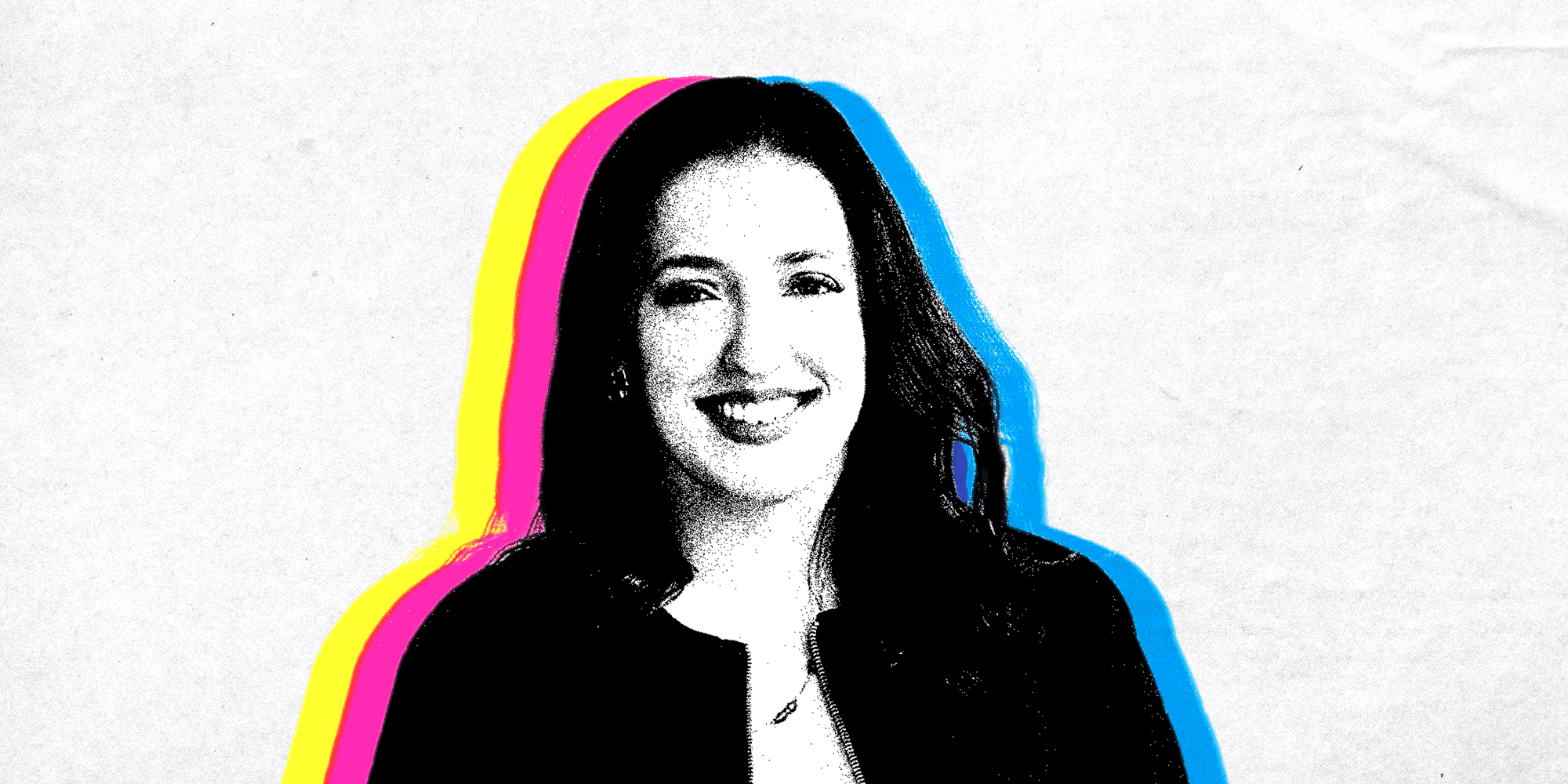

Keri Findley was already managing billions of dollars by her late 20s at the hedge fund Third Point, which she joined in 2009. She eventually made partner before departing for Silicon Valley in 2017. In 2022, Findley founded Tacora Capital, an Austin-based private credit firm focused on asset-backed lending to venture-backed companies. Tacora Capital focuses on loan sizes between $10 and $50 million. The debut fund, anchored by a $250 million investment from Peter Thiel, drew significant attention in Silicon Valley. Since then, Tacora has raised an additional $685 million for a second fund closed in 2025.
I spoke with Keri Findley about her rise through Wall Street post-2008, the intellectual foundations of her investment approach, and the risks building in today’s credit markets. What follows is a transcript of our conversation.
CB: What’s your relationship with mathematics?
KF: Love and hate. I was an operations research major at Columbia. I would say that simulation, Brownian motion, and applied integer programming were incredibly valuable to what I ended up doing. The class I was best at was called stochastic calculus.
CB: What’s that?
KF: It really is like a transition matrix for loan pools. Obviously, I didn’t know that at the time. One day I was sitting in research at Morgan Stanley. I was like 22 or 23, and it hit me. In stochastic calculus, the main example is like, if you start at First Street and First Avenue and 10th Street and 10th Avenue over here. How many different paths are there, and what are the weights on the path, and what percentage of the paths have you ending up on Fourth Street and Sixth Avenue? Those types of problems are literally a loan transition matrix. Every loan starts having made zero payments on day one, and they all either prepay or default. And it’s just a question of how they get there. I’ll never forget when I was like, oh my God, I’m in the job that perfectly aligns with my favorite class. And maybe I would have found that in many jobs, but I just found that very funny one day.
CB: What drew you to Wall Street? Were you looking for a challenge?
KF: No, I’m much lamer than that. I just wanted to stay in New York City. And I went to the Columbia career center, and Wall Street was recruiting, and I was relatively good at math. The other groups that were recruiting were a lot of corporate jobs at fashion companies, which I didn’t have any interest in, and a lot of consulting jobs. Consulting jobs usually had a minimum of a 3.7 or 3.8 GPA to apply. And I didn’t have that. I applied to every job that would take my application.
CB: You ended up in a sales role, right?
KF: I started in ABS CDO [asset-backed securities collateralized debt obligation] research at Morgan Stanley. At some point during my two year Analyst Program, the head of research left, and they moved me to sales, which I was shockingly bad at.
CB: Why do you think that was?
KF: Getting screamed at by clients and having to go back to them was just not something I was used to. When somebody screams at me and calls me names and tells me I’m the worst salesperson — I don’t think they meant it. But the clients would really beat you up. My boss would really beat me up. I didn’t handle being berated very well, and it would make me freeze and not jump into action. And I think I just had the wrong personality for it.
CB: How did you know to get out of that and what was your next move?
KF: Morgan Stanley told me, “You are not good at this.” I asked to go back to research. They didn’t have the head count. I had a great boss in research, like a kind of intermediate level boss that I really liked. His name was Ken Lee, but the head of the group was gone. The group was rudderless, which is why they moved me to begin with. But they were pretty clear to me that I was not going to make it as a salesperson. And I started looking at what other options there were, and I ended up at DB Zwirn, which had been one of my clients in research, and worked for two of the best guys I could ever imagine working for.
CB: Why did you leave them?
KF: Yeah, well, the story — you can read about it on the internet — is that the founder of DB Zwirn bought a plane with investor money, by accident. And it was a $6 billion firm. Investors were very upset at the lack of controls and were demanding their money back.
CB: From there you went to Third Point?
KF: My bosses were trying to find a place for the team. They found a place, but it ended up not working out for any of the team, and I ended up at Third Point.
CB: So, you didn’t find your fit right away. It seems like you had a rough time out the gate.
KF: It was hard. You’re in your early to mid-20s, you don’t know what you’re doing, and you’re just looking for somebody to follow around. I thought I found that in Rob and Ray, my mentors at DB Zwirn, and they’re awesome, and I’m still friends with them to this day. I’m actually seeing one of them this weekend. But you’re at a point where you’re looking for mentorship. You’re asking, “How do I do this?” And I thought I found it, and I did in many ways, but things don’t always work out as you think they will.
CB: Did you ever think about bailing on that career path during that period?
KF: I don’t know that I ever really knew what else I wanted to do. I took the GMAT because Morgan Stanley was offering a GMAT class. But I wasn’t like, “Oh, I have this other career path that I want to find.” Actually, at one point, a group called McMaster-Carr reached out to me and they were like, “This is where you want to work. If you want to go to business school, we give you incredible managerial experience. With an operations research degree, you help manage things. You help make systems more efficient.” And at McMaster-Carr, from what I understand, products come in and products go out. I did think about that for a minute, but I never found anything where I was like, this is what I want to do or what I might be good at. So I just kept going.
CB: Was there a moment when everything clicked for you, and you realized that you were in the right place, doing what you needed to be doing?
KF: The results at Third Point, and how quickly they came, were kind of astounding. I would say that I always had a decent amount of doubt. Once, I interviewed this person to come work for me at Third Point, and I asked, “Why do you want to work here? And she’s like, “I don’t know. The entire firm of Barclays thinks you’re going to blow Third Point sky high.” And I was like, what? It was this interesting realization that, not only did I have some doubts about what I was doing, but there was a common perception that I didn’t know what I was doing.
CB: You were managing quite a bit at this point in time, right? You were in a position that was rather unusual for your age.
KF: Yeah, I started by managing — at 25, I think it was — $200 or $250 million. Third Point, when I started, was about a $2 billion firm, and, you know, they entrusted me with about 10% of their capital, which was a huge compliment and wild. And the results came quickly. I started at a very good time. It was the bottom of the market. And it went from $250 million to $4 billion at one point, when Third Point was a $20 billion firm. I was managing a lot of money at a young age, and so, yes, it was a bit unusual. I believe I was managing $4 billion before I was 30.
CB: How do you cope with that kind of pressure?
KF: You just don’t think about it. You do the same thing every day. You come in, look for opportunities, and evaluate them against the opportunities in your portfolio. You maybe try to sell the worst asset in your portfolio. You try to add to it. You just think about small steps, like, what can I do today to get myself to the outcome I want? And when it’s that big, small changes every day over time compound, and so you just have to take a step forward every day.
CB: Do you have any memorable trades from that stage of your career?
KF: My favorite bond is probably one called CXHE 2005-DM4. It was a 2005 Centex-originated bond. And Centex was a pre crisis mortgage originator. And it was, if I remember correctly, it was five-year seasoned, so it was coming up on its 60th month, and I had just looked at a chart that showed that before the financial crisis, 97% of defaults had happened before the 60th month. So, if there were going to be 10% total defaults, 9.7% happened before month 60. So I was like, okay. And then this trader from Jefferies shows me this CXHE bond, and he says, it’s 30% delinquent today, but I can run 90% defaults and still get a positive yield. And I said, well, but I just saw a chart that said that 97% of the total defaults should have happened by now. And yes, there’s a financial crisis. And yes, things are weird, but 70% of these people have made 60 payments, and they’re still caught up on their mortgage. The question was, is it going to be 97 or is it going to be 33? That was the gap we were looking at. So if it was 33, we would still get a positive yield. But if it was 97, the bond would double and triple in price in a very short period of time. So I was like, okay, let’s assume that 90% of the defaults have happened. Let’s assume it’s 80, let’s assume it’s 70, and you saw the different scenarios of where the bond started to pop in price. It was a risk I really liked, and so I bought it, and then I bought a lot more bonds similar to it. That probably ended up being the best trade of my career.
CB: When did you decide to go to Silicon Valley?
KF: It was 2013 and I met a company called SoFi, and I just fell in love with Silicon Valley. I wanted to do all the fintech deals. I wanted to be in and around the fintech ecosystem. And I, you know, kind of ended up kind of gravitating that way. I was out in Silicon Valley all the time, looking at deals, looking for deals, and just kept spending more and more time there. And I ended up moving there in 2017.
CB: What’s the most profound difference between Wall Street and Silicon Valley?
KF: I think people in New York, in my experience at least, are really trying to grasp onto the past, and people in Silicon Valley are trying to change the future. And there’s a lot of cliches of, like, I used to joke, how many times will they say “change the world” in a meeting. And that is inversely correlated to the ability to do things or the desire to do things. But at the same time, embedded in that statement of “I want to change the world” is “I want to build things and move forward and change the future.” where, in New York, the number of times I heard people say things like, “I just need to keep this job for five more years and then I’ll be good. I just need things to not change too much and make my job irrelevant.” It was a very stark view of, they were resisting change, where Silicon Valley was embracing and trying to create change.
CB: How did you decide to go out on your own with Tacora?
KF: I actually didn’t want to. I spent a lot of time trying to find partners to start this business with, whether those partners were VC firms or other firms out there. I had no desire to do this on my own, and it wasn’t until I realized that doing it with a partner just meant different problems. At first I was like, okay, I don’t know how to do operations, accounting, or finance. Let me solve for that by doing this with a big VC firm. Let me solve by that by doing this with this person. Let me solve for that, A, B, whatever way. And then I realized that’s just creating more problems. If I want to do this the way I want to do this, I’m going to have to do it on my own.
CB: How did you raise for your first fund, and how did you profile both potential LPs, and your investments?
KF: The thesis came first. The thesis was, Silicon Valley is creating change in industries that it never had before. Silicon Valley venture capital firms are investing in the industries like insurance, financial services, and logistics that they never had before. And there’s a white space for capital. These firms are asset heavy. They shouldn’t be funded fully by venture equity. Venture equity, and what at the time was venture debt, like what Silicon Valley Bank offered, it just didn’t get you where you needed to go. So that’s really it.
CB: On the LP side, how did you figure out what kind of people you wanted to work with, and whose capital you wanted to take?
KF: I had known Peter Thiel for a long time, and when he made the offer, I was talking to a bunch of other people. I shut those other offers down because Peter has an unbelievable ethical makeup and has been someone I’ve gotten to know over a long period of time, and I thought it would be a good pairing. And it’s been better than I could have ever imagined.
CB: He’s such an interesting figure from an intellectual standpoint, and from an investing standpoint. Do you have any insight into Thiel thought? How does he think?
KF: You can get glimpses into it spending time with him, but if I knew the way he thought and the way he understood things, I’d probably have a 50x fund, or whatever he ended up having with his best funds. But I think he looks at things from a contrarian perspective, which I think is fascinating. He somehow finds a way to question every assumption and be cautious, where, at the same time, to have the returns he had, he’s had to be really optimistic.
CB: If you were a founder, what would drive you to seek private credit instead of other alternatives for capital?
KF: If you’re starting an insurance company and the insurance regulator says you need to have money in a state insurance fund or a surplus note that is basically money sitting in cash, you should not be using equity to, for all intents and purposes, have money sitting in cash. So a regulator is saying to you, you need to have $20 million of capital sitting at your carrier. You can raise $20 million of equity, or you can raise $4 million of equity and $16 million of debt. You are in a much better situation with the latter. If you are in the business of originating loans, you should not take equity to originate loans. If you are buying invoices, again, you should not raise equity to buy invoices. There’s just a lot of specialty finance-type businesses that should not be funded solely with equity. You obviously need equity for operating capital — for paying salaries, people, technology — but you need a different capital solution to fund assets.
CB: What was the relationship between private credit as an asset class and the 2008 financial crisis?
KF: Mortgages, in theory, could be considered a type of private credit, but at the time, they were not. Most mortgages were guaranteed a “wrap” by Fannie Mae or Freddie Mac or Ginnie Mae, which are government agencies. The rest were mostly put into public securitizations. So, you know, private credit. And those are CUSIP-ed and bonded and trade OTC. I guess not even on an OTC, they trade kind of by appointment. But those were not at the time called or considered private credit. Private credit would be a portfolio of loans that was just held on balance sheet. That’s, to me, the difference. But private credit was not called private credit back then. Mortgage-backed securities and the overleveraging of homes and houses, in theory, caused the financial crisis. It’s much more complicated than that, but that is the narrative, and a lot of what caused it. It was easy money from the Fed allowed originators to originate cheap. They had to feed these beasts and feed these machines. It was just more and more and more aggressive because they had to pay their costs, so they had to originate the same amount of loans. And people couldn’t afford it any more; payment rates started going up. And the whole structure collapsed. I’ll never forget being in Vegas and hearing the blackjack dealer say she had five homes, or a taxi driver tell me he was taking out an option ARM. It was very clear that these products were not being sold responsibly.
CB: Do you have any concerns about private credit as an asset class, very broadly, at this point in time?
KF: Of course. We don’t really know what they’re doing. You could have overleveraged loans and direct lending, and no one would ever know about them or see them, and it is private, right? Direct lending is basically hedge funds stepping into the places where banks used to operate. But because of more regulation, banks have overall shrunk. There are fewer of them, the bigger ones are obviously getting bigger, and the smaller ones are, for all intents and purposes, going away. And because of regulation, hedge funds are stepping in where banks used to be, and those firms are the firms like Blue Owl, Blackstone, Ares, Apollo. Pick your large, private credit fund.
I don’t know how they’re originating [creating new loans]. I don’t know what their covenants look like. I don’t see them. The only people who see them are the company and Apollo, and so we don’t really have any idea how overleveraged the system is, but my guess as to what will happen is that one industry will have a big decline in revenue. Whatever that industry is — I actually don’t think it will be software — you will see who’s exposed to that industry and what their loans look like.
CB: Does this have any impact on your outlook at Tacora?
KF: What we’ve seen is more money go into private credit, but what that’s done is make big deals bigger and keep us and our deals less competitive than they were even a couple of years ago. But we do $10 to $50 million deals. We stay at a small size, and we don’t have a lot of competition because of it. Look, sometimes there’s competition, sometimes there’s another fund or a family office or something like that. But the proliferation of private credit has meant less competition in smaller deals. The competitors seem to be all getting bigger and jumping into bigger assets.
Capitalism
•
Principals: Keri Findley
An interview with the founder and CEO of Tacora Capital
Keri Findley was already managing billions of dollars by her late 20s at the hedge fund Third Point, which she joined in 2009. She eventually made partner before departing for Silicon Valley in 2017. In 2022, Findley founded Tacora Capital, an Austin-based private credit firm focused on asset-backed lending to venture-backed companies. Tacora Capital focuses on loan sizes between $10 and $50 million. The debut fund, anchored by a $250 million investment from Peter Thiel, drew significant attention in Silicon Valley. Since then, Tacora has raised an additional $685 million for a second fund closed in 2025.
I spoke with Keri Findley about her rise through Wall Street post-2008, the intellectual foundations of her investment approach, and the risks building in today’s credit markets. What follows is a transcript of our conversation.
CB: What’s your relationship with mathematics?
KF: Love and hate. I was an operations research major at Columbia. I would say that simulation, Brownian motion, and applied integer programming were incredibly valuable to what I ended up doing. The class I was best at was called stochastic calculus.
CB: What’s that?
KF: It really is like a transition matrix for loan pools. Obviously, I didn’t know that at the time. One day I was sitting in research at Morgan Stanley. I was like 22 or 23, and it hit me. In stochastic calculus, the main example is like, if you start at First Street and First Avenue and 10th Street and 10th Avenue over here. How many different paths are there, and what are the weights on the path, and what percentage of the paths have you ending up on Fourth Street and Sixth Avenue? Those types of problems are literally a loan transition matrix. Every loan starts having made zero payments on day one, and they all either prepay or default. And it’s just a question of how they get there. I’ll never forget when I was like, oh my God, I’m in the job that perfectly aligns with my favorite class. And maybe I would have found that in many jobs, but I just found that very funny one day.
CB: What drew you to Wall Street? Were you looking for a challenge?
KF: No, I’m much lamer than that. I just wanted to stay in New York City. And I went to the Columbia career center, and Wall Street was recruiting, and I was relatively good at math. The other groups that were recruiting were a lot of corporate jobs at fashion companies, which I didn’t have any interest in, and a lot of consulting jobs. Consulting jobs usually had a minimum of a 3.7 or 3.8 GPA to apply. And I didn’t have that. I applied to every job that would take my application.
CB: You ended up in a sales role, right?
KF: I started in ABS CDO [asset-backed securities collateralized debt obligation] research at Morgan Stanley. At some point during my two year Analyst Program, the head of research left, and they moved me to sales, which I was shockingly bad at.
CB: Why do you think that was?
KF: Getting screamed at by clients and having to go back to them was just not something I was used to. When somebody screams at me and calls me names and tells me I’m the worst salesperson — I don’t think they meant it. But the clients would really beat you up. My boss would really beat me up. I didn’t handle being berated very well, and it would make me freeze and not jump into action. And I think I just had the wrong personality for it.
CB: How did you know to get out of that and what was your next move?
KF: Morgan Stanley told me, “You are not good at this.” I asked to go back to research. They didn’t have the head count. I had a great boss in research, like a kind of intermediate level boss that I really liked. His name was Ken Lee, but the head of the group was gone. The group was rudderless, which is why they moved me to begin with. But they were pretty clear to me that I was not going to make it as a salesperson. And I started looking at what other options there were, and I ended up at DB Zwirn, which had been one of my clients in research, and worked for two of the best guys I could ever imagine working for.
CB: Why did you leave them?
KF: Yeah, well, the story — you can read about it on the internet — is that the founder of DB Zwirn bought a plane with investor money, by accident. And it was a $6 billion firm. Investors were very upset at the lack of controls and were demanding their money back.
CB: From there you went to Third Point?
KF: My bosses were trying to find a place for the team. They found a place, but it ended up not working out for any of the team, and I ended up at Third Point.
CB: So, you didn’t find your fit right away. It seems like you had a rough time out the gate.
KF: It was hard. You’re in your early to mid-20s, you don’t know what you’re doing, and you’re just looking for somebody to follow around. I thought I found that in Rob and Ray, my mentors at DB Zwirn, and they’re awesome, and I’m still friends with them to this day. I’m actually seeing one of them this weekend. But you’re at a point where you’re looking for mentorship. You’re asking, “How do I do this?” And I thought I found it, and I did in many ways, but things don’t always work out as you think they will.
CB: Did you ever think about bailing on that career path during that period?
KF: I don’t know that I ever really knew what else I wanted to do. I took the GMAT because Morgan Stanley was offering a GMAT class. But I wasn’t like, “Oh, I have this other career path that I want to find.” Actually, at one point, a group called McMaster-Carr reached out to me and they were like, “This is where you want to work. If you want to go to business school, we give you incredible managerial experience. With an operations research degree, you help manage things. You help make systems more efficient.” And at McMaster-Carr, from what I understand, products come in and products go out. I did think about that for a minute, but I never found anything where I was like, this is what I want to do or what I might be good at. So I just kept going.
CB: Was there a moment when everything clicked for you, and you realized that you were in the right place, doing what you needed to be doing?
KF: The results at Third Point, and how quickly they came, were kind of astounding. I would say that I always had a decent amount of doubt. Once, I interviewed this person to come work for me at Third Point, and I asked, “Why do you want to work here? And she’s like, “I don’t know. The entire firm of Barclays thinks you’re going to blow Third Point sky high.” And I was like, what? It was this interesting realization that, not only did I have some doubts about what I was doing, but there was a common perception that I didn’t know what I was doing.
CB: You were managing quite a bit at this point in time, right? You were in a position that was rather unusual for your age.
KF: Yeah, I started by managing — at 25, I think it was — $200 or $250 million. Third Point, when I started, was about a $2 billion firm, and, you know, they entrusted me with about 10% of their capital, which was a huge compliment and wild. And the results came quickly. I started at a very good time. It was the bottom of the market. And it went from $250 million to $4 billion at one point, when Third Point was a $20 billion firm. I was managing a lot of money at a young age, and so, yes, it was a bit unusual. I believe I was managing $4 billion before I was 30.
CB: How do you cope with that kind of pressure?
KF: You just don’t think about it. You do the same thing every day. You come in, look for opportunities, and evaluate them against the opportunities in your portfolio. You maybe try to sell the worst asset in your portfolio. You try to add to it. You just think about small steps, like, what can I do today to get myself to the outcome I want? And when it’s that big, small changes every day over time compound, and so you just have to take a step forward every day.
CB: Do you have any memorable trades from that stage of your career?
KF: My favorite bond is probably one called CXHE 2005-DM4. It was a 2005 Centex-originated bond. And Centex was a pre crisis mortgage originator. And it was, if I remember correctly, it was five-year seasoned, so it was coming up on its 60th month, and I had just looked at a chart that showed that before the financial crisis, 97% of defaults had happened before the 60th month. So, if there were going to be 10% total defaults, 9.7% happened before month 60. So I was like, okay. And then this trader from Jefferies shows me this CXHE bond, and he says, it’s 30% delinquent today, but I can run 90% defaults and still get a positive yield. And I said, well, but I just saw a chart that said that 97% of the total defaults should have happened by now. And yes, there’s a financial crisis. And yes, things are weird, but 70% of these people have made 60 payments, and they’re still caught up on their mortgage. The question was, is it going to be 97 or is it going to be 33? That was the gap we were looking at. So if it was 33, we would still get a positive yield. But if it was 97, the bond would double and triple in price in a very short period of time. So I was like, okay, let’s assume that 90% of the defaults have happened. Let’s assume it’s 80, let’s assume it’s 70, and you saw the different scenarios of where the bond started to pop in price. It was a risk I really liked, and so I bought it, and then I bought a lot more bonds similar to it. That probably ended up being the best trade of my career.
CB: When did you decide to go to Silicon Valley?
KF: It was 2013 and I met a company called SoFi, and I just fell in love with Silicon Valley. I wanted to do all the fintech deals. I wanted to be in and around the fintech ecosystem. And I, you know, kind of ended up kind of gravitating that way. I was out in Silicon Valley all the time, looking at deals, looking for deals, and just kept spending more and more time there. And I ended up moving there in 2017.
CB: What’s the most profound difference between Wall Street and Silicon Valley?
KF: I think people in New York, in my experience at least, are really trying to grasp onto the past, and people in Silicon Valley are trying to change the future. And there’s a lot of cliches of, like, I used to joke, how many times will they say “change the world” in a meeting. And that is inversely correlated to the ability to do things or the desire to do things. But at the same time, embedded in that statement of “I want to change the world” is “I want to build things and move forward and change the future.” where, in New York, the number of times I heard people say things like, “I just need to keep this job for five more years and then I’ll be good. I just need things to not change too much and make my job irrelevant.” It was a very stark view of, they were resisting change, where Silicon Valley was embracing and trying to create change.
CB: How did you decide to go out on your own with Tacora?
KF: I actually didn’t want to. I spent a lot of time trying to find partners to start this business with, whether those partners were VC firms or other firms out there. I had no desire to do this on my own, and it wasn’t until I realized that doing it with a partner just meant different problems. At first I was like, okay, I don’t know how to do operations, accounting, or finance. Let me solve for that by doing this with a big VC firm. Let me solve by that by doing this with this person. Let me solve for that, A, B, whatever way. And then I realized that’s just creating more problems. If I want to do this the way I want to do this, I’m going to have to do it on my own.
CB: How did you raise for your first fund, and how did you profile both potential LPs, and your investments?
KF: The thesis came first. The thesis was, Silicon Valley is creating change in industries that it never had before. Silicon Valley venture capital firms are investing in the industries like insurance, financial services, and logistics that they never had before. And there’s a white space for capital. These firms are asset heavy. They shouldn’t be funded fully by venture equity. Venture equity, and what at the time was venture debt, like what Silicon Valley Bank offered, it just didn’t get you where you needed to go. So that’s really it.
CB: On the LP side, how did you figure out what kind of people you wanted to work with, and whose capital you wanted to take?
KF: I had known Peter Thiel for a long time, and when he made the offer, I was talking to a bunch of other people. I shut those other offers down because Peter has an unbelievable ethical makeup and has been someone I’ve gotten to know over a long period of time, and I thought it would be a good pairing. And it’s been better than I could have ever imagined.
CB: He’s such an interesting figure from an intellectual standpoint, and from an investing standpoint. Do you have any insight into Thiel thought? How does he think?
KF: You can get glimpses into it spending time with him, but if I knew the way he thought and the way he understood things, I’d probably have a 50x fund, or whatever he ended up having with his best funds. But I think he looks at things from a contrarian perspective, which I think is fascinating. He somehow finds a way to question every assumption and be cautious, where, at the same time, to have the returns he had, he’s had to be really optimistic.
CB: If you were a founder, what would drive you to seek private credit instead of other alternatives for capital?
KF: If you’re starting an insurance company and the insurance regulator says you need to have money in a state insurance fund or a surplus note that is basically money sitting in cash, you should not be using equity to, for all intents and purposes, have money sitting in cash. So a regulator is saying to you, you need to have $20 million of capital sitting at your carrier. You can raise $20 million of equity, or you can raise $4 million of equity and $16 million of debt. You are in a much better situation with the latter. If you are in the business of originating loans, you should not take equity to originate loans. If you are buying invoices, again, you should not raise equity to buy invoices. There’s just a lot of specialty finance-type businesses that should not be funded solely with equity. You obviously need equity for operating capital — for paying salaries, people, technology — but you need a different capital solution to fund assets.
CB: What was the relationship between private credit as an asset class and the 2008 financial crisis?
KF: Mortgages, in theory, could be considered a type of private credit, but at the time, they were not. Most mortgages were guaranteed a “wrap” by Fannie Mae or Freddie Mac or Ginnie Mae, which are government agencies. The rest were mostly put into public securitizations. So, you know, private credit. And those are CUSIP-ed and bonded and trade OTC. I guess not even on an OTC, they trade kind of by appointment. But those were not at the time called or considered private credit. Private credit would be a portfolio of loans that was just held on balance sheet. That’s, to me, the difference. But private credit was not called private credit back then. Mortgage-backed securities and the overleveraging of homes and houses, in theory, caused the financial crisis. It’s much more complicated than that, but that is the narrative, and a lot of what caused it. It was easy money from the Fed allowed originators to originate cheap. They had to feed these beasts and feed these machines. It was just more and more and more aggressive because they had to pay their costs, so they had to originate the same amount of loans. And people couldn’t afford it any more; payment rates started going up. And the whole structure collapsed. I’ll never forget being in Vegas and hearing the blackjack dealer say she had five homes, or a taxi driver tell me he was taking out an option ARM. It was very clear that these products were not being sold responsibly.
CB: Do you have any concerns about private credit as an asset class, very broadly, at this point in time?
KF: Of course. We don’t really know what they’re doing. You could have overleveraged loans and direct lending, and no one would ever know about them or see them, and it is private, right? Direct lending is basically hedge funds stepping into the places where banks used to operate. But because of more regulation, banks have overall shrunk. There are fewer of them, the bigger ones are obviously getting bigger, and the smaller ones are, for all intents and purposes, going away. And because of regulation, hedge funds are stepping in where banks used to be, and those firms are the firms like Blue Owl, Blackstone, Ares, Apollo. Pick your large, private credit fund.
I don’t know how they’re originating [creating new loans]. I don’t know what their covenants look like. I don’t see them. The only people who see them are the company and Apollo, and so we don’t really have any idea how overleveraged the system is, but my guess as to what will happen is that one industry will have a big decline in revenue. Whatever that industry is — I actually don’t think it will be software — you will see who’s exposed to that industry and what their loans look like.
CB: Does this have any impact on your outlook at Tacora?
KF: What we’ve seen is more money go into private credit, but what that’s done is make big deals bigger and keep us and our deals less competitive than they were even a couple of years ago. But we do $10 to $50 million deals. We stay at a small size, and we don’t have a lot of competition because of it. Look, sometimes there’s competition, sometimes there’s another fund or a family office or something like that. But the proliferation of private credit has meant less competition in smaller deals. The competitors seem to be all getting bigger and jumping into bigger assets.
About the Author
Carson Becker is an American writer. He is on X @carsonjbecker