tt
tt
tt
tt
tt
tt
Civilization
•
"Anxiously Engaged in a Good Cause"
Latter-day Saint ethos in American industry and technology.
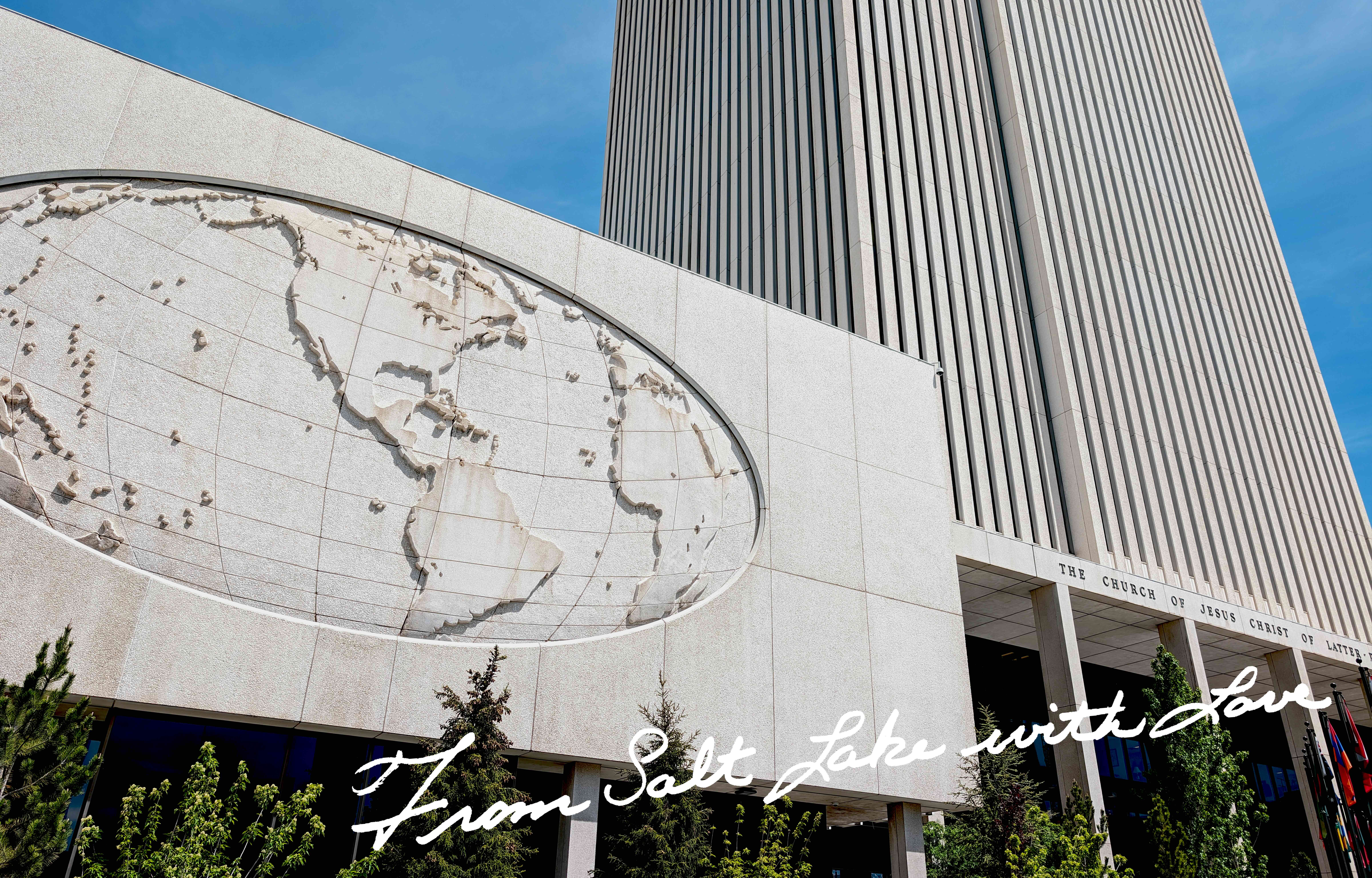

Everyone in tech knows a Mormon. Whether it’s the clean cut guy knocking back Diet Coke at the office happy hour or the engineering manager who is not only incredible at her job, but you’re shocked to find out she also has five kids. Outside of tech, your cultural exposure to Mormons might be limited to the white shirts and black name tags you’ve seen on the street, or re-runs of Mitt Romney debates. And yet, not only are Mormons a surprisingly present force in the tech industry, but Utah has an undeniable tech-forward mandate as well. Just last year, Utah has broken ground on what could be the first fully deployed small modular nuclear reactor in the US and kicked off “the largest cloud seeding project in modern American history.”
All of that may come as a surprise to anyone who sees Mormons as an odd, yet simple offshoot of Protestant Christianity. But the reality runs much deeper than that. The heritage of success in business and technology is tied not only to Latter-Day Saint history, but the religion’s very theology. From Bryan Johnson (Don’t Die) to Clayton Christensen (Innovator’s Dilemma) or Keith Johnson (the head of Sequoia’s family office), and across the founding stories of companies like Adobe, The Trade Desk, JetBlue, Stance Socks, Vivint, Ancestry, and countless others — the spirit of the quintessential American religion has left its mark.
An American Moses
America is a nation built on the dual concepts of restoration and reinvention. Making what is old into something also new. Americans reinvigorated and perfected little-r republicanism, little-d democracy, and inalienable rights.
American religious life is no different. While we transplanted Old World religion, we also made way for the reinvigoration of American prophetic voices. Where the ancient Moses had tablets, as a member of the Church of Jesus Christ of Latter-Day Saints, I believe that the American Moses had a pen.
For Your Eyes Only.
Spies. Satellites. State secrets. Inside the technologies and intelligence contests shaping American power.
Subscribe + Issue 007
In 1831, Joseph Smith, under a prophetic mantle, took up that pen and wrote words that fell from the lips of God, as far as we’re concerned. In what he wrote, you find articulated a fundamental ethos that rings true in the heart of every so-called Mormon: “Men should be anxiously engaged in a good cause.”
While we may not like being called Mormons, members of The Church of Jesus Christ of Latter-Day Saints have ultimately felt that anxious pursuit driving us forward. It’s how we became, arguably, the most influential American-made religion, spanning millions of members across 150 nations. Almost any entry over the last 200-or-so years of that history could justify its own book.
Put Your Shoulder To The Wheel
Chased from a half dozen towns, murdered and persecuted along the way, we built a city out of a swamp in Nauvoo, Illinois. At its peak, it reached a population of 12,000, rivaling Chicago at the time. After our first prophet was murdered, our second one, Brigham Young, led 148 fearless pioneers across a 1,300-mile trek to Salt Lake. Then, we turned around and spent the next twenty years helping 65,000 other people join us there. We spent over $50 million — adjusted for inflation — helping poorer European immigrants make the journey, spreading out across the west, not just Utah, but also Idaho, Arizona, and California. And, these frontiersmen succeeded: the first millionaire in California, Samual Brannan, was a Latter-Day Saint businessman literally selling picks and shovels to gold miners.
We imported industries wholesale to Utah to reinforce our self-reliance. From iron to textiles, we saw physical toil as a spiritual commandment. Our own scriptures reinforce that every commandment from God is spiritual; never temporal. We didn’t build industry to get rich, we did it to build the Kingdom of God, our own home-grown Zion. In fact, arguably the first full-line department store in the US was the Latter-Day Saints’ Zion’s Cooperative Mercantile Institution (ZCMI) founded in Salt Lake City in 1868 that pooled industrial output and local buying power into one enterprise.
Out of a barren desert, my ancestors built Deseret (the name we wanted for what is now “Utah” before the feds forced us to abandon the name), a Book of Mormon word that means honeybee — the perfect mascot for a hard-working, industrious hive.
By the 1860s, out-of-state travelers said Utah looked more akin to established Eastern towns like Chicago or New York, rather than the western outposts they were expecting. Brick homes, wide streets, mills, stores, schools. In fact, at a time when twenty percent of the US population was illiterate, only 2.5% of Utah had the same disadvantage. Our economy was well-rounded and strong, resisting the swings of the mining boom towns that then dotted the American West. Utah was built for broad stability, not quick fortunes.
Adding Investment To Industry
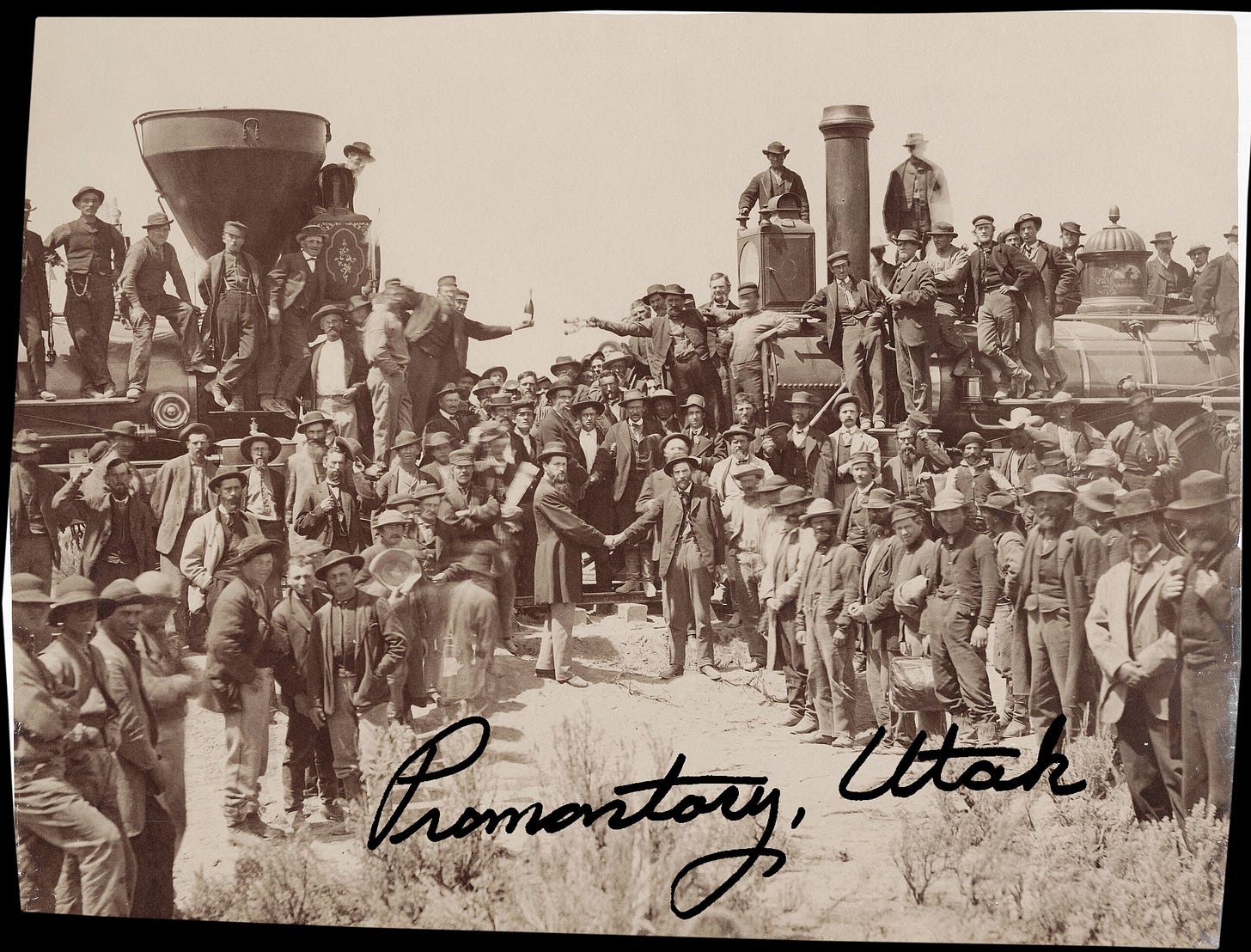
The first generation of Latter-Day Saint entrepreneurialism after Utah’s settlement revolved around industrial categories: iron, sugar processing, utilities, and railroads. All were risky capital-intensive endeavors. When the Union Pacific and the Central Pacific railroads finally met, connecting the east and west coasts, they did so in Promonotory, Utah. The arrival of the railroad in 1869 brought cheap products from the east, crowding out local industry. The Church was left carrying millions in debt with industries that were much more exposed to competition.
In the late 19th century, Utahans, determined to create heaven on Earth, continued to build everything from Church-owned enterprises, across media, insurance, and construction, to adjacent projects in the state. Founded in 1940, Hill Air Force Base became a major Air Force base with 22,000 personnel during World War II, offering critical maintenance. Thiokol, founded in 1929, manufactured everything from rubber to missile propulsion systems, including Minuteman ICBMs and the airbags on the Mars Pathfinder. Geneva Steel, founded in 1941, was at one point producing 60% of the steel in the Western US.
The same tenacity that powered my ancestors through spiritual and physical obstacles in the quest to find our American Zion prepared us to tackle financial obstacles at the turn of the century. Weathering the Great Depression and World War II redoubled our focus on self-reliance. One old pioneer motto came in handy: “use it up, wear it out, make do, or do without.” The Church created the Church Security Plan in 1936 to supplement government relief, provide food, jobs, and resources, and encourage self-reliance. By the 1960s the Church was solvent, but not wealthy. Then, N. Eldon Tanner helped introduce modern financial discipline into the hearts of every Latter-Day Saint.
Tanner was an oilman and politician in Canada, but was chosen as a modern-day Apostle in 1962. That was an unusual call at the time, given most Apostles came from academic and legal backgrounds. Upon becoming a senior leader of the Church, he was “thrust into financial affairs.” He took the raw fundamentals of self-reliance and grit among the Latter-Day Saints and supercharged it with corporate-style accounting, an aversion to debt, and a diversified investment portfolio.
Tanner pushed the Church towards an additional golden rule: “We do not spend money we do not have.” From debt-ridden to conservative spending to building up long-term reserves, the Church’s financial picture changed dramatically. Over the next 60 years, the Church built on a foundation of industriousness and financial discipline following scripture. The call from God was to “organize [ourselves] and prepare every needful thing.” So we did.
By the 2020s, the Church had built a net worth of $265 billion. That includes 290,000 acres of ranch land and citrus in Florida, one of the largest cattle ranches in the country, billions in real estate, a $55 billion equity portfolio, and on and on.
The entire purpose of the Church’s aggregation of financial assets had nothing to do with amassing wealth. The late president of the Church, Russell M. Nelson, may have been the head of a $265 billion organization. But he had a net worth of a few million as a former renowned heart surgeon, and was earning a $120,000 annual salary working full-time for the church, all while wearing a $30 Timex Casio wristwatch and vacuuming his own house.
So what, then, does the Church do with the $265 billion empire it has built? The leaders of the Church will be the first to reemphasize the mission: “help people learn about and live the teachings of Jesus Christ, to share that message with the world, to strengthen and unite families, and to care for the poor and the needy.” The Church spent $1.45 billion in 2024 alone on humanitarian aid and welfare efforts across over 3,000 projects in 192 countries. Beyond physical needs, the Church invests in supporting its members’ spiritual needs. That includes access to over 200 temples. Not just casual chapels, but sacred sanctuaries we believe are literally “the house of the Lord.”
We built industries, amassed financial assets, and gathered a reserve that can support millions of people spiritually and physically. But we didn’t stop at shaping the physical world. The digital world has been just as fertile a playing field for Latter-Day Saint grit.
“The Glory of God Is Intelligence”
In February 2024, Sam Altman said something that made the ears of every Latter-Day Saint perk up: “I grew up implicitly thinking that intelligence was this really special human thing and kind of somewhat magical. And I now think that it’s sort of a fundamental property of matter.”
Latter-Day Saint scripture teaches that all matter is eternal and can be neither created, nor destroyed. It can simply be organized, right in line with the law of conservation of mass. Where religion is often framed as being at odds with science, my religion offers a fundamental cosmology that has remained the same since at least 1833 (if not since, you know… forever).
Far from a congregation of Luddites, Latter-Day Saints have embraced science as frequently as possible. One of the most noteworthy entries in Utah’s technological history came from the University of Utah’s computer graphics lab in the 1960s and 1970s. Our own home-grown Traitorous Eight, this group yielded an insanely dense pool of technology titans from Ed Catmull (founder of Pixar) and Jim Clark (founder of Silicon Graphics and NetScape) to John Warnock (founder of Adobe) and Alan Kay (one of the most influential technologists to come out of Xerox PARC).
They may not all have been “Mormon” (Alan Kay and Jim Clark weren’t), but their technical training sprouted from an institutional environment fostered in Utah where, at the time, 70% of the population was LDS. That environment also enabled adjacent technology history to grow up around it. In 1969, in large part because of that graphics lab, ARPANET (a fundamental precursor to the internet) set up its fourth node at the University of Utah! (The first three were all in California.)
One graphics lab alumni, Alan Ashton, developed WordPerfect in 1979, which eventually became the dominant word processor in the 1980s before Microsoft Word came on the scene. That same Utah environment birthed Novell, an early pioneer in networking founded in 1980, reaching seventy percent of enterprises at its peak, and Cirrus Logic, the first fabless semiconductor company.
Most of that technical prowess in Utah over the second half of the 20th century grew out of a comparative advantage. Members of the Church were disproportionately literate, multilingual (almost half of Latter-Day Saints serve on a two-year mission, often learning a second language), globally comfortable, industrious, and thrifty. But every aspect of that character grew out of our heritage.
Our Heritage
Members of The Church of Jesus Christ of Latter-Day Saints make up just two percent of the American population, but we’ve taken seriously Christ’s admonition to be the “salt of the earth.” Our hope is that our heritage is clear from the way we live our lives. We work hard to build things and impact people as positively as we can.
In the first book of the science fiction series, the Expanse — written by a non-Mormon author — there is a side plot where, in the year 2350, “the Mormons” have built the LDSS Nauvoo; an interstellar ship — a “portable Eden” — running the length of six of the longest aircraft carriers in the world.
In a world of musicals like The Book of Mormon and other “cultural” artifacts like the reality TV show, The Secret Lives of Mormon Wives, a more true to life portrayal of the Latter-Day Saint character would be calling out the grit, self-reliance, and commitment that it would take to self-finance an intergalactic ship. The LDSS Nauvoo represents an embrace of, if my co-religionists will allow me, a techno-Mormon future. And the utopia we’ve been tasked with creating on Earth is just as much a techno-utopia as it is a spiritual utopia.
Civilization
•
"Anxiously Engaged in a Good Cause"
Latter-day Saint ethos in American industry and technology.
Everyone in tech knows a Mormon. Whether it’s the clean cut guy knocking back Diet Coke at the office happy hour or the engineering manager who is not only incredible at her job, but you’re shocked to find out she also has five kids. Outside of tech, your cultural exposure to Mormons might be limited to the white shirts and black name tags you’ve seen on the street, or re-runs of Mitt Romney debates. And yet, not only are Mormons a surprisingly present force in the tech industry, but Utah has an undeniable tech-forward mandate as well. Just last year, Utah has broken ground on what could be the first fully deployed small modular nuclear reactor in the US and kicked off “the largest cloud seeding project in modern American history.”
All of that may come as a surprise to anyone who sees Mormons as an odd, yet simple offshoot of Protestant Christianity. But the reality runs much deeper than that. The heritage of success in business and technology is tied not only to Latter-Day Saint history, but the religion’s very theology. From Bryan Johnson (Don’t Die) to Clayton Christensen (Innovator’s Dilemma) or Keith Johnson (the head of Sequoia’s family office), and across the founding stories of companies like Adobe, The Trade Desk, JetBlue, Stance Socks, Vivint, Ancestry, and countless others — the spirit of the quintessential American religion has left its mark.
An American Moses
America is a nation built on the dual concepts of restoration and reinvention. Making what is old into something also new. Americans reinvigorated and perfected little-r republicanism, little-d democracy, and inalienable rights.
American religious life is no different. While we transplanted Old World religion, we also made way for the reinvigoration of American prophetic voices. Where the ancient Moses had tablets, as a member of the Church of Jesus Christ of Latter-Day Saints, I believe that the American Moses had a pen.
For Your Eyes Only.
Spies. Satellites. State secrets. Inside the technologies and intelligence contests shaping American power.
Subscribe + Issue 007
In 1831, Joseph Smith, under a prophetic mantle, took up that pen and wrote words that fell from the lips of God, as far as we’re concerned. In what he wrote, you find articulated a fundamental ethos that rings true in the heart of every so-called Mormon: “Men should be anxiously engaged in a good cause.”
While we may not like being called Mormons, members of The Church of Jesus Christ of Latter-Day Saints have ultimately felt that anxious pursuit driving us forward. It’s how we became, arguably, the most influential American-made religion, spanning millions of members across 150 nations. Almost any entry over the last 200-or-so years of that history could justify its own book.
Put Your Shoulder To The Wheel
Chased from a half dozen towns, murdered and persecuted along the way, we built a city out of a swamp in Nauvoo, Illinois. At its peak, it reached a population of 12,000, rivaling Chicago at the time. After our first prophet was murdered, our second one, Brigham Young, led 148 fearless pioneers across a 1,300-mile trek to Salt Lake. Then, we turned around and spent the next twenty years helping 65,000 other people join us there. We spent over $50 million — adjusted for inflation — helping poorer European immigrants make the journey, spreading out across the west, not just Utah, but also Idaho, Arizona, and California. And, these frontiersmen succeeded: the first millionaire in California, Samual Brannan, was a Latter-Day Saint businessman literally selling picks and shovels to gold miners.
We imported industries wholesale to Utah to reinforce our self-reliance. From iron to textiles, we saw physical toil as a spiritual commandment. Our own scriptures reinforce that every commandment from God is spiritual; never temporal. We didn’t build industry to get rich, we did it to build the Kingdom of God, our own home-grown Zion. In fact, arguably the first full-line department store in the US was the Latter-Day Saints’ Zion’s Cooperative Mercantile Institution (ZCMI) founded in Salt Lake City in 1868 that pooled industrial output and local buying power into one enterprise.
Out of a barren desert, my ancestors built Deseret (the name we wanted for what is now “Utah” before the feds forced us to abandon the name), a Book of Mormon word that means honeybee — the perfect mascot for a hard-working, industrious hive.
By the 1860s, out-of-state travelers said Utah looked more akin to established Eastern towns like Chicago or New York, rather than the western outposts they were expecting. Brick homes, wide streets, mills, stores, schools. In fact, at a time when twenty percent of the US population was illiterate, only 2.5% of Utah had the same disadvantage. Our economy was well-rounded and strong, resisting the swings of the mining boom towns that then dotted the American West. Utah was built for broad stability, not quick fortunes.
Adding Investment To Industry
The first generation of Latter-Day Saint entrepreneurialism after Utah’s settlement revolved around industrial categories: iron, sugar processing, utilities, and railroads. All were risky capital-intensive endeavors. When the Union Pacific and the Central Pacific railroads finally met, connecting the east and west coasts, they did so in Promonotory, Utah. The arrival of the railroad in 1869 brought cheap products from the east, crowding out local industry. The Church was left carrying millions in debt with industries that were much more exposed to competition.
In the late 19th century, Utahans, determined to create heaven on Earth, continued to build everything from Church-owned enterprises, across media, insurance, and construction, to adjacent projects in the state. Founded in 1940, Hill Air Force Base became a major Air Force base with 22,000 personnel during World War II, offering critical maintenance. Thiokol, founded in 1929, manufactured everything from rubber to missile propulsion systems, including Minuteman ICBMs and the airbags on the Mars Pathfinder. Geneva Steel, founded in 1941, was at one point producing 60% of the steel in the Western US.
The same tenacity that powered my ancestors through spiritual and physical obstacles in the quest to find our American Zion prepared us to tackle financial obstacles at the turn of the century. Weathering the Great Depression and World War II redoubled our focus on self-reliance. One old pioneer motto came in handy: “use it up, wear it out, make do, or do without.” The Church created the Church Security Plan in 1936 to supplement government relief, provide food, jobs, and resources, and encourage self-reliance. By the 1960s the Church was solvent, but not wealthy. Then, N. Eldon Tanner helped introduce modern financial discipline into the hearts of every Latter-Day Saint.
Tanner was an oilman and politician in Canada, but was chosen as a modern-day Apostle in 1962. That was an unusual call at the time, given most Apostles came from academic and legal backgrounds. Upon becoming a senior leader of the Church, he was “thrust into financial affairs.” He took the raw fundamentals of self-reliance and grit among the Latter-Day Saints and supercharged it with corporate-style accounting, an aversion to debt, and a diversified investment portfolio.
Tanner pushed the Church towards an additional golden rule: “We do not spend money we do not have.” From debt-ridden to conservative spending to building up long-term reserves, the Church’s financial picture changed dramatically. Over the next 60 years, the Church built on a foundation of industriousness and financial discipline following scripture. The call from God was to “organize [ourselves] and prepare every needful thing.” So we did.
By the 2020s, the Church had built a net worth of $265 billion. That includes 290,000 acres of ranch land and citrus in Florida, one of the largest cattle ranches in the country, billions in real estate, a $55 billion equity portfolio, and on and on.
The entire purpose of the Church’s aggregation of financial assets had nothing to do with amassing wealth. The late president of the Church, Russell M. Nelson, may have been the head of a $265 billion organization. But he had a net worth of a few million as a former renowned heart surgeon, and was earning a $120,000 annual salary working full-time for the church, all while wearing a $30 Timex Casio wristwatch and vacuuming his own house.
So what, then, does the Church do with the $265 billion empire it has built? The leaders of the Church will be the first to reemphasize the mission: “help people learn about and live the teachings of Jesus Christ, to share that message with the world, to strengthen and unite families, and to care for the poor and the needy.” The Church spent $1.45 billion in 2024 alone on humanitarian aid and welfare efforts across over 3,000 projects in 192 countries. Beyond physical needs, the Church invests in supporting its members’ spiritual needs. That includes access to over 200 temples. Not just casual chapels, but sacred sanctuaries we believe are literally “the house of the Lord.”
We built industries, amassed financial assets, and gathered a reserve that can support millions of people spiritually and physically. But we didn’t stop at shaping the physical world. The digital world has been just as fertile a playing field for Latter-Day Saint grit.
“The Glory of God Is Intelligence”
In February 2024, Sam Altman said something that made the ears of every Latter-Day Saint perk up: “I grew up implicitly thinking that intelligence was this really special human thing and kind of somewhat magical. And I now think that it’s sort of a fundamental property of matter.”
Latter-Day Saint scripture teaches that all matter is eternal and can be neither created, nor destroyed. It can simply be organized, right in line with the law of conservation of mass. Where religion is often framed as being at odds with science, my religion offers a fundamental cosmology that has remained the same since at least 1833 (if not since, you know… forever).
Far from a congregation of Luddites, Latter-Day Saints have embraced science as frequently as possible. One of the most noteworthy entries in Utah’s technological history came from the University of Utah’s computer graphics lab in the 1960s and 1970s. Our own home-grown Traitorous Eight, this group yielded an insanely dense pool of technology titans from Ed Catmull (founder of Pixar) and Jim Clark (founder of Silicon Graphics and NetScape) to John Warnock (founder of Adobe) and Alan Kay (one of the most influential technologists to come out of Xerox PARC).
They may not all have been “Mormon” (Alan Kay and Jim Clark weren’t), but their technical training sprouted from an institutional environment fostered in Utah where, at the time, 70% of the population was LDS. That environment also enabled adjacent technology history to grow up around it. In 1969, in large part because of that graphics lab, ARPANET (a fundamental precursor to the internet) set up its fourth node at the University of Utah! (The first three were all in California.)
One graphics lab alumni, Alan Ashton, developed WordPerfect in 1979, which eventually became the dominant word processor in the 1980s before Microsoft Word came on the scene. That same Utah environment birthed Novell, an early pioneer in networking founded in 1980, reaching seventy percent of enterprises at its peak, and Cirrus Logic, the first fabless semiconductor company.
Most of that technical prowess in Utah over the second half of the 20th century grew out of a comparative advantage. Members of the Church were disproportionately literate, multilingual (almost half of Latter-Day Saints serve on a two-year mission, often learning a second language), globally comfortable, industrious, and thrifty. But every aspect of that character grew out of our heritage.
Our Heritage
Members of The Church of Jesus Christ of Latter-Day Saints make up just two percent of the American population, but we’ve taken seriously Christ’s admonition to be the “salt of the earth.” Our hope is that our heritage is clear from the way we live our lives. We work hard to build things and impact people as positively as we can.
In the first book of the science fiction series, the Expanse — written by a non-Mormon author — there is a side plot where, in the year 2350, “the Mormons” have built the LDSS Nauvoo; an interstellar ship — a “portable Eden” — running the length of six of the longest aircraft carriers in the world.
In a world of musicals like The Book of Mormon and other “cultural” artifacts like the reality TV show, The Secret Lives of Mormon Wives, a more true to life portrayal of the Latter-Day Saint character would be calling out the grit, self-reliance, and commitment that it would take to self-finance an intergalactic ship. The LDSS Nauvoo represents an embrace of, if my co-religionists will allow me, a techno-Mormon future. And the utopia we’ve been tasked with creating on Earth is just as much a techno-utopia as it is a spiritual utopia.
Civilization
•
"Anxiously Engaged in a Good Cause"
Latter-day Saint ethos in American industry and technology.
Everyone in tech knows a Mormon. Whether it’s the clean cut guy knocking back Diet Coke at the office happy hour or the engineering manager who is not only incredible at her job, but you’re shocked to find out she also has five kids. Outside of tech, your cultural exposure to Mormons might be limited to the white shirts and black name tags you’ve seen on the street, or re-runs of Mitt Romney debates. And yet, not only are Mormons a surprisingly present force in the tech industry, but Utah has an undeniable tech-forward mandate as well. Just last year, Utah has broken ground on what could be the first fully deployed small modular nuclear reactor in the US and kicked off “the largest cloud seeding project in modern American history.”
All of that may come as a surprise to anyone who sees Mormons as an odd, yet simple offshoot of Protestant Christianity. But the reality runs much deeper than that. The heritage of success in business and technology is tied not only to Latter-Day Saint history, but the religion’s very theology. From Bryan Johnson (Don’t Die) to Clayton Christensen (Innovator’s Dilemma) or Keith Johnson (the head of Sequoia’s family office), and across the founding stories of companies like Adobe, The Trade Desk, JetBlue, Stance Socks, Vivint, Ancestry, and countless others — the spirit of the quintessential American religion has left its mark.
An American Moses
America is a nation built on the dual concepts of restoration and reinvention. Making what is old into something also new. Americans reinvigorated and perfected little-r republicanism, little-d democracy, and inalienable rights.
American religious life is no different. While we transplanted Old World religion, we also made way for the reinvigoration of American prophetic voices. Where the ancient Moses had tablets, as a member of the Church of Jesus Christ of Latter-Day Saints, I believe that the American Moses had a pen.
For Your Eyes Only.
Spies. Satellites. State secrets. Inside the technologies and intelligence contests shaping American power.
Subscribe + Issue 007
In 1831, Joseph Smith, under a prophetic mantle, took up that pen and wrote words that fell from the lips of God, as far as we’re concerned. In what he wrote, you find articulated a fundamental ethos that rings true in the heart of every so-called Mormon: “Men should be anxiously engaged in a good cause.”
While we may not like being called Mormons, members of The Church of Jesus Christ of Latter-Day Saints have ultimately felt that anxious pursuit driving us forward. It’s how we became, arguably, the most influential American-made religion, spanning millions of members across 150 nations. Almost any entry over the last 200-or-so years of that history could justify its own book.
Put Your Shoulder To The Wheel
Chased from a half dozen towns, murdered and persecuted along the way, we built a city out of a swamp in Nauvoo, Illinois. At its peak, it reached a population of 12,000, rivaling Chicago at the time. After our first prophet was murdered, our second one, Brigham Young, led 148 fearless pioneers across a 1,300-mile trek to Salt Lake. Then, we turned around and spent the next twenty years helping 65,000 other people join us there. We spent over $50 million — adjusted for inflation — helping poorer European immigrants make the journey, spreading out across the west, not just Utah, but also Idaho, Arizona, and California. And, these frontiersmen succeeded: the first millionaire in California, Samual Brannan, was a Latter-Day Saint businessman literally selling picks and shovels to gold miners.
We imported industries wholesale to Utah to reinforce our self-reliance. From iron to textiles, we saw physical toil as a spiritual commandment. Our own scriptures reinforce that every commandment from God is spiritual; never temporal. We didn’t build industry to get rich, we did it to build the Kingdom of God, our own home-grown Zion. In fact, arguably the first full-line department store in the US was the Latter-Day Saints’ Zion’s Cooperative Mercantile Institution (ZCMI) founded in Salt Lake City in 1868 that pooled industrial output and local buying power into one enterprise.
Out of a barren desert, my ancestors built Deseret (the name we wanted for what is now “Utah” before the feds forced us to abandon the name), a Book of Mormon word that means honeybee — the perfect mascot for a hard-working, industrious hive.
By the 1860s, out-of-state travelers said Utah looked more akin to established Eastern towns like Chicago or New York, rather than the western outposts they were expecting. Brick homes, wide streets, mills, stores, schools. In fact, at a time when twenty percent of the US population was illiterate, only 2.5% of Utah had the same disadvantage. Our economy was well-rounded and strong, resisting the swings of the mining boom towns that then dotted the American West. Utah was built for broad stability, not quick fortunes.
Adding Investment To Industry
The first generation of Latter-Day Saint entrepreneurialism after Utah’s settlement revolved around industrial categories: iron, sugar processing, utilities, and railroads. All were risky capital-intensive endeavors. When the Union Pacific and the Central Pacific railroads finally met, connecting the east and west coasts, they did so in Promonotory, Utah. The arrival of the railroad in 1869 brought cheap products from the east, crowding out local industry. The Church was left carrying millions in debt with industries that were much more exposed to competition.
In the late 19th century, Utahans, determined to create heaven on Earth, continued to build everything from Church-owned enterprises, across media, insurance, and construction, to adjacent projects in the state. Founded in 1940, Hill Air Force Base became a major Air Force base with 22,000 personnel during World War II, offering critical maintenance. Thiokol, founded in 1929, manufactured everything from rubber to missile propulsion systems, including Minuteman ICBMs and the airbags on the Mars Pathfinder. Geneva Steel, founded in 1941, was at one point producing 60% of the steel in the Western US.
The same tenacity that powered my ancestors through spiritual and physical obstacles in the quest to find our American Zion prepared us to tackle financial obstacles at the turn of the century. Weathering the Great Depression and World War II redoubled our focus on self-reliance. One old pioneer motto came in handy: “use it up, wear it out, make do, or do without.” The Church created the Church Security Plan in 1936 to supplement government relief, provide food, jobs, and resources, and encourage self-reliance. By the 1960s the Church was solvent, but not wealthy. Then, N. Eldon Tanner helped introduce modern financial discipline into the hearts of every Latter-Day Saint.
Tanner was an oilman and politician in Canada, but was chosen as a modern-day Apostle in 1962. That was an unusual call at the time, given most Apostles came from academic and legal backgrounds. Upon becoming a senior leader of the Church, he was “thrust into financial affairs.” He took the raw fundamentals of self-reliance and grit among the Latter-Day Saints and supercharged it with corporate-style accounting, an aversion to debt, and a diversified investment portfolio.
Tanner pushed the Church towards an additional golden rule: “We do not spend money we do not have.” From debt-ridden to conservative spending to building up long-term reserves, the Church’s financial picture changed dramatically. Over the next 60 years, the Church built on a foundation of industriousness and financial discipline following scripture. The call from God was to “organize [ourselves] and prepare every needful thing.” So we did.
By the 2020s, the Church had built a net worth of $265 billion. That includes 290,000 acres of ranch land and citrus in Florida, one of the largest cattle ranches in the country, billions in real estate, a $55 billion equity portfolio, and on and on.
The entire purpose of the Church’s aggregation of financial assets had nothing to do with amassing wealth. The late president of the Church, Russell M. Nelson, may have been the head of a $265 billion organization. But he had a net worth of a few million as a former renowned heart surgeon, and was earning a $120,000 annual salary working full-time for the church, all while wearing a $30 Timex Casio wristwatch and vacuuming his own house.
So what, then, does the Church do with the $265 billion empire it has built? The leaders of the Church will be the first to reemphasize the mission: “help people learn about and live the teachings of Jesus Christ, to share that message with the world, to strengthen and unite families, and to care for the poor and the needy.” The Church spent $1.45 billion in 2024 alone on humanitarian aid and welfare efforts across over 3,000 projects in 192 countries. Beyond physical needs, the Church invests in supporting its members’ spiritual needs. That includes access to over 200 temples. Not just casual chapels, but sacred sanctuaries we believe are literally “the house of the Lord.”
We built industries, amassed financial assets, and gathered a reserve that can support millions of people spiritually and physically. But we didn’t stop at shaping the physical world. The digital world has been just as fertile a playing field for Latter-Day Saint grit.
“The Glory of God Is Intelligence”
In February 2024, Sam Altman said something that made the ears of every Latter-Day Saint perk up: “I grew up implicitly thinking that intelligence was this really special human thing and kind of somewhat magical. And I now think that it’s sort of a fundamental property of matter.”
Latter-Day Saint scripture teaches that all matter is eternal and can be neither created, nor destroyed. It can simply be organized, right in line with the law of conservation of mass. Where religion is often framed as being at odds with science, my religion offers a fundamental cosmology that has remained the same since at least 1833 (if not since, you know… forever).
Far from a congregation of Luddites, Latter-Day Saints have embraced science as frequently as possible. One of the most noteworthy entries in Utah’s technological history came from the University of Utah’s computer graphics lab in the 1960s and 1970s. Our own home-grown Traitorous Eight, this group yielded an insanely dense pool of technology titans from Ed Catmull (founder of Pixar) and Jim Clark (founder of Silicon Graphics and NetScape) to John Warnock (founder of Adobe) and Alan Kay (one of the most influential technologists to come out of Xerox PARC).
They may not all have been “Mormon” (Alan Kay and Jim Clark weren’t), but their technical training sprouted from an institutional environment fostered in Utah where, at the time, 70% of the population was LDS. That environment also enabled adjacent technology history to grow up around it. In 1969, in large part because of that graphics lab, ARPANET (a fundamental precursor to the internet) set up its fourth node at the University of Utah! (The first three were all in California.)
One graphics lab alumni, Alan Ashton, developed WordPerfect in 1979, which eventually became the dominant word processor in the 1980s before Microsoft Word came on the scene. That same Utah environment birthed Novell, an early pioneer in networking founded in 1980, reaching seventy percent of enterprises at its peak, and Cirrus Logic, the first fabless semiconductor company.
Most of that technical prowess in Utah over the second half of the 20th century grew out of a comparative advantage. Members of the Church were disproportionately literate, multilingual (almost half of Latter-Day Saints serve on a two-year mission, often learning a second language), globally comfortable, industrious, and thrifty. But every aspect of that character grew out of our heritage.
Our Heritage
Members of The Church of Jesus Christ of Latter-Day Saints make up just two percent of the American population, but we’ve taken seriously Christ’s admonition to be the “salt of the earth.” Our hope is that our heritage is clear from the way we live our lives. We work hard to build things and impact people as positively as we can.
In the first book of the science fiction series, the Expanse — written by a non-Mormon author — there is a side plot where, in the year 2350, “the Mormons” have built the LDSS Nauvoo; an interstellar ship — a “portable Eden” — running the length of six of the longest aircraft carriers in the world.
In a world of musicals like The Book of Mormon and other “cultural” artifacts like the reality TV show, The Secret Lives of Mormon Wives, a more true to life portrayal of the Latter-Day Saint character would be calling out the grit, self-reliance, and commitment that it would take to self-finance an intergalactic ship. The LDSS Nauvoo represents an embrace of, if my co-religionists will allow me, a techno-Mormon future. And the utopia we’ve been tasked with creating on Earth is just as much a techno-utopia as it is a spiritual utopia.
About the Author
Kyle Harrison is a General Partner at Contrary. Kyle founded Contrary Research in 2022 and leads Contrary’s investing efforts for companies from seed to scale. He previously worked at Index and Coatue, and has invested in companies like Anduril, Ramp, and Databricks. He is on X @kwharrison13.