tt
tt
tt
tt
tt
tt
Science
•
A Quest for Consciousness
Talking to Max Hodak of Science Corporation.
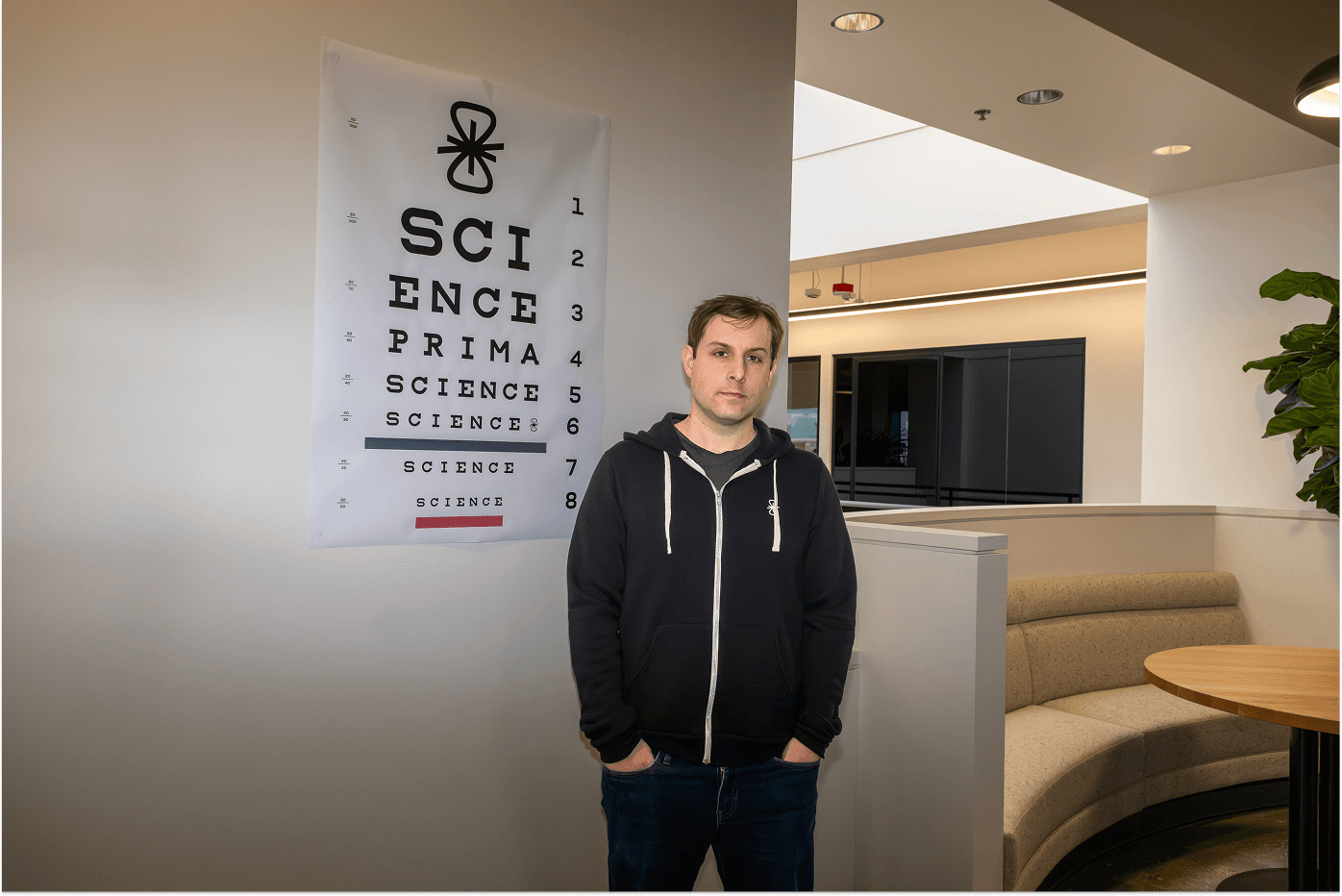

In a multi-story, secure, NDA-restricted facility on Alameda Island are the offices of the mysteriously-named Science Corporation. Max Hodak is the founder and CEO of Science and a self-described “general intelligence living in San Francisco.”
Hodak is one of a very small number of people seriously thinking about what is perhaps the largest unsolved problem in science: describing the nature, and the why, of subjective experience. Science traditionally seeks to describe the physical world — the world of atoms, protons, neutrons, and materials, and the conventional scientific method has proven enormously effective at doing so. But humans (at least, and possibly other animals) also have a rich subjective inner world, which we call “subjective experience,” or “consciousness.” When you close your eyes and picture a bright red apple, that apple “exists” somewhere (in that you could change your mind and picture an elephant instead), but it also does not “exist” in the physical world. So where is the apple, when you are imagining it? What is it made of? And why do humans (and almost certainly other animals too) have the capacity to have subjective experiences at all? Scientists have long dismissed the problem of consciousness as either impossible (i.e., too conceptually difficult to be worth trying to solve) or too “woo,” and not a serious research question. But as an eager engineer, Hodak is more optimistic than ever about understanding the physics of consciousness, and hence closer than ever to “engineering experience directly”: to reliably and precisely cause people to have particular experiences on command, like experiencing super-bliss or seeing certain colors without a traditional stimulus. His current vehicle, Science Corporation, a medical technologies company, is using cutting-edge neuroscience to cure diseases, enhance human experience, and create tools that explain consciousness. By building products that work directly with the brain, Hodak is chipping away at this problem of understanding subjective experience that scientists have long thought was intractable, or thousands of years away.
Hodak is of a school of thought that believes that even the most important scientific breakthroughs happen through trial and error, catalyzed by the pressure of market forces — like the rapid adoption of weight loss drug Ozempic, and the proliferation of artificially intelligent chatbots. Given that consciousness has long been thought of as an abstract problem, the general consensus was that the issue was going to be solved by academics, or philosophers, or theoretical physicists — people thinking in abstractions. But Hodak has reduced the problem of consciousness down to an electrical problem, applying electrical engineering to build biologically compatible products that integrate human experience with computers. And if Hodak succeeds in solving consciousness, then the Holy Grail of theoretical understanding will have been cracked not by a theorist, but by an engineer — a hacker, if you will.
Healing the Blind
“I’ve been interested in building brain-computer interfaces (BCIs) for essentially my entire life. Just watching The Matrix in fifth grade, paired with the realization that all of this” — Hodak gestures towards the room — “is brain activity. All of your vision, all of your perception is brain activity.” Born in Princeton, New Jersey, Hodak moved to Manhattan with his family when he was two years old; he had a fun childhood with encouraging parents, was active in sports, and went to boarding school. He describes watching The Matrix — a movie that depicts reality as being simulated — in middle school as a “very powerful experience.” The cinematic experience led him to believe in the possibility of a better world, easier to manage; if everything is simulated, then “the only thing that really matters is the brain — so if technology can act on the brain directly, then in a fundamental sense nothing else really matters.”

For Your Eyes Only.
Spies. Satellites. State secrets. Inside the technologies and intelligence contests shaping American power.
Subscribe + Issue 007
A biomedical engineer by training, Hodak states that his freshman year at Duke, he “talked his way” into the Nicolelis lab, “one of the best BCI labs in the world”; the lab typically did not allow undergraduates, but Hodak’s insistence earned him a spot. During college, and after graduating, Hodak founded companies involving data-driven performance modeling (MyFit) and cloud biology automation (Transcriptic). Hodak stepped down as CEO of Transcriptic in 2017. He co-founded Neuralink, a BCI company, with Elon Musk. Musk had mentioned to Sam Altman (who was then president of startup accelerator Y Combinator) that he was looking for someone “great” who would be “interested in the space.” Altman recommended his longtime acquaintance Hodak, who then became Neuralink president before leaving in early 2021. “It was the ultimate PhD — I learned a lot there,” Hodak tells me of his time at Neuralink.
Soon after, Hodak founded Science with a “massive” check from entrepreneur Jed McCaleb, as well as further financing from friends. Justin Kan, Science investor, co-founder of Twitch, and long time friend of Hodak, told me that “Max is a polymath, the smartest person I know. I invested in the company after the first ever presentation Max gave.”
Speaking about the limits of our “fragile earth bodies,” Hodak wants to use Science to dramatically transform the human condition through engineering. The first problem that Science has looked into as a testing ground for their theories about the brain and experience is blindness.
Science’s approach and mission-driven ethics have already yielded far better traction on the problem of blindness than any other research team that has tried before. Science hit its first major milestone in late 2025, when it restored functional central vision to clinical trial patients blinded by aging for the first time using a retinal implant called “PRIMA.” PRIMA — short for photovoltaic retina implant microarray — is a light-powered visual prosthesis with two components: an electrical implant and a pair of glasses. The implant, which is just two millimeters across (a quarter, for comparison, is 24 millimeters), is surgically placed underneath the retina, the innermost layer (and image sensor) of the eye. The implant itself is covered in pixels, which convert infrared light into signals that activate the retina. It is based on work originally conducted by Professor Daniel Palanker at Stanford University, a co-author of the paper. Once the implant is in place, patients can use glasses which are equipped with a camera facing outward and an infrared projector facing the eye, both of which communicate with the implant. The camera in the glasses captures visual information from the user’s environment; then, the infrared light projector activates select individual pixels on the retinal implant, which electrically stimulates the corresponding retinal region. This entire process encodes a visual signal for the eye to process, restoring sight for patients who use it. So far, 27 patients with age-related vision loss have been granted the ability to see again with PRIMA.
PRIMA is the first BCI to deliver meaningful vision restoration for blind patients. Per Science’s official press release, “It’s the first time that an attempt at vision restoration in these cases has achieved results — and in such a large number of patients.” Professor José-Alain Sahel, senior co-author of the PRIMA study published in The New England Journal of Medicine, described how some patients, previously unable to see, even progressed to reading entire pages of a book. This intervention demonstrates a key philosophy behind Science: that far from being magic, or inherently mysterious, subjective experience is created by physical matter in accordance with regular physical laws. The brain possesses an inherent ability to integrate and make sense of engineered signals; with the right tools, this ability can be leveraged to create experience anew.
A Corporation for Science
Hodak’s work at Science is a concerted effort to solve what he calls the binding problem: how distributed neural activity across space and time coheres into a single, unified moment of experience (i.e. a discrete instance of “your” consciousness, as distinct from “my” consciousness). The human brain has billions of neurons firing in different directions — some process color, others sound, others memory, and so on — yet we experience the world wholly, as a single unified experience with many sensory experiences “firing” at once, not as fragmented streams of data. While the binding problem is notoriously tricky to understand, let alone solve, its nature hints at good prospects for future neurotech. Because a single human “consciousness” is not localized to a single point, but emerges from many distributed streams of data, Hodak believes that a sufficiently integrated neurological device could become part of the same “bound” moment of awareness — creating new experiences that would be an indistinguishable part of “your” consciousness.
“Your brain is already two hemispheres connected by a big cable” — here Hodak is referencing the corpus callosum, a structure consisting of millions of nerve fibers that create a bridge between the two hemispheres of the brain and enable communication and coordination — but “you don’t experience two hemispheres, you experience one moment. Binding happens across that cable, and that cable is just electrical pulses.”
Hodak points to the case of twins Krista and Tatiana Hogan, who were born in 2006 with a shared skull, and who can reportedly see, feel, and taste the same experiences at once — the “stimulus” for each of their two experiences coming from the same sensory receptor (so that one sensory stimulus creates two “copies” of the same experience at once). The case of the Hogan twins, to Hodak, “really reduces [consciousness] to a classical electronic device,” and indicates that discrete conscious experiences (or “qualia,” in philosophical speak) might be something that can be transmitted through biological wiring, like how an electrical signal moves through a circuit.
Owing to his love for The Matrix and his explanations for consciousness, I ask Hodak if he thinks we live in a simulation, an electrically powered constructed reality. “I think we are probably not right now, but we should definitely build one. That’s a motivating source for me. When I think about ‘why build the Matrix?’ bits are just much easier than atoms. It’s really difficult to build anything [in the physical world]. If you have to actually put up a building versus building a game engine, one of these can be done in a couple hours, the other can be done in a couple of years, and cost many hundreds of thousands of dollars, and require enormous teams.” Hodak argues that resources in the physical universe are limited, whereas virtual worlds escape those limits and allow creative builders to create environments which favor defenders.
Science Corporation deals in both atoms and bits. Its Science Foundry, located in North Carolina, serves as the company’s dedicated fabrication hub. Acquired from MEMSCAP, an industry leader in micro-electrical-mechanical systems (or “MEMS,” which are tiny devices that integrate mechanical components, sensors, and electronics on a silicon chip) in late 2022, the Foundry was expanded in 2024 with plans for over fifty new local jobs and up to $65 million in investment. The Foundry produces custom chips, probes, and headstages which are commercially available, giving Science’s researchers and partners ready-to-use hardware of their choice for their own biotech experiments. This vertically integrated approach enables Science to scale its therapies like PRIMA faster than waiting for fragmented players to finish their products while also granting them significant influence in the neurotech ecosystem.
By owning both the hardware and the research ecosystem, Science seeks to accelerate radical therapies and platform innovations that would otherwise never be built. “Nobody has gone from an idea to a brain implant in less than a 100 million dollars. Venture math doesn’t work so it doesn’t get built,” states Hodak. “We are still in very early days; we are in season one [of neurotech].” Hodak views building the tools researchers need to fill in the blanks of neuroscience as a mission to advance our understanding of the brain. “To make season three products, there’s basic neuroscience that is missing and still not understood.”
Biohybrids
Another Hodak big-picture bet being made through Science is the Biohybrid: a group of genetically modified neurons derived from stem cells, placed on a scaffold that interfaces with the brain. Ultimately, the vision is to restore cognitive functions to people with brain damage from stroke or injury. Hodak dreams even bigger: augmenting human reasoning by adding new “patches of cortex… pre-trained to have some reasoning capability,” enhancing decision-making quality rather than speed.
The Biohybrid device is implanted neuron-side down; the system then creates connections to the brain by letting living neurons grow biological “wires” (axons and dendrites) between existing neural tissue and modified tissue. The goal of the Biohybrid is to create a way for BCIs to scale to millions of neural connections without the damage caused by traditional metal electrodes or threads. Early results are promising. In tests on mice, Science demonstrated that the device could use light to activate the implanted neurons, training the animals to choose the correct answer — such as moving left or right —to receive a reward.
This is where the project departs from a simple artificial intelligence-adjacent narrative that BCIs will make us humans more machine-like, and becomes, in Hodak’s words, “a longevity adjacent story.”
“One of the really big holy grails here is, the brain does two things: It’s intelligent and it’s conscious… The end of the artificial intelligence quest is to develop superintelligent machines.” But unlike pure AI research, which may succeed in re-creating advanced intelligence via silicon without simultaneously creating novel conscious experiences, BCIs aim to interface with the human mind in a way that preserves, and potentially expands, valuable subjective experience. As Hodak notes, it is “not clear to what degree LLMs are conscious or what their experience is like inside.” He invokes the AMC+ show Pantheon, which explores the concept of digitized intelligence that is uploaded to the cloud, to explain the risk: uploading or replacing human minds with machine analogues might optimize intelligence while quietly extinguishing consciousness — with no reliable way to verify what, if anything, is still being experienced.
The Biohybrid also represents another of Hodak’s guiding design principles: leaving the human brain alone. If a gene therapy delivered directly into the brain goes wrong, he explains, “those cells could die or you could get huge immune reactions,” potentially resulting in the irreversible loss of native neurons “in a lot of places.” The Biohybrid, by contrast, is designed so that if it ever fails, it fails gracefully: “With the Biohybrid graft cells, hopefully the worst thing that can happen is that the graft cells die, in which case the patient is in the same state they were before.”
Hodak is clear that this isn’t an ideological rejection of gene therapy — the Biohybrid itself consists of genetically modified light-sensitive proteins. The constraints are practical, not philosophical: immunogenicity, limited payload capacity, uneven brain coverage, and permanence. Once neurons are altered, “that’s like a once in a lifetime thing. The DNA has been inserted [and is] never coming out.” Ultimately, “not genetically modifying your original neuron seems like a good thing to be able to say.”
Looking Ahead
I now ask Hodak if Science will remain restricted to just neurotech and BCIs, “Science is a medical technology company. To the degree we are a neurotech company, it’s because you get huge effect sizes from engineering and dealing with the brain directly than you’re used to seeing with other medicine.” This is where Hodak’s entire philosophy, including his understanding of consciousness, fits together: a “neural engineering mindset, as opposed to a drug discovery mindset.” “It” — an engineering mindset as compared to more theoretical science — “just appears to be empirically better and more powerful.” He brings up Sarah, a patient in a successful case study at nearby UCSF who suffered from treatment-resistant depression for years. She received an experimental deep-brain simulation implant — electrodes that deliver electrical currents directly to the brain. Her affect improved instantly upon activation.
The pattern held for blindness. For decades, drugs and laser therapies have been tried to restore vision, but none have really worked. Gene therapies like Luxturna, a one-time treatment priced at $850,000, offer limited benefits. With Science’s PRIMA, however, “the average patient went from reading no letters on the eye chart, to reading from the fifth line, and the best patients could read every letter on the chart,” notes Hodak. The company hopes PRIMA will hit the European market this summer. I ask about US regulatory bodies and the rigorous timelines and standards they impose on medical device manufacturers. “The people at FDA care a lot and work hard. It’s a necessarily conservative body.”
Over the course of his career, Hodak has grown increasingly confident in his ability — and the world’s — to solve consciousness. This confidence rests on a convergence: clearer conceptual framing and the fact that technology capable of finally probing these questions will soon exist. “There’s capital, there’s talent, there’s stuff happening in the BCI industry that makes me think that it is really possible to build devices that allow me to give you answers to these questions of consciousness.”
I also ask about other diseases and ailments Science aims to alleviate next, and Hodak has a number of ideas. “Cochlear implants are great, but it’s not something we’re working on right now. We are very interested in stroke medicine, Parkinson’s disease. And through our ecosystem partners” — other companies using Science electronics and processes — “there’s a couple of those deals that I think we’ll see a longer list of medical applications being built in our technology through our partners beyond what we do internally.”
The day after our interview, Science announced Vessel, a perfusion system designed to keep organs, and thus patients, alive far longer than current technologies allow. Hodak was left “radicalized” after reading about the story of a teenage boy on ECMO (extracorporeal membrane oxygenation, a form of life support that temporarily acts as the heart and lungs by circulating blood outside the body to oxygenate it) who was awaiting a lung transplant. ECMO is not a long term solution, but rather “tethers patients to the ICU and requires constant manual adjustments to the system,” according to Hodak, in addition to carrying risks of infection. While on ECMO, the young boy developed a complication that made him ineligible for the transplant. This led to the boy’s medical team ultimately judging his recovery to be futile, and so they stopped changing the oxygenator filter on the ECMO. The boy passed away a week later. Such a scenario is a common ethical dilemma in modern medicine.
“The question shouldn’t be whether we can afford to keep someone alive; it should be whether the technology allows us to,” Hodak says. Vessel, another addition to Science’s growing longevity arsenal, is modular and configurable for different organs: namely the lungs, the heart, and the kidneys.
Hodak’s engineering approach has thus far proven successful, and his philosophy seems to be a winning one. He has set himself a quest larger than life, and on the way to his ultimate treasure, there appear to be many bounties to be shared with everyone. In PRIMA, Science has achieved what many have been trying to do for decades, and if Science is a testing ground for Hodak’s winning philosophy, then keep testing!
Science
•
A Quest for Consciousness
Talking to Max Hodak of Science Corporation.
In a multi-story, secure, NDA-restricted facility on Alameda Island are the offices of the mysteriously-named Science Corporation. Max Hodak is the founder and CEO of Science and a self-described “general intelligence living in San Francisco.”
Hodak is one of a very small number of people seriously thinking about what is perhaps the largest unsolved problem in science: describing the nature, and the why, of subjective experience. Science traditionally seeks to describe the physical world — the world of atoms, protons, neutrons, and materials, and the conventional scientific method has proven enormously effective at doing so. But humans (at least, and possibly other animals) also have a rich subjective inner world, which we call “subjective experience,” or “consciousness.” When you close your eyes and picture a bright red apple, that apple “exists” somewhere (in that you could change your mind and picture an elephant instead), but it also does not “exist” in the physical world. So where is the apple, when you are imagining it? What is it made of? And why do humans (and almost certainly other animals too) have the capacity to have subjective experiences at all? Scientists have long dismissed the problem of consciousness as either impossible (i.e., too conceptually difficult to be worth trying to solve) or too “woo,” and not a serious research question. But as an eager engineer, Hodak is more optimistic than ever about understanding the physics of consciousness, and hence closer than ever to “engineering experience directly”: to reliably and precisely cause people to have particular experiences on command, like experiencing super-bliss or seeing certain colors without a traditional stimulus. His current vehicle, Science Corporation, a medical technologies company, is using cutting-edge neuroscience to cure diseases, enhance human experience, and create tools that explain consciousness. By building products that work directly with the brain, Hodak is chipping away at this problem of understanding subjective experience that scientists have long thought was intractable, or thousands of years away.
Hodak is of a school of thought that believes that even the most important scientific breakthroughs happen through trial and error, catalyzed by the pressure of market forces — like the rapid adoption of weight loss drug Ozempic, and the proliferation of artificially intelligent chatbots. Given that consciousness has long been thought of as an abstract problem, the general consensus was that the issue was going to be solved by academics, or philosophers, or theoretical physicists — people thinking in abstractions. But Hodak has reduced the problem of consciousness down to an electrical problem, applying electrical engineering to build biologically compatible products that integrate human experience with computers. And if Hodak succeeds in solving consciousness, then the Holy Grail of theoretical understanding will have been cracked not by a theorist, but by an engineer — a hacker, if you will.
Healing the Blind
“I’ve been interested in building brain-computer interfaces (BCIs) for essentially my entire life. Just watching The Matrix in fifth grade, paired with the realization that all of this” — Hodak gestures towards the room — “is brain activity. All of your vision, all of your perception is brain activity.” Born in Princeton, New Jersey, Hodak moved to Manhattan with his family when he was two years old; he had a fun childhood with encouraging parents, was active in sports, and went to boarding school. He describes watching The Matrix — a movie that depicts reality as being simulated — in middle school as a “very powerful experience.” The cinematic experience led him to believe in the possibility of a better world, easier to manage; if everything is simulated, then “the only thing that really matters is the brain — so if technology can act on the brain directly, then in a fundamental sense nothing else really matters.”
For Your Eyes Only.
Spies. Satellites. State secrets. Inside the technologies and intelligence contests shaping American power.
Subscribe + Issue 007
A biomedical engineer by training, Hodak states that his freshman year at Duke, he “talked his way” into the Nicolelis lab, “one of the best BCI labs in the world”; the lab typically did not allow undergraduates, but Hodak’s insistence earned him a spot. During college, and after graduating, Hodak founded companies involving data-driven performance modeling (MyFit) and cloud biology automation (Transcriptic). Hodak stepped down as CEO of Transcriptic in 2017. He co-founded Neuralink, a BCI company, with Elon Musk. Musk had mentioned to Sam Altman (who was then president of startup accelerator Y Combinator) that he was looking for someone “great” who would be “interested in the space.” Altman recommended his longtime acquaintance Hodak, who then became Neuralink president before leaving in early 2021. “It was the ultimate PhD — I learned a lot there,” Hodak tells me of his time at Neuralink.
Soon after, Hodak founded Science with a “massive” check from entrepreneur Jed McCaleb, as well as further financing from friends. Justin Kan, Science investor, co-founder of Twitch, and long time friend of Hodak, told me that “Max is a polymath, the smartest person I know. I invested in the company after the first ever presentation Max gave.”
Speaking about the limits of our “fragile earth bodies,” Hodak wants to use Science to dramatically transform the human condition through engineering. The first problem that Science has looked into as a testing ground for their theories about the brain and experience is blindness.
Science’s approach and mission-driven ethics have already yielded far better traction on the problem of blindness than any other research team that has tried before. Science hit its first major milestone in late 2025, when it restored functional central vision to clinical trial patients blinded by aging for the first time using a retinal implant called “PRIMA.” PRIMA — short for photovoltaic retina implant microarray — is a light-powered visual prosthesis with two components: an electrical implant and a pair of glasses. The implant, which is just two millimeters across (a quarter, for comparison, is 24 millimeters), is surgically placed underneath the retina, the innermost layer (and image sensor) of the eye. The implant itself is covered in pixels, which convert infrared light into signals that activate the retina. It is based on work originally conducted by Professor Daniel Palanker at Stanford University, a co-author of the paper. Once the implant is in place, patients can use glasses which are equipped with a camera facing outward and an infrared projector facing the eye, both of which communicate with the implant. The camera in the glasses captures visual information from the user’s environment; then, the infrared light projector activates select individual pixels on the retinal implant, which electrically stimulates the corresponding retinal region. This entire process encodes a visual signal for the eye to process, restoring sight for patients who use it. So far, 27 patients with age-related vision loss have been granted the ability to see again with PRIMA.
PRIMA is the first BCI to deliver meaningful vision restoration for blind patients. Per Science’s official press release, “It’s the first time that an attempt at vision restoration in these cases has achieved results — and in such a large number of patients.” Professor José-Alain Sahel, senior co-author of the PRIMA study published in The New England Journal of Medicine, described how some patients, previously unable to see, even progressed to reading entire pages of a book. This intervention demonstrates a key philosophy behind Science: that far from being magic, or inherently mysterious, subjective experience is created by physical matter in accordance with regular physical laws. The brain possesses an inherent ability to integrate and make sense of engineered signals; with the right tools, this ability can be leveraged to create experience anew.
A Corporation for Science
Hodak’s work at Science is a concerted effort to solve what he calls the binding problem: how distributed neural activity across space and time coheres into a single, unified moment of experience (i.e. a discrete instance of “your” consciousness, as distinct from “my” consciousness). The human brain has billions of neurons firing in different directions — some process color, others sound, others memory, and so on — yet we experience the world wholly, as a single unified experience with many sensory experiences “firing” at once, not as fragmented streams of data. While the binding problem is notoriously tricky to understand, let alone solve, its nature hints at good prospects for future neurotech. Because a single human “consciousness” is not localized to a single point, but emerges from many distributed streams of data, Hodak believes that a sufficiently integrated neurological device could become part of the same “bound” moment of awareness — creating new experiences that would be an indistinguishable part of “your” consciousness.
“Your brain is already two hemispheres connected by a big cable” — here Hodak is referencing the corpus callosum, a structure consisting of millions of nerve fibers that create a bridge between the two hemispheres of the brain and enable communication and coordination — but “you don’t experience two hemispheres, you experience one moment. Binding happens across that cable, and that cable is just electrical pulses.”
Hodak points to the case of twins Krista and Tatiana Hogan, who were born in 2006 with a shared skull, and who can reportedly see, feel, and taste the same experiences at once — the “stimulus” for each of their two experiences coming from the same sensory receptor (so that one sensory stimulus creates two “copies” of the same experience at once). The case of the Hogan twins, to Hodak, “really reduces [consciousness] to a classical electronic device,” and indicates that discrete conscious experiences (or “qualia,” in philosophical speak) might be something that can be transmitted through biological wiring, like how an electrical signal moves through a circuit.
Owing to his love for The Matrix and his explanations for consciousness, I ask Hodak if he thinks we live in a simulation, an electrically powered constructed reality. “I think we are probably not right now, but we should definitely build one. That’s a motivating source for me. When I think about ‘why build the Matrix?’ bits are just much easier than atoms. It’s really difficult to build anything [in the physical world]. If you have to actually put up a building versus building a game engine, one of these can be done in a couple hours, the other can be done in a couple of years, and cost many hundreds of thousands of dollars, and require enormous teams.” Hodak argues that resources in the physical universe are limited, whereas virtual worlds escape those limits and allow creative builders to create environments which favor defenders.
Science Corporation deals in both atoms and bits. Its Science Foundry, located in North Carolina, serves as the company’s dedicated fabrication hub. Acquired from MEMSCAP, an industry leader in micro-electrical-mechanical systems (or “MEMS,” which are tiny devices that integrate mechanical components, sensors, and electronics on a silicon chip) in late 2022, the Foundry was expanded in 2024 with plans for over fifty new local jobs and up to $65 million in investment. The Foundry produces custom chips, probes, and headstages which are commercially available, giving Science’s researchers and partners ready-to-use hardware of their choice for their own biotech experiments. This vertically integrated approach enables Science to scale its therapies like PRIMA faster than waiting for fragmented players to finish their products while also granting them significant influence in the neurotech ecosystem.
By owning both the hardware and the research ecosystem, Science seeks to accelerate radical therapies and platform innovations that would otherwise never be built. “Nobody has gone from an idea to a brain implant in less than a 100 million dollars. Venture math doesn’t work so it doesn’t get built,” states Hodak. “We are still in very early days; we are in season one [of neurotech].” Hodak views building the tools researchers need to fill in the blanks of neuroscience as a mission to advance our understanding of the brain. “To make season three products, there’s basic neuroscience that is missing and still not understood.”
Biohybrids
Another Hodak big-picture bet being made through Science is the Biohybrid: a group of genetically modified neurons derived from stem cells, placed on a scaffold that interfaces with the brain. Ultimately, the vision is to restore cognitive functions to people with brain damage from stroke or injury. Hodak dreams even bigger: augmenting human reasoning by adding new “patches of cortex… pre-trained to have some reasoning capability,” enhancing decision-making quality rather than speed.
The Biohybrid device is implanted neuron-side down; the system then creates connections to the brain by letting living neurons grow biological “wires” (axons and dendrites) between existing neural tissue and modified tissue. The goal of the Biohybrid is to create a way for BCIs to scale to millions of neural connections without the damage caused by traditional metal electrodes or threads. Early results are promising. In tests on mice, Science demonstrated that the device could use light to activate the implanted neurons, training the animals to choose the correct answer — such as moving left or right —to receive a reward.
This is where the project departs from a simple artificial intelligence-adjacent narrative that BCIs will make us humans more machine-like, and becomes, in Hodak’s words, “a longevity adjacent story.”
“One of the really big holy grails here is, the brain does two things: It’s intelligent and it’s conscious… The end of the artificial intelligence quest is to develop superintelligent machines.” But unlike pure AI research, which may succeed in re-creating advanced intelligence via silicon without simultaneously creating novel conscious experiences, BCIs aim to interface with the human mind in a way that preserves, and potentially expands, valuable subjective experience. As Hodak notes, it is “not clear to what degree LLMs are conscious or what their experience is like inside.” He invokes the AMC+ show Pantheon, which explores the concept of digitized intelligence that is uploaded to the cloud, to explain the risk: uploading or replacing human minds with machine analogues might optimize intelligence while quietly extinguishing consciousness — with no reliable way to verify what, if anything, is still being experienced.
The Biohybrid also represents another of Hodak’s guiding design principles: leaving the human brain alone. If a gene therapy delivered directly into the brain goes wrong, he explains, “those cells could die or you could get huge immune reactions,” potentially resulting in the irreversible loss of native neurons “in a lot of places.” The Biohybrid, by contrast, is designed so that if it ever fails, it fails gracefully: “With the Biohybrid graft cells, hopefully the worst thing that can happen is that the graft cells die, in which case the patient is in the same state they were before.”
Hodak is clear that this isn’t an ideological rejection of gene therapy — the Biohybrid itself consists of genetically modified light-sensitive proteins. The constraints are practical, not philosophical: immunogenicity, limited payload capacity, uneven brain coverage, and permanence. Once neurons are altered, “that’s like a once in a lifetime thing. The DNA has been inserted [and is] never coming out.” Ultimately, “not genetically modifying your original neuron seems like a good thing to be able to say.”
Looking Ahead
I now ask Hodak if Science will remain restricted to just neurotech and BCIs, “Science is a medical technology company. To the degree we are a neurotech company, it’s because you get huge effect sizes from engineering and dealing with the brain directly than you’re used to seeing with other medicine.” This is where Hodak’s entire philosophy, including his understanding of consciousness, fits together: a “neural engineering mindset, as opposed to a drug discovery mindset.” “It” — an engineering mindset as compared to more theoretical science — “just appears to be empirically better and more powerful.” He brings up Sarah, a patient in a successful case study at nearby UCSF who suffered from treatment-resistant depression for years. She received an experimental deep-brain simulation implant — electrodes that deliver electrical currents directly to the brain. Her affect improved instantly upon activation.
The pattern held for blindness. For decades, drugs and laser therapies have been tried to restore vision, but none have really worked. Gene therapies like Luxturna, a one-time treatment priced at $850,000, offer limited benefits. With Science’s PRIMA, however, “the average patient went from reading no letters on the eye chart, to reading from the fifth line, and the best patients could read every letter on the chart,” notes Hodak. The company hopes PRIMA will hit the European market this summer. I ask about US regulatory bodies and the rigorous timelines and standards they impose on medical device manufacturers. “The people at FDA care a lot and work hard. It’s a necessarily conservative body.”
Over the course of his career, Hodak has grown increasingly confident in his ability — and the world’s — to solve consciousness. This confidence rests on a convergence: clearer conceptual framing and the fact that technology capable of finally probing these questions will soon exist. “There’s capital, there’s talent, there’s stuff happening in the BCI industry that makes me think that it is really possible to build devices that allow me to give you answers to these questions of consciousness.”
I also ask about other diseases and ailments Science aims to alleviate next, and Hodak has a number of ideas. “Cochlear implants are great, but it’s not something we’re working on right now. We are very interested in stroke medicine, Parkinson’s disease. And through our ecosystem partners” — other companies using Science electronics and processes — “there’s a couple of those deals that I think we’ll see a longer list of medical applications being built in our technology through our partners beyond what we do internally.”
The day after our interview, Science announced Vessel, a perfusion system designed to keep organs, and thus patients, alive far longer than current technologies allow. Hodak was left “radicalized” after reading about the story of a teenage boy on ECMO (extracorporeal membrane oxygenation, a form of life support that temporarily acts as the heart and lungs by circulating blood outside the body to oxygenate it) who was awaiting a lung transplant. ECMO is not a long term solution, but rather “tethers patients to the ICU and requires constant manual adjustments to the system,” according to Hodak, in addition to carrying risks of infection. While on ECMO, the young boy developed a complication that made him ineligible for the transplant. This led to the boy’s medical team ultimately judging his recovery to be futile, and so they stopped changing the oxygenator filter on the ECMO. The boy passed away a week later. Such a scenario is a common ethical dilemma in modern medicine.
“The question shouldn’t be whether we can afford to keep someone alive; it should be whether the technology allows us to,” Hodak says. Vessel, another addition to Science’s growing longevity arsenal, is modular and configurable for different organs: namely the lungs, the heart, and the kidneys.
Hodak’s engineering approach has thus far proven successful, and his philosophy seems to be a winning one. He has set himself a quest larger than life, and on the way to his ultimate treasure, there appear to be many bounties to be shared with everyone. In PRIMA, Science has achieved what many have been trying to do for decades, and if Science is a testing ground for Hodak’s winning philosophy, then keep testing!
Science
•
A Quest for Consciousness
Talking to Max Hodak of Science Corporation.
In a multi-story, secure, NDA-restricted facility on Alameda Island are the offices of the mysteriously-named Science Corporation. Max Hodak is the founder and CEO of Science and a self-described “general intelligence living in San Francisco.”
Hodak is one of a very small number of people seriously thinking about what is perhaps the largest unsolved problem in science: describing the nature, and the why, of subjective experience. Science traditionally seeks to describe the physical world — the world of atoms, protons, neutrons, and materials, and the conventional scientific method has proven enormously effective at doing so. But humans (at least, and possibly other animals) also have a rich subjective inner world, which we call “subjective experience,” or “consciousness.” When you close your eyes and picture a bright red apple, that apple “exists” somewhere (in that you could change your mind and picture an elephant instead), but it also does not “exist” in the physical world. So where is the apple, when you are imagining it? What is it made of? And why do humans (and almost certainly other animals too) have the capacity to have subjective experiences at all? Scientists have long dismissed the problem of consciousness as either impossible (i.e., too conceptually difficult to be worth trying to solve) or too “woo,” and not a serious research question. But as an eager engineer, Hodak is more optimistic than ever about understanding the physics of consciousness, and hence closer than ever to “engineering experience directly”: to reliably and precisely cause people to have particular experiences on command, like experiencing super-bliss or seeing certain colors without a traditional stimulus. His current vehicle, Science Corporation, a medical technologies company, is using cutting-edge neuroscience to cure diseases, enhance human experience, and create tools that explain consciousness. By building products that work directly with the brain, Hodak is chipping away at this problem of understanding subjective experience that scientists have long thought was intractable, or thousands of years away.
Hodak is of a school of thought that believes that even the most important scientific breakthroughs happen through trial and error, catalyzed by the pressure of market forces — like the rapid adoption of weight loss drug Ozempic, and the proliferation of artificially intelligent chatbots. Given that consciousness has long been thought of as an abstract problem, the general consensus was that the issue was going to be solved by academics, or philosophers, or theoretical physicists — people thinking in abstractions. But Hodak has reduced the problem of consciousness down to an electrical problem, applying electrical engineering to build biologically compatible products that integrate human experience with computers. And if Hodak succeeds in solving consciousness, then the Holy Grail of theoretical understanding will have been cracked not by a theorist, but by an engineer — a hacker, if you will.
Healing the Blind
“I’ve been interested in building brain-computer interfaces (BCIs) for essentially my entire life. Just watching The Matrix in fifth grade, paired with the realization that all of this” — Hodak gestures towards the room — “is brain activity. All of your vision, all of your perception is brain activity.” Born in Princeton, New Jersey, Hodak moved to Manhattan with his family when he was two years old; he had a fun childhood with encouraging parents, was active in sports, and went to boarding school. He describes watching The Matrix — a movie that depicts reality as being simulated — in middle school as a “very powerful experience.” The cinematic experience led him to believe in the possibility of a better world, easier to manage; if everything is simulated, then “the only thing that really matters is the brain — so if technology can act on the brain directly, then in a fundamental sense nothing else really matters.”
For Your Eyes Only.
Spies. Satellites. State secrets. Inside the technologies and intelligence contests shaping American power.
Subscribe + Issue 007
A biomedical engineer by training, Hodak states that his freshman year at Duke, he “talked his way” into the Nicolelis lab, “one of the best BCI labs in the world”; the lab typically did not allow undergraduates, but Hodak’s insistence earned him a spot. During college, and after graduating, Hodak founded companies involving data-driven performance modeling (MyFit) and cloud biology automation (Transcriptic). Hodak stepped down as CEO of Transcriptic in 2017. He co-founded Neuralink, a BCI company, with Elon Musk. Musk had mentioned to Sam Altman (who was then president of startup accelerator Y Combinator) that he was looking for someone “great” who would be “interested in the space.” Altman recommended his longtime acquaintance Hodak, who then became Neuralink president before leaving in early 2021. “It was the ultimate PhD — I learned a lot there,” Hodak tells me of his time at Neuralink.
Soon after, Hodak founded Science with a “massive” check from entrepreneur Jed McCaleb, as well as further financing from friends. Justin Kan, Science investor, co-founder of Twitch, and long time friend of Hodak, told me that “Max is a polymath, the smartest person I know. I invested in the company after the first ever presentation Max gave.”
Speaking about the limits of our “fragile earth bodies,” Hodak wants to use Science to dramatically transform the human condition through engineering. The first problem that Science has looked into as a testing ground for their theories about the brain and experience is blindness.
Science’s approach and mission-driven ethics have already yielded far better traction on the problem of blindness than any other research team that has tried before. Science hit its first major milestone in late 2025, when it restored functional central vision to clinical trial patients blinded by aging for the first time using a retinal implant called “PRIMA.” PRIMA — short for photovoltaic retina implant microarray — is a light-powered visual prosthesis with two components: an electrical implant and a pair of glasses. The implant, which is just two millimeters across (a quarter, for comparison, is 24 millimeters), is surgically placed underneath the retina, the innermost layer (and image sensor) of the eye. The implant itself is covered in pixels, which convert infrared light into signals that activate the retina. It is based on work originally conducted by Professor Daniel Palanker at Stanford University, a co-author of the paper. Once the implant is in place, patients can use glasses which are equipped with a camera facing outward and an infrared projector facing the eye, both of which communicate with the implant. The camera in the glasses captures visual information from the user’s environment; then, the infrared light projector activates select individual pixels on the retinal implant, which electrically stimulates the corresponding retinal region. This entire process encodes a visual signal for the eye to process, restoring sight for patients who use it. So far, 27 patients with age-related vision loss have been granted the ability to see again with PRIMA.
PRIMA is the first BCI to deliver meaningful vision restoration for blind patients. Per Science’s official press release, “It’s the first time that an attempt at vision restoration in these cases has achieved results — and in such a large number of patients.” Professor José-Alain Sahel, senior co-author of the PRIMA study published in The New England Journal of Medicine, described how some patients, previously unable to see, even progressed to reading entire pages of a book. This intervention demonstrates a key philosophy behind Science: that far from being magic, or inherently mysterious, subjective experience is created by physical matter in accordance with regular physical laws. The brain possesses an inherent ability to integrate and make sense of engineered signals; with the right tools, this ability can be leveraged to create experience anew.
A Corporation for Science
Hodak’s work at Science is a concerted effort to solve what he calls the binding problem: how distributed neural activity across space and time coheres into a single, unified moment of experience (i.e. a discrete instance of “your” consciousness, as distinct from “my” consciousness). The human brain has billions of neurons firing in different directions — some process color, others sound, others memory, and so on — yet we experience the world wholly, as a single unified experience with many sensory experiences “firing” at once, not as fragmented streams of data. While the binding problem is notoriously tricky to understand, let alone solve, its nature hints at good prospects for future neurotech. Because a single human “consciousness” is not localized to a single point, but emerges from many distributed streams of data, Hodak believes that a sufficiently integrated neurological device could become part of the same “bound” moment of awareness — creating new experiences that would be an indistinguishable part of “your” consciousness.
“Your brain is already two hemispheres connected by a big cable” — here Hodak is referencing the corpus callosum, a structure consisting of millions of nerve fibers that create a bridge between the two hemispheres of the brain and enable communication and coordination — but “you don’t experience two hemispheres, you experience one moment. Binding happens across that cable, and that cable is just electrical pulses.”
Hodak points to the case of twins Krista and Tatiana Hogan, who were born in 2006 with a shared skull, and who can reportedly see, feel, and taste the same experiences at once — the “stimulus” for each of their two experiences coming from the same sensory receptor (so that one sensory stimulus creates two “copies” of the same experience at once). The case of the Hogan twins, to Hodak, “really reduces [consciousness] to a classical electronic device,” and indicates that discrete conscious experiences (or “qualia,” in philosophical speak) might be something that can be transmitted through biological wiring, like how an electrical signal moves through a circuit.
Owing to his love for The Matrix and his explanations for consciousness, I ask Hodak if he thinks we live in a simulation, an electrically powered constructed reality. “I think we are probably not right now, but we should definitely build one. That’s a motivating source for me. When I think about ‘why build the Matrix?’ bits are just much easier than atoms. It’s really difficult to build anything [in the physical world]. If you have to actually put up a building versus building a game engine, one of these can be done in a couple hours, the other can be done in a couple of years, and cost many hundreds of thousands of dollars, and require enormous teams.” Hodak argues that resources in the physical universe are limited, whereas virtual worlds escape those limits and allow creative builders to create environments which favor defenders.
Science Corporation deals in both atoms and bits. Its Science Foundry, located in North Carolina, serves as the company’s dedicated fabrication hub. Acquired from MEMSCAP, an industry leader in micro-electrical-mechanical systems (or “MEMS,” which are tiny devices that integrate mechanical components, sensors, and electronics on a silicon chip) in late 2022, the Foundry was expanded in 2024 with plans for over fifty new local jobs and up to $65 million in investment. The Foundry produces custom chips, probes, and headstages which are commercially available, giving Science’s researchers and partners ready-to-use hardware of their choice for their own biotech experiments. This vertically integrated approach enables Science to scale its therapies like PRIMA faster than waiting for fragmented players to finish their products while also granting them significant influence in the neurotech ecosystem.
By owning both the hardware and the research ecosystem, Science seeks to accelerate radical therapies and platform innovations that would otherwise never be built. “Nobody has gone from an idea to a brain implant in less than a 100 million dollars. Venture math doesn’t work so it doesn’t get built,” states Hodak. “We are still in very early days; we are in season one [of neurotech].” Hodak views building the tools researchers need to fill in the blanks of neuroscience as a mission to advance our understanding of the brain. “To make season three products, there’s basic neuroscience that is missing and still not understood.”
Biohybrids
Another Hodak big-picture bet being made through Science is the Biohybrid: a group of genetically modified neurons derived from stem cells, placed on a scaffold that interfaces with the brain. Ultimately, the vision is to restore cognitive functions to people with brain damage from stroke or injury. Hodak dreams even bigger: augmenting human reasoning by adding new “patches of cortex… pre-trained to have some reasoning capability,” enhancing decision-making quality rather than speed.
The Biohybrid device is implanted neuron-side down; the system then creates connections to the brain by letting living neurons grow biological “wires” (axons and dendrites) between existing neural tissue and modified tissue. The goal of the Biohybrid is to create a way for BCIs to scale to millions of neural connections without the damage caused by traditional metal electrodes or threads. Early results are promising. In tests on mice, Science demonstrated that the device could use light to activate the implanted neurons, training the animals to choose the correct answer — such as moving left or right —to receive a reward.
This is where the project departs from a simple artificial intelligence-adjacent narrative that BCIs will make us humans more machine-like, and becomes, in Hodak’s words, “a longevity adjacent story.”
“One of the really big holy grails here is, the brain does two things: It’s intelligent and it’s conscious… The end of the artificial intelligence quest is to develop superintelligent machines.” But unlike pure AI research, which may succeed in re-creating advanced intelligence via silicon without simultaneously creating novel conscious experiences, BCIs aim to interface with the human mind in a way that preserves, and potentially expands, valuable subjective experience. As Hodak notes, it is “not clear to what degree LLMs are conscious or what their experience is like inside.” He invokes the AMC+ show Pantheon, which explores the concept of digitized intelligence that is uploaded to the cloud, to explain the risk: uploading or replacing human minds with machine analogues might optimize intelligence while quietly extinguishing consciousness — with no reliable way to verify what, if anything, is still being experienced.
The Biohybrid also represents another of Hodak’s guiding design principles: leaving the human brain alone. If a gene therapy delivered directly into the brain goes wrong, he explains, “those cells could die or you could get huge immune reactions,” potentially resulting in the irreversible loss of native neurons “in a lot of places.” The Biohybrid, by contrast, is designed so that if it ever fails, it fails gracefully: “With the Biohybrid graft cells, hopefully the worst thing that can happen is that the graft cells die, in which case the patient is in the same state they were before.”
Hodak is clear that this isn’t an ideological rejection of gene therapy — the Biohybrid itself consists of genetically modified light-sensitive proteins. The constraints are practical, not philosophical: immunogenicity, limited payload capacity, uneven brain coverage, and permanence. Once neurons are altered, “that’s like a once in a lifetime thing. The DNA has been inserted [and is] never coming out.” Ultimately, “not genetically modifying your original neuron seems like a good thing to be able to say.”
Looking Ahead
I now ask Hodak if Science will remain restricted to just neurotech and BCIs, “Science is a medical technology company. To the degree we are a neurotech company, it’s because you get huge effect sizes from engineering and dealing with the brain directly than you’re used to seeing with other medicine.” This is where Hodak’s entire philosophy, including his understanding of consciousness, fits together: a “neural engineering mindset, as opposed to a drug discovery mindset.” “It” — an engineering mindset as compared to more theoretical science — “just appears to be empirically better and more powerful.” He brings up Sarah, a patient in a successful case study at nearby UCSF who suffered from treatment-resistant depression for years. She received an experimental deep-brain simulation implant — electrodes that deliver electrical currents directly to the brain. Her affect improved instantly upon activation.
The pattern held for blindness. For decades, drugs and laser therapies have been tried to restore vision, but none have really worked. Gene therapies like Luxturna, a one-time treatment priced at $850,000, offer limited benefits. With Science’s PRIMA, however, “the average patient went from reading no letters on the eye chart, to reading from the fifth line, and the best patients could read every letter on the chart,” notes Hodak. The company hopes PRIMA will hit the European market this summer. I ask about US regulatory bodies and the rigorous timelines and standards they impose on medical device manufacturers. “The people at FDA care a lot and work hard. It’s a necessarily conservative body.”
Over the course of his career, Hodak has grown increasingly confident in his ability — and the world’s — to solve consciousness. This confidence rests on a convergence: clearer conceptual framing and the fact that technology capable of finally probing these questions will soon exist. “There’s capital, there’s talent, there’s stuff happening in the BCI industry that makes me think that it is really possible to build devices that allow me to give you answers to these questions of consciousness.”
I also ask about other diseases and ailments Science aims to alleviate next, and Hodak has a number of ideas. “Cochlear implants are great, but it’s not something we’re working on right now. We are very interested in stroke medicine, Parkinson’s disease. And through our ecosystem partners” — other companies using Science electronics and processes — “there’s a couple of those deals that I think we’ll see a longer list of medical applications being built in our technology through our partners beyond what we do internally.”
The day after our interview, Science announced Vessel, a perfusion system designed to keep organs, and thus patients, alive far longer than current technologies allow. Hodak was left “radicalized” after reading about the story of a teenage boy on ECMO (extracorporeal membrane oxygenation, a form of life support that temporarily acts as the heart and lungs by circulating blood outside the body to oxygenate it) who was awaiting a lung transplant. ECMO is not a long term solution, but rather “tethers patients to the ICU and requires constant manual adjustments to the system,” according to Hodak, in addition to carrying risks of infection. While on ECMO, the young boy developed a complication that made him ineligible for the transplant. This led to the boy’s medical team ultimately judging his recovery to be futile, and so they stopped changing the oxygenator filter on the ECMO. The boy passed away a week later. Such a scenario is a common ethical dilemma in modern medicine.
“The question shouldn’t be whether we can afford to keep someone alive; it should be whether the technology allows us to,” Hodak says. Vessel, another addition to Science’s growing longevity arsenal, is modular and configurable for different organs: namely the lungs, the heart, and the kidneys.
Hodak’s engineering approach has thus far proven successful, and his philosophy seems to be a winning one. He has set himself a quest larger than life, and on the way to his ultimate treasure, there appear to be many bounties to be shared with everyone. In PRIMA, Science has achieved what many have been trying to do for decades, and if Science is a testing ground for Hodak’s winning philosophy, then keep testing!
About the Author
Zaitoon Zafar is a junior editor at Arena Magazine. She can be found on X at: @zaitoonx.