tt
tt
tt
tt
tt
tt
Technology
•
The Rise and Fall of Finland’s Techno Empire
How the small Nordic nation built a consumer tech behemoth, then lost the OS race, and what came next.
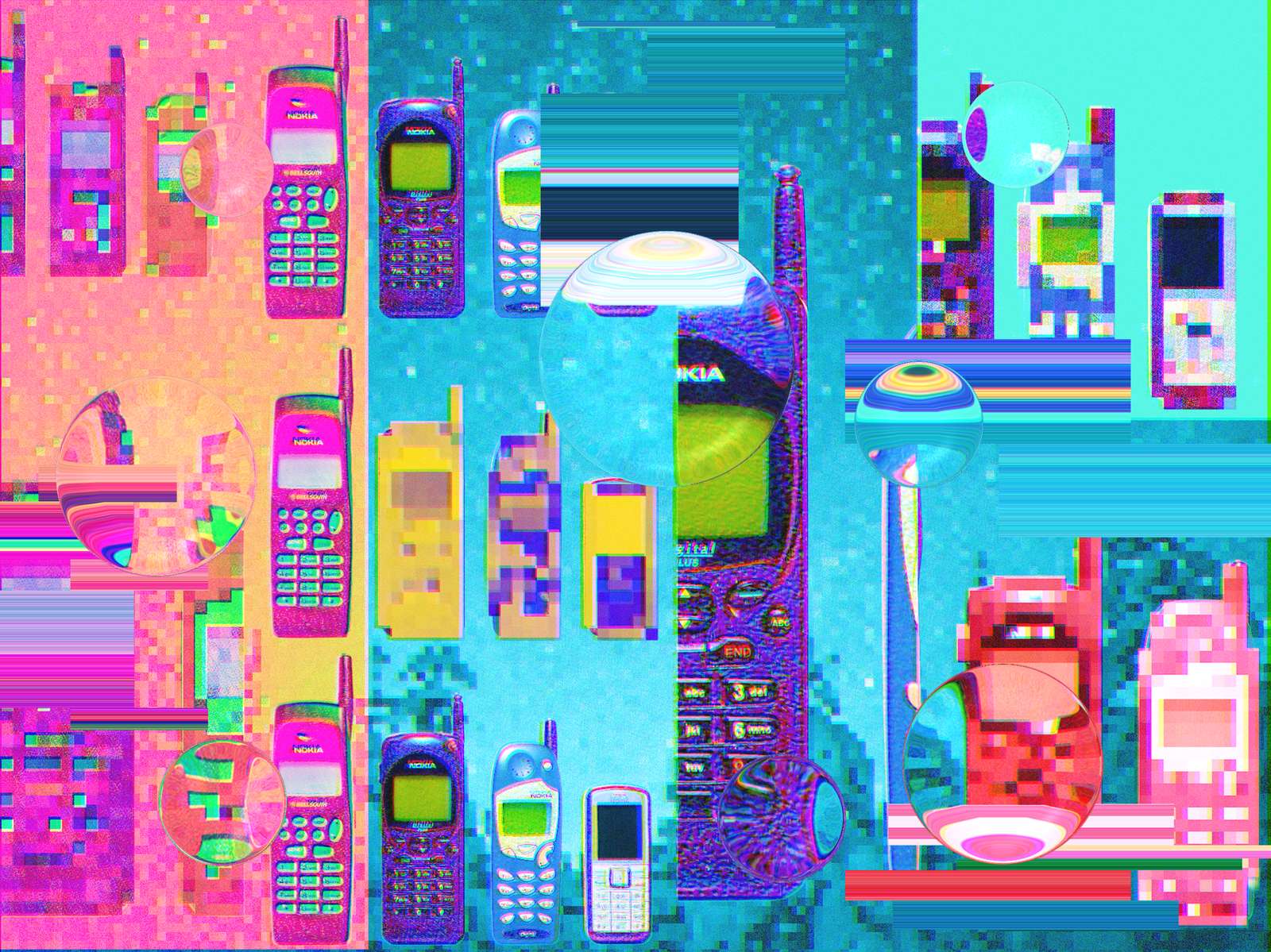

The name Nokia comes from an ancient manor house sitting at the confluence of two rivers near the city of Tampere in western Finland — a history that, according to legend, stretches back to 1270. A village sprouted there in the 19th century; in 1865, the entrepreneur Fredrik Idestam, returning from a long trip abroad where he had discovered new German methods of producing paper from wood pulp, established a paper factory on the site. Nokia was reorganized as the shared company Nokia Ab in 1871, when Finland was still a Grand Duchy of the Russian Empire. The paper mills that proliferated across Finland in that era became the basis of the entire national economy for generations. In 1967, after a merger, the Nokia Corporation was formally incorporated and structured as a single entity. By the end of the 20th century, it was one of the world’s most valuable companies at over $250 billion, trailing just behind Walmart and Intel.
On July 1, 1991, Harri Holkeri, Finland’s former Prime Minister, and Kaarina Suonio, the deputy mayor of Tampere, made the world’s first GSM call on a prototype Nokia car phone. Nokia, at this point, had relinquished its paper business in favor of consumer electronics. GSM, the Global System for Mobile Communications, was the new European standard for digital cellular networks, and Nokia, having assisted in developing the standard throughout the 1980s, was at the forefront of the technology (retroactively known as 2G). The call lasted just over three minutes, and marked the dawn of the modern cell phone age, enabling digital phone calls and SMS messaging. The next year, Nokia launched the 1011, the first GSM cell phone product. By 1998, it was the world leader in the global cell phone market, and Nokia’s annual general meetings in Helsinki began to achieve a level of pomp and revelry nearly indistinguishable from the red-carpet highlights of Hollywood and the world’s great sporting events.
For 14 years — from ousting Motorola in 1998 to being overtaken by Samsung in 2012 — Nokia led the world in mobile phone sales. At a peak market cap of $250 billion during the 2000 dot-com bubble, it was Europe's most valuable company. The Nokia 1100, released in 2003 with over 250 million units sold, remains the best selling mobile phone in history. Neither Apple’s iPhone, nor Samsung, nor any other rival, has ever come close to Nokia’s peak market share.
Most Americans, at least those past a certain age, will remember the ubiquity of Nokia products. What happened to this brand, the pride of Finnish enterprise and perhaps the defining commercial contribution of a small, isolated, but determined nation?
Finland is an unforgiving place for much of the year. The Finnish summer, which emerges in mid-June, is all too brief. By late August the cold breeze returns, followed by the rain, the painfully short days, and the seemingly endless months of snow. The Finns, like most peoples who inhabit such foreboding climates, are resilient and clever. But that stoic resilience — something the Finns call sisu — fails to explain in full how an isolated country of just 5.5 million, whose native language is spoken nowhere else, which shares an 830-mile land border with Russia and conducts over 95 percent of its trade by sea (an island, practically) has managed to have such an outsized impact on the world.
The Nordic state has a long tradition of producing great composers, Jean Sibelius and Kaija Saariaho among them, architects, and soldiers. Among America's monuments to the Finnish architectural tradition is Eero Saarinen's distinctive Main Terminal at Dulles Airport. But for much of its history, Finland was a poor and desolate country, a place where northern Europe's great powers went to battle one another for primacy. For six centuries it was an impoverished backwater of the Swedish Empire, its southern coast colonized by Swedes who remain a significant linguistic minority there today. In 1808, after Napoleon and Tsar Alexander I conspired to force Sweden into their continental blockade of Britain, Russian forces occupied Finland and ultimately wrested it from Stockholm.
Finland became a Grand Duchy of the Tsar, and under this arrangement enjoyed a remarkable degree of autonomy by Russian standards, with its own central bank, even a customs border with the rest of the empire to the east. While Finns served at the highest levels of the Russian imperial court, Russians were forbidden from serving in Finland's administration or buying land without first obtaining Finnish citizenship. Under these conditions, Finland thrived during the Industrial Revolution and entered the 20th century as a modern nation with a high standard of living. Amidst the upheavals of 1917, when Russia was consumed by the Bolshevik revolution, Finland declared its independence from Petrograd. After emerging from a fratricidal civil war between the communists and the anti-Bolshevik “whites,” the Finnish constitution and its stable governance have persisted to this day.
That Finland survived the 20th century as a sovereign state is nothing short of remarkable. As Europe succumbed to political extremism during the 1930s, Finland resisted. But its geographic position between rival great powers made it particularly vulnerable. When Germany and the USSR conspired to divide Europe between themselves, they did so at Finland's expense: the Molotov-Ribbentrop Pact of August 1939 contained a secret provision giving Stalin a free hand in the Baltic region, including Finland.
In October 1939, after the invasion of Poland had concluded, a Finnish delegation was summoned to Moscow, where Stalin demanded that it cede territory around Leningrad and grant the USSR a military base at Hanko on the southern coast. Finland agreed to move the border but refused to cede the base. In November, Stalin’s army invaded. During the Winter War, the Finns defended valiantly for over 100 days against an army that would eventually exceed one million soldiers. Ultimately, they made peace under terms even worse than what had originally been proposed. Winston Churchill described the invasion as “a despicable crime against a noble people.”
The Finns were eager to reverse their fortunes. In 1941, coinciding with Hitler’s invasion of the USSR, Finland invaded its former territories in what became known as the Continuation War. Ultimately, this too ended in defeat, but one that preserved Finnish sovereignty against the odds. The armistice signed in Moscow in September 1944 was punishing. Finland ceded Viipuri, its second-largest city; the strategic Arctic port and nickel mines of Petsamo; and a Soviet naval base on the Porkkala peninsula near Helsinki. It also required huge war reparations to the USSR in the form of Finnish industrial goods. All told, the wars against the Soviet Union claimed 2.3 percent of the Finnish population.
Meanwhile, Nokia was manufacturing cables and rubber boots for the Finnish armed forces. For decades after the war, the company operated as a loosely organized industrial conglomerate. Under the terms of the Soviet armistice, Nokia supplied communications cables to the Soviet Union. In 1973, the company began producing radio phones for the Finnish military in the northern city of Oulu, and in 1979 it set up a mobile phone joint venture with the Finnish TV company Salora, Mobira, and headquartered it in the small southwestern city of Salo. Nokia held roughly 13 percent of the global mobile market in the 1980s. Its phones sold in America under the Tandy brand name, but in those early years, Motorola outcompeted it, commanding 22 percent of the modest global market to Nokia's 10 by 1990.
A triple merger with Finnish Rubber Works and Finnish Cable Works in 1967 had made Nokia into the unified corporate entity that has persisted to this day. But the insular nature of the postwar Finnish economy had prevented Nokia from becoming a global business, and severely restricted its access to capital. The Finnish economy had been tightly controlled since the Second World War, defined by currency controls, fixed exchange rates, and strict protectionism. At the beginning of the 1980s, capital controls were so strict that one needed special permission from the Bank of Finland to take 10,000 markkas — about $1,600 USD at the time — out of the country. In a very rare exception, Citibank had been permitted to operate a Finnish subsidiary that was limited to mediating foreign loans. In 1984, the Bank of Finland finally suspended its capital controls, and foreign investment began to flood into the small Nordic state.
It was from Citibank's Helsinki office that Nokia's charismatic, risk-tolerant, expansionist CEO Kari Kairamo recruited the 35-year-old Jorma Ollila in 1985, placing him in charge of the conglomerate's international finance. From that post, Ollila negotiated a significant investment from George Soros and listed Nokia on the London Stock Exchange. He had already formed a sharp assessment of the company from his banking days. “The company was too diverse,” he recalled in his memoir. With nine divisions producing everything from batteries to rubber boots and firearms, the lack of focus seemed to be Nokia's single greatest weakness. It was an early diagnosis that would ultimately define his long-term strategy to streamline the business as CEO, a role he took in 1992. Even before that, while head of finance in the early 1980s, he began implementing such changes. Drawing on his international banking contacts, Ollila began selling off the less efficient branches of the business, beginning with the most sacrosanct: the historic paper division. In 1989 he brokered its sale into a joint venture between James River of Richmond, Virginia, and Montedison of Milan, beginning Nokia's withdrawal from the paper business after 125 years.
In 1990 Ollila was placed in charge of mobile phones as Nokia’s business seemed increasingly endangered. The timing could hardly have been more difficult for embarking upon such a radical transformation. The early 1990s were brutal for Finland. Partly due to the collapse of the Soviet Union and its vast market, Finnish GDP shrank by more than 10 percent and the stock market lost half its value. Nokia itself came close to disappearing. Informal discussions began in March 1991 to prepare the company for sale to Ericsson, but the Swedish firm walked away because Nokia's consumer electronics division, especially its TV business, was losing too much money.
Instead, Ollila sat down with Olli-Pekka Kallasvuo, another ex-banker, soon to be Nokia’s CFO, and determined, on a piece of scrap paper, that the mobile phone and network businesses were the only areas of Nokia’s conglomerate worth holding on to. Their projections for the new mobile phone and networks strategy turned out to be a massive underestimation: By 2000, Nokia's revenue reached $31.1 billion, with profits of $5.9 billion. For years, Ollila carried in his wallet a newspaper clipping from 1995, a Financial Times column concluding that Nokia was doomed. By 2007, media narratives had shifted considerably. Forbes was running a cover story with the headline: “Nokia. One billion customers — can anyone catch the cell phone king?”
In the first quarter of 2007, Nokia sold nearly 92 million phones, about 36 percent of the entire global market and up from 34 percent the previous year. It was nearly double the share of its closest rival, the Schaumburg, Illinois-based Motorola, whose position was slipping. This momentum was due to products like the N95, a dual-slide smartphone with 8 million units sold that quarter. At a moment when the worldwide market itself was expanding 14 percent year over year, Nokia was capturing more than one of every three phones sold on Earth.
Even at the peak however, Ollila sensed Nokia’s vulnerability to competitors that were swiftly closing the gap in software. At the end of 2001, he realized the company had to become better at developing software for its phones, and that meant competing with Microsoft, which had no intention of letting Nokia dominate that domain. Nokia relied on Symbian, the undisputed leader of the first generation of mobile operating systems. Founded as a consortium in 1998 by Nokia, Ericsson, and Motorola, it was descended from the British firm Psion.
By the late aughts, Symbian was aging, with its software rooted in Psion's EPOC32 operating system that began its development in the late 1980s. As the years progressed, it spiraled further into development debt. Symbian^3, a major rewrite that was meant to ship in 2009, was pushed back to 2010. This delay proved costly. While Android continued to expand into the lower and middle ends of the cell phone market, Apple increasingly dominated the high end.
Nokia sold a range of phones at both ends of the market, ranging from the N8 ($549), to basic 1000-series feature phones ($30-$50). While Symbian still held 51 percent of the OS market in 2009, it had slipped ten points within a year. Meanwhile, app developers were no longer coding for Symbian due to its technically burdensome architecture. Compared to iOS and Android, with their simplified software development kits and unified app stores, Symbian was obsolete. By 2010, it was floundering: Apple's store already offered 300,000 apps and Android over 150,000, while Symbian featured just 28,000. As Risto Siilasmaa, Nokia's chairman during the turbulent years that followed the collapse of its cell phone business, put it in his memoir, Symbian "was no longer competitive in the market it had been designed for and could not be competitive in the market it was being forced into."
Nokia's intended escape hatch was MeeGo, a Linux-based operating system for the touch screen era. It was announced in February 2010, a merger of Nokia’s Maemo and Intel’s Moblin. MeeGo was designed to compete with iOS and Android at the high end of the market, while a companion system, Meltemi, a stripped-down “mini-MeeGo,” would target the low-cost phones that served Nokia's millions of customers in the developing world. At least on paper, it was a coherent two-tier strategy for the post-Symbian era.
In what proved to be a fatal setback, MeeGo never arrived. Its development lagged far behind competitors. Google, with its unified approach to development, shipped Android upgrades every six months. Meanwhile, Nokia's cycles ran at a corpulent 12 to 18 months. The Finns had numerous problems: Nokia's engineering culture was fragmented, its management structure bureaucratic, and its resources split between propping up Symbian and building its replacement. When the company's new leadership commissioned an internal review in late 2010, it was determined that MeeGo could not ship enough competitive devices quickly enough to halt Nokia's fall. It was too late.
As CEO, Olli-Pekka Kallasvuo had championed MeeGo and Symbian^3, pouring billions into their development. He would later reflect that Nokia’s success had “reduce[d] the appetite for risk-taking and innovation.” After Kallasvuo was fired in 2010 for failing to compete with the iPhone and Android products, Ollila, still chairman, set out to find his replacement. He began the search in Silicon Valley, where Apple COO Tim Cook and Sun Microsystems’ Scott McNealy were reportedly considered, but settled on a relatively unknown Microsoft executive. Stephen Elop, a Canadian software engineer who had led Microsoft's $19 billion Office business. Elop became Nokia's first non-Finnish, non-Nokia grown CEO in the company's nearly century and a half of existence. He was recruited for his software know-how and outsider's perspective.
With Symbian collapsing and MeeGo written off, Elop almost immediately began discussions about shifting Nokia to Microsoft's Windows Phone operating system, while also negotiating with Google over the adoption of Android. Accounts differ on why the Android talks collapsed in January 2011. Some sources allege Google was domineering and arrogant; others believe it offered far more concessions than Nokia's leadership later implied. Google's platform already had many manufacturers building on it, and it signaled that it did not need Nokia. Nokia, in turn, feared becoming just another Android maker competing with the likes of Samsung. Microsoft was far more eager to partner with the Finnish firm, and the two companies held complementary intellectual property. One disadvantage loomed: Windows Phone was available in only eight languages, while Nokia served millions of customers across the developing world.
Days before the announcement, Elop sent his notorious “burning platform” memo, describing an oil worker forced to choose between the flames of his burning rig and the freezing sea below. Nokia was the man; Windows Phone was the leap into the unknown — terrifying, but the only hope of survival. On February 11, 2011, at Nokia's investor day in London, Elop formally announced the pivot, joined onstage by his former boss, Microsoft CEO Steve Ballmer. The optics immediately fueled allegations that Elop was a Trojan horse sent to sabotage Nokia — a conspiracy theory that quietly persists in some Finnish circles. Shares dropped 12 percent on the news.
The decision relegated MeeGo to a footnote — and produced one of the great ironies of the saga. The single MeeGo device Nokia released, the Nokia N9 of mid-2011, was widely praised, prompting lasting speculation about what might have been. In contemporary media accounts, company insiders shared a much more despairing view. In 2011, an emotional Kai Oistamo, Nokia’s Chief Development Officer, told Bloomberg that "MeeGo had been the collective hope of the company," and that, "we'd come to the conclusion that the emperor had no clothes."
The Microsoft deal was signed on April 21. Within a month, the pivot had wiped out half a billion euros of R&D investment in Finland; thirteen factories and R&D units would close, and 18,000 employees lost their jobs. The first fruits of the partnership — the Lumia line — were well reviewed but far from profitable. As 2011 gave way to 2012, Symbian’s collapse continued, and by March Nokia's board was discussing killing the OS altogether. In April, Samsung unseated Nokia as the world's top handset maker. Nokia and Apple had roughly comparable market capitalizations in 2008; by April 2012, Apple’s exceeded Nokia's 60-fold.
Then, in June 2012, Microsoft blindsided Nokia and all its hardware partners by announcing the Surface tablet. In what seems a grave oversight, Nokia's agreement had not barred Microsoft from building competing hardware. The silence was seen as hostile, a perception reinforced by Microsoft’s similar failure to communicate an imminent binary break between Windows Phone 7.5 and Windows Phone 8, meaning that apps built for the old version would simply stop working until individually updated, a hassle for users at best and a major disincentive for app developers to build on the OS at worst. Nokia’s options were limited and none of them good. Realistically, it could either renegotiate the Microsoft partnership, or pivot to Android.
In early 2013, Microsoft approached Nokia about acquiring its handset business. Ballmer warned that the economics of Windows Phone no longer made sense for Microsoft. The alternatives were buying Nokia's smartphone division or acquiring Taiwan's HTC and converting it into a Windows Phone maker. During secret meetings in Iceland, the two companies sized each other up. Formal negotiations began in New York in April, but the first round ended in minutes when Microsoft offered a bottom valuation of €1-2 billion for the handset business. A second deal came together that summer with modified terms: the sale of Nokia's Devices & Services business, plus IP license, to Microsoft for €5.44 billion in cash. The terms were agreed on July 21, while the deal was announced September 3 and closed in April 2014.
Nokia’s collapse is painfully apparent when reviewing the numbers. It had earned an operating profit of €8 billion in 2007, the year of the iPhone’s release. In 2011 it reported a loss of €1.07 billion. Over Elop's tenure, the company’s value declined by an average of €18 million per day, weekends and holidays included. Elop ultimately stepped down in September 2013 to lead the devices unit transferring to Microsoft, and was considered a frontrunner to succeed Ballmer, a job that ultimately went to Satya Nadella in 2014. The board saw Nadella, who, at the time, led the company’s rapidly growing Cloud and Enterprise group, as better aligned with the future of the business than the hardware-coded Elop, whose time in Finland hadn’t quite demonstrated his managerial brilliance either.
The sale of Nokia's phone business marked the end of a golden era of Finnish history. The fall of its corporate champion, responsible for 70% of the market capitalization of the Helsinki stock exchange, 20% of Finland’s total exports, and 4% of the national GDP, was another blow to be absorbed, in the Finnish way, with stoicism. Nokia’s rise had proved the greatness and national competence of a small, young country that had been isolated and abused for much of its history, and the impact of the sale was as emotional as it was financial. Finland’s economy has not seen real growth in 15 years.
Despite the enormous setback the company has since come back from the brink and regained a great deal of its former prominence. As a Network Infrastructure provider, Nokia builds and maintains the physical and digital backbone of global telecom and internet systems, like base stations and optical line terminals. It remains one of Europe’s most strategic companies: in October 2025, Nvidia acquired a 2.9% stake in Nokia in order to integrate GPU acceleration into telecom networks. It is one of the critical players driving the development of 6G technology, which will combine terabit-per-second speeds and lower latency with distributed edge computing and AI-native network intelligence. Bolstered by its AI and cloud customers, Nokia saw a profit of $496.11 million in Q2 of 2026. While a casual observer might consider the Finnish giant a company of the past, it is continuing to have a significant impact on the future.
The options that were available to Nokia during the post-2007 decline of its cell phone business continue to be debated. Could Nokia have adopted Android? Should MeeGo have trudged ahead? While it is impossible to know which business decisions would have led to an entirely different outcome, it is clear that Nokia’s vast mobile phone business was ultimately undone by the company’s failure to embrace software. Without Nokia at the helm of the mobile phone industry, the center of gravity of consumer tech has shifted ever further away from Europe.
In 2012, shortly after resigning as Nokia’s chairman, Jorma Ollila told the Finnish broadcaster Yle that it was a failure to adapt in software that had doomed Finland’s mobile phone empire. “It mostly began with the weakness of our software platform capabilities and the fact that it was not a European strength. We identified this ten years ago,” Ollila said, “but we were not able to build it.” In his telling, the Finns, thriving on the success of their hardware, had not fully realized the urgency of their predicament until it was too late. What was needed was a radical break from convention that never materialized, or, as the former chairman and CEO put it himself, a “violent shake-up, that would have woken up the entire organization.”
Technology
•
The Rise and Fall of Finland’s Techno Empire
How the small Nordic nation built a consumer tech behemoth, then lost the OS race, and what came next.
The name Nokia comes from an ancient manor house sitting at the confluence of two rivers near the city of Tampere in western Finland — a history that, according to legend, stretches back to 1270. A village sprouted there in the 19th century; in 1865, the entrepreneur Fredrik Idestam, returning from a long trip abroad where he had discovered new German methods of producing paper from wood pulp, established a paper factory on the site. Nokia was reorganized as the shared company Nokia Ab in 1871, when Finland was still a Grand Duchy of the Russian Empire. The paper mills that proliferated across Finland in that era became the basis of the entire national economy for generations. In 1967, after a merger, the Nokia Corporation was formally incorporated and structured as a single entity. By the end of the 20th century, it was one of the world’s most valuable companies at over $250 billion, trailing just behind Walmart and Intel.
On July 1, 1991, Harri Holkeri, Finland’s former Prime Minister, and Kaarina Suonio, the deputy mayor of Tampere, made the world’s first GSM call on a prototype Nokia car phone. Nokia, at this point, had relinquished its paper business in favor of consumer electronics. GSM, the Global System for Mobile Communications, was the new European standard for digital cellular networks, and Nokia, having assisted in developing the standard throughout the 1980s, was at the forefront of the technology (retroactively known as 2G). The call lasted just over three minutes, and marked the dawn of the modern cell phone age, enabling digital phone calls and SMS messaging. The next year, Nokia launched the 1011, the first GSM cell phone product. By 1998, it was the world leader in the global cell phone market, and Nokia’s annual general meetings in Helsinki began to achieve a level of pomp and revelry nearly indistinguishable from the red-carpet highlights of Hollywood and the world’s great sporting events.
For 14 years — from ousting Motorola in 1998 to being overtaken by Samsung in 2012 — Nokia led the world in mobile phone sales. At a peak market cap of $250 billion during the 2000 dot-com bubble, it was Europe's most valuable company. The Nokia 1100, released in 2003 with over 250 million units sold, remains the best selling mobile phone in history. Neither Apple’s iPhone, nor Samsung, nor any other rival, has ever come close to Nokia’s peak market share.
Most Americans, at least those past a certain age, will remember the ubiquity of Nokia products. What happened to this brand, the pride of Finnish enterprise and perhaps the defining commercial contribution of a small, isolated, but determined nation?
Finland is an unforgiving place for much of the year. The Finnish summer, which emerges in mid-June, is all too brief. By late August the cold breeze returns, followed by the rain, the painfully short days, and the seemingly endless months of snow. The Finns, like most peoples who inhabit such foreboding climates, are resilient and clever. But that stoic resilience — something the Finns call sisu — fails to explain in full how an isolated country of just 5.5 million, whose native language is spoken nowhere else, which shares an 830-mile land border with Russia and conducts over 95 percent of its trade by sea (an island, practically) has managed to have such an outsized impact on the world.
The Nordic state has a long tradition of producing great composers, Jean Sibelius and Kaija Saariaho among them, architects, and soldiers. Among America's monuments to the Finnish architectural tradition is Eero Saarinen's distinctive Main Terminal at Dulles Airport. But for much of its history, Finland was a poor and desolate country, a place where northern Europe's great powers went to battle one another for primacy. For six centuries it was an impoverished backwater of the Swedish Empire, its southern coast colonized by Swedes who remain a significant linguistic minority there today. In 1808, after Napoleon and Tsar Alexander I conspired to force Sweden into their continental blockade of Britain, Russian forces occupied Finland and ultimately wrested it from Stockholm.
Finland became a Grand Duchy of the Tsar, and under this arrangement enjoyed a remarkable degree of autonomy by Russian standards, with its own central bank, even a customs border with the rest of the empire to the east. While Finns served at the highest levels of the Russian imperial court, Russians were forbidden from serving in Finland's administration or buying land without first obtaining Finnish citizenship. Under these conditions, Finland thrived during the Industrial Revolution and entered the 20th century as a modern nation with a high standard of living. Amidst the upheavals of 1917, when Russia was consumed by the Bolshevik revolution, Finland declared its independence from Petrograd. After emerging from a fratricidal civil war between the communists and the anti-Bolshevik “whites,” the Finnish constitution and its stable governance have persisted to this day.
That Finland survived the 20th century as a sovereign state is nothing short of remarkable. As Europe succumbed to political extremism during the 1930s, Finland resisted. But its geographic position between rival great powers made it particularly vulnerable. When Germany and the USSR conspired to divide Europe between themselves, they did so at Finland's expense: the Molotov-Ribbentrop Pact of August 1939 contained a secret provision giving Stalin a free hand in the Baltic region, including Finland.
In October 1939, after the invasion of Poland had concluded, a Finnish delegation was summoned to Moscow, where Stalin demanded that it cede territory around Leningrad and grant the USSR a military base at Hanko on the southern coast. Finland agreed to move the border but refused to cede the base. In November, Stalin’s army invaded. During the Winter War, the Finns defended valiantly for over 100 days against an army that would eventually exceed one million soldiers. Ultimately, they made peace under terms even worse than what had originally been proposed. Winston Churchill described the invasion as “a despicable crime against a noble people.”
The Finns were eager to reverse their fortunes. In 1941, coinciding with Hitler’s invasion of the USSR, Finland invaded its former territories in what became known as the Continuation War. Ultimately, this too ended in defeat, but one that preserved Finnish sovereignty against the odds. The armistice signed in Moscow in September 1944 was punishing. Finland ceded Viipuri, its second-largest city; the strategic Arctic port and nickel mines of Petsamo; and a Soviet naval base on the Porkkala peninsula near Helsinki. It also required huge war reparations to the USSR in the form of Finnish industrial goods. All told, the wars against the Soviet Union claimed 2.3 percent of the Finnish population.
Meanwhile, Nokia was manufacturing cables and rubber boots for the Finnish armed forces. For decades after the war, the company operated as a loosely organized industrial conglomerate. Under the terms of the Soviet armistice, Nokia supplied communications cables to the Soviet Union. In 1973, the company began producing radio phones for the Finnish military in the northern city of Oulu, and in 1979 it set up a mobile phone joint venture with the Finnish TV company Salora, Mobira, and headquartered it in the small southwestern city of Salo. Nokia held roughly 13 percent of the global mobile market in the 1980s. Its phones sold in America under the Tandy brand name, but in those early years, Motorola outcompeted it, commanding 22 percent of the modest global market to Nokia's 10 by 1990.
A triple merger with Finnish Rubber Works and Finnish Cable Works in 1967 had made Nokia into the unified corporate entity that has persisted to this day. But the insular nature of the postwar Finnish economy had prevented Nokia from becoming a global business, and severely restricted its access to capital. The Finnish economy had been tightly controlled since the Second World War, defined by currency controls, fixed exchange rates, and strict protectionism. At the beginning of the 1980s, capital controls were so strict that one needed special permission from the Bank of Finland to take 10,000 markkas — about $1,600 USD at the time — out of the country. In a very rare exception, Citibank had been permitted to operate a Finnish subsidiary that was limited to mediating foreign loans. In 1984, the Bank of Finland finally suspended its capital controls, and foreign investment began to flood into the small Nordic state.
It was from Citibank's Helsinki office that Nokia's charismatic, risk-tolerant, expansionist CEO Kari Kairamo recruited the 35-year-old Jorma Ollila in 1985, placing him in charge of the conglomerate's international finance. From that post, Ollila negotiated a significant investment from George Soros and listed Nokia on the London Stock Exchange. He had already formed a sharp assessment of the company from his banking days. “The company was too diverse,” he recalled in his memoir. With nine divisions producing everything from batteries to rubber boots and firearms, the lack of focus seemed to be Nokia's single greatest weakness. It was an early diagnosis that would ultimately define his long-term strategy to streamline the business as CEO, a role he took in 1992. Even before that, while head of finance in the early 1980s, he began implementing such changes. Drawing on his international banking contacts, Ollila began selling off the less efficient branches of the business, beginning with the most sacrosanct: the historic paper division. In 1989 he brokered its sale into a joint venture between James River of Richmond, Virginia, and Montedison of Milan, beginning Nokia's withdrawal from the paper business after 125 years.
In 1990 Ollila was placed in charge of mobile phones as Nokia’s business seemed increasingly endangered. The timing could hardly have been more difficult for embarking upon such a radical transformation. The early 1990s were brutal for Finland. Partly due to the collapse of the Soviet Union and its vast market, Finnish GDP shrank by more than 10 percent and the stock market lost half its value. Nokia itself came close to disappearing. Informal discussions began in March 1991 to prepare the company for sale to Ericsson, but the Swedish firm walked away because Nokia's consumer electronics division, especially its TV business, was losing too much money.
Instead, Ollila sat down with Olli-Pekka Kallasvuo, another ex-banker, soon to be Nokia’s CFO, and determined, on a piece of scrap paper, that the mobile phone and network businesses were the only areas of Nokia’s conglomerate worth holding on to. Their projections for the new mobile phone and networks strategy turned out to be a massive underestimation: By 2000, Nokia's revenue reached $31.1 billion, with profits of $5.9 billion. For years, Ollila carried in his wallet a newspaper clipping from 1995, a Financial Times column concluding that Nokia was doomed. By 2007, media narratives had shifted considerably. Forbes was running a cover story with the headline: “Nokia. One billion customers — can anyone catch the cell phone king?”
In the first quarter of 2007, Nokia sold nearly 92 million phones, about 36 percent of the entire global market and up from 34 percent the previous year. It was nearly double the share of its closest rival, the Schaumburg, Illinois-based Motorola, whose position was slipping. This momentum was due to products like the N95, a dual-slide smartphone with 8 million units sold that quarter. At a moment when the worldwide market itself was expanding 14 percent year over year, Nokia was capturing more than one of every three phones sold on Earth.
Even at the peak however, Ollila sensed Nokia’s vulnerability to competitors that were swiftly closing the gap in software. At the end of 2001, he realized the company had to become better at developing software for its phones, and that meant competing with Microsoft, which had no intention of letting Nokia dominate that domain. Nokia relied on Symbian, the undisputed leader of the first generation of mobile operating systems. Founded as a consortium in 1998 by Nokia, Ericsson, and Motorola, it was descended from the British firm Psion.
By the late aughts, Symbian was aging, with its software rooted in Psion's EPOC32 operating system that began its development in the late 1980s. As the years progressed, it spiraled further into development debt. Symbian^3, a major rewrite that was meant to ship in 2009, was pushed back to 2010. This delay proved costly. While Android continued to expand into the lower and middle ends of the cell phone market, Apple increasingly dominated the high end.
Nokia sold a range of phones at both ends of the market, ranging from the N8 ($549), to basic 1000-series feature phones ($30-$50). While Symbian still held 51 percent of the OS market in 2009, it had slipped ten points within a year. Meanwhile, app developers were no longer coding for Symbian due to its technically burdensome architecture. Compared to iOS and Android, with their simplified software development kits and unified app stores, Symbian was obsolete. By 2010, it was floundering: Apple's store already offered 300,000 apps and Android over 150,000, while Symbian featured just 28,000. As Risto Siilasmaa, Nokia's chairman during the turbulent years that followed the collapse of its cell phone business, put it in his memoir, Symbian "was no longer competitive in the market it had been designed for and could not be competitive in the market it was being forced into."
Nokia's intended escape hatch was MeeGo, a Linux-based operating system for the touch screen era. It was announced in February 2010, a merger of Nokia’s Maemo and Intel’s Moblin. MeeGo was designed to compete with iOS and Android at the high end of the market, while a companion system, Meltemi, a stripped-down “mini-MeeGo,” would target the low-cost phones that served Nokia's millions of customers in the developing world. At least on paper, it was a coherent two-tier strategy for the post-Symbian era.
In what proved to be a fatal setback, MeeGo never arrived. Its development lagged far behind competitors. Google, with its unified approach to development, shipped Android upgrades every six months. Meanwhile, Nokia's cycles ran at a corpulent 12 to 18 months. The Finns had numerous problems: Nokia's engineering culture was fragmented, its management structure bureaucratic, and its resources split between propping up Symbian and building its replacement. When the company's new leadership commissioned an internal review in late 2010, it was determined that MeeGo could not ship enough competitive devices quickly enough to halt Nokia's fall. It was too late.
As CEO, Olli-Pekka Kallasvuo had championed MeeGo and Symbian^3, pouring billions into their development. He would later reflect that Nokia’s success had “reduce[d] the appetite for risk-taking and innovation.” After Kallasvuo was fired in 2010 for failing to compete with the iPhone and Android products, Ollila, still chairman, set out to find his replacement. He began the search in Silicon Valley, where Apple COO Tim Cook and Sun Microsystems’ Scott McNealy were reportedly considered, but settled on a relatively unknown Microsoft executive. Stephen Elop, a Canadian software engineer who had led Microsoft's $19 billion Office business. Elop became Nokia's first non-Finnish, non-Nokia grown CEO in the company's nearly century and a half of existence. He was recruited for his software know-how and outsider's perspective.
With Symbian collapsing and MeeGo written off, Elop almost immediately began discussions about shifting Nokia to Microsoft's Windows Phone operating system, while also negotiating with Google over the adoption of Android. Accounts differ on why the Android talks collapsed in January 2011. Some sources allege Google was domineering and arrogant; others believe it offered far more concessions than Nokia's leadership later implied. Google's platform already had many manufacturers building on it, and it signaled that it did not need Nokia. Nokia, in turn, feared becoming just another Android maker competing with the likes of Samsung. Microsoft was far more eager to partner with the Finnish firm, and the two companies held complementary intellectual property. One disadvantage loomed: Windows Phone was available in only eight languages, while Nokia served millions of customers across the developing world.
Days before the announcement, Elop sent his notorious “burning platform” memo, describing an oil worker forced to choose between the flames of his burning rig and the freezing sea below. Nokia was the man; Windows Phone was the leap into the unknown — terrifying, but the only hope of survival. On February 11, 2011, at Nokia's investor day in London, Elop formally announced the pivot, joined onstage by his former boss, Microsoft CEO Steve Ballmer. The optics immediately fueled allegations that Elop was a Trojan horse sent to sabotage Nokia — a conspiracy theory that quietly persists in some Finnish circles. Shares dropped 12 percent on the news.
The decision relegated MeeGo to a footnote — and produced one of the great ironies of the saga. The single MeeGo device Nokia released, the Nokia N9 of mid-2011, was widely praised, prompting lasting speculation about what might have been. In contemporary media accounts, company insiders shared a much more despairing view. In 2011, an emotional Kai Oistamo, Nokia’s Chief Development Officer, told Bloomberg that "MeeGo had been the collective hope of the company," and that, "we'd come to the conclusion that the emperor had no clothes."
The Microsoft deal was signed on April 21. Within a month, the pivot had wiped out half a billion euros of R&D investment in Finland; thirteen factories and R&D units would close, and 18,000 employees lost their jobs. The first fruits of the partnership — the Lumia line — were well reviewed but far from profitable. As 2011 gave way to 2012, Symbian’s collapse continued, and by March Nokia's board was discussing killing the OS altogether. In April, Samsung unseated Nokia as the world's top handset maker. Nokia and Apple had roughly comparable market capitalizations in 2008; by April 2012, Apple’s exceeded Nokia's 60-fold.
Then, in June 2012, Microsoft blindsided Nokia and all its hardware partners by announcing the Surface tablet. In what seems a grave oversight, Nokia's agreement had not barred Microsoft from building competing hardware. The silence was seen as hostile, a perception reinforced by Microsoft’s similar failure to communicate an imminent binary break between Windows Phone 7.5 and Windows Phone 8, meaning that apps built for the old version would simply stop working until individually updated, a hassle for users at best and a major disincentive for app developers to build on the OS at worst. Nokia’s options were limited and none of them good. Realistically, it could either renegotiate the Microsoft partnership, or pivot to Android.
In early 2013, Microsoft approached Nokia about acquiring its handset business. Ballmer warned that the economics of Windows Phone no longer made sense for Microsoft. The alternatives were buying Nokia's smartphone division or acquiring Taiwan's HTC and converting it into a Windows Phone maker. During secret meetings in Iceland, the two companies sized each other up. Formal negotiations began in New York in April, but the first round ended in minutes when Microsoft offered a bottom valuation of €1-2 billion for the handset business. A second deal came together that summer with modified terms: the sale of Nokia's Devices & Services business, plus IP license, to Microsoft for €5.44 billion in cash. The terms were agreed on July 21, while the deal was announced September 3 and closed in April 2014.
Nokia’s collapse is painfully apparent when reviewing the numbers. It had earned an operating profit of €8 billion in 2007, the year of the iPhone’s release. In 2011 it reported a loss of €1.07 billion. Over Elop's tenure, the company’s value declined by an average of €18 million per day, weekends and holidays included. Elop ultimately stepped down in September 2013 to lead the devices unit transferring to Microsoft, and was considered a frontrunner to succeed Ballmer, a job that ultimately went to Satya Nadella in 2014. The board saw Nadella, who, at the time, led the company’s rapidly growing Cloud and Enterprise group, as better aligned with the future of the business than the hardware-coded Elop, whose time in Finland hadn’t quite demonstrated his managerial brilliance either.
The sale of Nokia's phone business marked the end of a golden era of Finnish history. The fall of its corporate champion, responsible for 70% of the market capitalization of the Helsinki stock exchange, 20% of Finland’s total exports, and 4% of the national GDP, was another blow to be absorbed, in the Finnish way, with stoicism. Nokia’s rise had proved the greatness and national competence of a small, young country that had been isolated and abused for much of its history, and the impact of the sale was as emotional as it was financial. Finland’s economy has not seen real growth in 15 years.
Despite the enormous setback the company has since come back from the brink and regained a great deal of its former prominence. As a Network Infrastructure provider, Nokia builds and maintains the physical and digital backbone of global telecom and internet systems, like base stations and optical line terminals. It remains one of Europe’s most strategic companies: in October 2025, Nvidia acquired a 2.9% stake in Nokia in order to integrate GPU acceleration into telecom networks. It is one of the critical players driving the development of 6G technology, which will combine terabit-per-second speeds and lower latency with distributed edge computing and AI-native network intelligence. Bolstered by its AI and cloud customers, Nokia saw a profit of $496.11 million in Q2 of 2026. While a casual observer might consider the Finnish giant a company of the past, it is continuing to have a significant impact on the future.
The options that were available to Nokia during the post-2007 decline of its cell phone business continue to be debated. Could Nokia have adopted Android? Should MeeGo have trudged ahead? While it is impossible to know which business decisions would have led to an entirely different outcome, it is clear that Nokia’s vast mobile phone business was ultimately undone by the company’s failure to embrace software. Without Nokia at the helm of the mobile phone industry, the center of gravity of consumer tech has shifted ever further away from Europe.
In 2012, shortly after resigning as Nokia’s chairman, Jorma Ollila told the Finnish broadcaster Yle that it was a failure to adapt in software that had doomed Finland’s mobile phone empire. “It mostly began with the weakness of our software platform capabilities and the fact that it was not a European strength. We identified this ten years ago,” Ollila said, “but we were not able to build it.” In his telling, the Finns, thriving on the success of their hardware, had not fully realized the urgency of their predicament until it was too late. What was needed was a radical break from convention that never materialized, or, as the former chairman and CEO put it himself, a “violent shake-up, that would have woken up the entire organization.”
About the Author
Carson Becker is an American writer. He is on X @carsonjbecker