tt
tt
tt
tt
tt
tt
Technology
•
The AI Next Door
The small worlds and big visions of Town AI.

The most intimate aspect of your digital life you can hand a stranger is your inbox. Texts, emails, chats, whatever. They’re all inboxes. Last month, oddly enough, I handed mine to a company called Town. Not just my inbox but my calendar, WhatsApp, call transcripts. Basically everything.
I’d found Town the way I find most new things now: on X. The post that stopped me was a launch post from Daria Tsenter, an engineer at Town: she’d gotten married on Saturday and shipped Town four days later. She credited her survival to Littlebear, her Townie, which had run the vendor chaos — the florist, the tent, the caterer, the valet — and coordinated logistics directly with her now-husband’s assistant. It was “two AIs talking so the two of us didn’t have to,” she wrote. It seemed insane to me that something as large and personal as a wedding could be handled this smoothly by agents — and collaboratively, agent to agent. The photo of her custom Townie also struck me: kitschy Townies are drawn like Miyazaki or children’s book characters, my first hint that someone intelligent was making deliberate aesthetic choices here, a departure from the sterile default of AI products. Someone was choosing to embody something familiar, disarming, and nostalgic.
You cannot experience Town without surrendering to it. The product cannot deliver on its promises unless you connect your email and calendar; Town asks for them before it has shown you anything at all. I hesitated, thinking about the privacy-minded friends who would disapprove of all the access I was granting. But my curiosity won, and I clicked through. Within a few minutes, Town had assembled a biography of me and introduced my Townie: Tock, a clockwork songbird — a brass, gear-driven courier bird drawn mid-flight. Tagline: “Swift edits, solar-powered spirit.” The “solar-powered” wasn’t random. Tock had picked it up from another project I’ve been working on.
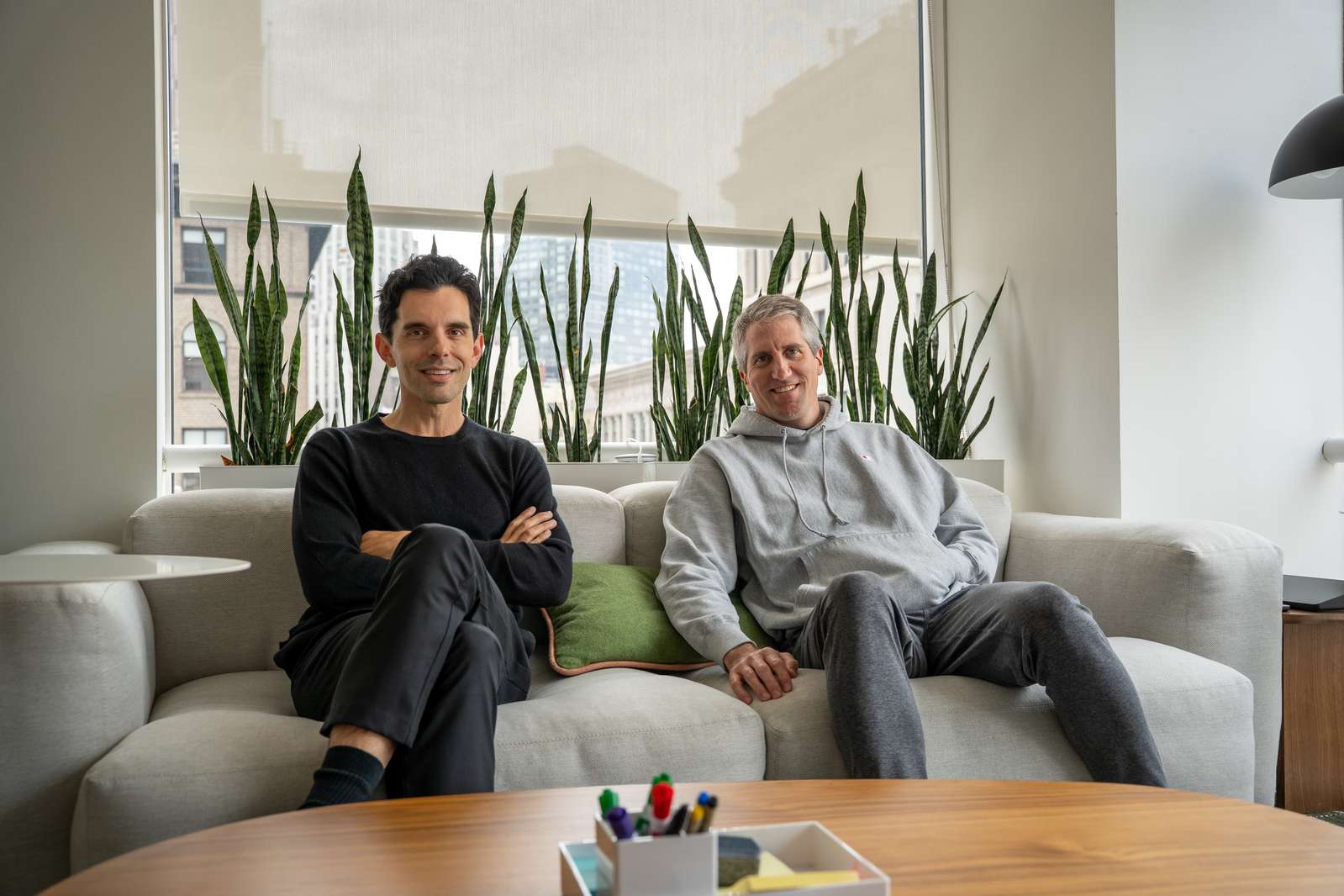
Two things struck me in that first sitting. First was what wasn’t there. No model picker — nowhere to pick between Opus or Fable or GPT 5.6, nowhere obvious to prompt. There was simply a small character with a name and a face, asking to be introduced to my life and for the chance to show me what it could do. The intelligence underneath, I knew, was powered by models from frontier labs like Anthropic or OpenAI. The second was scarier. “For the assistant to serve you well, it has to know you,” Town’s CEO, Jean-Denis Greze, a gray-haired man who dials me from an office call booth, tells me. “The more it knows, the better it is for you. And so whoever ends up winning in this personal assistant space will have built a company that has the trust of people. It’s just not possible to build the best product without it.”
To experience the magic of Town means to surrender to its world.
***
I’ve spent nearly my entire life using software — first playing Freddi Fish on my mom’s lap, then, from age eight onwards, making my first blogs connecting with online writers. I’ve been using ChatGPT since the day it came out. Yet it was using Town that started to make me seriously wonder: are we experiencing the end of software? What happens when your entire online life — personal and professional — gets consolidated onto one platform, a single agentic operating system capable of writing personalized routines and reminders, using the tools and software necessary to deliver on nearly anything?
Town is the first agentic product I believe has a chance at escaping the highly online, well-read corners of tech insiders and X power users. It’s the first one that could enchant the non-technical masses, because it bundles all the implicit knowledge of new AI capabilities into ergonomic UX and product design, much like the Macintosh liberated personal computing from the command line.
***
Tony Vincent, Town’s cofounder and chief product officer, says that new technology first arrives in a nerd phase: raw capability “presented to the masses” in a form only enthusiasts can love. Then, if the technology matters, it gets “refined into a form more ergonomic for normal people on earth.” Vincent, with a soft spoken sensitivity unlike those of other Silicon Valley veterans, watched the lifecycle of cloud computing from the inside at Dropbox, where he ran design: cloud storage was an infrastructure problem until Drew Houston and Arash Ferdowsi made it feel like “just a folder on a computer.” Dropbox was ergonomic insofar as its storage folder structure resembled that of MacOS and, in fact, was designed to live as seamlessly as possible beside the beloved operating system. Vincent’s future cofounder Greze was there too, as a director of engineering, before spending seven years as CTO of Plaid, wiring the banking system to the apps that sat on top of it. The two are, by resume, specialists in taking a capability first developed and harnessed by nerds and handing it to everyone else, and they founded Town on the bet that AI had reached its turn.
They did not start with an assistant. Town’s first product was AI tax preparation for small businesses — an idea good enough to raise an $18 million seed led by First Round Capital, and good enough, technically, to work. “We got the tech side correct,” Greze told me, “automating like 30-ish percent of a full tax return with line of sight to more.” What failed was everything around the technology. “Tax is once a year,” he said. “People don’t get giddy about referring their tax product. Honestly, we could have built that company — it just wouldn’t have been a big win.” Last year, he and Vincent sat together for a week and agonized over what to do next. The way out was sitting inside their own office. Town’s tax operation employed a team whose days were consumed not by taxes but by the operations surrounding it — scheduling clients, chasing documents, sending the same emails over and over. The toil adjacent to the work, it turned out, was bigger than the work itself. The company pivoted from preparing taxes to absorbing the toil. From the toil, the assistant was born.
Timing did the rest. Greze is unusually candid about how narrow the window was: he explained that, at the end of 2025, he and Vincent watched an open-source agent framework called OpenClaw break out while they were building — “oh no, same idea, God,” as he recounts the moment — but he insists the category simply could not have existed earlier. “Before Opus 4.5” — an advanced AI model released by Anthropic in November 2025 — “I don’t think you could make a version of these systems.” It’s a striking admission for a founder to make. Companies like to present themselves as inevitable. Greze presents Town as dependent on a specific moment in time.
Town’s ambitions run larger than the word “assistant” suggests. A Townie doesn’t just answer; it builds — automations, documents, spreadsheets, small working software like an email agent that automatically declines incoming cold outreach. Programs that write programs date to Lisp, the language John McCarthy — the man who coined the term “artificial intelligence” — invented for AI research in 1958: its code was written in the same form as its data, so a program could read, generate, and rewrite other programs. The computer scientist Alan Kay called the computer “the first metamedium,” because unlike paper or film, which are fixed, a computer can simulate any medium you can describe — typewriter, canvas, orchestra. And Kay had spent the seventies at Xerox PARC building the interface that let ordinary people command it: the overlapping windows that, after Steve Jobs’ famous 1979 visit, defined the Macintosh. Large language models make McCarthy’s vision ordinary: any chatbot will write you code on request. What Town adds is an ergonomic interface. You describe an outcome and the Townie builds and runs the software across the tools you already use. If Vincent’s cycle holds, the nerd phase of agentic AI is ending on schedule, and Town is auditioning to be its Macintosh.
***
Tock, my avian agent, lives where I do. It has its own email address; I CC it on threads the way you’d loop in a colleague — find a time that works — and it checks my calendar, negotiates the slot, drafts the confirmation. I can message it on WhatsApp or through Town’s app. It’s the same trick that tinkerers’ agent frameworks like OpenClaw pioneered — an assistant reachable wherever you already are — minus the weekends of configuration.
Three weeks in, Tock and I run several standing routines. Every morning it sends a digest of the day’s external calls; 30 minutes before each one, a briefing arrives — who I’m meeting, our email history, suggested talking points. An hour after a call ends, it has pulled the transcript, updated its notes on whoever I met, and drafted the follow-ups in my voice, with a proposed calendar invite awaiting my okay. On Mondays it sweeps my inboxes for threads where I sent the last message and heard nothing back — the pitches, the drafts, the invoices that a freelance life runs on — and pre-writes the nudges. The drafts are rarely final; I edit most of them. But they are a start where there was none, and half their value is motivational — a pre-written nudge turns a nagging obligation into a two-minute edit. Tock also claims to learn continuously from how I write and work, so, over time, its emails and draft documents sound more like mine.
One of my favorite routines is among its dumbest. On a monthly schedule, silently, Tock checks for my COBRA health-insurance notice and logs the payment to my expense sheet, pinging me only if something looks off. I’ve stopped prepping for calls, something that took me at least 10 minutes before, because Tock preps me. I’ve offloaded the cognitive load of scheduling, logistics emails, and even canceling unused subscriptions. Working feels like playing a video game, with Town handling background mechanics, freeing me to focus my attention on directional decisions. It’s empowering and, yes, magical.
It also has blind spots. For weeks Tock kept missing context from my work calls; the record of those conversations lived in Fireflies, the AI notetaker that sits in my meetings, and Tock had no access to it until I figured out how to connect the two. The fix for one AI’s ignorance, it turned out, was introducing it to another AI. Every gap in Tock’s knowledge has had the same remedy: more connection, more access. The ratchet turns just one way.
Software has always let its users make the first move. Before AI agents proliferated, every tool sat still until you did something to it. The Townie often acts first — the briefing arrives unbidden, the drafts exist before you thought to ask. I found that being anticipated is a categorically different sensation from being served. Town lets me shrink the length of the to-do list I have to carry in my head at all times. Psychologists refer to this as prospective memory: the obligation to remember future obligations. I’m a captive user of Town because I’ve surrendered remembering. Town remembers and Town helps.
So who else lives inside Town? The company describes its users as prosumers — 70 to 80 percent of usage is work, as reported in Fortune — but the cohort nobody at Town predicted was Australian plumbers, one of whom fields 300 emails a day. There’s a Townie who serves a hairdresser who runs a hair-coloring bar. There are, by the company’s own account, hundreds of parents emailing in use cases “we never would have dreamed about.” When I asked Vincent to explain how plumbers found out about Town, or even how they use the product, he didn’t pretend to know, or have spoken with them. What the users share, he offered, is instead a much more general archetype: “smart… human beings that are not highly technical, that are doing transactional work out of their inbox” — which is why the same product can serve, in his words, a VC and a school director and a plumber.
Greze has a statistic for how far away ordinary people still are from all this. The 80th-percentile user of AI, he told Fortune, opens ChatGPT or Claude at most three times a day — not for lack of need, but for lack of intuition about what the technology can do. The plumber was not underserved because AI couldn’t help him. He was underserved because every prior interface assumed he would learn complex tools like Codex or Claude skill files and MCP servers. A plumber is a one-person enterprise whose entire back office is an inbox and voicemail; so is a hair colorist; so, for that matter, is a freelance journalist. The natural habitat of the personal assistant turns out not to be the executive suite — executives already have assistants — but the enormous middle of working life that could never afford one.
Town says it is approaching 10,000 users, with 99 percent two-month retention — among users who built at least one automation, a cohort the company selected for the telling. And its loudest evangelists include its own shareholders: 93 percent of First Round Capital, the firm which led Town’s $18M seed round, uses the product, per Vincent’s LinkedIn. Early love is real at Town; it is also, for now, still concentrated among tech nerds — with the plumbers as the exception. No one knows how they discovered Town.
***
Ask Vincent where the name Town came from and he does not reach for a brand positioning exercise. He reaches for a children’s book. He’d been reading Richard Scarry’s Busy, Busy Town to his two-and-a-half-year-old — a picture-book world of small characters doing everyday jobs, “friendly… non-threatening and helpful in its nature.” He found that this children’s book was the antithesis of what AI branding had become. A town, he told me, is “a place that has an identity, that has community in it, and is built around knowable primitives” — a library, a city hall, shared places — “but you have your own home there.” He set that against the actual substrate of the technology: “this abstract alien universe called weights,” living somewhere in “the cloud computing and the GPU.” Vincent traces the lineage of the Townie — every user’s assistant gets a name and a face, presumably AI generated — through a canon of companions: Winnie the Pooh in his Hundred Acre Wood, the dæmons of His Dark Materials, “all the way back to the earliest examples of people wanting to have an imaginary friend or a companion or angel.”
Vincent is equally fluent in the anti-canon. There is the terminal aesthetic of the agent frameworks — a “heartless black-and-white world,” agents running agents, which he finds “kind of gross.” Worse yet, there is the oversaturated, “hyper-glossy, clubby EDM” register of AI advertising. He reserves particular horror for a competitor’s campaign: “Ava, the AI BDR, terrorizing the streets of San Francisco on all the bus wraps,” he said. “What is that? That’s so creepy.” (A BDR, business development representative, is responsible for outbound sales tasks like generating leads and booking calls. Ava, with her glowing purple eyes, seems to resemble a dæmon of the worst possible sort.)
Some of Town’s most consequential design decisions are found in what it hides. “You’ll find the word MCP in our product somewhere,” Vincent told me, “but I am generally pushing the design team… to remove stuff like ‘executing code in the sandbox.’ MCPs are weird. Normal people don’t know what an MCP is. Normal people still don’t even know what an API is sometimes.” (MCP — the Model Context Protocol — is the open standard that lets an AI system plug into other software: your calendar, your CRM, your bank. It is the reason a Townie can act on your world rather than just ask questions about it; an API is a set of rules that allow different web applications to work together.) The stated philosophy is to “humanize the language around the technology and just turn it into outcomes… hide all of the weird technical jargon about the how, still allow you to see how it’s working if you want to get down into the undercarriage.”
You could read the choice to hide details as condescension — Silicon Valley deciding, once again, what the masses can handle. Greze rejects this frame. “There’s a tendency in Silicon Valley sometimes to feel like a priesthood,” he said. “We are the priests of technology for the people. But I don’t believe in that. You just need to see businesses that are run on top of Excel to realize that people can be really clever… everybody has a little bit of a tinkerer in them.”
When I questioned if Town’s audience can be described as ‘normies’ — people who aren’t deep into tech-world rabbit holes like MCPs or BDRs — he corrected me: “I think of it as AI for everyone. I don’t love the word normie.”
Self-proclaimed humanist software companies have not always delivered on their mandate. Among the acclaimed practitioners of the genre this decade was The Browser Company, whose browser Arc was beloved by exactly the designers Vincent competes with for talent — and whose landing ended not in mainstream adoption but in an enterprise acquisition, sold to Atlassian last September for $610 million in cash, its flagship deprioritized before the deal. The aesthetics of human-first software, it turns out, are copyable, fundable, and mortal. When I asked Vincent about Arc, he refused the dunk: “I envy the Browser Company’s design quality… their taste is so good.” What he claimed instead was a different relationship between brand and product. Many companies, he argued, run their design “way ahead of the product, because it’s promising the future of what the product will be someday.” Town inverts this: the brand sits “perpetually behind the capability of what the product can offer.”
To Town’s credit, the company’s X account is a wall of reposts of customer testimonial retweets: a user startled to wake up to three email drafts he never asked for; another reporting the first AI-written emails she’s “actually used without edits”; a third who replaced his hand-built stack of Claude Code automations — “20+ hours of work → a 20 minute setup” — and added that he doesn’t mourn his tedious projects. Ironically, Vincent says most of what makes user experiences like these possible is the tedious work his team put into designing Town. He described it as “mending thousands of paper cuts,” claiming that the domain of human administrative work is complex with many edge cases. He dares anyone who thinks they can build a duplicate of Town using Claude Code or OpenClaw and a spare weekend to try.
Greze offers a different argument against Town’s supposed replicability. The frontier labs, he pointed out, have begun hiring forward-deployed engineers — the consultants of the AI era, humans dispatched to wire models into a client’s business. “It’s kind of ironic,” he said, “because you have a company, Anthropic, that believes in AGI, but yet they’re hiring lots of humans to do the last mile between AI and humans.” A 200-person company cannot afford a forward-deployed engineer for its HR problems and its warehouse problems. If the mainstream is ever going to be served, the last mile has to be automated too — agents building agents, software doing its own installation. “In some ways,” Greze said, “we’re more AI-pilled, so to speak, than even some of the labs.”
When I suggested to Greze that Town is really an interface design company that happens to build with AI, he didn’t push back. “I think we are a product and product engineering and UX design company first and foremost,” he said. “Should we train our own foundational model? Maybe, but that’s not the winning play. The winning play is to be really thoughtful about how you design an experience that feels highly personal for each user in a software package that’s very scalable.” If the interface is the product, then Town’s fate will answer the question of whether agentic interfaces are a real software category.
***
Greze raised the skeptics before I could. “10 to 20 percent of users are Silicon Valley people,” he told me. “They try the product and they’re like, oh, I really like it — but I could just connect Claude to my email and do this.” Wire a raw Gmail connector to a model with no restrictions and, he says, “one out of every ten times, it’s going to draft and send the emails. It won’t just draft.” Then there are calendars: “On my main account I have seven calendars connected. The first time we did Town, it told me I was always busy… that calendar is the on-call calendar, and even though you’re on call that week, you’re actually free.” The last mile delivery consists of a thousand such judgments.
But there’s a deeper question Greze probed with an honesty I did not expect from a CEO. “The meta question nobody has the answer to,” he said, “ is: as the models get better, does most of the value accrue to the relationship with the user and that product experience” — the experience that Town itself is providing — “or does most of it accrue to the model? We just don’t know. But if you believe it accrues to the model endgame, then no one can do anything. There’s no innovation.”
Netscape Navigator once helped turn the web into a mass-market product, then lost to Microsoft, which gave Internet Explorer away and used Windows to distribute it. Marc Andreessen lived through that defeat but re-emerged victorious. His 2011 essay “Why Software Is Eating the World” outlined one of Silicon Valley’s defining investment theses: software companies would remake nearly every industry. It became a rallying cry for vertical SaaS: expensive to build, nearly free to distribute and capable of producing high-margin, defensible companies.
In 2024, venture capitalist Chris Paik published his well-circulated essay, “The End of Software,” predicting that the cost of making software is collapsing toward zero. The vertical-SaaS era depended on building a separate product for every industry and workflow. AI may reverse that logic. Instead of buying dozens of rigid applications, users could rely on a smaller number of general-purpose interfaces that understand their data, adapt to their preferences and generate specialized tools as needed.
Greze agrees with the obituary. “More horizontal platforms will win as the vertical SaaS era is coming to an end.” He says that if AI makes app-layer software incredibly cheap to build, profits will instead pool around the layers AI can’t commoditize, like data centers or energy.
So are personal agents close to software’s final form? The last interface? Town itself has three available futures. One: it becomes the Macintosh of the agent era, and the value accrues to the relationship between the user and the interface. Two: It becomes the next Browser Company, perhaps the most acclaimed human-centered computing shop of the decade, acquired by Atlassian for $610 million. If the moat is accumulated context and trust, that is exactly the asset a frontier lab buys rather than builds. (Both of Town’s founders are refugees of the acquirer class: Vincent from Google’s applied-AI division, Greze from the Plaid-Visa acquisition the Justice Department killed in 2021.) Or three: frontier models simply eat it. The company that could not exist before Opus 4.5 (Anthropic’s November 2025 model) gets obsoleted by whatever comes two generations later, the weekend-clone critique made true not by any rival but by absorption.
The legal scholar Tim Wu coined the Cycle: every information industry in American history (think radio and telephones) has started open, hobbyist, and distributed, and ended as empire. Software ran the Cycle in miniature, repeatedly: mainframe concentration, PC distribution, platform re-concentration, and then the SaaS era, which distributed software wealth more widely than any chapter before it. Every one of Town’s three endings re-concentrates that wealth: into Town, into an acquirer, or into the labs. But capability is distributing even as wealth concentrates. The plumber is getting a back office no plumber could ever buy before, and if Paik is right, the total pie of software wealth may simply shrink, value migrating back to atoms. Greze says as much himself.
When I asked Greze what his utopia looks like, he gave me the frankest possible version of the industry’s non-answer: “I’m a student of the market and capitalism, so my utopia is what the users tell me they want, as modulated by what the users have told the government to regulate.” What software is for, in the grand, existential sense, is, according to Greze, whatever sells.
***
Given what I’ve surrendered to Tock, the question I most wanted Greze to answer wasn’t whether Town is useful. (I already see that it is.) It’s whether it’s safe. He answered with a framework he’s clearly delivered before. Town, he says, operates under three constraints: “security, privacy, and — I don’t have a good word for it — not making the user look stupid.” An assistant that books a meeting over a conflict forces you to send the embarrassed correction email; “the AI has made you look stupid.”
On the issue of security security, Greze reached for a framework from the developer Simon Willison, who coined the “lethal trifecta.” An AI system becomes dangerous when it combines access to private data, exposure to untrusted content, and the ability to communicate outward. A personal assistant that reads your email holds the first two by definition — inbound email is professionally untrusted as it could contain messages or attachments that are harmful from unknown senders — and researchers demonstrated last year that a single crafted email could make Microsoft’s Copilot silently exfiltrate corporate data, in a zero-click attack they named EchoLeak, patched before any known exploitation. Town’s answer is to amputate the third leg. “Town cannot send emails to other people. It just can’t do it. It can create a draft and put it in your inbox and ask you to review the draft, but it can’t send an email to someone else.” It will not browse arbitrary websites either, because even entering a URL communicates information to whoever owns the server; it only visits addresses “you as the user have given us, or it comes from a search result that we trust.” (To be clear, a “search result that we trust” begs the question — trusted by what criteria?)
On privacy, Greze believes that “you shouldn’t have data that you don’t need. We’re not an advertising company… we’re never reselling data to anybody else.” Town does not copy your mailbox onto its servers; it queries Gmail’s APIs, pulls a thread when asked to analyze one, and deletes the analysis after thirty days. You pay Town a monthly or annual subscription fee, a part of which funds the tokens for the underlying intelligence.
Town has to solve a basic design dilemma: “If you hide too much, people don’t have confidence in the output. If you show them too much, you’re not saving that much time. If you ask them too many questions, they just say yes every time.” The human gets tired. My 60-year-old father — semi-retired, sharp, constitutionally suspicious of AI — once had Claude update a 200-row spreadsheet for him, then checked every single row by hand. That is what the first month of going mainstream looks like. The safest possible version of Town is the one that knows nothing, and the most useful version is the one that knows everything. I don’t know if I’m stupid to trust a 14-month-old startup to calibrate that dial for me.
***
In an earlier essay, Greze described the human as “a high-latency, high-intelligence search node.” I told him I didn’t want to be reduced to an artificial agent’s search node. He wasn’t defensive at all, but challenged my thinking. “Because that’s reversing the agency. It’s saying the AI has agency and calls you when it needs you… I do think it has to start and end with a human. If you’re getting random questions in your day and you don’t know why — because of some other being’s utility function you’re helping to maximize — that’s weird.”
In 1960, the psychologist and computing visionary J.C.R. Licklider imagined “man-computer symbiosis.” Humans would set goals and exercise judgment, while computers handled the routinizable work. Two years later, the electrical engineer and interactive-computing pioneer Douglas Engelbart made “augmenting human intellect” the organizing principle of his work. Computers should not merely automate tasks, he believed, but extend our ability to think and solve problems — what Steve Jobs would later call a “bicycle for the mind.” Town can draft something that feels 75 percent like you, Greze tells me — someday, maybe 90. Never 100: “You will always have things in your head that are valuable, that aren’t anywhere else in the universe but your head — because if they did, what’s the meaning of being a human being? And we can never cross that last 10 percent. And that’s okay.”
I think about my pottery teacher. Half her working life is not ceramics; it is scheduling and answering student emails — when will my piece be fired, I can’t make Tuesday, can I switch to the Thursday class? The AI she hears about is data centers and doom; she curses tech and resents its billionaires. The product built for exactly her toil has probably never appeared in her feed.
Her class is full, every week, of people who pay money to do — by hand, slowly and imperfectly — what factories perfected a century ago. Wheel-thrown pottery has been economically obsolete for generations. Chess, similarly, is more popular than it has ever been, decades after IBM’s Deep Blue. Greze made the same point without meaning to, when we talked about whether writers ought to disclose AI-written text: “Much like right now we watch humans race in the Olympics, even though we know cars are faster, we still like watching humans do the thing.”
So: what is software for? Engelbart’s 1962 answer, to augment human intellect, has since been half-forgotten by every era since, as software became an industry, company, or job title. If the agent era really is the end of software, the end will not look like more software. It will look like software receding from attention: the 10,000 vertical tools collapsing into a few well-designed horizontal interfaces, so that the operators of the real world — the plumber, colorist, ceramicist — can operate, well, in it. The last software is the software that lets you stop thinking about software. I write and edit for a living, which means the toil Tock absorbs sits uncomfortably close to the craft it cannot touch. I have skin in the last 10 percent.
My pottery teacher will not care whether the software that finally frees her (answering student emails, processing payments and refunds, or managing her class schedule) is Town, or an acquired Town folded inside a frontier lab, or a model that swallowed the interface whole; the end of software looks the same from her side of the screen. The 10 hours a week she gets back have a dollar amount, and the whole history of Wu’s Cycle says money flows uphill, into fewer hands than the last era dealt to — unless someone decides otherwise. Early is when such things get decided, and it is early.
Technology
•
The AI Next Door
The small worlds and big visions of Town AI.
The most intimate aspect of your digital life you can hand a stranger is your inbox. Texts, emails, chats, whatever. They’re all inboxes. Last month, oddly enough, I handed mine to a company called Town. Not just my inbox but my calendar, WhatsApp, call transcripts. Basically everything.
I’d found Town the way I find most new things now: on X. The post that stopped me was a launch post from Daria Tsenter, an engineer at Town: she’d gotten married on Saturday and shipped Town four days later. She credited her survival to Littlebear, her Townie, which had run the vendor chaos — the florist, the tent, the caterer, the valet — and coordinated logistics directly with her now-husband’s assistant. It was “two AIs talking so the two of us didn’t have to,” she wrote. It seemed insane to me that something as large and personal as a wedding could be handled this smoothly by agents — and collaboratively, agent to agent. The photo of her custom Townie also struck me: kitschy Townies are drawn like Miyazaki or children’s book characters, my first hint that someone intelligent was making deliberate aesthetic choices here, a departure from the sterile default of AI products. Someone was choosing to embody something familiar, disarming, and nostalgic.
You cannot experience Town without surrendering to it. The product cannot deliver on its promises unless you connect your email and calendar; Town asks for them before it has shown you anything at all. I hesitated, thinking about the privacy-minded friends who would disapprove of all the access I was granting. But my curiosity won, and I clicked through. Within a few minutes, Town had assembled a biography of me and introduced my Townie: Tock, a clockwork songbird — a brass, gear-driven courier bird drawn mid-flight. Tagline: “Swift edits, solar-powered spirit.” The “solar-powered” wasn’t random. Tock had picked it up from another project I’ve been working on.
Two things struck me in that first sitting. First was what wasn’t there. No model picker — nowhere to pick between Opus or Fable or GPT 5.6, nowhere obvious to prompt. There was simply a small character with a name and a face, asking to be introduced to my life and for the chance to show me what it could do. The intelligence underneath, I knew, was powered by models from frontier labs like Anthropic or OpenAI. The second was scarier. “For the assistant to serve you well, it has to know you,” Town’s CEO, Jean-Denis Greze, a gray-haired man who dials me from an office call booth, tells me. “The more it knows, the better it is for you. And so whoever ends up winning in this personal assistant space will have built a company that has the trust of people. It’s just not possible to build the best product without it.”
To experience the magic of Town means to surrender to its world.
***
I’ve spent nearly my entire life using software — first playing Freddi Fish on my mom’s lap, then, from age eight onwards, making my first blogs connecting with online writers. I’ve been using ChatGPT since the day it came out. Yet it was using Town that started to make me seriously wonder: are we experiencing the end of software? What happens when your entire online life — personal and professional — gets consolidated onto one platform, a single agentic operating system capable of writing personalized routines and reminders, using the tools and software necessary to deliver on nearly anything?
Town is the first agentic product I believe has a chance at escaping the highly online, well-read corners of tech insiders and X power users. It’s the first one that could enchant the non-technical masses, because it bundles all the implicit knowledge of new AI capabilities into ergonomic UX and product design, much like the Macintosh liberated personal computing from the command line.
***
Tony Vincent, Town’s cofounder and chief product officer, says that new technology first arrives in a nerd phase: raw capability “presented to the masses” in a form only enthusiasts can love. Then, if the technology matters, it gets “refined into a form more ergonomic for normal people on earth.” Vincent, with a soft spoken sensitivity unlike those of other Silicon Valley veterans, watched the lifecycle of cloud computing from the inside at Dropbox, where he ran design: cloud storage was an infrastructure problem until Drew Houston and Arash Ferdowsi made it feel like “just a folder on a computer.” Dropbox was ergonomic insofar as its storage folder structure resembled that of MacOS and, in fact, was designed to live as seamlessly as possible beside the beloved operating system. Vincent’s future cofounder Greze was there too, as a director of engineering, before spending seven years as CTO of Plaid, wiring the banking system to the apps that sat on top of it. The two are, by resume, specialists in taking a capability first developed and harnessed by nerds and handing it to everyone else, and they founded Town on the bet that AI had reached its turn.
They did not start with an assistant. Town’s first product was AI tax preparation for small businesses — an idea good enough to raise an $18 million seed led by First Round Capital, and good enough, technically, to work. “We got the tech side correct,” Greze told me, “automating like 30-ish percent of a full tax return with line of sight to more.” What failed was everything around the technology. “Tax is once a year,” he said. “People don’t get giddy about referring their tax product. Honestly, we could have built that company — it just wouldn’t have been a big win.” Last year, he and Vincent sat together for a week and agonized over what to do next. The way out was sitting inside their own office. Town’s tax operation employed a team whose days were consumed not by taxes but by the operations surrounding it — scheduling clients, chasing documents, sending the same emails over and over. The toil adjacent to the work, it turned out, was bigger than the work itself. The company pivoted from preparing taxes to absorbing the toil. From the toil, the assistant was born.
Timing did the rest. Greze is unusually candid about how narrow the window was: he explained that, at the end of 2025, he and Vincent watched an open-source agent framework called OpenClaw break out while they were building — “oh no, same idea, God,” as he recounts the moment — but he insists the category simply could not have existed earlier. “Before Opus 4.5” — an advanced AI model released by Anthropic in November 2025 — “I don’t think you could make a version of these systems.” It’s a striking admission for a founder to make. Companies like to present themselves as inevitable. Greze presents Town as dependent on a specific moment in time.
Town’s ambitions run larger than the word “assistant” suggests. A Townie doesn’t just answer; it builds — automations, documents, spreadsheets, small working software like an email agent that automatically declines incoming cold outreach. Programs that write programs date to Lisp, the language John McCarthy — the man who coined the term “artificial intelligence” — invented for AI research in 1958: its code was written in the same form as its data, so a program could read, generate, and rewrite other programs. The computer scientist Alan Kay called the computer “the first metamedium,” because unlike paper or film, which are fixed, a computer can simulate any medium you can describe — typewriter, canvas, orchestra. And Kay had spent the seventies at Xerox PARC building the interface that let ordinary people command it: the overlapping windows that, after Steve Jobs’ famous 1979 visit, defined the Macintosh. Large language models make McCarthy’s vision ordinary: any chatbot will write you code on request. What Town adds is an ergonomic interface. You describe an outcome and the Townie builds and runs the software across the tools you already use. If Vincent’s cycle holds, the nerd phase of agentic AI is ending on schedule, and Town is auditioning to be its Macintosh.
***
Tock, my avian agent, lives where I do. It has its own email address; I CC it on threads the way you’d loop in a colleague — find a time that works — and it checks my calendar, negotiates the slot, drafts the confirmation. I can message it on WhatsApp or through Town’s app. It’s the same trick that tinkerers’ agent frameworks like OpenClaw pioneered — an assistant reachable wherever you already are — minus the weekends of configuration.
Three weeks in, Tock and I run several standing routines. Every morning it sends a digest of the day’s external calls; 30 minutes before each one, a briefing arrives — who I’m meeting, our email history, suggested talking points. An hour after a call ends, it has pulled the transcript, updated its notes on whoever I met, and drafted the follow-ups in my voice, with a proposed calendar invite awaiting my okay. On Mondays it sweeps my inboxes for threads where I sent the last message and heard nothing back — the pitches, the drafts, the invoices that a freelance life runs on — and pre-writes the nudges. The drafts are rarely final; I edit most of them. But they are a start where there was none, and half their value is motivational — a pre-written nudge turns a nagging obligation into a two-minute edit. Tock also claims to learn continuously from how I write and work, so, over time, its emails and draft documents sound more like mine.
One of my favorite routines is among its dumbest. On a monthly schedule, silently, Tock checks for my COBRA health-insurance notice and logs the payment to my expense sheet, pinging me only if something looks off. I’ve stopped prepping for calls, something that took me at least 10 minutes before, because Tock preps me. I’ve offloaded the cognitive load of scheduling, logistics emails, and even canceling unused subscriptions. Working feels like playing a video game, with Town handling background mechanics, freeing me to focus my attention on directional decisions. It’s empowering and, yes, magical.
It also has blind spots. For weeks Tock kept missing context from my work calls; the record of those conversations lived in Fireflies, the AI notetaker that sits in my meetings, and Tock had no access to it until I figured out how to connect the two. The fix for one AI’s ignorance, it turned out, was introducing it to another AI. Every gap in Tock’s knowledge has had the same remedy: more connection, more access. The ratchet turns just one way.
Software has always let its users make the first move. Before AI agents proliferated, every tool sat still until you did something to it. The Townie often acts first — the briefing arrives unbidden, the drafts exist before you thought to ask. I found that being anticipated is a categorically different sensation from being served. Town lets me shrink the length of the to-do list I have to carry in my head at all times. Psychologists refer to this as prospective memory: the obligation to remember future obligations. I’m a captive user of Town because I’ve surrendered remembering. Town remembers and Town helps.
So who else lives inside Town? The company describes its users as prosumers — 70 to 80 percent of usage is work, as reported in Fortune — but the cohort nobody at Town predicted was Australian plumbers, one of whom fields 300 emails a day. There’s a Townie who serves a hairdresser who runs a hair-coloring bar. There are, by the company’s own account, hundreds of parents emailing in use cases “we never would have dreamed about.” When I asked Vincent to explain how plumbers found out about Town, or even how they use the product, he didn’t pretend to know, or have spoken with them. What the users share, he offered, is instead a much more general archetype: “smart… human beings that are not highly technical, that are doing transactional work out of their inbox” — which is why the same product can serve, in his words, a VC and a school director and a plumber.
Greze has a statistic for how far away ordinary people still are from all this. The 80th-percentile user of AI, he told Fortune, opens ChatGPT or Claude at most three times a day — not for lack of need, but for lack of intuition about what the technology can do. The plumber was not underserved because AI couldn’t help him. He was underserved because every prior interface assumed he would learn complex tools like Codex or Claude skill files and MCP servers. A plumber is a one-person enterprise whose entire back office is an inbox and voicemail; so is a hair colorist; so, for that matter, is a freelance journalist. The natural habitat of the personal assistant turns out not to be the executive suite — executives already have assistants — but the enormous middle of working life that could never afford one.
Town says it is approaching 10,000 users, with 99 percent two-month retention — among users who built at least one automation, a cohort the company selected for the telling. And its loudest evangelists include its own shareholders: 93 percent of First Round Capital, the firm which led Town’s $18M seed round, uses the product, per Vincent’s LinkedIn. Early love is real at Town; it is also, for now, still concentrated among tech nerds — with the plumbers as the exception. No one knows how they discovered Town.
***
Ask Vincent where the name Town came from and he does not reach for a brand positioning exercise. He reaches for a children’s book. He’d been reading Richard Scarry’s Busy, Busy Town to his two-and-a-half-year-old — a picture-book world of small characters doing everyday jobs, “friendly… non-threatening and helpful in its nature.” He found that this children’s book was the antithesis of what AI branding had become. A town, he told me, is “a place that has an identity, that has community in it, and is built around knowable primitives” — a library, a city hall, shared places — “but you have your own home there.” He set that against the actual substrate of the technology: “this abstract alien universe called weights,” living somewhere in “the cloud computing and the GPU.” Vincent traces the lineage of the Townie — every user’s assistant gets a name and a face, presumably AI generated — through a canon of companions: Winnie the Pooh in his Hundred Acre Wood, the dæmons of His Dark Materials, “all the way back to the earliest examples of people wanting to have an imaginary friend or a companion or angel.”
Vincent is equally fluent in the anti-canon. There is the terminal aesthetic of the agent frameworks — a “heartless black-and-white world,” agents running agents, which he finds “kind of gross.” Worse yet, there is the oversaturated, “hyper-glossy, clubby EDM” register of AI advertising. He reserves particular horror for a competitor’s campaign: “Ava, the AI BDR, terrorizing the streets of San Francisco on all the bus wraps,” he said. “What is that? That’s so creepy.” (A BDR, business development representative, is responsible for outbound sales tasks like generating leads and booking calls. Ava, with her glowing purple eyes, seems to resemble a dæmon of the worst possible sort.)
Some of Town’s most consequential design decisions are found in what it hides. “You’ll find the word MCP in our product somewhere,” Vincent told me, “but I am generally pushing the design team… to remove stuff like ‘executing code in the sandbox.’ MCPs are weird. Normal people don’t know what an MCP is. Normal people still don’t even know what an API is sometimes.” (MCP — the Model Context Protocol — is the open standard that lets an AI system plug into other software: your calendar, your CRM, your bank. It is the reason a Townie can act on your world rather than just ask questions about it; an API is a set of rules that allow different web applications to work together.) The stated philosophy is to “humanize the language around the technology and just turn it into outcomes… hide all of the weird technical jargon about the how, still allow you to see how it’s working if you want to get down into the undercarriage.”
You could read the choice to hide details as condescension — Silicon Valley deciding, once again, what the masses can handle. Greze rejects this frame. “There’s a tendency in Silicon Valley sometimes to feel like a priesthood,” he said. “We are the priests of technology for the people. But I don’t believe in that. You just need to see businesses that are run on top of Excel to realize that people can be really clever… everybody has a little bit of a tinkerer in them.”
When I questioned if Town’s audience can be described as ‘normies’ — people who aren’t deep into tech-world rabbit holes like MCPs or BDRs — he corrected me: “I think of it as AI for everyone. I don’t love the word normie.”
Self-proclaimed humanist software companies have not always delivered on their mandate. Among the acclaimed practitioners of the genre this decade was The Browser Company, whose browser Arc was beloved by exactly the designers Vincent competes with for talent — and whose landing ended not in mainstream adoption but in an enterprise acquisition, sold to Atlassian last September for $610 million in cash, its flagship deprioritized before the deal. The aesthetics of human-first software, it turns out, are copyable, fundable, and mortal. When I asked Vincent about Arc, he refused the dunk: “I envy the Browser Company’s design quality… their taste is so good.” What he claimed instead was a different relationship between brand and product. Many companies, he argued, run their design “way ahead of the product, because it’s promising the future of what the product will be someday.” Town inverts this: the brand sits “perpetually behind the capability of what the product can offer.”
To Town’s credit, the company’s X account is a wall of reposts of customer testimonial retweets: a user startled to wake up to three email drafts he never asked for; another reporting the first AI-written emails she’s “actually used without edits”; a third who replaced his hand-built stack of Claude Code automations — “20+ hours of work → a 20 minute setup” — and added that he doesn’t mourn his tedious projects. Ironically, Vincent says most of what makes user experiences like these possible is the tedious work his team put into designing Town. He described it as “mending thousands of paper cuts,” claiming that the domain of human administrative work is complex with many edge cases. He dares anyone who thinks they can build a duplicate of Town using Claude Code or OpenClaw and a spare weekend to try.
Greze offers a different argument against Town’s supposed replicability. The frontier labs, he pointed out, have begun hiring forward-deployed engineers — the consultants of the AI era, humans dispatched to wire models into a client’s business. “It’s kind of ironic,” he said, “because you have a company, Anthropic, that believes in AGI, but yet they’re hiring lots of humans to do the last mile between AI and humans.” A 200-person company cannot afford a forward-deployed engineer for its HR problems and its warehouse problems. If the mainstream is ever going to be served, the last mile has to be automated too — agents building agents, software doing its own installation. “In some ways,” Greze said, “we’re more AI-pilled, so to speak, than even some of the labs.”
When I suggested to Greze that Town is really an interface design company that happens to build with AI, he didn’t push back. “I think we are a product and product engineering and UX design company first and foremost,” he said. “Should we train our own foundational model? Maybe, but that’s not the winning play. The winning play is to be really thoughtful about how you design an experience that feels highly personal for each user in a software package that’s very scalable.” If the interface is the product, then Town’s fate will answer the question of whether agentic interfaces are a real software category.
***
Greze raised the skeptics before I could. “10 to 20 percent of users are Silicon Valley people,” he told me. “They try the product and they’re like, oh, I really like it — but I could just connect Claude to my email and do this.” Wire a raw Gmail connector to a model with no restrictions and, he says, “one out of every ten times, it’s going to draft and send the emails. It won’t just draft.” Then there are calendars: “On my main account I have seven calendars connected. The first time we did Town, it told me I was always busy… that calendar is the on-call calendar, and even though you’re on call that week, you’re actually free.” The last mile delivery consists of a thousand such judgments.
But there’s a deeper question Greze probed with an honesty I did not expect from a CEO. “The meta question nobody has the answer to,” he said, “ is: as the models get better, does most of the value accrue to the relationship with the user and that product experience” — the experience that Town itself is providing — “or does most of it accrue to the model? We just don’t know. But if you believe it accrues to the model endgame, then no one can do anything. There’s no innovation.”
Netscape Navigator once helped turn the web into a mass-market product, then lost to Microsoft, which gave Internet Explorer away and used Windows to distribute it. Marc Andreessen lived through that defeat but re-emerged victorious. His 2011 essay “Why Software Is Eating the World” outlined one of Silicon Valley’s defining investment theses: software companies would remake nearly every industry. It became a rallying cry for vertical SaaS: expensive to build, nearly free to distribute and capable of producing high-margin, defensible companies.
In 2024, venture capitalist Chris Paik published his well-circulated essay, “The End of Software,” predicting that the cost of making software is collapsing toward zero. The vertical-SaaS era depended on building a separate product for every industry and workflow. AI may reverse that logic. Instead of buying dozens of rigid applications, users could rely on a smaller number of general-purpose interfaces that understand their data, adapt to their preferences and generate specialized tools as needed.
Greze agrees with the obituary. “More horizontal platforms will win as the vertical SaaS era is coming to an end.” He says that if AI makes app-layer software incredibly cheap to build, profits will instead pool around the layers AI can’t commoditize, like data centers or energy.
So are personal agents close to software’s final form? The last interface? Town itself has three available futures. One: it becomes the Macintosh of the agent era, and the value accrues to the relationship between the user and the interface. Two: It becomes the next Browser Company, perhaps the most acclaimed human-centered computing shop of the decade, acquired by Atlassian for $610 million. If the moat is accumulated context and trust, that is exactly the asset a frontier lab buys rather than builds. (Both of Town’s founders are refugees of the acquirer class: Vincent from Google’s applied-AI division, Greze from the Plaid-Visa acquisition the Justice Department killed in 2021.) Or three: frontier models simply eat it. The company that could not exist before Opus 4.5 (Anthropic’s November 2025 model) gets obsoleted by whatever comes two generations later, the weekend-clone critique made true not by any rival but by absorption.
The legal scholar Tim Wu coined the Cycle: every information industry in American history (think radio and telephones) has started open, hobbyist, and distributed, and ended as empire. Software ran the Cycle in miniature, repeatedly: mainframe concentration, PC distribution, platform re-concentration, and then the SaaS era, which distributed software wealth more widely than any chapter before it. Every one of Town’s three endings re-concentrates that wealth: into Town, into an acquirer, or into the labs. But capability is distributing even as wealth concentrates. The plumber is getting a back office no plumber could ever buy before, and if Paik is right, the total pie of software wealth may simply shrink, value migrating back to atoms. Greze says as much himself.
When I asked Greze what his utopia looks like, he gave me the frankest possible version of the industry’s non-answer: “I’m a student of the market and capitalism, so my utopia is what the users tell me they want, as modulated by what the users have told the government to regulate.” What software is for, in the grand, existential sense, is, according to Greze, whatever sells.
***
Given what I’ve surrendered to Tock, the question I most wanted Greze to answer wasn’t whether Town is useful. (I already see that it is.) It’s whether it’s safe. He answered with a framework he’s clearly delivered before. Town, he says, operates under three constraints: “security, privacy, and — I don’t have a good word for it — not making the user look stupid.” An assistant that books a meeting over a conflict forces you to send the embarrassed correction email; “the AI has made you look stupid.”
On the issue of security security, Greze reached for a framework from the developer Simon Willison, who coined the “lethal trifecta.” An AI system becomes dangerous when it combines access to private data, exposure to untrusted content, and the ability to communicate outward. A personal assistant that reads your email holds the first two by definition — inbound email is professionally untrusted as it could contain messages or attachments that are harmful from unknown senders — and researchers demonstrated last year that a single crafted email could make Microsoft’s Copilot silently exfiltrate corporate data, in a zero-click attack they named EchoLeak, patched before any known exploitation. Town’s answer is to amputate the third leg. “Town cannot send emails to other people. It just can’t do it. It can create a draft and put it in your inbox and ask you to review the draft, but it can’t send an email to someone else.” It will not browse arbitrary websites either, because even entering a URL communicates information to whoever owns the server; it only visits addresses “you as the user have given us, or it comes from a search result that we trust.” (To be clear, a “search result that we trust” begs the question — trusted by what criteria?)
On privacy, Greze believes that “you shouldn’t have data that you don’t need. We’re not an advertising company… we’re never reselling data to anybody else.” Town does not copy your mailbox onto its servers; it queries Gmail’s APIs, pulls a thread when asked to analyze one, and deletes the analysis after thirty days. You pay Town a monthly or annual subscription fee, a part of which funds the tokens for the underlying intelligence.
Town has to solve a basic design dilemma: “If you hide too much, people don’t have confidence in the output. If you show them too much, you’re not saving that much time. If you ask them too many questions, they just say yes every time.” The human gets tired. My 60-year-old father — semi-retired, sharp, constitutionally suspicious of AI — once had Claude update a 200-row spreadsheet for him, then checked every single row by hand. That is what the first month of going mainstream looks like. The safest possible version of Town is the one that knows nothing, and the most useful version is the one that knows everything. I don’t know if I’m stupid to trust a 14-month-old startup to calibrate that dial for me.
***
In an earlier essay, Greze described the human as “a high-latency, high-intelligence search node.” I told him I didn’t want to be reduced to an artificial agent’s search node. He wasn’t defensive at all, but challenged my thinking. “Because that’s reversing the agency. It’s saying the AI has agency and calls you when it needs you… I do think it has to start and end with a human. If you’re getting random questions in your day and you don’t know why — because of some other being’s utility function you’re helping to maximize — that’s weird.”
In 1960, the psychologist and computing visionary J.C.R. Licklider imagined “man-computer symbiosis.” Humans would set goals and exercise judgment, while computers handled the routinizable work. Two years later, the electrical engineer and interactive-computing pioneer Douglas Engelbart made “augmenting human intellect” the organizing principle of his work. Computers should not merely automate tasks, he believed, but extend our ability to think and solve problems — what Steve Jobs would later call a “bicycle for the mind.” Town can draft something that feels 75 percent like you, Greze tells me — someday, maybe 90. Never 100: “You will always have things in your head that are valuable, that aren’t anywhere else in the universe but your head — because if they did, what’s the meaning of being a human being? And we can never cross that last 10 percent. And that’s okay.”
I think about my pottery teacher. Half her working life is not ceramics; it is scheduling and answering student emails — when will my piece be fired, I can’t make Tuesday, can I switch to the Thursday class? The AI she hears about is data centers and doom; she curses tech and resents its billionaires. The product built for exactly her toil has probably never appeared in her feed.
Her class is full, every week, of people who pay money to do — by hand, slowly and imperfectly — what factories perfected a century ago. Wheel-thrown pottery has been economically obsolete for generations. Chess, similarly, is more popular than it has ever been, decades after IBM’s Deep Blue. Greze made the same point without meaning to, when we talked about whether writers ought to disclose AI-written text: “Much like right now we watch humans race in the Olympics, even though we know cars are faster, we still like watching humans do the thing.”
So: what is software for? Engelbart’s 1962 answer, to augment human intellect, has since been half-forgotten by every era since, as software became an industry, company, or job title. If the agent era really is the end of software, the end will not look like more software. It will look like software receding from attention: the 10,000 vertical tools collapsing into a few well-designed horizontal interfaces, so that the operators of the real world — the plumber, colorist, ceramicist — can operate, well, in it. The last software is the software that lets you stop thinking about software. I write and edit for a living, which means the toil Tock absorbs sits uncomfortably close to the craft it cannot touch. I have skin in the last 10 percent.
My pottery teacher will not care whether the software that finally frees her (answering student emails, processing payments and refunds, or managing her class schedule) is Town, or an acquired Town folded inside a frontier lab, or a model that swallowed the interface whole; the end of software looks the same from her side of the screen. The 10 hours a week she gets back have a dollar amount, and the whole history of Wu’s Cycle says money flows uphill, into fewer hands than the last era dealt to — unless someone decides otherwise. Early is when such things get decided, and it is early.
About the Author
Shreeda Segan is a contributing writer to Arena Magazine. She can be found on X @freeshreeda.