tt
tt
tt
tt
tt
tt

Civilization
•
Mahanian Mania
The Influence of Sea Power upon History — and upon the Future.
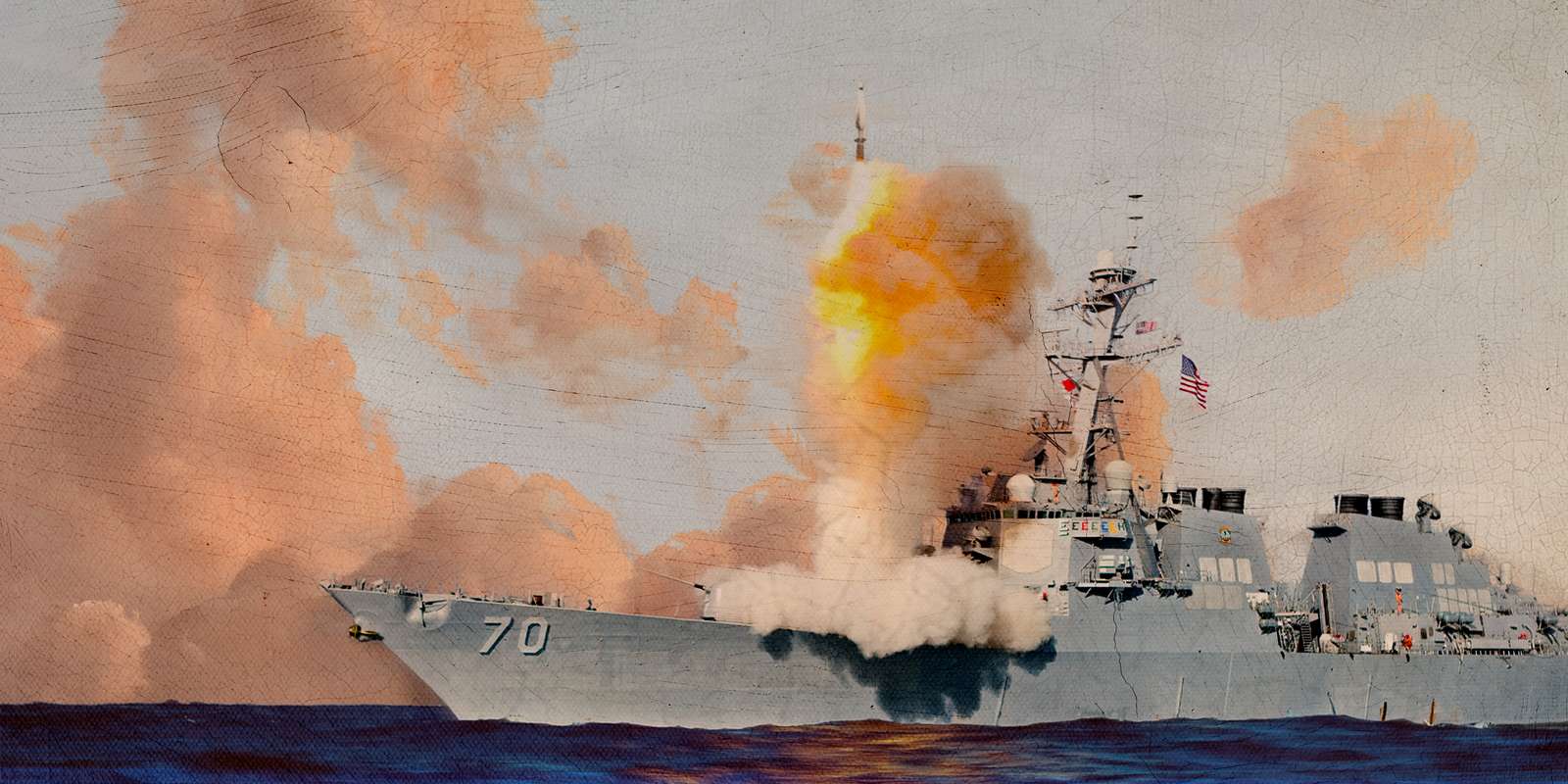

To rule the waves is to rule the world. Understanding this dictum allowed the West to overcome the pressure of larger continental powers and become the center of modern global civilization. Over the past century, however, the maritime domain was transformed into what appeared to be an almost invisible background condition, the background noise of globalization. The sea moved from the romantic world of daring explorers, privateers, and great admirals to the unglamorous domain of coast guard patrols, logistics, and insurance brokers.
That is no longer the case. The sea has once again become a visible, contested geopolitical space. But what is different in the 21st century is that such contests for maritime supremacy are now transforming the ocean from an open space of circulation into an increasingly enclosed and territorialized system.
That challenge to the global maritime order emerges, first, from the relative erosion of the naval capabilities of Western nations, including the United States, which ostensibly remains the dominant maritime power. Second, from technological developments — in the military domain, such as long-range weapons that can easily disrupt maritime supply lines, and in the civilian domain, technologies that allow for the exploitation of undersea resources — which have fundamentally altered the terms of that competition. Third, from the rise of China, an industrial, commercial, and increasingly naval power, one that holds a fundamentally different view of the seas than the West does.
To answer that challenge, the United States and the nations of the West cannot rely on naval military superiority alone. Born as an outpost of a merchant republic, America’s coastal cities were the core of the nation from its birth. But soon after the revolution, the conquest of the West shifted most of the country inland. Since then, the nation has oscillated between periods of deep infatuation with the call of the seas and inland introspection.

At Sea.
Subscribe and add Issue 008.
Add both to cart
Today the US Navy is the most powerful in the world, but the rest of the traditional American maritime economy is in terminal decline. That could be an advantage. Freed from the models of the past, the US can approach the maritime domain with fresh eyes. But in the new geopolitical context, even that may not be enough to sustain American maritime preeminence. The US must now do something it has never fully committed to: embrace its identity as a sea power in the fullest sense — commercial, industrial, technological, financial, and political. Open seas are the key to American global supremacy, and only a true sea-power identity can rebuff emerging rivals and the continentalization of the maritime domain.
What Is Sea Power?
The great popularizer of the concept of “sea power” was the American admiral Alfred Thayer Mahan, who published The Influence of Sea Power upon History in 1890. The book became an international bestseller and was read as a manual by key political leaders at home and abroad. Mahan advised Theodore Roosevelt on his campaign to turn the long-neglected US Navy into a force capable of challenging European rivals. Unintentionally, his ideas also influenced future enemies of the United States, most notably Kaiser Wilhelm II and Emperor Hirohito of Japan.
Mahan understood that war at sea has always been total war: “The control of the seas, and especially along the great lines drawn by national interest or national commerce, is the chief among the merely material elements in the power and prosperity of nations. It is so because the sea is the world’s great medium of circulation.” He saw sea power as the industrial-era fusion of naval strength, commercial shipping, overseas markets, colonies and coaling stations, and national productive capacity. For Mahan, command of the sea meant securing the maritime circulation of goods, capital, and strategic resources that sustained an industrial economy capable of winning wars.
A great power needed fleets, but also shipyards, a merchant marine, a civilian commercial fleet that could carry trade in peacetime and support national logistics in war, ports, and a political culture supportive of sea power.
A contemporary of Mahan, the turn-of-the-century British strategist Julian Corbett placed even more weight on a holistic vision of sea power: “Command of the sea… means nothing but the control of maritime communications.” Mahan’s understanding of sea power was broad and incorporated multiple dimensions, but his logic still pointed toward one central purpose: enabling a powerful navy to win decisive battles at sea. Where Mahan argued that “the enemy’s ships and fleets are the true objects to be assailed,” Corbett countered that “naval warfare does not begin and end with the destruction of the enemy’s battle-fleet.”
For Corbett, sea power became the architecture of a national grand strategy: a system in which trade, finance, industry, logistics, and naval force worked together to shape the global balance of power through control of the sea. Corbett’s current intellectual heir, the historian Andrew Lambert, argues that sea power cannot be reduced to material capabilities alone — it requires the political decision of a nation to make the sea the center of its imagination and economy. Rome, Habsburg Spain, and even Peter the Great’s Russia all had large navies, but their center of gravity did not pulse toward the seas. By contrast, the nations Lambert sees as the true embodiment of sea power — Athens, Venice, and Britain — were societies fundamentally shaped by and dependent on the seas.
The strategic logic of sea power can be seen in the classic example of Britain during the Napoleonic Wars. A “nation of shopkeepers” defeated the greatest general of the era by using the sea to strangle French power from afar — blockading French and allied ports, controlling trade routes, and subsidizing allied armies to fight Napoleon on land while keeping British boots off the continent.
The Royal Navy was the instrument of this strategy: one of the most meritocratic institutions of its age, manned by superbly trained sailors and led by commanders of genius such as Horatio Nelson. But the glory of Nelson’s martyrdom at Trafalgar would have meant little without Britain’s capacity to sustain those blockades for years. The British turned the sea into a force multiplier against Napoleon through total national mobilization, in which the navy was inseparable from the factory, the banker, and the accountants who built the sophisticated logistics that kept ships at sea for months at a time. It was “shopkeeping” as much as the discipline of British sailors that defeated Napoleon.
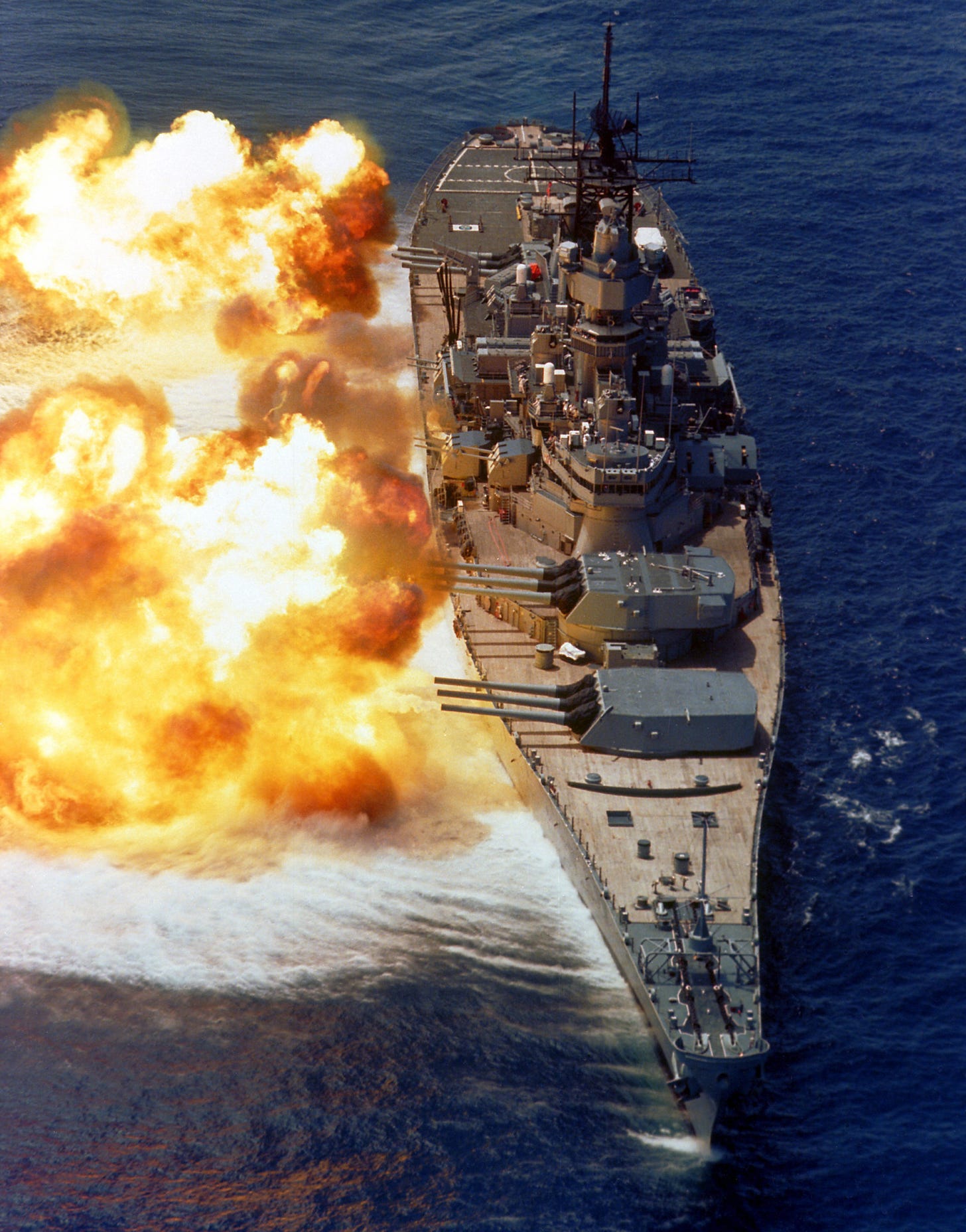
How China Is Expanding Its Maritime Power
The American position against China today is not equivalent to Britain’s position against Napoleon. America is not materially weaker in the same way, though it has deindustrialized. But the strategic logic is similar: the United States must use command of the seas, finance, alliances, technology, and a network of bases to offset China’s advantages in industrial scale and manpower.
The particular challenge that China poses, compared to Napoleonic France, is that it is much more than a continental empire to be contained from the sea. China is also a shipbuilding and manufacturing superpower, actively trying to contest the maritime order that once allowed sea powers to defeat larger continental rivals. Although China lacks a navy capable of projecting power overseas, it might be growing powerful enough to deny the US Navy control over Chinese waters. The naval historian Lincoln P. Paine observes that after the Second World War, “the US fleet exists to project power and safeguard trade, not to fight fleets of comparable capabilities, because there are none.” That won’t be true for much longer.
In recent years, China has become a more advanced student of Mahan’s and Corbett’s gospel of sea power than the United States itself. China has also learned from the failures of previous challengers to British and American naval supremacy, and has gone well beyond simply building more warships.
Shipbuilding sits at the center of an ecosystem of highly strategic supply chains. In the East Asian development experience of Korea and Japan, shipbuilding became a linchpin of industrial development because it allowed those countries to build up capacity in sectors like steel, transportation, and energy, producing large conglomerates that spanned multiple areas of the economy — Honda, Mitsubishi, Samsung.
China followed a similar path, but — as in many other sectors — has used its immense capacity to scale toward a wider ecosystem in ways its competitors couldn’t: shipyards, a merchant fleet, advanced port infrastructure, coast guard forces, fishing fleets, logistics networks, and even gray private security actors that can be deployed to protect Chinese interests in Africa and Central Asia while denying any direct military intervention. Quite the achievement for a nation that spent centuries banning its people from venturing out to seas.
By 2024, China accounted for 53 percent of the global commercial shipbuilding market, up from just five percent in 2000. China’s largest state-owned shipbuilder, CSSC, delivered more commercial tonnage in 2024 than the entire US shipbuilding industry has produced since the end of World War II. Many of these Chinese shipyards are dual-use, both building the merchant vessels that carry global trade and modernizing the People’s Liberation Army Navy (PLAN). Chinese cargo vessels are also capable of resupplying PLAN ships and of carrying container-sized missile launchers deployable from the decks of ordinary Chinese merchant vessels.
As per Corbett, Beijing is preparing to command the sea in wartime while embedding itself into the everyday architecture through which global maritime commerce moves. This is what makes the Chinese challenge different from a purely military naval arms race.
Chinese firms, above all COSCO Shipping and other state-linked companies, have acquired stakes in critical ports and maritime infrastructure across Europe, Africa, Latin America, and Asia. Although Beijing presents these acquisitions as commercial, the reality is geopolitical. In March 2025, under pressure from the Trump administration, CK Hutchison — a Hong Kong-based firm that had managed terminals at both ends of the Panama Canal — announced an agreement to sell most of its global ports business to a BlackRock-led consortium. The agreement included a 90 percent stake in Panama Ports Company. Beijing denounced the sale as contrary to China’s national interest and immediately ramped up inspections of Panama-flagged ships in its waters, threatening one of Panama’s main streams of revenue.
China’s maritime power also operates in the gray zone between state and private, civilian and military. Its maritime militia and fishing fleets already perform coercive functions in disputed waters. Chinese private security companies have expanded abroad alongside Belt and Road projects, providing armed escort against pirates, intelligence services, and protection for state-owned fisheries — often in a legal gray zone where the line between private firm and state interest is deliberately blurred. Counting only destroyers and aircraft carriers leaves too much out of the picture to understand China’s real strength at sea.
The Continentalization of the Sea
The question of sovereignty over the seas is not new. The classic debate set the idea of open seas, upheld by the Dutch philosopher Hugo Grotius’s Mare Liberum (1609), which argued that no state could own the ocean and that maritime trade should remain free, against English jurist John Selden’s Mare Clausum (1635), which defended the idea that seas could be claimed, enclosed, and governed by states. Both positions, however, shared a vision of the maritime domain as an endless space of circulation, meant to be charted. The debate about sovereignty over the seas was ultimately about who could navigate through them.
In the 21st century, the proliferation of new technologies capable of exploiting subsea natural resources has given new urgency and a different meaning to this centuries-old question. Disputes over Exclusive Economic Zones (EEZs), as well as seabed resources, fisheries, and maritime chokepoints, have multiplied. (An EEZ is the 200 nautical miles from a state’s coast, where the state does not have full sovereignty but has special rights over resources.) The past decade has seen a sharp rise in conflicts — such as that in the Eastern Mediterranean among Turkey, Greece, Cyprus, Egypt, Israel, and Lebanon over gas fields, pipelines, and drilling rights. In 2020, Turkish seismic surveys in disputed waters produced direct naval tensions with Greece, including a collision between Greek and Turkish frigates. Athens called for support from its European partners, but with meager success — both Turkey and Greece are NATO members.
In the South China Sea, Beijing has used a more sophisticated approach: creating artificial islands — which expand China’s land surface in the area and with it its “legal” claim to territorial waters and EEZs across the disputed region — and deploying maritime militia and fishing fleets to back territorial claims through fait accompli.
What is new is that this logic now reaches downward, into the seabed. Polymetallic nodules, cobalt-rich crusts, and deep-sea sulfides are becoming part of the critical minerals race. In its quest to become independent of China’s rare earth chokeholds, the Trump administration issued an executive order in 2025 that explicitly framed offshore and deep-seabed minerals as a national security and economic priority. Meanwhile, China already holds multiple exploration contracts with the International Seabed Authority, including in the Clarion-Clipperton Zone, a vast deep-sea region of the Pacific containing some of the world’s most abundant polymetallic nodule deposits, the minerals needed for batteries, power grids, data centers, robots, and the AI economy as a whole.
The result is that parts of the high seas are no longer simply open spaces of navigation, but increasingly pre-allocated as future zones of resource extraction. Even fisheries are part of this appropriation, as recent tensions between Argentina and Chinese fishing fleets in Argentine waters illustrate.
The traditional image of the ocean as a vast global commons — a highway over which great powers project naval and commercial power — still matters. But it is increasingly incomplete. States are no longer fighting only over command of sea lanes, but for the resources beneath them. They are fighting over the sea as land. The result is a new politics of sea appropriation in tension with the logic of circulation.
The sea was historically an open space — fluid, mobile, and more resistant to enclosure than land, under fewer political constraints. But in the industrial era, as Carl Schmitt wrote in his 1942 book Land and Sea, “The sea is today no longer an element as it was in the time of the whale hunters and corsairs. Today’s transportation and communications technology has made the sea into a space in the contemporary sense of the word. Today, in times of peace, every shipowner can know daily and hourly at which point in the ocean his ship on the high sea is to be found.” The dragons, in other words, are gone.
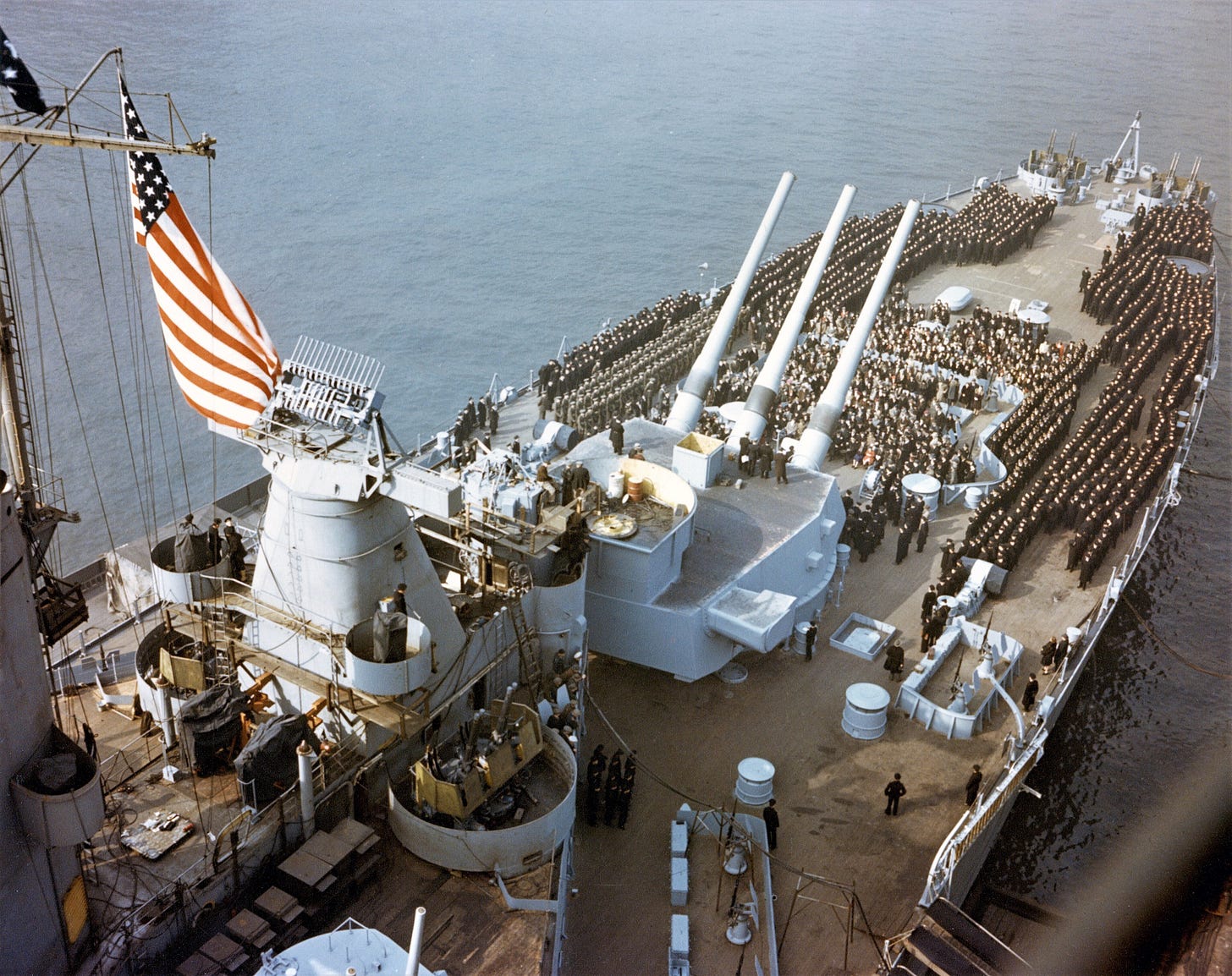
The Houthis show how the continentalization of the sea can be practiced by actors without a conventional navy. Since November 2023, they have used drones, cruise missiles, and anti-ship ballistic missiles to threaten commercial shipping and naval vessels in the Red Sea, turning a maritime corridor into a contested zone from land. The current Iran war extends this logic further: Iran has reportedly fired long-range missiles at Diego Garcia, a US-UK base in the Indian Ocean roughly 4,000 kilometers away. The lesson is that islands, ports, and distant bases are no longer sanctuaries. Long-range precision systems allow continental powers and their proxies to contest maritime space from shore without directly controlling the sea.
In this sense, the central challenge the West faces in the maritime realm is not only naval competition with China, but the continentalization of maritime space — the conversion of open sea into contested territory. We have already seen this logic unfold with the Houthis in the Red Sea and Iran in the Strait of Hormuz. China is an actor that can surpass those cases by several orders of magnitude; its current goal may not be a decisive naval battle, but rather to make access to its surrounding waters prohibitively costly. In this environment, sea power becomes a question of endurance. To project power across oceans for long periods, the United States must combine naval force with the “shopkeeping” foundations needed to command the seas.
Re-opening the Seas
The United States still retains the most traditional instruments of sea power: a powerful blue-water navy, aircraft carriers, and a global network of bases that give America the ability to project military power across oceans. But across nearly every other metric, the US has lost ground. It lacks a merchant navy, its shipbuilding output is negligible, and the state of its shipyards — with a declining workforce — is so poor that it has had to send US Navy ships to Japan for repairs, not as a matter of cost efficiency but for lack of capacity at home. No great naval power has endured without also being a great commercial maritime power, capable of sustaining trade, moving goods, and turning maritime wealth into strategic depth. Nor has any great naval power remained dominant without an industrial base capable of building and replacing its own warships. As they say, ships may win battles, but shipyards win wars.
In the last ten years, China built 6,765 commercial ships; Japan, 3,130; South Korea, 2,405. The United States built 37. China alone now accounts for 53 percent of the global commercial shipbuilding market; the United States, 0.1 percent.
America has compensated for its weakness in the commercial maritime domain with an informal bargain among its allies. Washington provided the military muscle while allied countries and their companies provided the maritime logistical depth. Japan and Korea provided the shipyards, together accounting for roughly 40 percent of global commercial vessel production, while European companies provided the merchant fleet of the West. Four European companies alone account for over half the world’s container fleet — MSC (Swiss-Italian, 19.9 percent), Maersk (Danish, 14.6 percent), CMA CGM (French, 12.7 percent), and Hapag-Lloyd (German, 7 perent). The US Navy provided the security umbrella under which the system flourished, protecting global supply lines by ensuring freedom of navigation for the ships of all nations.
That bargain worked reasonably well in an era when the sea was treated as a stable background condition of globalization. The return of maritime competition has exposed the fragility of the arrangement. Recent maritime disruptions in the Red Sea and the Strait of Hormuz revealed that the question was not only whether the US Navy could escort vessels, but whose vessels were being protected, under what authority, and with what political commitments from the states that benefited from American protection.
The United States therefore faces a hard choice. It can try to rebuild its own maritime and shipbuilding base at speed — but that will take years, and may never be sufficient on its own. Or it can formalize the maritime bargain with its allies, creating arrangements with allied governments and key shipping companies that would guarantee access to merchant vessels and their crews in the event of war or major crisis. This would not require nationalizing allied merchant fleets, but it would require a clearer framework of strategic availability.
This is where allied sea power becomes central. The goal should not be to make every ally dependent on American naval protection while their commercial fleets and industrial capacities remain strategically detached. American maritime strategy may already be reshaping along those lines. Washington has begun looking to Japan and South Korea as industrial partners in the reconstruction of American sea power. South Korea’s Hanwha acquired Philly Shipyard in 2024, giving one of Asia’s leading shipbuilders a direct foothold in the US industrial base, and has since expanded its role in US naval and commercial shipbuilding. Japan, meanwhile, is becoming central to American efforts to expand ship repair, maintenance, and potentially shipbuilding cooperation in the Western Pacific.
The same logic applies beyond shipyards. Greece is the world’s largest ship-owning country by deadweight tonnage; the United Kingdom is home to some of the world’s largest shipping companies and maritime insurers, alongside Denmark and the Netherlands, which add port and logistical capacities. These are the commercial and industrial foundations of sea power. A serious American maritime strategy would therefore not merely ask allies to spend more on defense. It would integrate their shipyards, fleets, ports, capital, and expertise into a common system capable of preserving Western hegemony at sea.
A New American Sea Power
The United States has always been tempted to turn away from the sea. Despite its two long coastlines, the sheer scale of its continental interior pulls the national imagination inwards. But America, thanks to its unique culture as a frontier society, offers an embrace of what the sea could truly mean for humanity that no present rival or past model could match.
At its essence, sea power is the use of an expanding space to maximize one’s capabilities against stronger or more populous enemies. Properly understood, it means orienting the energies of a nation toward communion with the maritime space, building a society open to risk, commerce, and techno-political imagination around the ocean. It implies the ability to open new worlds through the sea. Today we are approaching a new understanding of the sea, not only as a space for circulation or short-term resource exploitation, but as a new space to settle. That’s the new foundation of sea power that America can offer.
One advantage the US holds over China is that China lacks the capacity to protect its overseas interests. Even as it acquires assets overseas, its expansion of territorial claims at sea — via artificial islands — is best understood as an extension of Chinese continental needs. China is less able to settle the maritime frontier than the US is. That may decide the future of the seas.
The United States, then, can preserve the openness of the maritime system by preventing any continental power from enclosing key regions while enabling allied maritime capacity to grow. The paradox is that the maritime sovereignty of individual Western nations may depend on deeper collective integration, something poorly understood on both sides of the Atlantic. If the oceans become a patchwork of fortified regional spaces, the West loses not only military freedom of movement but the material foundation of its political order and the next frontier to conquer. Open seas are the operating system of Western strength. This is why the defense of innocent passage and open sea lanes cannot be framed merely as an American military project. It must be a common Western project: keeping the sea open enough to move through, stable enough to build upon, and protected enough that no continental power can threaten its freedom.
Civilization
•
Mahanian Mania
The Influence of Sea Power upon History — and upon the Future.
To rule the waves is to rule the world. Understanding this dictum allowed the West to overcome the pressure of larger continental powers and become the center of modern global civilization. Over the past century, however, the maritime domain was transformed into what appeared to be an almost invisible background condition, the background noise of globalization. The sea moved from the romantic world of daring explorers, privateers, and great admirals to the unglamorous domain of coast guard patrols, logistics, and insurance brokers.
That is no longer the case. The sea has once again become a visible, contested geopolitical space. But what is different in the 21st century is that such contests for maritime supremacy are now transforming the ocean from an open space of circulation into an increasingly enclosed and territorialized system.
That challenge to the global maritime order emerges, first, from the relative erosion of the naval capabilities of Western nations, including the United States, which ostensibly remains the dominant maritime power. Second, from technological developments — in the military domain, such as long-range weapons that can easily disrupt maritime supply lines, and in the civilian domain, technologies that allow for the exploitation of undersea resources — which have fundamentally altered the terms of that competition. Third, from the rise of China, an industrial, commercial, and increasingly naval power, one that holds a fundamentally different view of the seas than the West does.
To answer that challenge, the United States and the nations of the West cannot rely on naval military superiority alone. Born as an outpost of a merchant republic, America’s coastal cities were the core of the nation from its birth. But soon after the revolution, the conquest of the West shifted most of the country inland. Since then, the nation has oscillated between periods of deep infatuation with the call of the seas and inland introspection.
At Sea.
Subscribe and add Issue 008.
Add both to cart
Today the US Navy is the most powerful in the world, but the rest of the traditional American maritime economy is in terminal decline. That could be an advantage. Freed from the models of the past, the US can approach the maritime domain with fresh eyes. But in the new geopolitical context, even that may not be enough to sustain American maritime preeminence. The US must now do something it has never fully committed to: embrace its identity as a sea power in the fullest sense — commercial, industrial, technological, financial, and political. Open seas are the key to American global supremacy, and only a true sea-power identity can rebuff emerging rivals and the continentalization of the maritime domain.
What Is Sea Power?
The great popularizer of the concept of “sea power” was the American admiral Alfred Thayer Mahan, who published The Influence of Sea Power upon History in 1890. The book became an international bestseller and was read as a manual by key political leaders at home and abroad. Mahan advised Theodore Roosevelt on his campaign to turn the long-neglected US Navy into a force capable of challenging European rivals. Unintentionally, his ideas also influenced future enemies of the United States, most notably Kaiser Wilhelm II and Emperor Hirohito of Japan.
Mahan understood that war at sea has always been total war: “The control of the seas, and especially along the great lines drawn by national interest or national commerce, is the chief among the merely material elements in the power and prosperity of nations. It is so because the sea is the world’s great medium of circulation.” He saw sea power as the industrial-era fusion of naval strength, commercial shipping, overseas markets, colonies and coaling stations, and national productive capacity. For Mahan, command of the sea meant securing the maritime circulation of goods, capital, and strategic resources that sustained an industrial economy capable of winning wars.
A great power needed fleets, but also shipyards, a merchant marine, a civilian commercial fleet that could carry trade in peacetime and support national logistics in war, ports, and a political culture supportive of sea power.
A contemporary of Mahan, the turn-of-the-century British strategist Julian Corbett placed even more weight on a holistic vision of sea power: “Command of the sea… means nothing but the control of maritime communications.” Mahan’s understanding of sea power was broad and incorporated multiple dimensions, but his logic still pointed toward one central purpose: enabling a powerful navy to win decisive battles at sea. Where Mahan argued that “the enemy’s ships and fleets are the true objects to be assailed,” Corbett countered that “naval warfare does not begin and end with the destruction of the enemy’s battle-fleet.”
For Corbett, sea power became the architecture of a national grand strategy: a system in which trade, finance, industry, logistics, and naval force worked together to shape the global balance of power through control of the sea. Corbett’s current intellectual heir, the historian Andrew Lambert, argues that sea power cannot be reduced to material capabilities alone — it requires the political decision of a nation to make the sea the center of its imagination and economy. Rome, Habsburg Spain, and even Peter the Great’s Russia all had large navies, but their center of gravity did not pulse toward the seas. By contrast, the nations Lambert sees as the true embodiment of sea power — Athens, Venice, and Britain — were societies fundamentally shaped by and dependent on the seas.
The strategic logic of sea power can be seen in the classic example of Britain during the Napoleonic Wars. A “nation of shopkeepers” defeated the greatest general of the era by using the sea to strangle French power from afar — blockading French and allied ports, controlling trade routes, and subsidizing allied armies to fight Napoleon on land while keeping British boots off the continent.
The Royal Navy was the instrument of this strategy: one of the most meritocratic institutions of its age, manned by superbly trained sailors and led by commanders of genius such as Horatio Nelson. But the glory of Nelson’s martyrdom at Trafalgar would have meant little without Britain’s capacity to sustain those blockades for years. The British turned the sea into a force multiplier against Napoleon through total national mobilization, in which the navy was inseparable from the factory, the banker, and the accountants who built the sophisticated logistics that kept ships at sea for months at a time. It was “shopkeeping” as much as the discipline of British sailors that defeated Napoleon.
How China Is Expanding Its Maritime Power
The American position against China today is not equivalent to Britain’s position against Napoleon. America is not materially weaker in the same way, though it has deindustrialized. But the strategic logic is similar: the United States must use command of the seas, finance, alliances, technology, and a network of bases to offset China’s advantages in industrial scale and manpower.
The particular challenge that China poses, compared to Napoleonic France, is that it is much more than a continental empire to be contained from the sea. China is also a shipbuilding and manufacturing superpower, actively trying to contest the maritime order that once allowed sea powers to defeat larger continental rivals. Although China lacks a navy capable of projecting power overseas, it might be growing powerful enough to deny the US Navy control over Chinese waters. The naval historian Lincoln P. Paine observes that after the Second World War, “the US fleet exists to project power and safeguard trade, not to fight fleets of comparable capabilities, because there are none.” That won’t be true for much longer.
In recent years, China has become a more advanced student of Mahan’s and Corbett’s gospel of sea power than the United States itself. China has also learned from the failures of previous challengers to British and American naval supremacy, and has gone well beyond simply building more warships.
Shipbuilding sits at the center of an ecosystem of highly strategic supply chains. In the East Asian development experience of Korea and Japan, shipbuilding became a linchpin of industrial development because it allowed those countries to build up capacity in sectors like steel, transportation, and energy, producing large conglomerates that spanned multiple areas of the economy — Honda, Mitsubishi, Samsung.
China followed a similar path, but — as in many other sectors — has used its immense capacity to scale toward a wider ecosystem in ways its competitors couldn’t: shipyards, a merchant fleet, advanced port infrastructure, coast guard forces, fishing fleets, logistics networks, and even gray private security actors that can be deployed to protect Chinese interests in Africa and Central Asia while denying any direct military intervention. Quite the achievement for a nation that spent centuries banning its people from venturing out to seas.
By 2024, China accounted for 53 percent of the global commercial shipbuilding market, up from just five percent in 2000. China’s largest state-owned shipbuilder, CSSC, delivered more commercial tonnage in 2024 than the entire US shipbuilding industry has produced since the end of World War II. Many of these Chinese shipyards are dual-use, both building the merchant vessels that carry global trade and modernizing the People’s Liberation Army Navy (PLAN). Chinese cargo vessels are also capable of resupplying PLAN ships and of carrying container-sized missile launchers deployable from the decks of ordinary Chinese merchant vessels.
As per Corbett, Beijing is preparing to command the sea in wartime while embedding itself into the everyday architecture through which global maritime commerce moves. This is what makes the Chinese challenge different from a purely military naval arms race.
Chinese firms, above all COSCO Shipping and other state-linked companies, have acquired stakes in critical ports and maritime infrastructure across Europe, Africa, Latin America, and Asia. Although Beijing presents these acquisitions as commercial, the reality is geopolitical. In March 2025, under pressure from the Trump administration, CK Hutchison — a Hong Kong-based firm that had managed terminals at both ends of the Panama Canal — announced an agreement to sell most of its global ports business to a BlackRock-led consortium. The agreement included a 90 percent stake in Panama Ports Company. Beijing denounced the sale as contrary to China’s national interest and immediately ramped up inspections of Panama-flagged ships in its waters, threatening one of Panama’s main streams of revenue.
China’s maritime power also operates in the gray zone between state and private, civilian and military. Its maritime militia and fishing fleets already perform coercive functions in disputed waters. Chinese private security companies have expanded abroad alongside Belt and Road projects, providing armed escort against pirates, intelligence services, and protection for state-owned fisheries — often in a legal gray zone where the line between private firm and state interest is deliberately blurred. Counting only destroyers and aircraft carriers leaves too much out of the picture to understand China’s real strength at sea.
The Continentalization of the Sea
The question of sovereignty over the seas is not new. The classic debate set the idea of open seas, upheld by the Dutch philosopher Hugo Grotius’s Mare Liberum (1609), which argued that no state could own the ocean and that maritime trade should remain free, against English jurist John Selden’s Mare Clausum (1635), which defended the idea that seas could be claimed, enclosed, and governed by states. Both positions, however, shared a vision of the maritime domain as an endless space of circulation, meant to be charted. The debate about sovereignty over the seas was ultimately about who could navigate through them.
In the 21st century, the proliferation of new technologies capable of exploiting subsea natural resources has given new urgency and a different meaning to this centuries-old question. Disputes over Exclusive Economic Zones (EEZs), as well as seabed resources, fisheries, and maritime chokepoints, have multiplied. (An EEZ is the 200 nautical miles from a state’s coast, where the state does not have full sovereignty but has special rights over resources.) The past decade has seen a sharp rise in conflicts — such as that in the Eastern Mediterranean among Turkey, Greece, Cyprus, Egypt, Israel, and Lebanon over gas fields, pipelines, and drilling rights. In 2020, Turkish seismic surveys in disputed waters produced direct naval tensions with Greece, including a collision between Greek and Turkish frigates. Athens called for support from its European partners, but with meager success — both Turkey and Greece are NATO members.
In the South China Sea, Beijing has used a more sophisticated approach: creating artificial islands — which expand China’s land surface in the area and with it its “legal” claim to territorial waters and EEZs across the disputed region — and deploying maritime militia and fishing fleets to back territorial claims through fait accompli.
What is new is that this logic now reaches downward, into the seabed. Polymetallic nodules, cobalt-rich crusts, and deep-sea sulfides are becoming part of the critical minerals race. In its quest to become independent of China’s rare earth chokeholds, the Trump administration issued an executive order in 2025 that explicitly framed offshore and deep-seabed minerals as a national security and economic priority. Meanwhile, China already holds multiple exploration contracts with the International Seabed Authority, including in the Clarion-Clipperton Zone, a vast deep-sea region of the Pacific containing some of the world’s most abundant polymetallic nodule deposits, the minerals needed for batteries, power grids, data centers, robots, and the AI economy as a whole.
The result is that parts of the high seas are no longer simply open spaces of navigation, but increasingly pre-allocated as future zones of resource extraction. Even fisheries are part of this appropriation, as recent tensions between Argentina and Chinese fishing fleets in Argentine waters illustrate.
The traditional image of the ocean as a vast global commons — a highway over which great powers project naval and commercial power — still matters. But it is increasingly incomplete. States are no longer fighting only over command of sea lanes, but for the resources beneath them. They are fighting over the sea as land. The result is a new politics of sea appropriation in tension with the logic of circulation.
The sea was historically an open space — fluid, mobile, and more resistant to enclosure than land, under fewer political constraints. But in the industrial era, as Carl Schmitt wrote in his 1942 book Land and Sea, “The sea is today no longer an element as it was in the time of the whale hunters and corsairs. Today’s transportation and communications technology has made the sea into a space in the contemporary sense of the word. Today, in times of peace, every shipowner can know daily and hourly at which point in the ocean his ship on the high sea is to be found.” The dragons, in other words, are gone.
The Houthis show how the continentalization of the sea can be practiced by actors without a conventional navy. Since November 2023, they have used drones, cruise missiles, and anti-ship ballistic missiles to threaten commercial shipping and naval vessels in the Red Sea, turning a maritime corridor into a contested zone from land. The current Iran war extends this logic further: Iran has reportedly fired long-range missiles at Diego Garcia, a US-UK base in the Indian Ocean roughly 4,000 kilometers away. The lesson is that islands, ports, and distant bases are no longer sanctuaries. Long-range precision systems allow continental powers and their proxies to contest maritime space from shore without directly controlling the sea.
In this sense, the central challenge the West faces in the maritime realm is not only naval competition with China, but the continentalization of maritime space — the conversion of open sea into contested territory. We have already seen this logic unfold with the Houthis in the Red Sea and Iran in the Strait of Hormuz. China is an actor that can surpass those cases by several orders of magnitude; its current goal may not be a decisive naval battle, but rather to make access to its surrounding waters prohibitively costly. In this environment, sea power becomes a question of endurance. To project power across oceans for long periods, the United States must combine naval force with the “shopkeeping” foundations needed to command the seas.
Re-opening the Seas
The United States still retains the most traditional instruments of sea power: a powerful blue-water navy, aircraft carriers, and a global network of bases that give America the ability to project military power across oceans. But across nearly every other metric, the US has lost ground. It lacks a merchant navy, its shipbuilding output is negligible, and the state of its shipyards — with a declining workforce — is so poor that it has had to send US Navy ships to Japan for repairs, not as a matter of cost efficiency but for lack of capacity at home. No great naval power has endured without also being a great commercial maritime power, capable of sustaining trade, moving goods, and turning maritime wealth into strategic depth. Nor has any great naval power remained dominant without an industrial base capable of building and replacing its own warships. As they say, ships may win battles, but shipyards win wars.
In the last ten years, China built 6,765 commercial ships; Japan, 3,130; South Korea, 2,405. The United States built 37. China alone now accounts for 53 percent of the global commercial shipbuilding market; the United States, 0.1 percent.
America has compensated for its weakness in the commercial maritime domain with an informal bargain among its allies. Washington provided the military muscle while allied countries and their companies provided the maritime logistical depth. Japan and Korea provided the shipyards, together accounting for roughly 40 percent of global commercial vessel production, while European companies provided the merchant fleet of the West. Four European companies alone account for over half the world’s container fleet — MSC (Swiss-Italian, 19.9 percent), Maersk (Danish, 14.6 percent), CMA CGM (French, 12.7 percent), and Hapag-Lloyd (German, 7 perent). The US Navy provided the security umbrella under which the system flourished, protecting global supply lines by ensuring freedom of navigation for the ships of all nations.
That bargain worked reasonably well in an era when the sea was treated as a stable background condition of globalization. The return of maritime competition has exposed the fragility of the arrangement. Recent maritime disruptions in the Red Sea and the Strait of Hormuz revealed that the question was not only whether the US Navy could escort vessels, but whose vessels were being protected, under what authority, and with what political commitments from the states that benefited from American protection.
The United States therefore faces a hard choice. It can try to rebuild its own maritime and shipbuilding base at speed — but that will take years, and may never be sufficient on its own. Or it can formalize the maritime bargain with its allies, creating arrangements with allied governments and key shipping companies that would guarantee access to merchant vessels and their crews in the event of war or major crisis. This would not require nationalizing allied merchant fleets, but it would require a clearer framework of strategic availability.
This is where allied sea power becomes central. The goal should not be to make every ally dependent on American naval protection while their commercial fleets and industrial capacities remain strategically detached. American maritime strategy may already be reshaping along those lines. Washington has begun looking to Japan and South Korea as industrial partners in the reconstruction of American sea power. South Korea’s Hanwha acquired Philly Shipyard in 2024, giving one of Asia’s leading shipbuilders a direct foothold in the US industrial base, and has since expanded its role in US naval and commercial shipbuilding. Japan, meanwhile, is becoming central to American efforts to expand ship repair, maintenance, and potentially shipbuilding cooperation in the Western Pacific.
The same logic applies beyond shipyards. Greece is the world’s largest ship-owning country by deadweight tonnage; the United Kingdom is home to some of the world’s largest shipping companies and maritime insurers, alongside Denmark and the Netherlands, which add port and logistical capacities. These are the commercial and industrial foundations of sea power. A serious American maritime strategy would therefore not merely ask allies to spend more on defense. It would integrate their shipyards, fleets, ports, capital, and expertise into a common system capable of preserving Western hegemony at sea.
A New American Sea Power
The United States has always been tempted to turn away from the sea. Despite its two long coastlines, the sheer scale of its continental interior pulls the national imagination inwards. But America, thanks to its unique culture as a frontier society, offers an embrace of what the sea could truly mean for humanity that no present rival or past model could match.
At its essence, sea power is the use of an expanding space to maximize one’s capabilities against stronger or more populous enemies. Properly understood, it means orienting the energies of a nation toward communion with the maritime space, building a society open to risk, commerce, and techno-political imagination around the ocean. It implies the ability to open new worlds through the sea. Today we are approaching a new understanding of the sea, not only as a space for circulation or short-term resource exploitation, but as a new space to settle. That’s the new foundation of sea power that America can offer.
One advantage the US holds over China is that China lacks the capacity to protect its overseas interests. Even as it acquires assets overseas, its expansion of territorial claims at sea — via artificial islands — is best understood as an extension of Chinese continental needs. China is less able to settle the maritime frontier than the US is. That may decide the future of the seas.
The United States, then, can preserve the openness of the maritime system by preventing any continental power from enclosing key regions while enabling allied maritime capacity to grow. The paradox is that the maritime sovereignty of individual Western nations may depend on deeper collective integration, something poorly understood on both sides of the Atlantic. If the oceans become a patchwork of fortified regional spaces, the West loses not only military freedom of movement but the material foundation of its political order and the next frontier to conquer. Open seas are the operating system of Western strength. This is why the defense of innocent passage and open sea lanes cannot be framed merely as an American military project. It must be a common Western project: keeping the sea open enough to move through, stable enough to build upon, and protected enough that no continental power can threaten its freedom.
Civilization
•
Mahanian Mania
The Influence of Sea Power upon History — and upon the Future.
To rule the waves is to rule the world. Understanding this dictum allowed the West to overcome the pressure of larger continental powers and become the center of modern global civilization. Over the past century, however, the maritime domain was transformed into what appeared to be an almost invisible background condition, the background noise of globalization. The sea moved from the romantic world of daring explorers, privateers, and great admirals to the unglamorous domain of coast guard patrols, logistics, and insurance brokers.
That is no longer the case. The sea has once again become a visible, contested geopolitical space. But what is different in the 21st century is that such contests for maritime supremacy are now transforming the ocean from an open space of circulation into an increasingly enclosed and territorialized system.
That challenge to the global maritime order emerges, first, from the relative erosion of the naval capabilities of Western nations, including the United States, which ostensibly remains the dominant maritime power. Second, from technological developments — in the military domain, such as long-range weapons that can easily disrupt maritime supply lines, and in the civilian domain, technologies that allow for the exploitation of undersea resources — which have fundamentally altered the terms of that competition. Third, from the rise of China, an industrial, commercial, and increasingly naval power, one that holds a fundamentally different view of the seas than the West does.
To answer that challenge, the United States and the nations of the West cannot rely on naval military superiority alone. Born as an outpost of a merchant republic, America’s coastal cities were the core of the nation from its birth. But soon after the revolution, the conquest of the West shifted most of the country inland. Since then, the nation has oscillated between periods of deep infatuation with the call of the seas and inland introspection.
At Sea.
Subscribe and add Issue 008.
Add both to cart
Today the US Navy is the most powerful in the world, but the rest of the traditional American maritime economy is in terminal decline. That could be an advantage. Freed from the models of the past, the US can approach the maritime domain with fresh eyes. But in the new geopolitical context, even that may not be enough to sustain American maritime preeminence. The US must now do something it has never fully committed to: embrace its identity as a sea power in the fullest sense — commercial, industrial, technological, financial, and political. Open seas are the key to American global supremacy, and only a true sea-power identity can rebuff emerging rivals and the continentalization of the maritime domain.
What Is Sea Power?
The great popularizer of the concept of “sea power” was the American admiral Alfred Thayer Mahan, who published The Influence of Sea Power upon History in 1890. The book became an international bestseller and was read as a manual by key political leaders at home and abroad. Mahan advised Theodore Roosevelt on his campaign to turn the long-neglected US Navy into a force capable of challenging European rivals. Unintentionally, his ideas also influenced future enemies of the United States, most notably Kaiser Wilhelm II and Emperor Hirohito of Japan.
Mahan understood that war at sea has always been total war: “The control of the seas, and especially along the great lines drawn by national interest or national commerce, is the chief among the merely material elements in the power and prosperity of nations. It is so because the sea is the world’s great medium of circulation.” He saw sea power as the industrial-era fusion of naval strength, commercial shipping, overseas markets, colonies and coaling stations, and national productive capacity. For Mahan, command of the sea meant securing the maritime circulation of goods, capital, and strategic resources that sustained an industrial economy capable of winning wars.
A great power needed fleets, but also shipyards, a merchant marine, a civilian commercial fleet that could carry trade in peacetime and support national logistics in war, ports, and a political culture supportive of sea power.
A contemporary of Mahan, the turn-of-the-century British strategist Julian Corbett placed even more weight on a holistic vision of sea power: “Command of the sea… means nothing but the control of maritime communications.” Mahan’s understanding of sea power was broad and incorporated multiple dimensions, but his logic still pointed toward one central purpose: enabling a powerful navy to win decisive battles at sea. Where Mahan argued that “the enemy’s ships and fleets are the true objects to be assailed,” Corbett countered that “naval warfare does not begin and end with the destruction of the enemy’s battle-fleet.”
For Corbett, sea power became the architecture of a national grand strategy: a system in which trade, finance, industry, logistics, and naval force worked together to shape the global balance of power through control of the sea. Corbett’s current intellectual heir, the historian Andrew Lambert, argues that sea power cannot be reduced to material capabilities alone — it requires the political decision of a nation to make the sea the center of its imagination and economy. Rome, Habsburg Spain, and even Peter the Great’s Russia all had large navies, but their center of gravity did not pulse toward the seas. By contrast, the nations Lambert sees as the true embodiment of sea power — Athens, Venice, and Britain — were societies fundamentally shaped by and dependent on the seas.
The strategic logic of sea power can be seen in the classic example of Britain during the Napoleonic Wars. A “nation of shopkeepers” defeated the greatest general of the era by using the sea to strangle French power from afar — blockading French and allied ports, controlling trade routes, and subsidizing allied armies to fight Napoleon on land while keeping British boots off the continent.
The Royal Navy was the instrument of this strategy: one of the most meritocratic institutions of its age, manned by superbly trained sailors and led by commanders of genius such as Horatio Nelson. But the glory of Nelson’s martyrdom at Trafalgar would have meant little without Britain’s capacity to sustain those blockades for years. The British turned the sea into a force multiplier against Napoleon through total national mobilization, in which the navy was inseparable from the factory, the banker, and the accountants who built the sophisticated logistics that kept ships at sea for months at a time. It was “shopkeeping” as much as the discipline of British sailors that defeated Napoleon.
How China Is Expanding Its Maritime Power
The American position against China today is not equivalent to Britain’s position against Napoleon. America is not materially weaker in the same way, though it has deindustrialized. But the strategic logic is similar: the United States must use command of the seas, finance, alliances, technology, and a network of bases to offset China’s advantages in industrial scale and manpower.
The particular challenge that China poses, compared to Napoleonic France, is that it is much more than a continental empire to be contained from the sea. China is also a shipbuilding and manufacturing superpower, actively trying to contest the maritime order that once allowed sea powers to defeat larger continental rivals. Although China lacks a navy capable of projecting power overseas, it might be growing powerful enough to deny the US Navy control over Chinese waters. The naval historian Lincoln P. Paine observes that after the Second World War, “the US fleet exists to project power and safeguard trade, not to fight fleets of comparable capabilities, because there are none.” That won’t be true for much longer.
In recent years, China has become a more advanced student of Mahan’s and Corbett’s gospel of sea power than the United States itself. China has also learned from the failures of previous challengers to British and American naval supremacy, and has gone well beyond simply building more warships.
Shipbuilding sits at the center of an ecosystem of highly strategic supply chains. In the East Asian development experience of Korea and Japan, shipbuilding became a linchpin of industrial development because it allowed those countries to build up capacity in sectors like steel, transportation, and energy, producing large conglomerates that spanned multiple areas of the economy — Honda, Mitsubishi, Samsung.
China followed a similar path, but — as in many other sectors — has used its immense capacity to scale toward a wider ecosystem in ways its competitors couldn’t: shipyards, a merchant fleet, advanced port infrastructure, coast guard forces, fishing fleets, logistics networks, and even gray private security actors that can be deployed to protect Chinese interests in Africa and Central Asia while denying any direct military intervention. Quite the achievement for a nation that spent centuries banning its people from venturing out to seas.
By 2024, China accounted for 53 percent of the global commercial shipbuilding market, up from just five percent in 2000. China’s largest state-owned shipbuilder, CSSC, delivered more commercial tonnage in 2024 than the entire US shipbuilding industry has produced since the end of World War II. Many of these Chinese shipyards are dual-use, both building the merchant vessels that carry global trade and modernizing the People’s Liberation Army Navy (PLAN). Chinese cargo vessels are also capable of resupplying PLAN ships and of carrying container-sized missile launchers deployable from the decks of ordinary Chinese merchant vessels.
As per Corbett, Beijing is preparing to command the sea in wartime while embedding itself into the everyday architecture through which global maritime commerce moves. This is what makes the Chinese challenge different from a purely military naval arms race.
Chinese firms, above all COSCO Shipping and other state-linked companies, have acquired stakes in critical ports and maritime infrastructure across Europe, Africa, Latin America, and Asia. Although Beijing presents these acquisitions as commercial, the reality is geopolitical. In March 2025, under pressure from the Trump administration, CK Hutchison — a Hong Kong-based firm that had managed terminals at both ends of the Panama Canal — announced an agreement to sell most of its global ports business to a BlackRock-led consortium. The agreement included a 90 percent stake in Panama Ports Company. Beijing denounced the sale as contrary to China’s national interest and immediately ramped up inspections of Panama-flagged ships in its waters, threatening one of Panama’s main streams of revenue.
China’s maritime power also operates in the gray zone between state and private, civilian and military. Its maritime militia and fishing fleets already perform coercive functions in disputed waters. Chinese private security companies have expanded abroad alongside Belt and Road projects, providing armed escort against pirates, intelligence services, and protection for state-owned fisheries — often in a legal gray zone where the line between private firm and state interest is deliberately blurred. Counting only destroyers and aircraft carriers leaves too much out of the picture to understand China’s real strength at sea.
The Continentalization of the Sea
The question of sovereignty over the seas is not new. The classic debate set the idea of open seas, upheld by the Dutch philosopher Hugo Grotius’s Mare Liberum (1609), which argued that no state could own the ocean and that maritime trade should remain free, against English jurist John Selden’s Mare Clausum (1635), which defended the idea that seas could be claimed, enclosed, and governed by states. Both positions, however, shared a vision of the maritime domain as an endless space of circulation, meant to be charted. The debate about sovereignty over the seas was ultimately about who could navigate through them.
In the 21st century, the proliferation of new technologies capable of exploiting subsea natural resources has given new urgency and a different meaning to this centuries-old question. Disputes over Exclusive Economic Zones (EEZs), as well as seabed resources, fisheries, and maritime chokepoints, have multiplied. (An EEZ is the 200 nautical miles from a state’s coast, where the state does not have full sovereignty but has special rights over resources.) The past decade has seen a sharp rise in conflicts — such as that in the Eastern Mediterranean among Turkey, Greece, Cyprus, Egypt, Israel, and Lebanon over gas fields, pipelines, and drilling rights. In 2020, Turkish seismic surveys in disputed waters produced direct naval tensions with Greece, including a collision between Greek and Turkish frigates. Athens called for support from its European partners, but with meager success — both Turkey and Greece are NATO members.
In the South China Sea, Beijing has used a more sophisticated approach: creating artificial islands — which expand China’s land surface in the area and with it its “legal” claim to territorial waters and EEZs across the disputed region — and deploying maritime militia and fishing fleets to back territorial claims through fait accompli.
What is new is that this logic now reaches downward, into the seabed. Polymetallic nodules, cobalt-rich crusts, and deep-sea sulfides are becoming part of the critical minerals race. In its quest to become independent of China’s rare earth chokeholds, the Trump administration issued an executive order in 2025 that explicitly framed offshore and deep-seabed minerals as a national security and economic priority. Meanwhile, China already holds multiple exploration contracts with the International Seabed Authority, including in the Clarion-Clipperton Zone, a vast deep-sea region of the Pacific containing some of the world’s most abundant polymetallic nodule deposits, the minerals needed for batteries, power grids, data centers, robots, and the AI economy as a whole.
The result is that parts of the high seas are no longer simply open spaces of navigation, but increasingly pre-allocated as future zones of resource extraction. Even fisheries are part of this appropriation, as recent tensions between Argentina and Chinese fishing fleets in Argentine waters illustrate.
The traditional image of the ocean as a vast global commons — a highway over which great powers project naval and commercial power — still matters. But it is increasingly incomplete. States are no longer fighting only over command of sea lanes, but for the resources beneath them. They are fighting over the sea as land. The result is a new politics of sea appropriation in tension with the logic of circulation.
The sea was historically an open space — fluid, mobile, and more resistant to enclosure than land, under fewer political constraints. But in the industrial era, as Carl Schmitt wrote in his 1942 book Land and Sea, “The sea is today no longer an element as it was in the time of the whale hunters and corsairs. Today’s transportation and communications technology has made the sea into a space in the contemporary sense of the word. Today, in times of peace, every shipowner can know daily and hourly at which point in the ocean his ship on the high sea is to be found.” The dragons, in other words, are gone.
The Houthis show how the continentalization of the sea can be practiced by actors without a conventional navy. Since November 2023, they have used drones, cruise missiles, and anti-ship ballistic missiles to threaten commercial shipping and naval vessels in the Red Sea, turning a maritime corridor into a contested zone from land. The current Iran war extends this logic further: Iran has reportedly fired long-range missiles at Diego Garcia, a US-UK base in the Indian Ocean roughly 4,000 kilometers away. The lesson is that islands, ports, and distant bases are no longer sanctuaries. Long-range precision systems allow continental powers and their proxies to contest maritime space from shore without directly controlling the sea.
In this sense, the central challenge the West faces in the maritime realm is not only naval competition with China, but the continentalization of maritime space — the conversion of open sea into contested territory. We have already seen this logic unfold with the Houthis in the Red Sea and Iran in the Strait of Hormuz. China is an actor that can surpass those cases by several orders of magnitude; its current goal may not be a decisive naval battle, but rather to make access to its surrounding waters prohibitively costly. In this environment, sea power becomes a question of endurance. To project power across oceans for long periods, the United States must combine naval force with the “shopkeeping” foundations needed to command the seas.
Re-opening the Seas
The United States still retains the most traditional instruments of sea power: a powerful blue-water navy, aircraft carriers, and a global network of bases that give America the ability to project military power across oceans. But across nearly every other metric, the US has lost ground. It lacks a merchant navy, its shipbuilding output is negligible, and the state of its shipyards — with a declining workforce — is so poor that it has had to send US Navy ships to Japan for repairs, not as a matter of cost efficiency but for lack of capacity at home. No great naval power has endured without also being a great commercial maritime power, capable of sustaining trade, moving goods, and turning maritime wealth into strategic depth. Nor has any great naval power remained dominant without an industrial base capable of building and replacing its own warships. As they say, ships may win battles, but shipyards win wars.
In the last ten years, China built 6,765 commercial ships; Japan, 3,130; South Korea, 2,405. The United States built 37. China alone now accounts for 53 percent of the global commercial shipbuilding market; the United States, 0.1 percent.
America has compensated for its weakness in the commercial maritime domain with an informal bargain among its allies. Washington provided the military muscle while allied countries and their companies provided the maritime logistical depth. Japan and Korea provided the shipyards, together accounting for roughly 40 percent of global commercial vessel production, while European companies provided the merchant fleet of the West. Four European companies alone account for over half the world’s container fleet — MSC (Swiss-Italian, 19.9 percent), Maersk (Danish, 14.6 percent), CMA CGM (French, 12.7 percent), and Hapag-Lloyd (German, 7 perent). The US Navy provided the security umbrella under which the system flourished, protecting global supply lines by ensuring freedom of navigation for the ships of all nations.
That bargain worked reasonably well in an era when the sea was treated as a stable background condition of globalization. The return of maritime competition has exposed the fragility of the arrangement. Recent maritime disruptions in the Red Sea and the Strait of Hormuz revealed that the question was not only whether the US Navy could escort vessels, but whose vessels were being protected, under what authority, and with what political commitments from the states that benefited from American protection.
The United States therefore faces a hard choice. It can try to rebuild its own maritime and shipbuilding base at speed — but that will take years, and may never be sufficient on its own. Or it can formalize the maritime bargain with its allies, creating arrangements with allied governments and key shipping companies that would guarantee access to merchant vessels and their crews in the event of war or major crisis. This would not require nationalizing allied merchant fleets, but it would require a clearer framework of strategic availability.
This is where allied sea power becomes central. The goal should not be to make every ally dependent on American naval protection while their commercial fleets and industrial capacities remain strategically detached. American maritime strategy may already be reshaping along those lines. Washington has begun looking to Japan and South Korea as industrial partners in the reconstruction of American sea power. South Korea’s Hanwha acquired Philly Shipyard in 2024, giving one of Asia’s leading shipbuilders a direct foothold in the US industrial base, and has since expanded its role in US naval and commercial shipbuilding. Japan, meanwhile, is becoming central to American efforts to expand ship repair, maintenance, and potentially shipbuilding cooperation in the Western Pacific.
The same logic applies beyond shipyards. Greece is the world’s largest ship-owning country by deadweight tonnage; the United Kingdom is home to some of the world’s largest shipping companies and maritime insurers, alongside Denmark and the Netherlands, which add port and logistical capacities. These are the commercial and industrial foundations of sea power. A serious American maritime strategy would therefore not merely ask allies to spend more on defense. It would integrate their shipyards, fleets, ports, capital, and expertise into a common system capable of preserving Western hegemony at sea.
A New American Sea Power
The United States has always been tempted to turn away from the sea. Despite its two long coastlines, the sheer scale of its continental interior pulls the national imagination inwards. But America, thanks to its unique culture as a frontier society, offers an embrace of what the sea could truly mean for humanity that no present rival or past model could match.
At its essence, sea power is the use of an expanding space to maximize one’s capabilities against stronger or more populous enemies. Properly understood, it means orienting the energies of a nation toward communion with the maritime space, building a society open to risk, commerce, and techno-political imagination around the ocean. It implies the ability to open new worlds through the sea. Today we are approaching a new understanding of the sea, not only as a space for circulation or short-term resource exploitation, but as a new space to settle. That’s the new foundation of sea power that America can offer.
One advantage the US holds over China is that China lacks the capacity to protect its overseas interests. Even as it acquires assets overseas, its expansion of territorial claims at sea — via artificial islands — is best understood as an extension of Chinese continental needs. China is less able to settle the maritime frontier than the US is. That may decide the future of the seas.
The United States, then, can preserve the openness of the maritime system by preventing any continental power from enclosing key regions while enabling allied maritime capacity to grow. The paradox is that the maritime sovereignty of individual Western nations may depend on deeper collective integration, something poorly understood on both sides of the Atlantic. If the oceans become a patchwork of fortified regional spaces, the West loses not only military freedom of movement but the material foundation of its political order and the next frontier to conquer. Open seas are the operating system of Western strength. This is why the defense of innocent passage and open sea lanes cannot be framed merely as an American military project. It must be a common Western project: keeping the sea open enough to move through, stable enough to build upon, and protected enough that no continental power can threaten its freedom.
About the Author
Miquel Vila is a geopolitical risk strategist and a non-resident fellow at the Orion Policy Institute. He can be found on X at: @MiquelVilam.