tt
tt
tt
tt
tt
tt
Technology
•
The Stations to Come
Vast, a space technology firm, is building for a post-ISS orbital future.

In the summer of 1975, an American Apollo module docked with a Soviet Soyuz capsule in low Earth orbit (LEO), at an altitude of approximately 140 miles. The Apollo program had been a national project designed to land a man on the Moon before the Soviets — and it did. But its final manned flight achieved something else entirely. The Apollo-Soyuz “handshake in Space,” the first orbital rendezvous between the two spacefaring powers, was seen by many as the final act of the Space Race between the Americans and the Soviets, and the beginning of a new era marked by cooperation.
Multiple projects were proposed to mark this new era — modular stations, joint missions. But costs mounted, and the Soviet Union collapsed. Eventually, Russia, which inherited much of the USSR’s spacefaring infrastructure, and America combined their efforts. The result was the International Space Station (ISS) in September 1993, the most expensive structure ever built at over $150 billion. It was assembled piece by piece in orbit over more than a decade, beginning in 1998 and reaching major completion in 2011. It was a triumph of post-Cold War globalization: America and Russia provided the bulk of the components; European, Canadian and Japanese modules gradually joined to form a single structure. In total, it took roughly thirteen years of continuous assembly and international coordination for the ISS to become what it is today: a functioning and continuous human outpost in LEO. The only other operational space station in orbit is China’s Tiangong, launched in 2021.
The ISS is now twenty-five years old, suffers from material fatigue and costs taxpayers roughly $3 billion annually. NASA plans on decommissioning it by 2030. The United States has not built another space station since.
✺
At a 90,000-square-foot facility in Long Beach, California, Vast is vying to become the ISS successor with its proposed space station, Haven-2.
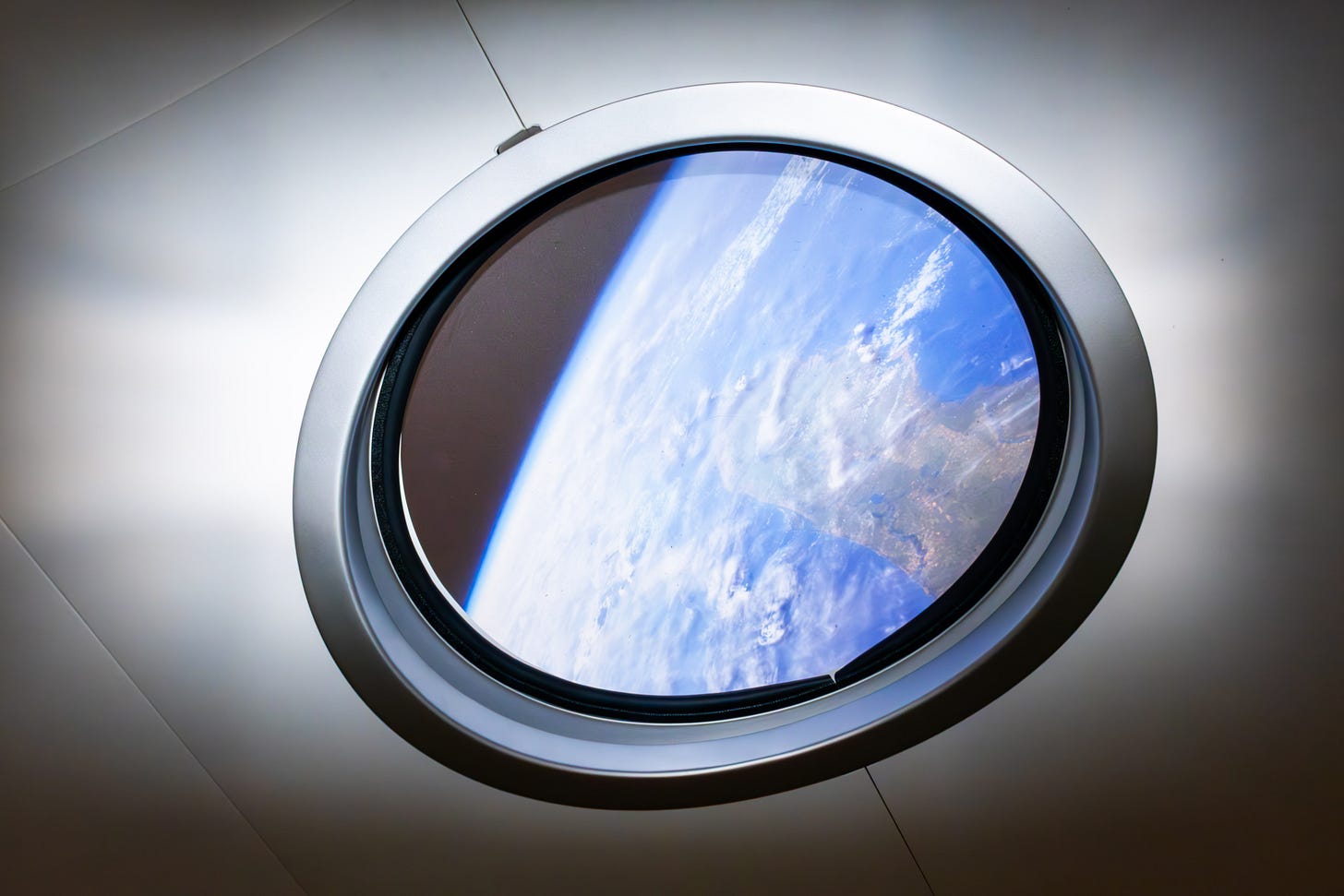
The guest lobby at Vast feels like the inside of a very luxurious space shuttle — rounded, tall, grey, futuristic, with a central tree growing up into the sky. Vast repurposed former distribution warehouses for aerospace use, with three buildings spanning manufacturing, testing, integration, and astronaut training, Standard operating procedures are strictly followed on the factory floors. Earplugs and safety goggles are neatly arranged in cabinets, with clean room suits on racks available at multiple checkpoints. There are pillars here and there holding protective headgear. Each building has its own communal cafeteria, and lunch is being served during our visit. People are very excited about the burrito station.
Vast was founded by entrepreneur Jed McCaleb in 2021. When I asked Vast CEO Max Haot about the company’s name he explained: “Jed named it Vast because space is vast.”
Haot was born in Belgium. He taught himself to code as a child and moved to the UK after graduating high school. In London, while working at the sports management company IMG, Haot pursued his interests in live television and the internet by developing websites, scoring and real-time video platforms for organizations like Manchester United and Wimbledon, learning English along the way. He moved to the United States after Verizon acquired a content-management system he developed. “I wanted to follow the American dream,” he told me. Haot landed in New York City in 2005, founded the livestreaming platform Livestream in 2007 and sold it to Vimeo 10 years later — his second liquidity event.
Following the acquisition, Haot finally had the resources to pursue big-picture ideas for humanity. “We are expansionists — we need a frontier. In 10,000 years, if we are still around, we’ll be multiplanetary. And if that’s true, then the most important event ever would have been Sputnik, and then the moon landing. The first time we left. And so I’m born at minute zero.” Haot founded Launcher, a rocket and satellite launch company, in 2017, the same year as Livestream’s sale. He then scaled it from a small New York team to a major operation in Hawthorne, California. After meeting McCaleb, he sold to Vast in 2023 and joined as President, becoming CEO a few months later.
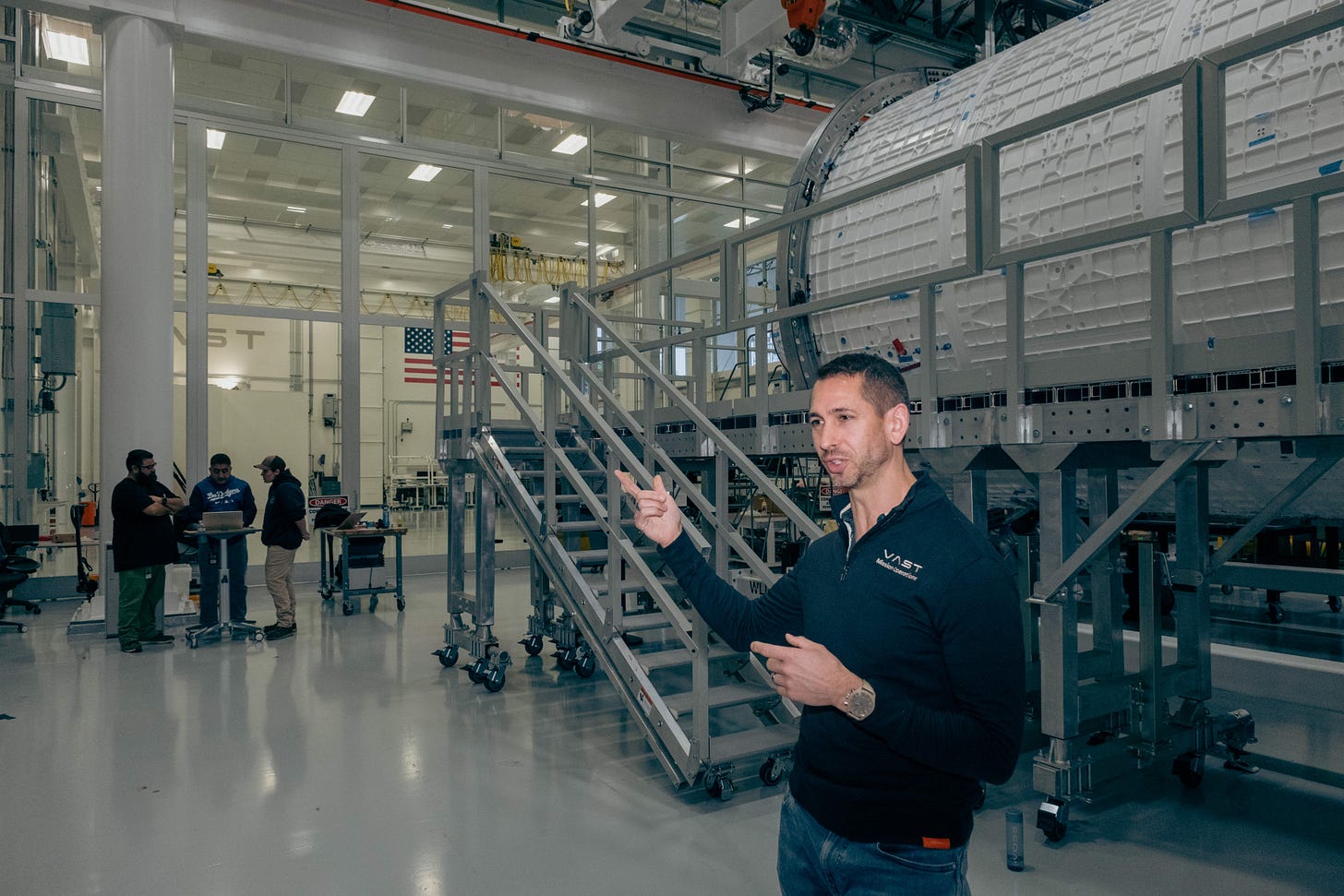
Currently, the Vast facility is buzzing: the team is putting together Haven-1, Vast’s flagship space station. The structure is in its integration phase, following successful pressure and load testing in 2025. Vast will have invested about $1 billion, a combination of capital provided by founder McCaleb, and revenue from customers, by the time the first crew to Haven-1 is launched. “That’s actually not a lot of capital compared to what’s been done on space stations so far,” Haot explains, referring to the cost of the publicly funded ISS. Vast operates on what Haot calls a “leapfrog strategy” — step-by-step development funded privately. “Build an actual space station, and launch it as quickly as we can, and become the company building the world’s first commercial space station.”
Haven-1 is Vast’s proof-of-concept to win NASA’s CLD Phase 2 funding. (Awards are expected to be announced mid-2026). CLD — Commercial Low Earth Orbit Destinations — is NASA’s program to partner with private companies to build and operate the next generation of commercial space stations, intended to replace the ISS after its planned retirement in 2030. Phase 1, which has been ongoing since 2021, provided smaller funded or unfunded agreements for early design and technology development — Axiom and a partnership between Blue Origin and Sierra Space received funded awards in the hundreds of millions. Phase 2 will award $1 to $1.5 billion to at least two winners. Unlike earlier fixed-price contracts, the program now uses Space Act Agreements, with NASA providing direct funding for hardware demos, crewed tests, and prep work through 2031. We caught Vast in the run-up.
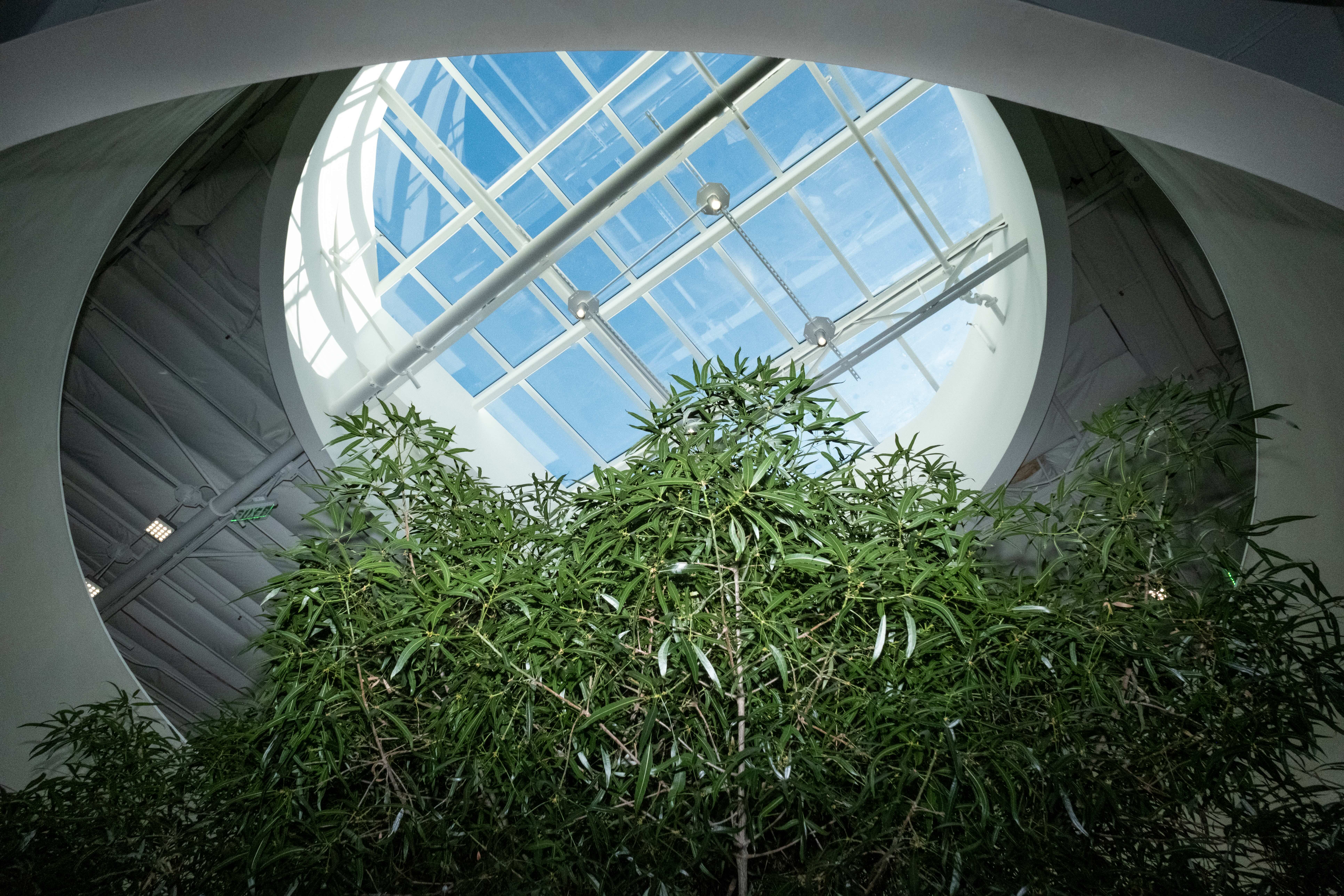
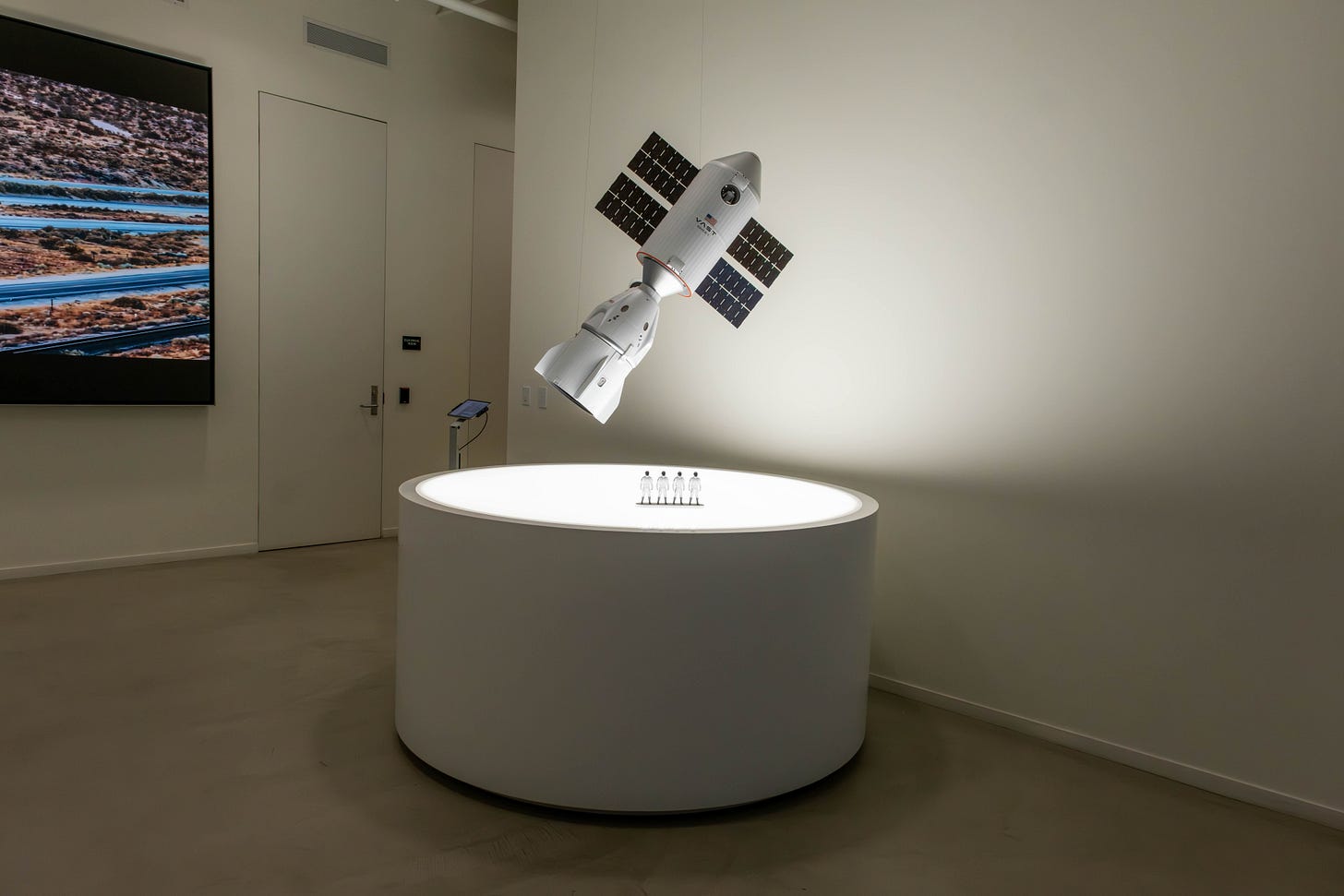
Haven-1, designed with guidance from former Apple Industrial designer and Vast advisor Peter Russell-Clarke, is a compact cylindrical module about the size of a subway car, with “Earth tone” interiors, a domed observation window, personal crew quarters, and always-on Wi-Fi via Starlink. The station is able to support up to four crew members for missions of 10–30 days (up to 40 days maximum). It also includes the Haven-1 Lab: 10 standardized payload slots (each up to 30 kilograms and 100 W) for microgravity experiments. Food scientist Zach Rosenthal is leading a team to develop food systems to meet the nutrient demands for long term missions. The station is planned to launch uncrewed on a SpaceX Falcon 9 rocket from Cape Canaveral, Florida in Q1 2027.
“We went from 120 people when I joined” — 40 at Vast, 80 at Launcher — “to a thousand people. We went from empty buildings, to fully built facilities, where we believe we have everything we need to build America’s next space station,” said Haot of Vast’s rapid growth. I ask if McCaleb’s personal investment has given Vast a competitive advantage, allowing them to take risks unavailable to VC-funded competitors like Axiom Space. “The payback for human space flight is not instant, and the amount of technology you have to build, and the amount you have to invest, you just can’t bootstrap it. The barrier to entry is so high, the moat is so high, that it needs this kind of private investor willing to place such a large bet.”
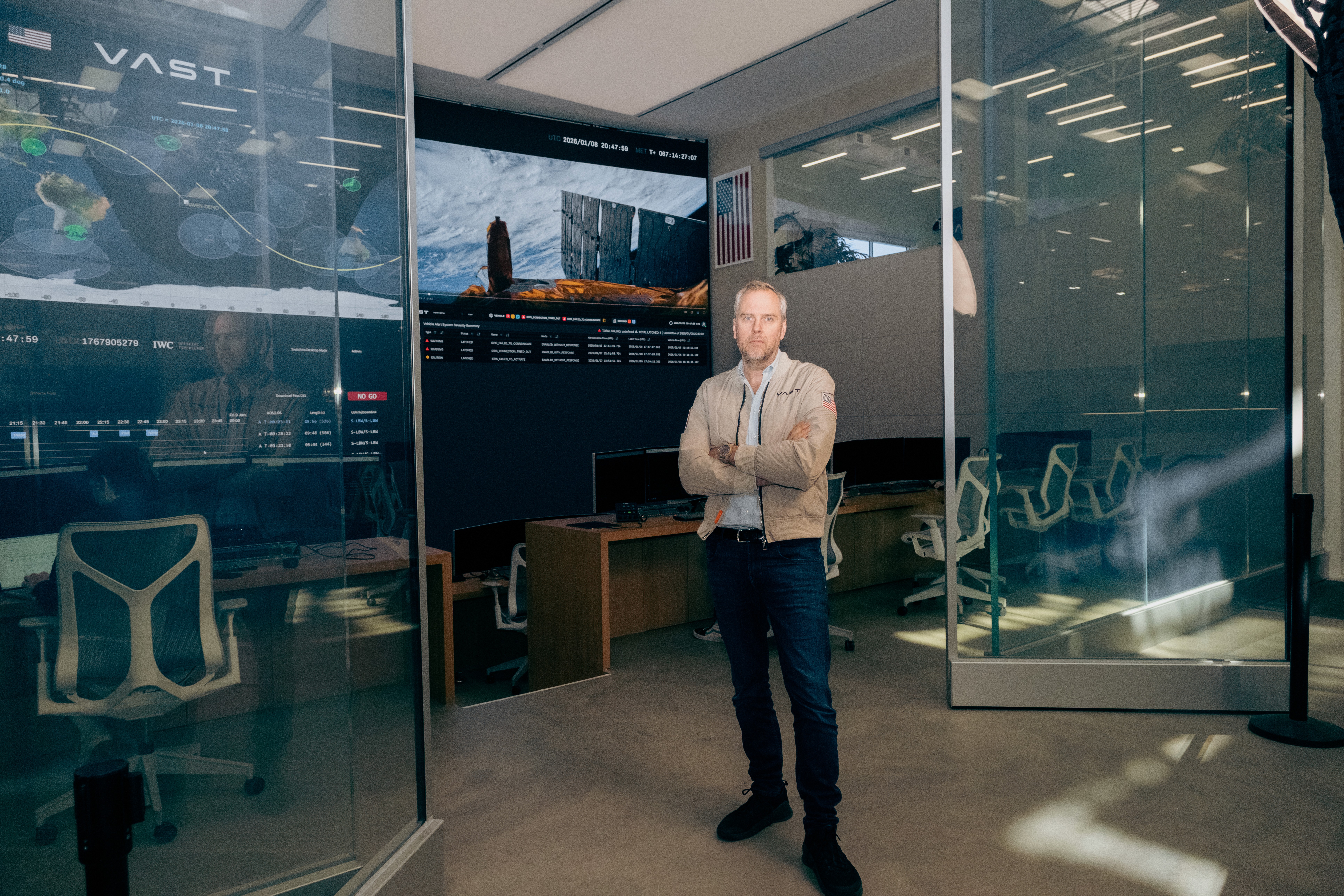
Foreign governments have already signed on: Colombia, Uzbekistan, and the European Space Agency, among others, have signed memorandums of understanding with this private American space company to explore human spaceflight opportunities and research on Haven-1 and future stations. The change, from trusting the US government to trusting a private operator, is significant. “We’re lucky that there’s an amazing precedent,” Haot reassures me. NASA’s move from ownership to a more supervisory role, via its “cost-plus” programs, in which contractors are reimbursed for expenses plus a guaranteed profit margin — removing incentives to control costs — to fixed-price commercial contracts was validated by SpaceX, whose reusable Crew Dragon spacecraft now flies astronauts with an “impeccable safety record” under close NASA oversight, a model that is now being extended to private space stations.
In order to validate key systems that will power Haven-1, Vast launched Haven Demo into orbit in November 2025, ridesharing on SpaceX’s Bandwagon-4. Haven Demo is boxy, roughly 3 × 4 × 3 ft. It successfully demonstrated core systems like propulsion, navigation, and control, directly informing the final design of Haven-1. It performed well even during the northern lights phenomenon in December 2025, which produced intense auroras that can disrupt spacecraft transmissions. Demo currently transmits onboard footage in 4K, viewable from the mission control center room at Vast HQ. Its success marked Vast as the only private company to operate hardware in space created specifically for commercial space station development.
By sending up low-cost pathfinders equipped with telemetry systems, Vast avoids the high-stakes first-flight failures common in new space hardware, while gathering empirical data in actual orbit. This mirrors the SpaceX-style progression COO Kris Young emphasizes — “uncrewed engineering tests before crewed demos” — and mirrors Vast’s broader philosophy of iterative development. Young joined Vast in September 2025 and is an aerospace engineer with roughly 18 years in spaceflight, including roles at Northrop Grumman and more than 14 years at SpaceX focused on human spaceflight. At SpaceX, he led engineering for Crew Dragon and later oversaw flight and launch operations, supporting around 19 human spaceflight missions and 150 rocket launches in a single year, which was then “a record for the company.”
Young frames Vast’s North Star: “humans are endeavored to be among the stars,” and thus Vast’s goal is to make space “safe and efficient for humans,” from LEO to the Moon and Mars. He emphasizes that this begins with foundational demonstrations like Haven Demo, advancing through Haven-1 as a learning platform for human spaceflight, and culminating in Haven-2 as a successor to the ISS, enabling “continuous human presence” and a 21st-century environment for living, working, and conducting research in space.
To this end, Vast deliberately explores long-horizon ideas — like artificial gravity stations and fully closed-loop life-support systems — because microgravity profoundly affects the human body: “you actually end up losing about half your blood volume,” Young tells me, along with muscle, bone density, and balance. This philosophy guides their Environmental Control and Life Support Systems (ECLSS), which recycle air, water, and other resources to reduce resupply needs. Haven-1 starts with a simple, open-loop ECLSS that prioritizes reliability, venting waste and relying on Dragon to bring crew aboard. In parallel, Vast flies closed-loop experiments on every mission to gather real data and iterate without risking crew safety. The plan is to mature this system by Haven-2 so that these life support systems have no dependence on Earth.
Haven-2 will be fully equipped for long-duration, continuous human occupation with up to 12 crew members and approximately 500 cubic meters of habitable volume. (For comparison, the ISS has a known maximum capacity of 13 people, with seven being the standard crew count). Vast’s longer-term roadmap envisions building artificial gravity stations generated by rotation: the station will spin at roughly 3.5 revolutions per minute to produce Earth-like gravity along its outer rim, so that astronauts can live and work under conditions similar to those on Earth. Vast has had an unfunded Space Act Agreement with NASA since June 2023 for collaboration on microgravity and artificial gravity technologies, giving Vast access to NASA expertise, facilities (e.g., testing at NASA’s Neil Armstrong Flight Research Center), and validation, helping de-risk their experimental concepts without cash funding.
The Haven-2 station will be assembled in LEO through sequential launches beginning with the first core module targeted for 2028 — contingent on winning NASA’s CLD contract. Vast aims for Haven-2 to provide seamless continuity for NASA-sponsored science and international collaboration in a post-ISS era.
I ask Young what prompted his decision to join Vast. “I spent a long time working on crew transportation and just getting humans out of Earth’s atmosphere into orbit. And, whilst it’s never easy, it’s working. We have a safe and reliable transportation system.” He alludes to how SpaceX has made transportation in and out of Earth’s orbit almost commonplace. “Right now, the number one limiter for flying [to space] more often is not having a destination. What inspired me to join Vast is that they are gonna be the first destination.”
“I have a lot of pride in just being able to build capability for the country. I’m really proud of some of the technology we’ve developed,” Young tells me. The one story he wants to share with me is about the team developing in-house control moment gyroscopes (CMGs), devices that allow a spacecraft to rotate and orient itself without using fuel. For long-duration human presence in orbit, the vehicle must maintain attitude — attitude meaning its rotational orientation in space — without using propellant. CMGs solve this by using electricity to generate torque, providing fuel-free attitude control that’s reliable over years. Vast discovered the sole US supplier for CMGs was slow and expensive, Young explains: “We’d love to buy some. Well, first it took them a while to actually answer the phone… then it was like, okay, pay us 50 million bucks and we’ll see you in four years… What? Are you kidding me? We’re gonna fly Haven-1 before that’s even done.” So Vast designed, built, and tested the first set of CMGs themselves in roughly six months, and they’ve been spinning continuously for two years with additional sets built since then.
Speaking on how Vast will be different from the ISS, Haot explains, “we need to be very respectful of what’s been achieved in 25 years, the capability, the safety. No one wants a LEO settlement to just disappear. Our biggest contribution I hope will be that we make it sustainable, profitable, save taxpayer money. We want to achieve more science.”
It feels very special, yet equally humbling, to stand next to, and see, Haven-1 being assembled. The structure demystifies space technology for me: I see pieces of metal being put together by human hands, similar to mine. The pieces that have come together to complete the station and its components — mainly aluminum and some steel — have been ordinary throughout my whole life as well. What feels most extraordinary is the timescale. Nearly 300 people from 26 nations have visited the ISS; many of the people who will one day live inside Haven-1 and Haven-2 haven’t even been born yet. I wonder when our ambitions and dreams will outgrow Haven-2, or even LEO itself. When I ask Kris Young if the sheer scale of what they’re attempting is daunting, he calmly replies, “No. It’s exciting.”
Technology
•
The Stations to Come
Vast, a space technology firm, is building for a post-ISS orbital future.
In the summer of 1975, an American Apollo module docked with a Soviet Soyuz capsule in low Earth orbit (LEO), at an altitude of approximately 140 miles. The Apollo program had been a national project designed to land a man on the Moon before the Soviets — and it did. But its final manned flight achieved something else entirely. The Apollo-Soyuz “handshake in Space,” the first orbital rendezvous between the two spacefaring powers, was seen by many as the final act of the Space Race between the Americans and the Soviets, and the beginning of a new era marked by cooperation.
Multiple projects were proposed to mark this new era — modular stations, joint missions. But costs mounted, and the Soviet Union collapsed. Eventually, Russia, which inherited much of the USSR’s spacefaring infrastructure, and America combined their efforts. The result was the International Space Station (ISS) in September 1993, the most expensive structure ever built at over $150 billion. It was assembled piece by piece in orbit over more than a decade, beginning in 1998 and reaching major completion in 2011. It was a triumph of post-Cold War globalization: America and Russia provided the bulk of the components; European, Canadian and Japanese modules gradually joined to form a single structure. In total, it took roughly thirteen years of continuous assembly and international coordination for the ISS to become what it is today: a functioning and continuous human outpost in LEO. The only other operational space station in orbit is China’s Tiangong, launched in 2021.
The ISS is now twenty-five years old, suffers from material fatigue and costs taxpayers roughly $3 billion annually. NASA plans on decommissioning it by 2030. The United States has not built another space station since.
✺
At a 90,000-square-foot facility in Long Beach, California, Vast is vying to become the ISS successor with its proposed space station, Haven-2.
The guest lobby at Vast feels like the inside of a very luxurious space shuttle — rounded, tall, grey, futuristic, with a central tree growing up into the sky. Vast repurposed former distribution warehouses for aerospace use, with three buildings spanning manufacturing, testing, integration, and astronaut training, Standard operating procedures are strictly followed on the factory floors. Earplugs and safety goggles are neatly arranged in cabinets, with clean room suits on racks available at multiple checkpoints. There are pillars here and there holding protective headgear. Each building has its own communal cafeteria, and lunch is being served during our visit. People are very excited about the burrito station.
Vast was founded by entrepreneur Jed McCaleb in 2021. When I asked Vast CEO Max Haot about the company’s name he explained: “Jed named it Vast because space is vast.”
Haot was born in Belgium. He taught himself to code as a child and moved to the UK after graduating high school. In London, while working at the sports management company IMG, Haot pursued his interests in live television and the internet by developing websites, scoring and real-time video platforms for organizations like Manchester United and Wimbledon, learning English along the way. He moved to the United States after Verizon acquired a content-management system he developed. “I wanted to follow the American dream,” he told me. Haot landed in New York City in 2005, founded the livestreaming platform Livestream in 2007 and sold it to Vimeo 10 years later — his second liquidity event.
Following the acquisition, Haot finally had the resources to pursue big-picture ideas for humanity. “We are expansionists — we need a frontier. In 10,000 years, if we are still around, we’ll be multiplanetary. And if that’s true, then the most important event ever would have been Sputnik, and then the moon landing. The first time we left. And so I’m born at minute zero.” Haot founded Launcher, a rocket and satellite launch company, in 2017, the same year as Livestream’s sale. He then scaled it from a small New York team to a major operation in Hawthorne, California. After meeting McCaleb, he sold to Vast in 2023 and joined as President, becoming CEO a few months later.
Currently, the Vast facility is buzzing: the team is putting together Haven-1, Vast’s flagship space station. The structure is in its integration phase, following successful pressure and load testing in 2025. Vast will have invested about $1 billion, a combination of capital provided by founder McCaleb, and revenue from customers, by the time the first crew to Haven-1 is launched. “That’s actually not a lot of capital compared to what’s been done on space stations so far,” Haot explains, referring to the cost of the publicly funded ISS. Vast operates on what Haot calls a “leapfrog strategy” — step-by-step development funded privately. “Build an actual space station, and launch it as quickly as we can, and become the company building the world’s first commercial space station.”
Haven-1 is Vast’s proof-of-concept to win NASA’s CLD Phase 2 funding. (Awards are expected to be announced mid-2026). CLD — Commercial Low Earth Orbit Destinations — is NASA’s program to partner with private companies to build and operate the next generation of commercial space stations, intended to replace the ISS after its planned retirement in 2030. Phase 1, which has been ongoing since 2021, provided smaller funded or unfunded agreements for early design and technology development — Axiom and a partnership between Blue Origin and Sierra Space received funded awards in the hundreds of millions. Phase 2 will award $1 to $1.5 billion to at least two winners. Unlike earlier fixed-price contracts, the program now uses Space Act Agreements, with NASA providing direct funding for hardware demos, crewed tests, and prep work through 2031. We caught Vast in the run-up.
Haven-1, designed with guidance from former Apple Industrial designer and Vast advisor Peter Russell-Clarke, is a compact cylindrical module about the size of a subway car, with “Earth tone” interiors, a domed observation window, personal crew quarters, and always-on Wi-Fi via Starlink. The station is able to support up to four crew members for missions of 10–30 days (up to 40 days maximum). It also includes the Haven-1 Lab: 10 standardized payload slots (each up to 30 kilograms and 100 W) for microgravity experiments. Food scientist Zach Rosenthal is leading a team to develop food systems to meet the nutrient demands for long term missions. The station is planned to launch uncrewed on a SpaceX Falcon 9 rocket from Cape Canaveral, Florida in Q1 2027.
“We went from 120 people when I joined” — 40 at Vast, 80 at Launcher — “to a thousand people. We went from empty buildings, to fully built facilities, where we believe we have everything we need to build America’s next space station,” said Haot of Vast’s rapid growth. I ask if McCaleb’s personal investment has given Vast a competitive advantage, allowing them to take risks unavailable to VC-funded competitors like Axiom Space. “The payback for human space flight is not instant, and the amount of technology you have to build, and the amount you have to invest, you just can’t bootstrap it. The barrier to entry is so high, the moat is so high, that it needs this kind of private investor willing to place such a large bet.”
Foreign governments have already signed on: Colombia, Uzbekistan, and the European Space Agency, among others, have signed memorandums of understanding with this private American space company to explore human spaceflight opportunities and research on Haven-1 and future stations. The change, from trusting the US government to trusting a private operator, is significant. “We’re lucky that there’s an amazing precedent,” Haot reassures me. NASA’s move from ownership to a more supervisory role, via its “cost-plus” programs, in which contractors are reimbursed for expenses plus a guaranteed profit margin — removing incentives to control costs — to fixed-price commercial contracts was validated by SpaceX, whose reusable Crew Dragon spacecraft now flies astronauts with an “impeccable safety record” under close NASA oversight, a model that is now being extended to private space stations.
In order to validate key systems that will power Haven-1, Vast launched Haven Demo into orbit in November 2025, ridesharing on SpaceX’s Bandwagon-4. Haven Demo is boxy, roughly 3 × 4 × 3 ft. It successfully demonstrated core systems like propulsion, navigation, and control, directly informing the final design of Haven-1. It performed well even during the northern lights phenomenon in December 2025, which produced intense auroras that can disrupt spacecraft transmissions. Demo currently transmits onboard footage in 4K, viewable from the mission control center room at Vast HQ. Its success marked Vast as the only private company to operate hardware in space created specifically for commercial space station development.
By sending up low-cost pathfinders equipped with telemetry systems, Vast avoids the high-stakes first-flight failures common in new space hardware, while gathering empirical data in actual orbit. This mirrors the SpaceX-style progression COO Kris Young emphasizes — “uncrewed engineering tests before crewed demos” — and mirrors Vast’s broader philosophy of iterative development. Young joined Vast in September 2025 and is an aerospace engineer with roughly 18 years in spaceflight, including roles at Northrop Grumman and more than 14 years at SpaceX focused on human spaceflight. At SpaceX, he led engineering for Crew Dragon and later oversaw flight and launch operations, supporting around 19 human spaceflight missions and 150 rocket launches in a single year, which was then “a record for the company.”
Young frames Vast’s North Star: “humans are endeavored to be among the stars,” and thus Vast’s goal is to make space “safe and efficient for humans,” from LEO to the Moon and Mars. He emphasizes that this begins with foundational demonstrations like Haven Demo, advancing through Haven-1 as a learning platform for human spaceflight, and culminating in Haven-2 as a successor to the ISS, enabling “continuous human presence” and a 21st-century environment for living, working, and conducting research in space.
To this end, Vast deliberately explores long-horizon ideas — like artificial gravity stations and fully closed-loop life-support systems — because microgravity profoundly affects the human body: “you actually end up losing about half your blood volume,” Young tells me, along with muscle, bone density, and balance. This philosophy guides their Environmental Control and Life Support Systems (ECLSS), which recycle air, water, and other resources to reduce resupply needs. Haven-1 starts with a simple, open-loop ECLSS that prioritizes reliability, venting waste and relying on Dragon to bring crew aboard. In parallel, Vast flies closed-loop experiments on every mission to gather real data and iterate without risking crew safety. The plan is to mature this system by Haven-2 so that these life support systems have no dependence on Earth.
Haven-2 will be fully equipped for long-duration, continuous human occupation with up to 12 crew members and approximately 500 cubic meters of habitable volume. (For comparison, the ISS has a known maximum capacity of 13 people, with seven being the standard crew count). Vast’s longer-term roadmap envisions building artificial gravity stations generated by rotation: the station will spin at roughly 3.5 revolutions per minute to produce Earth-like gravity along its outer rim, so that astronauts can live and work under conditions similar to those on Earth. Vast has had an unfunded Space Act Agreement with NASA since June 2023 for collaboration on microgravity and artificial gravity technologies, giving Vast access to NASA expertise, facilities (e.g., testing at NASA’s Neil Armstrong Flight Research Center), and validation, helping de-risk their experimental concepts without cash funding.
The Haven-2 station will be assembled in LEO through sequential launches beginning with the first core module targeted for 2028 — contingent on winning NASA’s CLD contract. Vast aims for Haven-2 to provide seamless continuity for NASA-sponsored science and international collaboration in a post-ISS era.
I ask Young what prompted his decision to join Vast. “I spent a long time working on crew transportation and just getting humans out of Earth’s atmosphere into orbit. And, whilst it’s never easy, it’s working. We have a safe and reliable transportation system.” He alludes to how SpaceX has made transportation in and out of Earth’s orbit almost commonplace. “Right now, the number one limiter for flying [to space] more often is not having a destination. What inspired me to join Vast is that they are gonna be the first destination.”
“I have a lot of pride in just being able to build capability for the country. I’m really proud of some of the technology we’ve developed,” Young tells me. The one story he wants to share with me is about the team developing in-house control moment gyroscopes (CMGs), devices that allow a spacecraft to rotate and orient itself without using fuel. For long-duration human presence in orbit, the vehicle must maintain attitude — attitude meaning its rotational orientation in space — without using propellant. CMGs solve this by using electricity to generate torque, providing fuel-free attitude control that’s reliable over years. Vast discovered the sole US supplier for CMGs was slow and expensive, Young explains: “We’d love to buy some. Well, first it took them a while to actually answer the phone… then it was like, okay, pay us 50 million bucks and we’ll see you in four years… What? Are you kidding me? We’re gonna fly Haven-1 before that’s even done.” So Vast designed, built, and tested the first set of CMGs themselves in roughly six months, and they’ve been spinning continuously for two years with additional sets built since then.
Speaking on how Vast will be different from the ISS, Haot explains, “we need to be very respectful of what’s been achieved in 25 years, the capability, the safety. No one wants a LEO settlement to just disappear. Our biggest contribution I hope will be that we make it sustainable, profitable, save taxpayer money. We want to achieve more science.”
It feels very special, yet equally humbling, to stand next to, and see, Haven-1 being assembled. The structure demystifies space technology for me: I see pieces of metal being put together by human hands, similar to mine. The pieces that have come together to complete the station and its components — mainly aluminum and some steel — have been ordinary throughout my whole life as well. What feels most extraordinary is the timescale. Nearly 300 people from 26 nations have visited the ISS; many of the people who will one day live inside Haven-1 and Haven-2 haven’t even been born yet. I wonder when our ambitions and dreams will outgrow Haven-2, or even LEO itself. When I ask Kris Young if the sheer scale of what they’re attempting is daunting, he calmly replies, “No. It’s exciting.”
About the Author
Zaitoon Zafar is a junior editor at Arena Magazine. She can be found on X at: @zaitoonx.