tt
tt
tt
tt
tt
tt
Greatness
•
Designing America
One year ago, Airbnb cofounder Joe Gebbia became Chief Design Officer of the United States. At the National Design Studio, he’s built a small army of engineers and creatives to help him overhaul government branding and software.


In September 1789, the Frenchman-turned-American Pierre Charles L’Enfant wrote to George Washington, then just five months into the Presidency, asking his former boss for a job. L’Enfant had left France in 1776 to join the American Revolution and served under Washington as a military engineer; after the war, he worked in New York as an architect and designer of homes and home furniture. It was the ratification of the Constitution, which authorized Congress to designate and govern a federal district, that caught L’Enfant’s attention.
“No nation, perhaps,” L’Enfant wrote to President Washington, “had ever before the opportunity of deliberately deciding on the spot where their Capital city should be fixed.” And he put himself forward for the job of designing the city, telling Washington that the plan for the national capital needed to be much bigger than what the indebted, infant Republic could actually pay for in the near term. Such was his confidence in what America could become.
“I view the appointment of Engineer to the United States as the one which could possibly be most gratifying to my wishes,” he wrote. “Although the means now within the power of the country are not such as to pursue the design to any great extent, it will be obvious that the plan should be drawn on such a scale as to leave room for that aggrandizement and embellishment which the increase of the wealth of the nation will permit it to pursue at any period however remote.”
Washington never created the standing office that L’Enfant had requested, but two years later, he gave him the commission that would make his name synonymous with the capital city to a degree surpassed only by the name of Washington himself. Congress had by then selected the Potomac for the permanent seat of government and authorized the President to choose its precise location. Thomas Jefferson, the Secretary of State, sent L’Enfant maps of the great European cities—Amsterdam, Turin, Milan, Paris, and Frankfurt among them. L’Enfant first laid eyes on his canvas in the Spring of 1791. He made quick work, presenting the first and second versions of his plan to Washington that Summer.
The plan placed broad diagonal avenues over a rectangular street grid, opening long views between sites that would be reserved for national buildings. Its central avenue connected the “President’s House” with the “Congress House.” That road became Pennsylvania Avenue, and its western end acquired what may be the most iconic residential address in history: 1600 Pennsylvania Avenue.
More than two centuries, one Civil War, one moon landing, one Internet, and one enormous website for sleeping in strangers’ houses later, another designer found himself with a mandate from the President of the United States to bring art & engineering to bear to do something great for the nation.
That man was Joe Gebbia, the first Chief Design Officer of the United States.
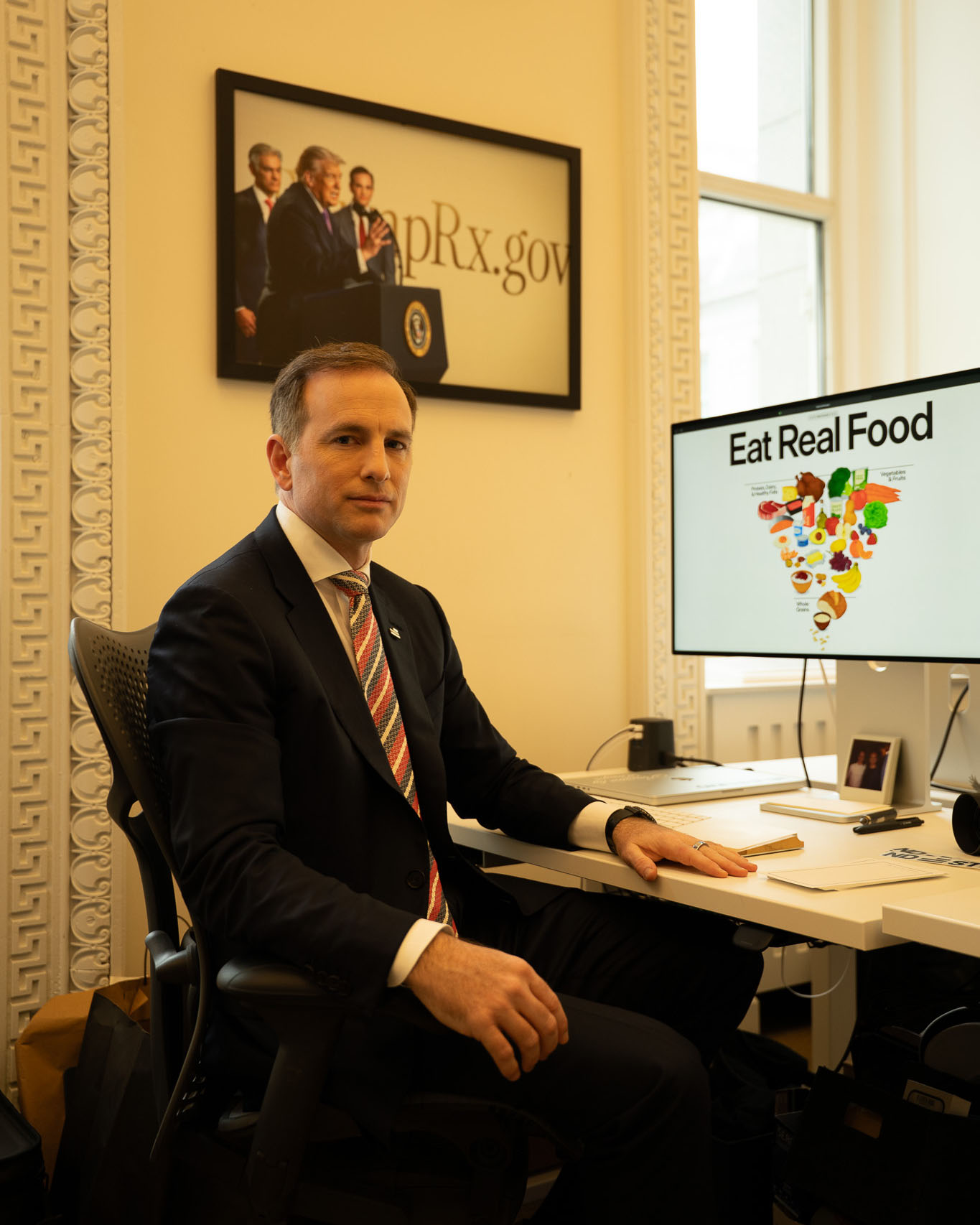
Joe Gebbia is, to tell you the truth, a little out of place in Washington. He spent most of his professional life a world away in San Francisco. He studied graphic and industrial design at the Rhode Island School of Design, where he met Brian Chesky; the two later founded Airbnb with Nathan Blecharczyk. In a now-famous 2007 email, Gebbia wrote to Chesky: “Brian, I thought of a way to make a few bucks — turning our place into ‘designers bed and breakfast.’”
The plan worked. They did make a few bucks, and Gebbia’s stake in Airbnb is worth nearly $10 billion today (the company went public in 2020). He stepped back from Airbnb in 2022 to pursue new projects. One was Samara, a startup gathering elegant design, advanced manufacturing, and streamlined permitting and delivery to build homes in California’s notoriously-slow housing market. He also cofounded the “Eames Institute for Infinite Curiosity” – a digital and physical archive of the work of legendary industrial designers Ray and Charles Eames, who had long been inspirations to Gebbia.
Airbnb’s earliest problem was, naturally, trust. Persuading strangers to sleep in one another’s homes through an interface on the Internet was no small task; it was in part through design that the company made something that sounded a little crazy seem quotidian. In coming to Washington, Gebbia had traded in his Silicon Valley wardrobe of t-shirts and the occasional sport jacket for a set of well-tailored suits, and traded in the problem of trust in strangers’ houses for an even gnarlier problem: trust in government.
In a stately room in the Eisenhower Executive Office Building, just across the street from the White House, I spoke to Gebbia and two of his main collaborators in the National Design Studio about how the project came about, their ambitions for it, and what their merry band of creatives and tinkerers hope to do for the nation through better design.
“America by Design”
In January 2025, Gebbia came to Washington for the inauguration and a number of cabinet confirmation hearings. During one of the hearings for Robert F. Kennedy, Jr., his phone buzzed. Elon Musk was inviting him to meet the early DOGE team at the General Services Administration. Gebbia had a flight planned back to Austin that afternoon. He changed his travel plan and went over; that postponement would turn out to extend his stay in Washington for a lot more than the few hours he was anticipating.
One of the problems the DOGE group was working on led to Boyers, Pennsylvania, where the Office of Personnel Management kept its retirement records 230 feet underground in a former limestone mine. A federal employee’s retirement application – there are nearly 100,000 of them every year – traveled on paper through agency human-resources offices and payroll providers before arriving there by mail. Inside, hundreds of employees processed claims among thousands of filing cabinets containing hundreds of millions of pieces of paper; a claim could take months or longer. “The Mine” attracted the attention of DOGE as a visceral, captivating symbol of government dysfunction and inefficiency. And that symbol pulled Gebbia further in: he agreed to stick around for a while – six months, he thought – to work on creating a new, digital experience for federal employees wishing to retire. It would be faster and easier, conducted over the modern rails of the web rather than in the depths of the mine.
As their work began to bear fruit, word got around Washington. Officials from around the administration started calling: could the same group do something like that for their agency? “This door opened,” Gebbia said, “and I had the option to walk through to do design at not just the agency scale, but the everything scale.” To achieve things at “the everything scale” in Washington, Gebbia knew he would need a team.
“DC is very tactile,” Gebbia said to me, recounting his experience pitching a new comprehensive federal design program. “It’s not like Silicon Valley where you’re on screens or laptops all the time. It’s a foam-core place.”
And to boot, in shopping the idea of a “National Design Studio” around Washington, Gebbia became a frequent customer at local print shops. He visited cabinet secretaries and the directors of Social Security, the IRS, Medicare, and the National Park Service. By the time he had reached White House Chief of Staff Susie Wiles, he says he had given the pitch at least twenty times. “By then it was dialed,” he said. “And I was in a state of flow as I was pitching to her. It was my best Don Draper moment.”
Wiles liked the idea and said she would move it forward. “A very short time later, I found myself entering the Oval Office to pitch the President. And that was the pitch of a lifetime, to say the least.”
The designer and the President – himself long interested in the design of physical spaces – hit it off. And on August 21, 2025, which was Gebbia’s 44th birthday, President Trump signed Executive Order 14338, “Improving Our Nation Through Better Design.”
“There is established a national initiative, America by Design,” the order reads, “to improve comprehensively the visual presentation and usability of Federal services provided to the public in both digital and physical spaces, creating first-class online and offline experiences for Americans.” It created the National Design Studio within the Executive Office of the President, with a Chief Design Officer to oversee the project.
“I kind of couldn’t believe it,” Gebbia recounted thinking after walking out of the West Wing, having won the support of the President to bring a new culture of design to Washington. “This was an idea that was a tiny seed only months earlier, and now it had been ordained by the highest level of authority in our nation. Holy cow.”
“If you’re an engineer, you analyze problems through three lenses,” says Edward Coristine, an engineer who worked on DOGE and became a founding member of NDS. “How big is the scale? What is the difference between what I can do and what currently exists? And how fast can I do it? Across every single one of those, the opportunity here is incredible.”
The night before the executive order was announced, Gebbia was sitting with Coristine in one of the antique rooms of the Eisenhower Executive Office Building. “Joe, congrats on the executive order tomorrow,” Coristine told him. “I want to be a part of this.” Gebbia had already worked with the twenty-year-old engineer during the preceding months. And he says he agreed on one condition: “You need to lead the engineering team.”

“He holds quality and design as much as he holds urgency and shipping,” Gebbia said of his colleague, half his age. “Ed actually fights for craft and design. He fights for the pixel-level stuff.” They shook hands, embraced, and, Gebbia said, “within about an hour, we had five other engineers on the scene.”
“It’s an opportunity that’s never really existed before. And the way we get to work: we get to iterate fast, we get to build things, we get to ship improvements and grade our output based on the product quality, not based on bureaucracy. So, it’s now or never. This is the golden shot.”
Ed Coristine
The interfaces may be used by hundreds of millions of people; their defects have accumulated for years; and the studio has been organized to work faster than a conventional agency process. One can see parallels between what attracts someone like Coristine (and the dozens of other young designers and engineers) to NDS and what it is they’re trying to provide for citizens. In a word? Agency. Inside the studio, that means authority to make decisions, and move quickly, (not exactly the norm for government work). Outside it, agency means getting a new Social Security card or obtaining cheaper prescription drugs without becoming trapped in what Gebbia calls “the maze.”
“Sure, we don’t have stock options and RSUs. But if you want to ship things that your mom will use, your grandparents will use, your classmates will use, your friends will use…” Gebbia said of his pitch to young talent to come work at NDS.
One of the first NDS projects was the “Genesis Mission,” then an unnamed concept at the Department of Energy to make half a century of scientific data across the national laboratories available to researchers using modern AI tools. NDS worked with Energy to brand the effort, give it a name, and build a home on the web. “It really started to show people,” Gebbia said, “‘Oh. This is what National Design Studio can do.’”
For the new federal dietary guidelines promoted by HHS Secretary Robert F. Kennedy, Jr., NDS created the “Real Food” brand campaign, posters and all. The new pyramid turned the familiar 1992 image nearly upside down. Protein, dairy, and healthy fats occupy its broad upper tier; vegetables and fruit sit below; whole grains narrow to the point. And the aesthetic of the new pyramid was as different as its content. At a February event celebrating Real Food, Gebbia said, “We launched RealFood.gov not as another clunky government site, but as a modern minimalist experience…because if we’re asking families to choose real food every day, the guidance should feel welcoming, trustworthy, and beautiful — not bureaucratic.”
TrumpRx came closer to the form of a consumer product, not unlike what Gebbia and company might be shipping in Silicon Valley. The administration had reached voluntary “most-favored-nation” agreements with pharmaceutical manufacturers to offer selected brand-name drugs to cash-paying patients at prices comparable to those available in other developed countries. To promote those agreements, NDS created the site where someone could search for a medication, see available prices or discounts, and learn how to obtain it through a manufacturer or pharmacy. Gebbia showed off the new site at its White House launch, attended by entrepreneur Mark Cuban. “Imagine that,” Gebbia said. “We’re doing product launches at the government!”
Its most significant work to date, I think, may be the design of “Trump Accounts.” Created by Congress in the 2025 reconciliation spending bill, “Trump Accounts” are tax-advantaged investment accounts for children, and include a $1,000 federal contribution for eligible children born from 2025 through 2028 (Dell Technologies founder Michael Dell and his wife Susan Dell have committed over $6 billion to contribute an additional $250 for up to 25 million eligible children).
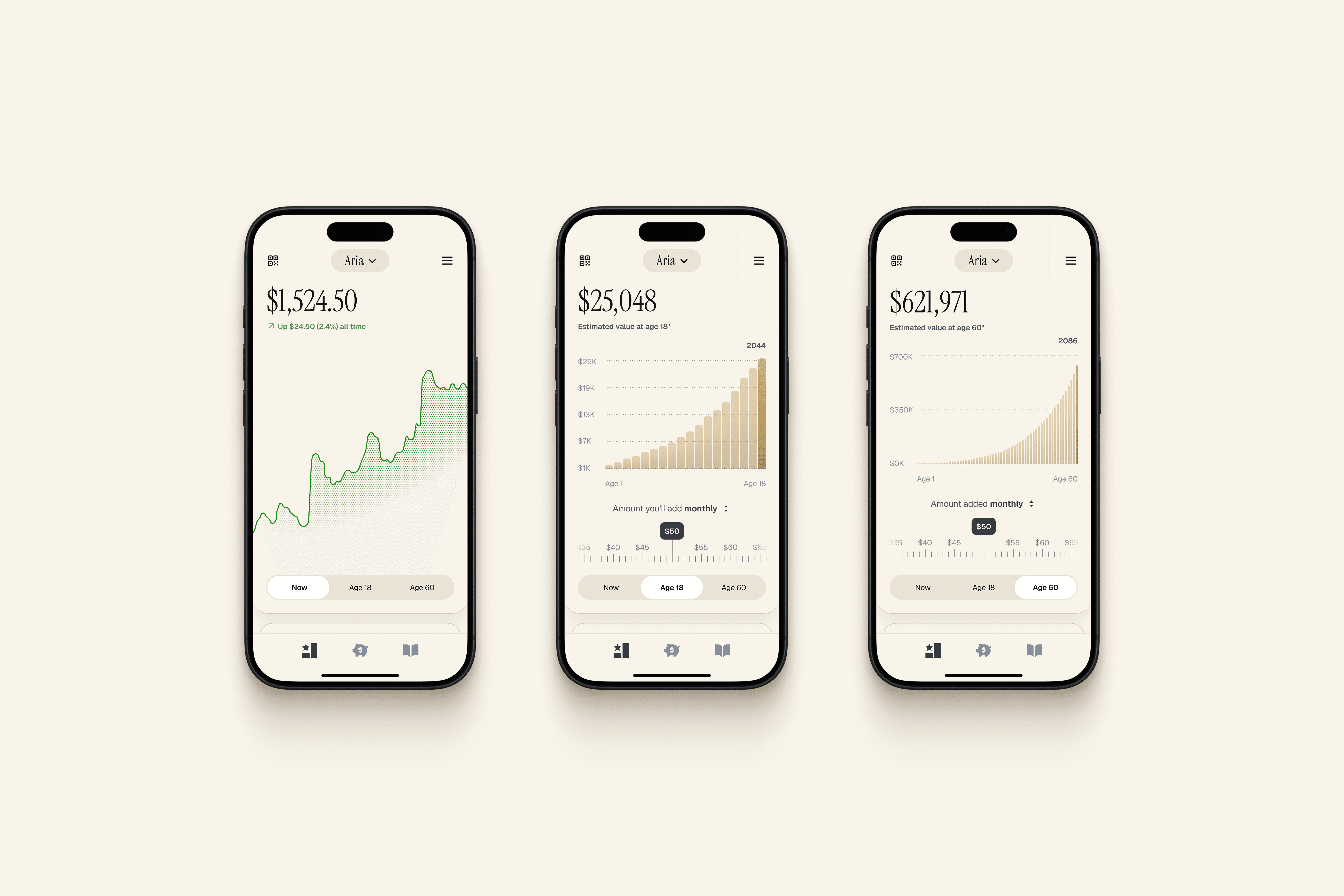
NDS designed the public website, with a very sleek signup process, and worked with fintech firm Robinhood on the digital experience through which families would manage accounts (Robinhood serves as the broker for the accounts).
“At some point in history, people accessed government by walking into buildings,” Gebbia told me. “And when they did, we see how beautiful the lobbies were, because they’re still around today.” Now most Americans arrived through a web browser or a phone, which had become the lobby, the front desk, and often the entire building.
There is little to unify the many thousands of websites published by the Federal Government; except, that is, for the small flag at the top of each, which reads, “An Official Website of the United States Government. Here’s How You Know.” Most of the time, that flag is believable because as Americans, we sort of know what government sites are supposed to look like: clunky and replete with PDFs. On the new NDS sites – and the Trump Accounts site in particular – that flag is actually kind of… unbelievable, because of how different it is!
“My vision,” Gebbia said, “is that in the future, startup founders and designers will look to dot-gov websites for inspiration and actually say to themselves, ‘Let’s go see how they did it on that dot-gov website.’” After a conversation with Dylan Field, CEO of design software firm Figma, at a May conference in Washington, a woman approached Gebbia and told him that her startup was using RealFood.gov and TrumpRx for inspiration.
“Oh my God,” Gebbia remembered thinking. “We’re scratching the surface, and it’s happening.”
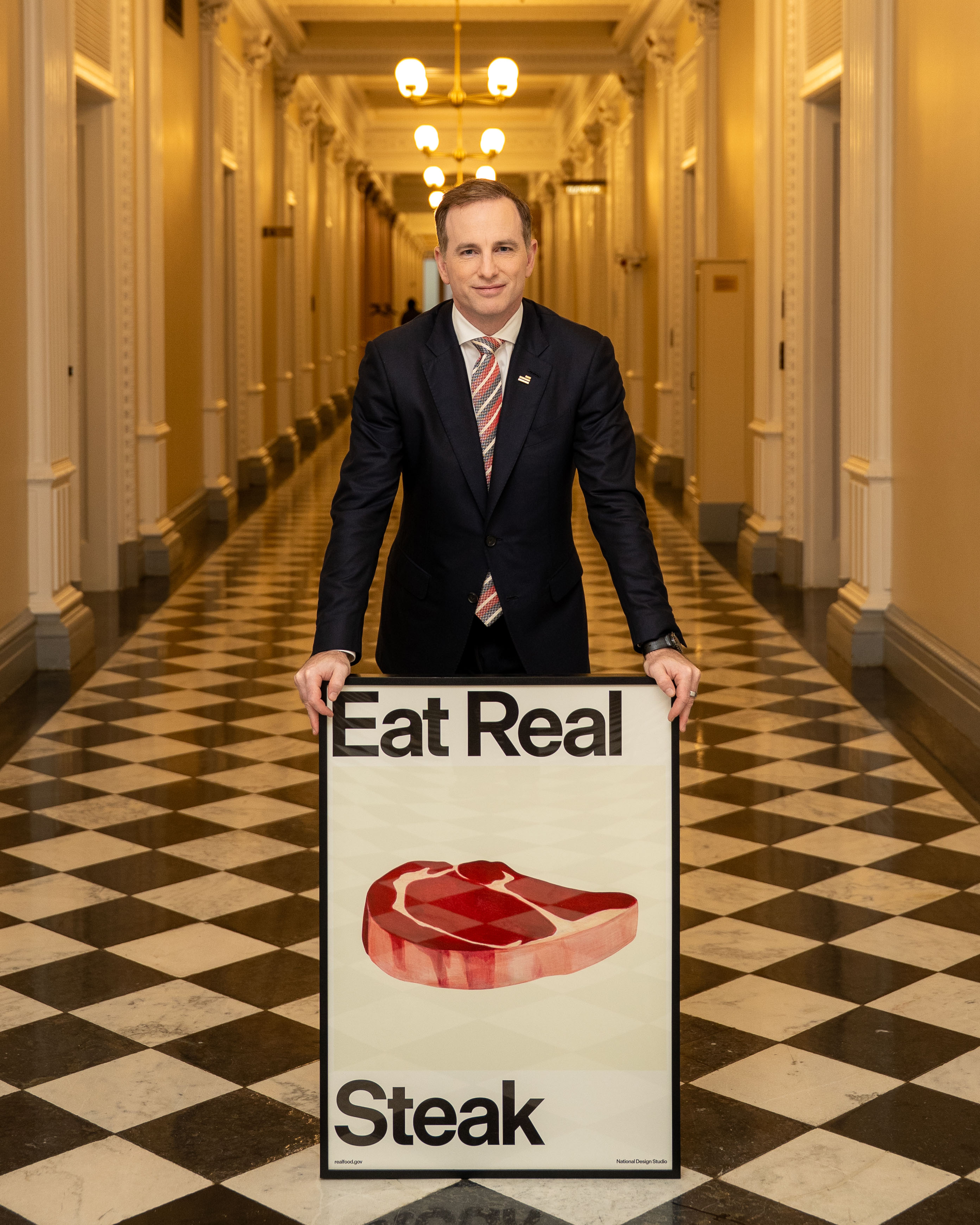
“America — the United States — is likely, if not inarguably, the most valuable brand in the world,” said Peter Arnell. Gebbia tapped Arnell, 68, as “Chief Brand Architect of the United States” in May. Arnell, a lifelong New Yorker, had spent decades moving among branding, photography, and product design for leading fashion houses and the largest corporations. DKNY, Apple, Ray-Ban, Aman Hotels, Prada, and many others have been clients.
And he knew the President going back to the 1980s, when he had designed catalogs for the Trump Organization. (Asked how that came about, he quipped, “Well, I’m a New Yorker and he’s a New Yorker” and said that Trump always had an interest in working with design talent)
Gebbia did not know Arnell, but after a mutual friend introduced them, he thought (within a half-hour, he says) that Arnell was operating “at a higher level than others I’d talked to in the world of branding or design or agency work.” He asked him to consider coming to Washington to join NDS as Chief Brand Architect.
When we met at the end of May, he was only a few weeks into the job, and was in the process of relocating to Washington fully. Arnell, the lifelong New Yorker, has been learning Washington at night – working, as he is, all day at NDS – by photographing monuments and federal buildings. “There’s incredible writings on buildings and words that mean things,” he said. “The symbolism is extraordinary.”
“For me, as a brand person, Washington may be the world’s most extraordinary built environment. The expressions, proportions, scale, messaging, everywhere you look.”
The job of “Chief Brand Architect” for a country that has such a brand already may seem like an odd posting. America is full of iconic symbols: our green paper currency, nearly unchanged in its presentation since the first “greenbacks” were printed during the Civil War; the unique flavor of civic architecture embodied in courthouses and state capitols from coast to coast; the immediately recognizable skyline not just of a place like Manhattan, but a place like Yosemite National Park, too! And then there is the intangible brand of America: of our nation as a place of relentless builders and dreamers, which is a brand that came from people, not a campaign.
But talking at length with Arnell, I realized that he sees his job as narrowing the distance between the grandeur of the national image – the feeling that one gets in the shadow of the Lincoln Memorial, or walking under the Capitol rotunda, those temples of our government – and the small indignities through which citizens actually encounter “the government” in practice.
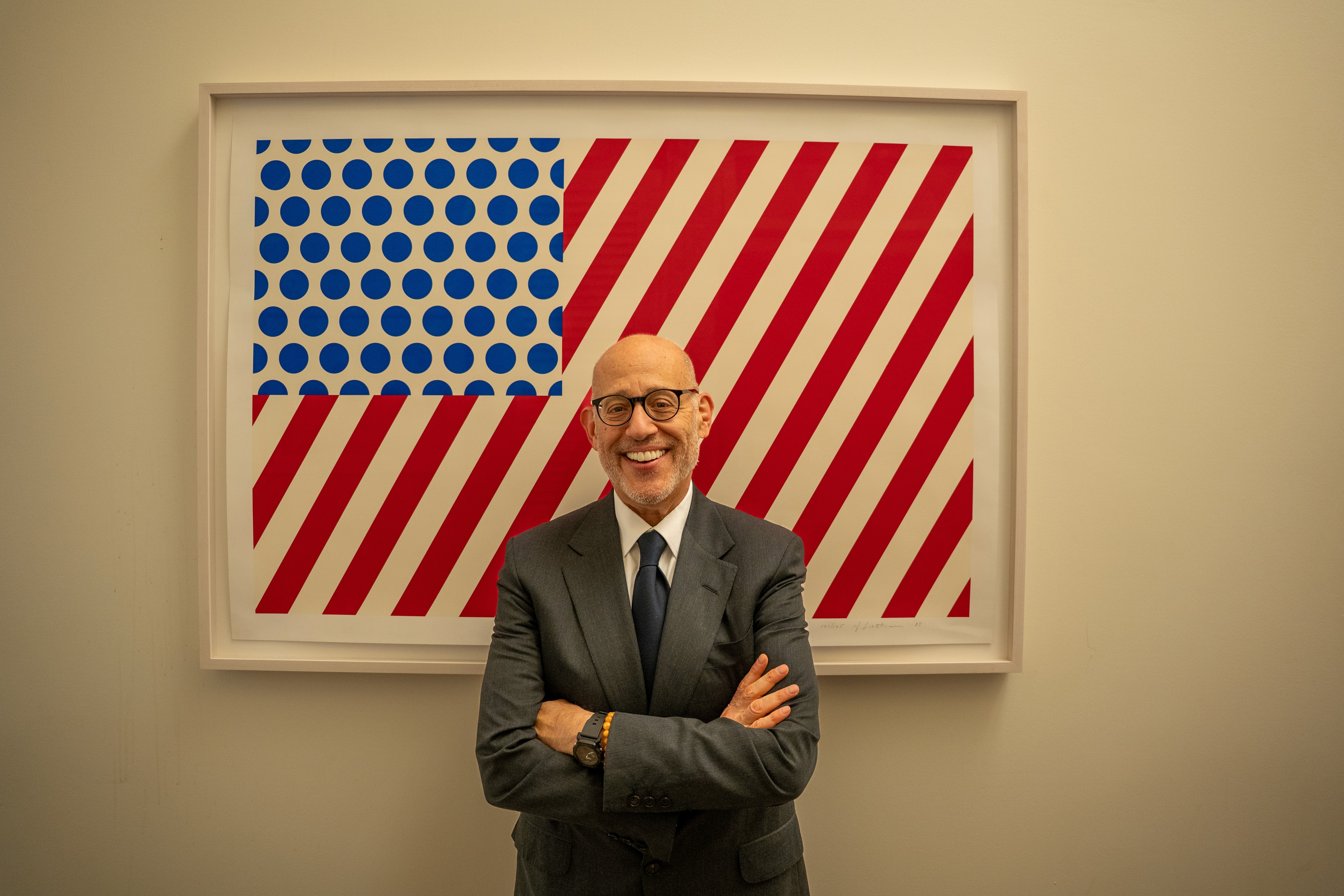
For instance: A friend of Gebbia’s recently became an American citizen and sent him a photograph of the welcome kit she received. “Someone who just went through a years-long process to become a citizen of the greatest nation on Earth—you would not believe how underwhelming and disappointing this welcome kit is,” he said. There was a half-designed brochure, a small American flag that looked to him like something from a cheap souvenir store, and what he called “a cheesy certificate.” “My heart hurt,” Gebbia said. “I was like, wow. This is the state of what we’re sending to welcome people in the most official way into our nation as permanent citizens of this place?”
The kit joined the growing inventory in Gebbia’s mind of encounters with the federal government that he and the NDS should aspire to improve. “There are dozens, if not hundreds, if not thousands of examples like that, of these touchpoints that people have that have never been designed,” he said. “They’ve never been cared for.”
“Good design is when somebody’s using something and they feel the care the designer put into it. They recognize that someone took the time to make sure that was easy, or simple, or clear, or effortless.”
Joe Gebbia
“Prior to President Nixon,” Gebbia said, “the visual identity of the government had splintered. It was a bit of a mess. So, he came in and said, ‘Let’s clean this up.’” In 1972, Nixon created the Federal Design Improvement Program, pairing federal agencies with some of the country’s best architects and graphic designers. The (brand-new) Environmental Protection Agency received a rigorous visual system. NASA adopted Richard Danne and Bruce Blackburn’s iconic red “worm” wordmark. The American Revolution bicentennial in 1976 exemplified the Helvetica craze of the 1970s.
“That is robust design,” Gebbia said. “That was not trendy. That was not like, ‘Oh, here today, gone tomorrow with the administration.’ Much of it is still in use 50 years later. That’s good design, by the way.” Early in the job of Chief Design Officer, Gebbia asked the National Archives for the records of the Nixon program and received six hundred pages of memos, mandates, and notes.
“The inefficiency that they were solving was largely the total number of pages being printed in documents, books, and pamphlets,” he said, as the Federal Government transitioned from typewriters. Robust design systems – modern typography, basically – were the solution. Today, in the computer age (and the beginning of something newer like an AI Age) the problems design can solve are different.
“How do we reduce the number of clicks that people have to go through to access a government service?” As the studio moves from greenfield projects like TrumpRx and Real Food – easier to design well when they’re starting from scratch – toward existing federal systems, the “how many clicks” question is getting trickier but more pressing. These services come with decades of rules, forms, databases, contractors, and established procedures. Changes must be made while millions of people continue using them. Lately, Gebbia has been looking at one of the most common (and frustrating) online government experiences: replacing a Social Security card. Gebbia says the current path takes a minimum of 87 clicks on a successful attempt. An unpublished studio prototype, he says, used twelve.
The trio of Gebbia, Coristine, and Arnell is a curious one. Coristine, 20, and Arnell, 68 have nearly 50 years between them – with Gebbia, 45, nearly in the middle. They’ve lived in different places, and worked in different worlds. Arnell is rather enchanted by Washington; Coristine not so much.
It’s easy enough to imagine Gebbia the entrepreneur encountering either Arnell or Coristine individually at some point in his career – Arnell, a distinguished brand professional and Coristine a young engineer. But the outfit of the National Design Studio may be the only place in America (or anywhere else) where all three of them would intersect. “Joe fits us together like a puzzle,” Arnell said, “and then all of a sudden we’re living together twenty-four hours a day.”
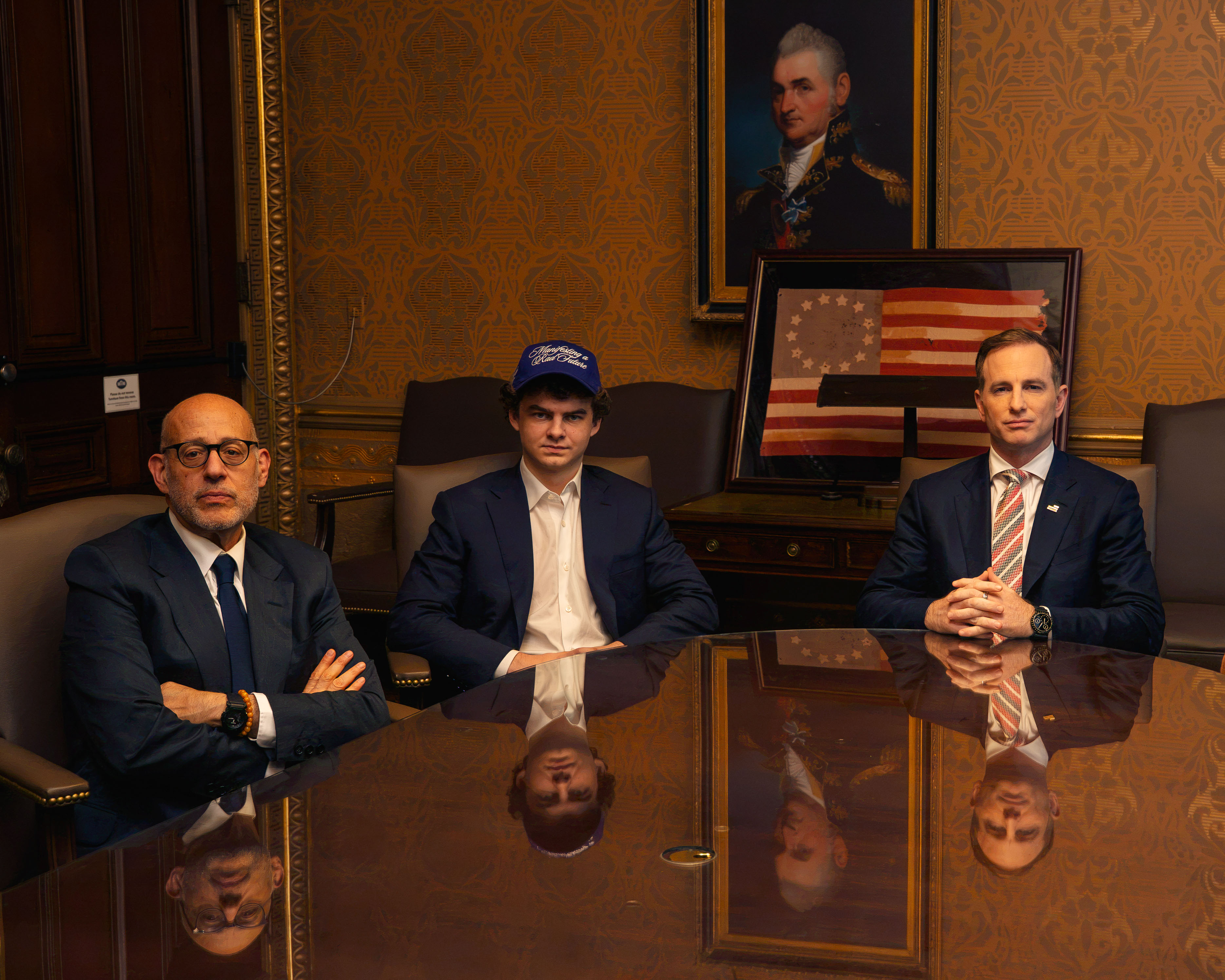
“It’s just so cool. When am I going to do this again in my life, design to change things for the entire country, for everybody? I’m shocked that we don’t get 10,000 resumés a day. Seriously. We might be doing a really lousy job at getting the message out about how cool we are and how radical this is for government. Radical is the word. It’s radical.”
Peter Arnell
And there is, of course, the Trump factor; more than a few entrepreneurs have made their way into the administrations of the 45th and 47th President. Gebbia made sure to stress that “none of this would be possible without President Trump. This exists because of him, because he wants to fix things for Americans.”
Today, the headcount of NDS has swelled from a handful at the start to a few dozen, and they are growing quickly.
“I’ve recruited a lot of designers in my life,” Gebbia said, “and I have yet to meet one that doesn’t want to have impact with what they do. If you’re a designer in the United States and you want to have impact, there are very few better places to do that than here. This is a place where the design that you work on effectively has an installed user base of 350 million.
“There is a creative class in America,” Arnell said. “And what we’re establishing with the National Design Studio, it’s in part an invitation to them. It’s a call to service.”
Toward the end of our talk, I asked Gebbia how he was thinking about the upcoming one-year mark for the National Design Studio, which will be commemorated later in September. He paused for a long beat before answering.
“By October, we’ll have turned a page on the future of user experience in the United States. The public will have experienced version one, the beginnings of a much brighter, faster, clearer, and dignified way of interacting with the nation than has ever existed before. I would call it a radical transformation in usability, in time saved.”
His new friend Peter Arnell butted in to reiterate the point that the first year will have just been the start of a much grander project: “Can you imagine the opportunity to align with the next 250 years, to get everything right, and make an incredible, frictionless environment for citizens?” Arnell asked. “I mean, it’s almost unheard of. It’s miracle level stuff. And it’s happening right now, right here.”
In a 1792 letter to Thomas Jefferson, Pierre Charles L’Enfant wrote this about the project to build a federal city: “To change a Wilderness into a City, to erect and beautify Buildings to that degree of perfection, necessary to receive the Seat of Government of so extensive an Empire, in the short period of time that remains to effect these objects, is an undertaking vast as it is Novel.”
Gebbia and his collaborators, like L’Enfant before them, found in federal service the opportunity to work on a project whose eventual scale could only be imagined — “an undertaking vast as it is novel.”
In a country that could itself be called “vast and novel” the attraction of that is easy to understand.
Greatness
•
Designing America
One year ago, Airbnb cofounder Joe Gebbia became Chief Design Officer of the United States. At the National Design Studio, he’s built a small army of engineers and creatives to help him overhaul government branding and software.
In September 1789, the Frenchman-turned-American Pierre Charles L’Enfant wrote to George Washington, then just five months into the Presidency, asking his former boss for a job. L’Enfant had left France in 1776 to join the American Revolution and served under Washington as a military engineer; after the war, he worked in New York as an architect and designer of homes and home furniture. It was the ratification of the Constitution, which authorized Congress to designate and govern a federal district, that caught L’Enfant’s attention.
“No nation, perhaps,” L’Enfant wrote to President Washington, “had ever before the opportunity of deliberately deciding on the spot where their Capital city should be fixed.” And he put himself forward for the job of designing the city, telling Washington that the plan for the national capital needed to be much bigger than what the indebted, infant Republic could actually pay for in the near term. Such was his confidence in what America could become.
“I view the appointment of Engineer to the United States as the one which could possibly be most gratifying to my wishes,” he wrote. “Although the means now within the power of the country are not such as to pursue the design to any great extent, it will be obvious that the plan should be drawn on such a scale as to leave room for that aggrandizement and embellishment which the increase of the wealth of the nation will permit it to pursue at any period however remote.”
Washington never created the standing office that L’Enfant had requested, but two years later, he gave him the commission that would make his name synonymous with the capital city to a degree surpassed only by the name of Washington himself. Congress had by then selected the Potomac for the permanent seat of government and authorized the President to choose its precise location. Thomas Jefferson, the Secretary of State, sent L’Enfant maps of the great European cities—Amsterdam, Turin, Milan, Paris, and Frankfurt among them. L’Enfant first laid eyes on his canvas in the Spring of 1791. He made quick work, presenting the first and second versions of his plan to Washington that Summer.
The plan placed broad diagonal avenues over a rectangular street grid, opening long views between sites that would be reserved for national buildings. Its central avenue connected the “President’s House” with the “Congress House.” That road became Pennsylvania Avenue, and its western end acquired what may be the most iconic residential address in history: 1600 Pennsylvania Avenue.
More than two centuries, one Civil War, one moon landing, one Internet, and one enormous website for sleeping in strangers’ houses later, another designer found himself with a mandate from the President of the United States to bring art & engineering to bear to do something great for the nation.
That man was Joe Gebbia, the first Chief Design Officer of the United States.
Joe Gebbia is, to tell you the truth, a little out of place in Washington. He spent most of his professional life a world away in San Francisco. He studied graphic and industrial design at the Rhode Island School of Design, where he met Brian Chesky; the two later founded Airbnb with Nathan Blecharczyk. In a now-famous 2007 email, Gebbia wrote to Chesky: “Brian, I thought of a way to make a few bucks — turning our place into ‘designers bed and breakfast.’”
The plan worked. They did make a few bucks, and Gebbia’s stake in Airbnb is worth nearly $10 billion today (the company went public in 2020). He stepped back from Airbnb in 2022 to pursue new projects. One was Samara, a startup gathering elegant design, advanced manufacturing, and streamlined permitting and delivery to build homes in California’s notoriously-slow housing market. He also cofounded the “Eames Institute for Infinite Curiosity” – a digital and physical archive of the work of legendary industrial designers Ray and Charles Eames, who had long been inspirations to Gebbia.
Airbnb’s earliest problem was, naturally, trust. Persuading strangers to sleep in one another’s homes through an interface on the Internet was no small task; it was in part through design that the company made something that sounded a little crazy seem quotidian. In coming to Washington, Gebbia had traded in his Silicon Valley wardrobe of t-shirts and the occasional sport jacket for a set of well-tailored suits, and traded in the problem of trust in strangers’ houses for an even gnarlier problem: trust in government.
In a stately room in the Eisenhower Executive Office Building, just across the street from the White House, I spoke to Gebbia and two of his main collaborators in the National Design Studio about how the project came about, their ambitions for it, and what their merry band of creatives and tinkerers hope to do for the nation through better design.
“America by Design”
In January 2025, Gebbia came to Washington for the inauguration and a number of cabinet confirmation hearings. During one of the hearings for Robert F. Kennedy, Jr., his phone buzzed. Elon Musk was inviting him to meet the early DOGE team at the General Services Administration. Gebbia had a flight planned back to Austin that afternoon. He changed his travel plan and went over; that postponement would turn out to extend his stay in Washington for a lot more than the few hours he was anticipating.
One of the problems the DOGE group was working on led to Boyers, Pennsylvania, where the Office of Personnel Management kept its retirement records 230 feet underground in a former limestone mine. A federal employee’s retirement application – there are nearly 100,000 of them every year – traveled on paper through agency human-resources offices and payroll providers before arriving there by mail. Inside, hundreds of employees processed claims among thousands of filing cabinets containing hundreds of millions of pieces of paper; a claim could take months or longer. “The Mine” attracted the attention of DOGE as a visceral, captivating symbol of government dysfunction and inefficiency. And that symbol pulled Gebbia further in: he agreed to stick around for a while – six months, he thought – to work on creating a new, digital experience for federal employees wishing to retire. It would be faster and easier, conducted over the modern rails of the web rather than in the depths of the mine.
As their work began to bear fruit, word got around Washington. Officials from around the administration started calling: could the same group do something like that for their agency? “This door opened,” Gebbia said, “and I had the option to walk through to do design at not just the agency scale, but the everything scale.” To achieve things at “the everything scale” in Washington, Gebbia knew he would need a team.
“DC is very tactile,” Gebbia said to me, recounting his experience pitching a new comprehensive federal design program. “It’s not like Silicon Valley where you’re on screens or laptops all the time. It’s a foam-core place.”
And to boot, in shopping the idea of a “National Design Studio” around Washington, Gebbia became a frequent customer at local print shops. He visited cabinet secretaries and the directors of Social Security, the IRS, Medicare, and the National Park Service. By the time he had reached White House Chief of Staff Susie Wiles, he says he had given the pitch at least twenty times. “By then it was dialed,” he said. “And I was in a state of flow as I was pitching to her. It was my best Don Draper moment.”
Wiles liked the idea and said she would move it forward. “A very short time later, I found myself entering the Oval Office to pitch the President. And that was the pitch of a lifetime, to say the least.”
The designer and the President – himself long interested in the design of physical spaces – hit it off. And on August 21, 2025, which was Gebbia’s 44th birthday, President Trump signed Executive Order 14338, “Improving Our Nation Through Better Design.”
“There is established a national initiative, America by Design,” the order reads, “to improve comprehensively the visual presentation and usability of Federal services provided to the public in both digital and physical spaces, creating first-class online and offline experiences for Americans.” It created the National Design Studio within the Executive Office of the President, with a Chief Design Officer to oversee the project.
“I kind of couldn’t believe it,” Gebbia recounted thinking after walking out of the West Wing, having won the support of the President to bring a new culture of design to Washington. “This was an idea that was a tiny seed only months earlier, and now it had been ordained by the highest level of authority in our nation. Holy cow.”
“If you’re an engineer, you analyze problems through three lenses,” says Edward Coristine, an engineer who worked on DOGE and became a founding member of NDS. “How big is the scale? What is the difference between what I can do and what currently exists? And how fast can I do it? Across every single one of those, the opportunity here is incredible.”
The night before the executive order was announced, Gebbia was sitting with Coristine in one of the antique rooms of the Eisenhower Executive Office Building. “Joe, congrats on the executive order tomorrow,” Coristine told him. “I want to be a part of this.” Gebbia had already worked with the twenty-year-old engineer during the preceding months. And he says he agreed on one condition: “You need to lead the engineering team.”
“He holds quality and design as much as he holds urgency and shipping,” Gebbia said of his colleague, half his age. “Ed actually fights for craft and design. He fights for the pixel-level stuff.” They shook hands, embraced, and, Gebbia said, “within about an hour, we had five other engineers on the scene.”
“It’s an opportunity that’s never really existed before. And the way we get to work: we get to iterate fast, we get to build things, we get to ship improvements and grade our output based on the product quality, not based on bureaucracy. So, it’s now or never. This is the golden shot.”
Ed Coristine
The interfaces may be used by hundreds of millions of people; their defects have accumulated for years; and the studio has been organized to work faster than a conventional agency process. One can see parallels between what attracts someone like Coristine (and the dozens of other young designers and engineers) to NDS and what it is they’re trying to provide for citizens. In a word? Agency. Inside the studio, that means authority to make decisions, and move quickly, (not exactly the norm for government work). Outside it, agency means getting a new Social Security card or obtaining cheaper prescription drugs without becoming trapped in what Gebbia calls “the maze.”
“Sure, we don’t have stock options and RSUs. But if you want to ship things that your mom will use, your grandparents will use, your classmates will use, your friends will use…” Gebbia said of his pitch to young talent to come work at NDS.
One of the first NDS projects was the “Genesis Mission,” then an unnamed concept at the Department of Energy to make half a century of scientific data across the national laboratories available to researchers using modern AI tools. NDS worked with Energy to brand the effort, give it a name, and build a home on the web. “It really started to show people,” Gebbia said, “‘Oh. This is what National Design Studio can do.’”
For the new federal dietary guidelines promoted by HHS Secretary Robert F. Kennedy, Jr., NDS created the “Real Food” brand campaign, posters and all. The new pyramid turned the familiar 1992 image nearly upside down. Protein, dairy, and healthy fats occupy its broad upper tier; vegetables and fruit sit below; whole grains narrow to the point. And the aesthetic of the new pyramid was as different as its content. At a February event celebrating Real Food, Gebbia said, “We launched RealFood.gov not as another clunky government site, but as a modern minimalist experience…because if we’re asking families to choose real food every day, the guidance should feel welcoming, trustworthy, and beautiful — not bureaucratic.”
TrumpRx came closer to the form of a consumer product, not unlike what Gebbia and company might be shipping in Silicon Valley. The administration had reached voluntary “most-favored-nation” agreements with pharmaceutical manufacturers to offer selected brand-name drugs to cash-paying patients at prices comparable to those available in other developed countries. To promote those agreements, NDS created the site where someone could search for a medication, see available prices or discounts, and learn how to obtain it through a manufacturer or pharmacy. Gebbia showed off the new site at its White House launch, attended by entrepreneur Mark Cuban. “Imagine that,” Gebbia said. “We’re doing product launches at the government!”
Its most significant work to date, I think, may be the design of “Trump Accounts.” Created by Congress in the 2025 reconciliation spending bill, “Trump Accounts” are tax-advantaged investment accounts for children, and include a $1,000 federal contribution for eligible children born from 2025 through 2028 (Dell Technologies founder Michael Dell and his wife Susan Dell have committed over $6 billion to contribute an additional $250 for up to 25 million eligible children).
NDS designed the public website, with a very sleek signup process, and worked with fintech firm Robinhood on the digital experience through which families would manage accounts (Robinhood serves as the broker for the accounts).
“At some point in history, people accessed government by walking into buildings,” Gebbia told me. “And when they did, we see how beautiful the lobbies were, because they’re still around today.” Now most Americans arrived through a web browser or a phone, which had become the lobby, the front desk, and often the entire building.
There is little to unify the many thousands of websites published by the Federal Government; except, that is, for the small flag at the top of each, which reads, “An Official Website of the United States Government. Here’s How You Know.” Most of the time, that flag is believable because as Americans, we sort of know what government sites are supposed to look like: clunky and replete with PDFs. On the new NDS sites – and the Trump Accounts site in particular – that flag is actually kind of… unbelievable, because of how different it is!
“My vision,” Gebbia said, “is that in the future, startup founders and designers will look to dot-gov websites for inspiration and actually say to themselves, ‘Let’s go see how they did it on that dot-gov website.’” After a conversation with Dylan Field, CEO of design software firm Figma, at a May conference in Washington, a woman approached Gebbia and told him that her startup was using RealFood.gov and TrumpRx for inspiration.
“Oh my God,” Gebbia remembered thinking. “We’re scratching the surface, and it’s happening.”
“America — the United States — is likely, if not inarguably, the most valuable brand in the world,” said Peter Arnell. Gebbia tapped Arnell, 68, as “Chief Brand Architect of the United States” in May. Arnell, a lifelong New Yorker, had spent decades moving among branding, photography, and product design for leading fashion houses and the largest corporations. DKNY, Apple, Ray-Ban, Aman Hotels, Prada, and many others have been clients.
And he knew the President going back to the 1980s, when he had designed catalogs for the Trump Organization. (Asked how that came about, he quipped, “Well, I’m a New Yorker and he’s a New Yorker” and said that Trump always had an interest in working with design talent)
Gebbia did not know Arnell, but after a mutual friend introduced them, he thought (within a half-hour, he says) that Arnell was operating “at a higher level than others I’d talked to in the world of branding or design or agency work.” He asked him to consider coming to Washington to join NDS as Chief Brand Architect.
When we met at the end of May, he was only a few weeks into the job, and was in the process of relocating to Washington fully. Arnell, the lifelong New Yorker, has been learning Washington at night – working, as he is, all day at NDS – by photographing monuments and federal buildings. “There’s incredible writings on buildings and words that mean things,” he said. “The symbolism is extraordinary.”
“For me, as a brand person, Washington may be the world’s most extraordinary built environment. The expressions, proportions, scale, messaging, everywhere you look.”
The job of “Chief Brand Architect” for a country that has such a brand already may seem like an odd posting. America is full of iconic symbols: our green paper currency, nearly unchanged in its presentation since the first “greenbacks” were printed during the Civil War; the unique flavor of civic architecture embodied in courthouses and state capitols from coast to coast; the immediately recognizable skyline not just of a place like Manhattan, but a place like Yosemite National Park, too! And then there is the intangible brand of America: of our nation as a place of relentless builders and dreamers, which is a brand that came from people, not a campaign.
But talking at length with Arnell, I realized that he sees his job as narrowing the distance between the grandeur of the national image – the feeling that one gets in the shadow of the Lincoln Memorial, or walking under the Capitol rotunda, those temples of our government – and the small indignities through which citizens actually encounter “the government” in practice.
For instance: A friend of Gebbia’s recently became an American citizen and sent him a photograph of the welcome kit she received. “Someone who just went through a years-long process to become a citizen of the greatest nation on Earth—you would not believe how underwhelming and disappointing this welcome kit is,” he said. There was a half-designed brochure, a small American flag that looked to him like something from a cheap souvenir store, and what he called “a cheesy certificate.” “My heart hurt,” Gebbia said. “I was like, wow. This is the state of what we’re sending to welcome people in the most official way into our nation as permanent citizens of this place?”
The kit joined the growing inventory in Gebbia’s mind of encounters with the federal government that he and the NDS should aspire to improve. “There are dozens, if not hundreds, if not thousands of examples like that, of these touchpoints that people have that have never been designed,” he said. “They’ve never been cared for.”
“Good design is when somebody’s using something and they feel the care the designer put into it. They recognize that someone took the time to make sure that was easy, or simple, or clear, or effortless.”
Joe Gebbia
“Prior to President Nixon,” Gebbia said, “the visual identity of the government had splintered. It was a bit of a mess. So, he came in and said, ‘Let’s clean this up.’” In 1972, Nixon created the Federal Design Improvement Program, pairing federal agencies with some of the country’s best architects and graphic designers. The (brand-new) Environmental Protection Agency received a rigorous visual system. NASA adopted Richard Danne and Bruce Blackburn’s iconic red “worm” wordmark. The American Revolution bicentennial in 1976 exemplified the Helvetica craze of the 1970s.
“That is robust design,” Gebbia said. “That was not trendy. That was not like, ‘Oh, here today, gone tomorrow with the administration.’ Much of it is still in use 50 years later. That’s good design, by the way.” Early in the job of Chief Design Officer, Gebbia asked the National Archives for the records of the Nixon program and received six hundred pages of memos, mandates, and notes.
“The inefficiency that they were solving was largely the total number of pages being printed in documents, books, and pamphlets,” he said, as the Federal Government transitioned from typewriters. Robust design systems – modern typography, basically – were the solution. Today, in the computer age (and the beginning of something newer like an AI Age) the problems design can solve are different.
“How do we reduce the number of clicks that people have to go through to access a government service?” As the studio moves from greenfield projects like TrumpRx and Real Food – easier to design well when they’re starting from scratch – toward existing federal systems, the “how many clicks” question is getting trickier but more pressing. These services come with decades of rules, forms, databases, contractors, and established procedures. Changes must be made while millions of people continue using them. Lately, Gebbia has been looking at one of the most common (and frustrating) online government experiences: replacing a Social Security card. Gebbia says the current path takes a minimum of 87 clicks on a successful attempt. An unpublished studio prototype, he says, used twelve.
The trio of Gebbia, Coristine, and Arnell is a curious one. Coristine, 20, and Arnell, 68 have nearly 50 years between them – with Gebbia, 45, nearly in the middle. They’ve lived in different places, and worked in different worlds. Arnell is rather enchanted by Washington; Coristine not so much.
It’s easy enough to imagine Gebbia the entrepreneur encountering either Arnell or Coristine individually at some point in his career – Arnell, a distinguished brand professional and Coristine a young engineer. But the outfit of the National Design Studio may be the only place in America (or anywhere else) where all three of them would intersect. “Joe fits us together like a puzzle,” Arnell said, “and then all of a sudden we’re living together twenty-four hours a day.”
“It’s just so cool. When am I going to do this again in my life, design to change things for the entire country, for everybody? I’m shocked that we don’t get 10,000 resumés a day. Seriously. We might be doing a really lousy job at getting the message out about how cool we are and how radical this is for government. Radical is the word. It’s radical.”
Peter Arnell
And there is, of course, the Trump factor; more than a few entrepreneurs have made their way into the administrations of the 45th and 47th President. Gebbia made sure to stress that “none of this would be possible without President Trump. This exists because of him, because he wants to fix things for Americans.”
Today, the headcount of NDS has swelled from a handful at the start to a few dozen, and they are growing quickly.
“I’ve recruited a lot of designers in my life,” Gebbia said, “and I have yet to meet one that doesn’t want to have impact with what they do. If you’re a designer in the United States and you want to have impact, there are very few better places to do that than here. This is a place where the design that you work on effectively has an installed user base of 350 million.
“There is a creative class in America,” Arnell said. “And what we’re establishing with the National Design Studio, it’s in part an invitation to them. It’s a call to service.”
Toward the end of our talk, I asked Gebbia how he was thinking about the upcoming one-year mark for the National Design Studio, which will be commemorated later in September. He paused for a long beat before answering.
“By October, we’ll have turned a page on the future of user experience in the United States. The public will have experienced version one, the beginnings of a much brighter, faster, clearer, and dignified way of interacting with the nation than has ever existed before. I would call it a radical transformation in usability, in time saved.”
His new friend Peter Arnell butted in to reiterate the point that the first year will have just been the start of a much grander project: “Can you imagine the opportunity to align with the next 250 years, to get everything right, and make an incredible, frictionless environment for citizens?” Arnell asked. “I mean, it’s almost unheard of. It’s miracle level stuff. And it’s happening right now, right here.”
In a 1792 letter to Thomas Jefferson, Pierre Charles L’Enfant wrote this about the project to build a federal city: “To change a Wilderness into a City, to erect and beautify Buildings to that degree of perfection, necessary to receive the Seat of Government of so extensive an Empire, in the short period of time that remains to effect these objects, is an undertaking vast as it is Novel.”
Gebbia and his collaborators, like L’Enfant before them, found in federal service the opportunity to work on a project whose eventual scale could only be imagined — “an undertaking vast as it is novel.”
In a country that could itself be called “vast and novel” the attraction of that is easy to understand.
Greatness
•
Designing America
One year ago, Airbnb cofounder Joe Gebbia became Chief Design Officer of the United States. At the National Design Studio, he’s built a small army of engineers and creatives to help him overhaul government branding and software.
In September 1789, the Frenchman-turned-American Pierre Charles L’Enfant wrote to George Washington, then just five months into the Presidency, asking his former boss for a job. L’Enfant had left France in 1776 to join the American Revolution and served under Washington as a military engineer; after the war, he worked in New York as an architect and designer of homes and home furniture. It was the ratification of the Constitution, which authorized Congress to designate and govern a federal district, that caught L’Enfant’s attention.
“No nation, perhaps,” L’Enfant wrote to President Washington, “had ever before the opportunity of deliberately deciding on the spot where their Capital city should be fixed.” And he put himself forward for the job of designing the city, telling Washington that the plan for the national capital needed to be much bigger than what the indebted, infant Republic could actually pay for in the near term. Such was his confidence in what America could become.
“I view the appointment of Engineer to the United States as the one which could possibly be most gratifying to my wishes,” he wrote. “Although the means now within the power of the country are not such as to pursue the design to any great extent, it will be obvious that the plan should be drawn on such a scale as to leave room for that aggrandizement and embellishment which the increase of the wealth of the nation will permit it to pursue at any period however remote.”
Washington never created the standing office that L’Enfant had requested, but two years later, he gave him the commission that would make his name synonymous with the capital city to a degree surpassed only by the name of Washington himself. Congress had by then selected the Potomac for the permanent seat of government and authorized the President to choose its precise location. Thomas Jefferson, the Secretary of State, sent L’Enfant maps of the great European cities—Amsterdam, Turin, Milan, Paris, and Frankfurt among them. L’Enfant first laid eyes on his canvas in the Spring of 1791. He made quick work, presenting the first and second versions of his plan to Washington that Summer.
The plan placed broad diagonal avenues over a rectangular street grid, opening long views between sites that would be reserved for national buildings. Its central avenue connected the “President’s House” with the “Congress House.” That road became Pennsylvania Avenue, and its western end acquired what may be the most iconic residential address in history: 1600 Pennsylvania Avenue.
More than two centuries, one Civil War, one moon landing, one Internet, and one enormous website for sleeping in strangers’ houses later, another designer found himself with a mandate from the President of the United States to bring art & engineering to bear to do something great for the nation.
That man was Joe Gebbia, the first Chief Design Officer of the United States.
Joe Gebbia is, to tell you the truth, a little out of place in Washington. He spent most of his professional life a world away in San Francisco. He studied graphic and industrial design at the Rhode Island School of Design, where he met Brian Chesky; the two later founded Airbnb with Nathan Blecharczyk. In a now-famous 2007 email, Gebbia wrote to Chesky: “Brian, I thought of a way to make a few bucks — turning our place into ‘designers bed and breakfast.’”
The plan worked. They did make a few bucks, and Gebbia’s stake in Airbnb is worth nearly $10 billion today (the company went public in 2020). He stepped back from Airbnb in 2022 to pursue new projects. One was Samara, a startup gathering elegant design, advanced manufacturing, and streamlined permitting and delivery to build homes in California’s notoriously-slow housing market. He also cofounded the “Eames Institute for Infinite Curiosity” – a digital and physical archive of the work of legendary industrial designers Ray and Charles Eames, who had long been inspirations to Gebbia.
Airbnb’s earliest problem was, naturally, trust. Persuading strangers to sleep in one another’s homes through an interface on the Internet was no small task; it was in part through design that the company made something that sounded a little crazy seem quotidian. In coming to Washington, Gebbia had traded in his Silicon Valley wardrobe of t-shirts and the occasional sport jacket for a set of well-tailored suits, and traded in the problem of trust in strangers’ houses for an even gnarlier problem: trust in government.
In a stately room in the Eisenhower Executive Office Building, just across the street from the White House, I spoke to Gebbia and two of his main collaborators in the National Design Studio about how the project came about, their ambitions for it, and what their merry band of creatives and tinkerers hope to do for the nation through better design.
“America by Design”
In January 2025, Gebbia came to Washington for the inauguration and a number of cabinet confirmation hearings. During one of the hearings for Robert F. Kennedy, Jr., his phone buzzed. Elon Musk was inviting him to meet the early DOGE team at the General Services Administration. Gebbia had a flight planned back to Austin that afternoon. He changed his travel plan and went over; that postponement would turn out to extend his stay in Washington for a lot more than the few hours he was anticipating.
One of the problems the DOGE group was working on led to Boyers, Pennsylvania, where the Office of Personnel Management kept its retirement records 230 feet underground in a former limestone mine. A federal employee’s retirement application – there are nearly 100,000 of them every year – traveled on paper through agency human-resources offices and payroll providers before arriving there by mail. Inside, hundreds of employees processed claims among thousands of filing cabinets containing hundreds of millions of pieces of paper; a claim could take months or longer. “The Mine” attracted the attention of DOGE as a visceral, captivating symbol of government dysfunction and inefficiency. And that symbol pulled Gebbia further in: he agreed to stick around for a while – six months, he thought – to work on creating a new, digital experience for federal employees wishing to retire. It would be faster and easier, conducted over the modern rails of the web rather than in the depths of the mine.
As their work began to bear fruit, word got around Washington. Officials from around the administration started calling: could the same group do something like that for their agency? “This door opened,” Gebbia said, “and I had the option to walk through to do design at not just the agency scale, but the everything scale.” To achieve things at “the everything scale” in Washington, Gebbia knew he would need a team.
“DC is very tactile,” Gebbia said to me, recounting his experience pitching a new comprehensive federal design program. “It’s not like Silicon Valley where you’re on screens or laptops all the time. It’s a foam-core place.”
And to boot, in shopping the idea of a “National Design Studio” around Washington, Gebbia became a frequent customer at local print shops. He visited cabinet secretaries and the directors of Social Security, the IRS, Medicare, and the National Park Service. By the time he had reached White House Chief of Staff Susie Wiles, he says he had given the pitch at least twenty times. “By then it was dialed,” he said. “And I was in a state of flow as I was pitching to her. It was my best Don Draper moment.”
Wiles liked the idea and said she would move it forward. “A very short time later, I found myself entering the Oval Office to pitch the President. And that was the pitch of a lifetime, to say the least.”
The designer and the President – himself long interested in the design of physical spaces – hit it off. And on August 21, 2025, which was Gebbia’s 44th birthday, President Trump signed Executive Order 14338, “Improving Our Nation Through Better Design.”
“There is established a national initiative, America by Design,” the order reads, “to improve comprehensively the visual presentation and usability of Federal services provided to the public in both digital and physical spaces, creating first-class online and offline experiences for Americans.” It created the National Design Studio within the Executive Office of the President, with a Chief Design Officer to oversee the project.
“I kind of couldn’t believe it,” Gebbia recounted thinking after walking out of the West Wing, having won the support of the President to bring a new culture of design to Washington. “This was an idea that was a tiny seed only months earlier, and now it had been ordained by the highest level of authority in our nation. Holy cow.”
“If you’re an engineer, you analyze problems through three lenses,” says Edward Coristine, an engineer who worked on DOGE and became a founding member of NDS. “How big is the scale? What is the difference between what I can do and what currently exists? And how fast can I do it? Across every single one of those, the opportunity here is incredible.”
The night before the executive order was announced, Gebbia was sitting with Coristine in one of the antique rooms of the Eisenhower Executive Office Building. “Joe, congrats on the executive order tomorrow,” Coristine told him. “I want to be a part of this.” Gebbia had already worked with the twenty-year-old engineer during the preceding months. And he says he agreed on one condition: “You need to lead the engineering team.”
“He holds quality and design as much as he holds urgency and shipping,” Gebbia said of his colleague, half his age. “Ed actually fights for craft and design. He fights for the pixel-level stuff.” They shook hands, embraced, and, Gebbia said, “within about an hour, we had five other engineers on the scene.”
“It’s an opportunity that’s never really existed before. And the way we get to work: we get to iterate fast, we get to build things, we get to ship improvements and grade our output based on the product quality, not based on bureaucracy. So, it’s now or never. This is the golden shot.”
Ed Coristine
The interfaces may be used by hundreds of millions of people; their defects have accumulated for years; and the studio has been organized to work faster than a conventional agency process. One can see parallels between what attracts someone like Coristine (and the dozens of other young designers and engineers) to NDS and what it is they’re trying to provide for citizens. In a word? Agency. Inside the studio, that means authority to make decisions, and move quickly, (not exactly the norm for government work). Outside it, agency means getting a new Social Security card or obtaining cheaper prescription drugs without becoming trapped in what Gebbia calls “the maze.”
“Sure, we don’t have stock options and RSUs. But if you want to ship things that your mom will use, your grandparents will use, your classmates will use, your friends will use…” Gebbia said of his pitch to young talent to come work at NDS.
One of the first NDS projects was the “Genesis Mission,” then an unnamed concept at the Department of Energy to make half a century of scientific data across the national laboratories available to researchers using modern AI tools. NDS worked with Energy to brand the effort, give it a name, and build a home on the web. “It really started to show people,” Gebbia said, “‘Oh. This is what National Design Studio can do.’”
For the new federal dietary guidelines promoted by HHS Secretary Robert F. Kennedy, Jr., NDS created the “Real Food” brand campaign, posters and all. The new pyramid turned the familiar 1992 image nearly upside down. Protein, dairy, and healthy fats occupy its broad upper tier; vegetables and fruit sit below; whole grains narrow to the point. And the aesthetic of the new pyramid was as different as its content. At a February event celebrating Real Food, Gebbia said, “We launched RealFood.gov not as another clunky government site, but as a modern minimalist experience…because if we’re asking families to choose real food every day, the guidance should feel welcoming, trustworthy, and beautiful — not bureaucratic.”
TrumpRx came closer to the form of a consumer product, not unlike what Gebbia and company might be shipping in Silicon Valley. The administration had reached voluntary “most-favored-nation” agreements with pharmaceutical manufacturers to offer selected brand-name drugs to cash-paying patients at prices comparable to those available in other developed countries. To promote those agreements, NDS created the site where someone could search for a medication, see available prices or discounts, and learn how to obtain it through a manufacturer or pharmacy. Gebbia showed off the new site at its White House launch, attended by entrepreneur Mark Cuban. “Imagine that,” Gebbia said. “We’re doing product launches at the government!”
Its most significant work to date, I think, may be the design of “Trump Accounts.” Created by Congress in the 2025 reconciliation spending bill, “Trump Accounts” are tax-advantaged investment accounts for children, and include a $1,000 federal contribution for eligible children born from 2025 through 2028 (Dell Technologies founder Michael Dell and his wife Susan Dell have committed over $6 billion to contribute an additional $250 for up to 25 million eligible children).
NDS designed the public website, with a very sleek signup process, and worked with fintech firm Robinhood on the digital experience through which families would manage accounts (Robinhood serves as the broker for the accounts).
“At some point in history, people accessed government by walking into buildings,” Gebbia told me. “And when they did, we see how beautiful the lobbies were, because they’re still around today.” Now most Americans arrived through a web browser or a phone, which had become the lobby, the front desk, and often the entire building.
There is little to unify the many thousands of websites published by the Federal Government; except, that is, for the small flag at the top of each, which reads, “An Official Website of the United States Government. Here’s How You Know.” Most of the time, that flag is believable because as Americans, we sort of know what government sites are supposed to look like: clunky and replete with PDFs. On the new NDS sites – and the Trump Accounts site in particular – that flag is actually kind of… unbelievable, because of how different it is!
“My vision,” Gebbia said, “is that in the future, startup founders and designers will look to dot-gov websites for inspiration and actually say to themselves, ‘Let’s go see how they did it on that dot-gov website.’” After a conversation with Dylan Field, CEO of design software firm Figma, at a May conference in Washington, a woman approached Gebbia and told him that her startup was using RealFood.gov and TrumpRx for inspiration.
“Oh my God,” Gebbia remembered thinking. “We’re scratching the surface, and it’s happening.”
“America — the United States — is likely, if not inarguably, the most valuable brand in the world,” said Peter Arnell. Gebbia tapped Arnell, 68, as “Chief Brand Architect of the United States” in May. Arnell, a lifelong New Yorker, had spent decades moving among branding, photography, and product design for leading fashion houses and the largest corporations. DKNY, Apple, Ray-Ban, Aman Hotels, Prada, and many others have been clients.
And he knew the President going back to the 1980s, when he had designed catalogs for the Trump Organization. (Asked how that came about, he quipped, “Well, I’m a New Yorker and he’s a New Yorker” and said that Trump always had an interest in working with design talent)
Gebbia did not know Arnell, but after a mutual friend introduced them, he thought (within a half-hour, he says) that Arnell was operating “at a higher level than others I’d talked to in the world of branding or design or agency work.” He asked him to consider coming to Washington to join NDS as Chief Brand Architect.
When we met at the end of May, he was only a few weeks into the job, and was in the process of relocating to Washington fully. Arnell, the lifelong New Yorker, has been learning Washington at night – working, as he is, all day at NDS – by photographing monuments and federal buildings. “There’s incredible writings on buildings and words that mean things,” he said. “The symbolism is extraordinary.”
“For me, as a brand person, Washington may be the world’s most extraordinary built environment. The expressions, proportions, scale, messaging, everywhere you look.”
The job of “Chief Brand Architect” for a country that has such a brand already may seem like an odd posting. America is full of iconic symbols: our green paper currency, nearly unchanged in its presentation since the first “greenbacks” were printed during the Civil War; the unique flavor of civic architecture embodied in courthouses and state capitols from coast to coast; the immediately recognizable skyline not just of a place like Manhattan, but a place like Yosemite National Park, too! And then there is the intangible brand of America: of our nation as a place of relentless builders and dreamers, which is a brand that came from people, not a campaign.
But talking at length with Arnell, I realized that he sees his job as narrowing the distance between the grandeur of the national image – the feeling that one gets in the shadow of the Lincoln Memorial, or walking under the Capitol rotunda, those temples of our government – and the small indignities through which citizens actually encounter “the government” in practice.
For instance: A friend of Gebbia’s recently became an American citizen and sent him a photograph of the welcome kit she received. “Someone who just went through a years-long process to become a citizen of the greatest nation on Earth—you would not believe how underwhelming and disappointing this welcome kit is,” he said. There was a half-designed brochure, a small American flag that looked to him like something from a cheap souvenir store, and what he called “a cheesy certificate.” “My heart hurt,” Gebbia said. “I was like, wow. This is the state of what we’re sending to welcome people in the most official way into our nation as permanent citizens of this place?”
The kit joined the growing inventory in Gebbia’s mind of encounters with the federal government that he and the NDS should aspire to improve. “There are dozens, if not hundreds, if not thousands of examples like that, of these touchpoints that people have that have never been designed,” he said. “They’ve never been cared for.”
“Good design is when somebody’s using something and they feel the care the designer put into it. They recognize that someone took the time to make sure that was easy, or simple, or clear, or effortless.”
Joe Gebbia
“Prior to President Nixon,” Gebbia said, “the visual identity of the government had splintered. It was a bit of a mess. So, he came in and said, ‘Let’s clean this up.’” In 1972, Nixon created the Federal Design Improvement Program, pairing federal agencies with some of the country’s best architects and graphic designers. The (brand-new) Environmental Protection Agency received a rigorous visual system. NASA adopted Richard Danne and Bruce Blackburn’s iconic red “worm” wordmark. The American Revolution bicentennial in 1976 exemplified the Helvetica craze of the 1970s.
“That is robust design,” Gebbia said. “That was not trendy. That was not like, ‘Oh, here today, gone tomorrow with the administration.’ Much of it is still in use 50 years later. That’s good design, by the way.” Early in the job of Chief Design Officer, Gebbia asked the National Archives for the records of the Nixon program and received six hundred pages of memos, mandates, and notes.
“The inefficiency that they were solving was largely the total number of pages being printed in documents, books, and pamphlets,” he said, as the Federal Government transitioned from typewriters. Robust design systems – modern typography, basically – were the solution. Today, in the computer age (and the beginning of something newer like an AI Age) the problems design can solve are different.
“How do we reduce the number of clicks that people have to go through to access a government service?” As the studio moves from greenfield projects like TrumpRx and Real Food – easier to design well when they’re starting from scratch – toward existing federal systems, the “how many clicks” question is getting trickier but more pressing. These services come with decades of rules, forms, databases, contractors, and established procedures. Changes must be made while millions of people continue using them. Lately, Gebbia has been looking at one of the most common (and frustrating) online government experiences: replacing a Social Security card. Gebbia says the current path takes a minimum of 87 clicks on a successful attempt. An unpublished studio prototype, he says, used twelve.
The trio of Gebbia, Coristine, and Arnell is a curious one. Coristine, 20, and Arnell, 68 have nearly 50 years between them – with Gebbia, 45, nearly in the middle. They’ve lived in different places, and worked in different worlds. Arnell is rather enchanted by Washington; Coristine not so much.
It’s easy enough to imagine Gebbia the entrepreneur encountering either Arnell or Coristine individually at some point in his career – Arnell, a distinguished brand professional and Coristine a young engineer. But the outfit of the National Design Studio may be the only place in America (or anywhere else) where all three of them would intersect. “Joe fits us together like a puzzle,” Arnell said, “and then all of a sudden we’re living together twenty-four hours a day.”
“It’s just so cool. When am I going to do this again in my life, design to change things for the entire country, for everybody? I’m shocked that we don’t get 10,000 resumés a day. Seriously. We might be doing a really lousy job at getting the message out about how cool we are and how radical this is for government. Radical is the word. It’s radical.”
Peter Arnell
And there is, of course, the Trump factor; more than a few entrepreneurs have made their way into the administrations of the 45th and 47th President. Gebbia made sure to stress that “none of this would be possible without President Trump. This exists because of him, because he wants to fix things for Americans.”
Today, the headcount of NDS has swelled from a handful at the start to a few dozen, and they are growing quickly.
“I’ve recruited a lot of designers in my life,” Gebbia said, “and I have yet to meet one that doesn’t want to have impact with what they do. If you’re a designer in the United States and you want to have impact, there are very few better places to do that than here. This is a place where the design that you work on effectively has an installed user base of 350 million.
“There is a creative class in America,” Arnell said. “And what we’re establishing with the National Design Studio, it’s in part an invitation to them. It’s a call to service.”
Toward the end of our talk, I asked Gebbia how he was thinking about the upcoming one-year mark for the National Design Studio, which will be commemorated later in September. He paused for a long beat before answering.
“By October, we’ll have turned a page on the future of user experience in the United States. The public will have experienced version one, the beginnings of a much brighter, faster, clearer, and dignified way of interacting with the nation than has ever existed before. I would call it a radical transformation in usability, in time saved.”
His new friend Peter Arnell butted in to reiterate the point that the first year will have just been the start of a much grander project: “Can you imagine the opportunity to align with the next 250 years, to get everything right, and make an incredible, frictionless environment for citizens?” Arnell asked. “I mean, it’s almost unheard of. It’s miracle level stuff. And it’s happening right now, right here.”
In a 1792 letter to Thomas Jefferson, Pierre Charles L’Enfant wrote this about the project to build a federal city: “To change a Wilderness into a City, to erect and beautify Buildings to that degree of perfection, necessary to receive the Seat of Government of so extensive an Empire, in the short period of time that remains to effect these objects, is an undertaking vast as it is Novel.”
Gebbia and his collaborators, like L’Enfant before them, found in federal service the opportunity to work on a project whose eventual scale could only be imagined — “an undertaking vast as it is novel.”
In a country that could itself be called “vast and novel” the attraction of that is easy to understand.
About the Author
Maxwell Meyer is the founder and Editor of Arena Magazine, and President of the Intergalactic Media Corporation of America. He graduated from Stanford University with a degree in geophysics. He can be found on X at: @mualphaxi.