tt
tt
tt
tt
tt
tt

Civilization
•
Trae Stephens on Rebuilding the American Arsenal
An interview with the chairman of Anduril Industries.
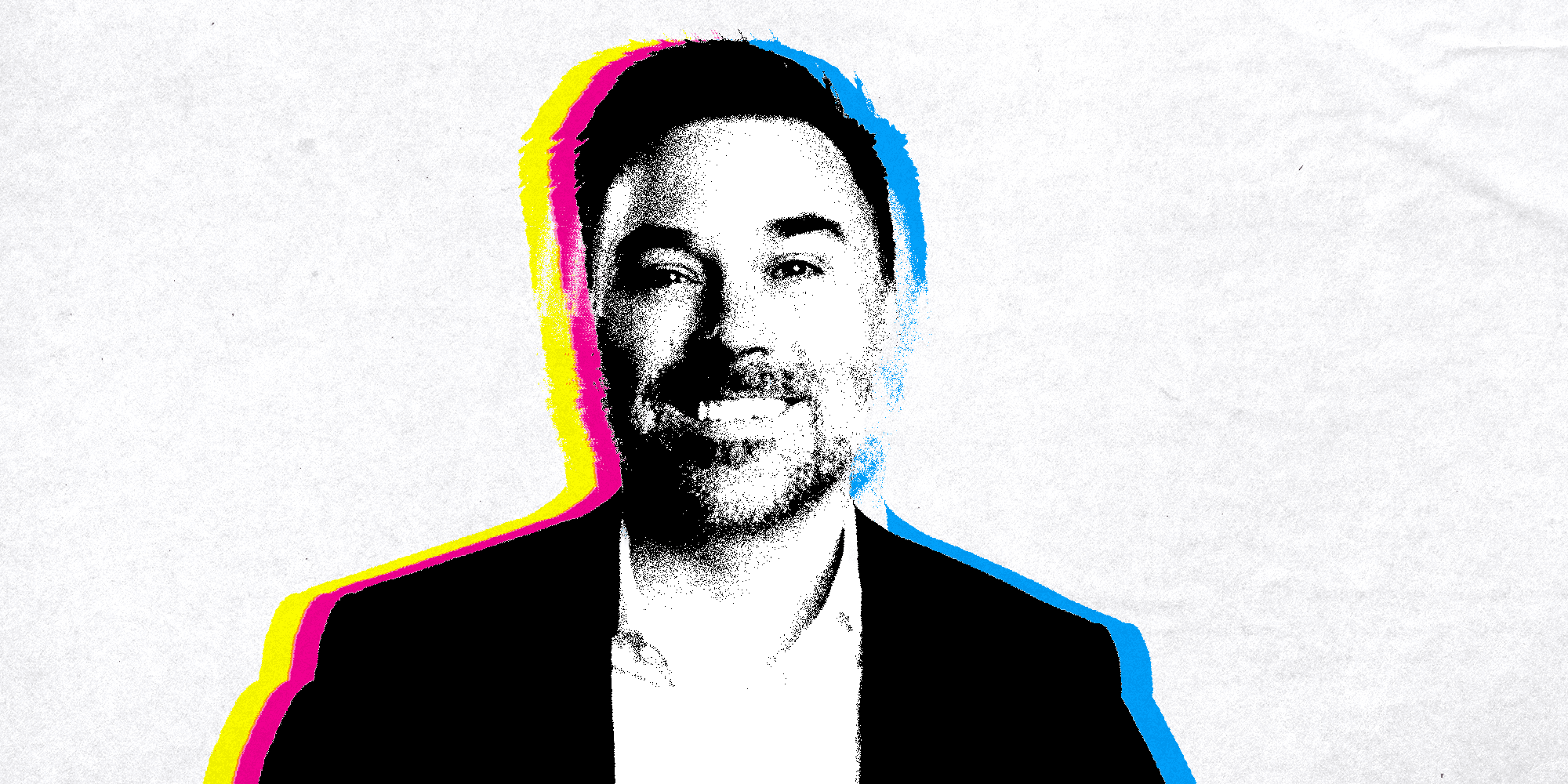

Toward the end of 2016, Trae Stephens received a phone call from Palmer Luckey. For several years, the pair had been contemplating an idea inspired by the fictional Stark Industries from Ironman: a defense technology company that would develop products in-house and sell them off the shelf, rather than waiting on the Pentagon contract system. The company they founded in 2017 with Brian Schimpf, Joseph Chen, and Matt Grimm — Anduril Industries — arrived at a notable low point in the relationship between Silicon Valley and Washington. There was a strict taboo around defense in the Valley. The following year, thousands of Google employees would pressure their company into abandoning its AI work for the Department of Defense under Project Maven, demanding that Google adopt a policy of never building “warfare technology.”
Anduril was founded on the assumption that the American defense model, with its guild of defense primes producing small numbers of exquisite, expensive, slowly built weapons platforms, would have to be fundamentally redesigned. Instead, Anduril would produce low-cost, autonomous, mass-produced systems in large numbers. Less than a decade later, as wars in Ukraine and the Persian Gulf throw the old assumptions of warfare into disarray, that wager looks prophetic. In May, Anduril closed a $5 billion Series H at a $61 billion valuation. The company more than doubled its revenue in 2025 to $2.2 billion. At Arsenal-1, its 5 million-square-foot manufacturing facility in Ohio, it is standing up high-rate production, transforming from technology startup into a bona fide defense production company. In time, Anduril plans to build similar facilities in allied countries worldwide.
Trae Stephens is Anduril’s co-founder and executive chairman, and a partner at Founders Fund. His path to the commanding heights of defense technology was an unlikely one. Raised in Ohio, Stephens spent part of the eighth grade in Gaza where he developed a fascination with the Middle East. After 9/11, which occurred during his senior year of high school, he abandoned ambitions in journalism and refocused his efforts toward a career in national service.
After studying Arabic and computational linguistics in college, Stephens’ first job was in intelligence. From there he joined Palantir Technologies as an early employee, then moved to Founders Fund, where he has built an investment practice around companies at the intersection of technology and national security like Varda Space Industries and Nominal. He has served as Anduril’s executive chairman since its founding. Stephens is one of the defense tech ecosystem’s most influential voices on the widening gap between American production capacity and the demands of modern war — a gap laid bare by the recent war with Iran, in which the United States burned through years of Tomahawk production, along with other crucial stockpiles, in just a few weeks.
I sat down with Stephens in San Francisco to better understand the lessons of modern war, the strategic challenge posed by China, and the future of the American defense industry. What follows is a transcript of our conversation.
CB: Have you read anything particularly valuable recently? I know you're a bit of a writer yourself.
TS: I would not claim that. Mike Solana is a brilliant writer. I’m just hanging on for dear life. The last book I read was about the San Francisco Presidio, called Bastion by the Bay — a cool history. Up until 1994, this was a continuously operated military base under three different countries: it was a Spanish military base, then a Mexican military base, and then a US military base. It was a cool story. I also read a lot of science fiction, which I think is helpful for venture capital. And then, obviously, all sorts of books concerning the history of defense.
CB: In your interviews you describe growing up in Ohio. One question I had from hearing your account was: How did you get so interested in the Middle East in particular, coming from Ohio? You ended up studying Arabic, and also Farsi?
TS: I did a bunch of computational linguistics stuff on Arabic script-based languages, which includes Farsi, things like that, but I was studying Arabic specifically.
When I was in eighth grade, my family went to the Gaza Strip on a service trip. My dad was doing some construction work and my mom was volunteering at a school for the deaf. I had a burgeoning interest in becoming a journalist doing international correspondence, and this really fueled that even more. I became the editor of my high school newspaper. Then, 9/11 happened my senior year, and so I pivoted from wanting to do foreign policy, geopolitical-type journalism to doing something in service to the country. I went down that path in college, and then went into the intelligence community from there.
CB: I’ve read a lot about the British Empire, their civil service, the Indian Civil Service, and so on. It was among the most prestigious jobs you could have. An intensive exam process. It drew the cognitive elite into that field. From your time in intelligence, did you get the impression that these American institutions were taking advantage of the brilliant minds we have here?
TS: No, definitely not. I mean, there were moments, like during the Cold War. I think we did a great job of attracting the right people then. If you look at the history of tech, most of the cutting-edge tech was coming out of research funding for defense, whether that was radar for commercial aviation, or GPS, or the internet. All of these were defense projects. The long history of Stanford's rise to the top of academia for science-related fields — that was also funded by the Defense Department.
I think people understood the reality of the existential threat we were facing vis-a-vis the Soviet Union, and they were willing to spend their time and effort contributing to national service relevant to that potential conflict, or that related at least to the existential risk of that potential conflict. Once the Cold War ended, I feel like a lot of that just faded into oblivion. People were much more likely to graduate and go and work on Wall Street, or become lawyers.
CB: The more lucrative professions.
TS: Yeah, they’d go into tech, work on the early days of the internet — and who could blame them? There was this very confident feeling that we would have an impenetrable hegemony. The Soviet Union was dead. We had a global monopoly on power. It felt very safe. I remember living through the ‘90s and thinking that our biggest problem was whether or not the president had an affair with an intern. It seemed like there was nothing happening that would have led people to go and work in national security.
I think the problem is that the mystique behind it remained, so the culture still believed that these were these incredibly high-powered, intellectual, aspirational jobs — media and entertainment played into that with popularity of the Bond movies and the Bourne movies — but the talent pipeline dried up. It's further than ever from being recovered, I would argue. So, I think this is a real problem that we haven't really reckoned with as a country yet.
CB: To touch on some of the themes that you mentioned in your Hill and Valley speech back in March: There are certain historical cases where the US was forced to respond to a technological or industrial challenge. A shock moment. In World War II, it led to us creating this massive assembly line where we could make 286,000 airplanes. A few years later, you had the Sputnik moment, which drove Silicon Valley’s development to a great extent. Do you think that we're on the verge of some kind of shock?
TS: It's probably less of a shock and more of a 30-year ignorance compounding into a major problem. This isn't even a partisan thing. Democrats and Republicans alike agreed that globalization was good. Offshoring to low-cost labor sources was totally acceptable. The rising tide was going to lift all boats. Everyone would be better off. Consumer prices went down, surely, but the belief was that economic growth was going to democratize potential international adversaries.
I was in Paris in 2019 — right before Covid — and there was a debate at that time about Western Europe's reliance on Huawei for 5G infrastructure. Macron gave a speech saying, in effect: “I think people are overreacting to the Huawei conversation. Our close partnership with China is undoubtedly going to lead to better justice and outcomes for democracy to the Chinese people.” That was in 2019. That's not even that long ago. Now we look back on these twilight-zone moments from as recently as five or six years ago and we think: how could we have possibly believed that that was true as recently as 2019? I think there was a 30-year window where people thought, ‘this is just the expectation of globalization,’ and the Chinese have sort of hoodwinked us into getting complacent about natural resources and supply chain risk and the need for skilled labor, the trades. We're sort of waking up to it, but I don't get a sense that it’s going to be a single flash moment. It's more like we're the frog that has been boiling.
CB: The timing of Hill and Valley — this was in early March — was an interesting time, right? You had the Iran war kicking off, and then the whole Pentagon-Anthropic saga kicking off around the same time. On the Anthropic issue, do you think that indicates some sort of latent cold war between Silicon Valley and DC?
TS: I don't think there's a cold war. I think it's more like there are misunderstandings on both sides. There's been such a fracturing of communication. Obviously it's very different from Stanford in the Cold War, right? Those were very close ties. I think today the tech community sort of roughly believes that it operates with relative impunity, and the government believes that they don't really need tech, and I don't think either of those stories is true. Obviously, Microsoft found this out in a very painful way 20-some years ago, when it was bundling Internet Explorer and forcing consumers down that path, and it got smacked pretty hard by the government. So, I think there just needs to be closer engagement in order for that trust to be restored. But the trust certainly doesn't exist right now. Michael Kratsios, the director of the Office of Science and Technology Policy, released a policy document on the interaction between the Department of War and the AI labs. The work is happening. I feel like the chasm is much smaller than it was even a couple months ago.
CB: On the Iran war, there have been some interesting developments. On the one hand, the performance of the American aerospace industry — ISR, targeting systems, all of that — has been pretty good. However, the war has also proven that what we currently have is not enough to achieve our strategic objectives. The UAE fired $10 billion worth of interceptors from a very limited stockpile, at extremely high cost. If you were to break down the core lessons of this war, what have we learned about our shortcomings and vulnerabilities as a power?
TS: I think what you just hinted at is the exact thing that everyone's waking up to. The contract for Patriot missiles was first awarded in the 1960s. They were tested in 1969. They're incredibly capable. They can be used to shoot down a DJI drone or a maneuverable hypersonic weapon, and everything in between. They were built to counter MiGs, to shoot down fighter planes, and we're using them to shoot at $60,000 drones, Shahed-136s. So the economic arbitrage piece of this is clearly not the right solution. We need to have a layered air defense portfolio. There need to be lower cost ways of engaging less exquisite systems. Do you still need a PAC-3, a modern-block Patriot missile to shoot down hypersonic targets? Sure, that sounds great. If you're going to shoot a $3 million missile, it better be at something that's highly capable.
The bigger problem is manufacturability. Whether it's a Tomahawk or an SM-6 or a PAC-3, these are multimillion-dollar weapon systems that take years to build at very low volumes. Right now our annual production capacity for Patriots is something like 685. Tomahawks were a few 100 per year, and we shot about 1,000 Tomahawks in the first few weeks of Epic Fury. That's years of production, and the most recent orders that are coming in won't actually be supplied until 2030. We shot over 200 THAAD interceptors, over half of our inventory. We fired more than half of our Patriot interceptors. So when you burn through your inventory, the resupply on that inventory boxes out our international allies and partners because they get pushed to the bottom of the waiting list.
Even if we're doing resupply and we don't engage in any major conflicts over the next three years that would further burn down those very limited inventories, we've told Kuwait and Qatar and the Emirates and the Saudis: sorry, you're not getting any more Patriots. What does that mean for them? They have to make hard decisions. Do we go to China for munitions? If we do, does that mean that we need to tighten our partnership there? Does that put US interests at risk in the region? I would argue that it does. So we really need to fix the manufacturing and production side of the equation, in addition to increasing capability. Production is a huge shortfall right now.
CB: If you were to apply the lessons of Iran to the production and innovative capacity of China, you'd probably find yourself with a much more frightening scenario. Have you thought about how that would look?
TS: Yeah. It's not only drones — I mean, they have fully autonomous factories making cruise missiles. They also perceive that there is risk in becoming a critical supplier to Iran, right? China is not a provoking nation. Have you read The Hundred-Year Marathon?
CB: I've not.
TS: It's a brilliant book. It's by this guy, Michael Pillsbury, who was at the CIA in China House for a long time — their China office — and he basically ties in the fables, the stories we were told as kids in different cultures. For Western fables, we have Aesop and Shakespeare and all this stuff, and a lot of the moral lessons that we've learned come from the Western canon, even if we don't realize that that's where they come from.
CB: We’ve internalized it from childhood.
TS: Yeah, we've internalized the Western canon, and that's often why we do the things that we do. The Chinese canon is not the Western canon — it's very different. The most popular fable in Chinese culture comes from the Warring States period. There’s this story about a super powerful king that was the presumed hegemon, and he had a vassal state whose king he would summon to come and meet with him. And every time, the king would say, "Tell me about your growth — what's happening economically, what's happening militarily in your kingdom,?” And the vassal would say, “Oh, we're so weak. It’s very difficult. We’re no match for you — you’re far superior.” He said that every year while he was building up his power, and then the moment at which he surpassed the other king was the first time he even suggested that he had the power to take control.
That’s not how the Western canon works at all. We're provoking, that's how we interact. It's like peacocking, almost. Whereas the China story is: every time you meet with them, they're gonna remind you how weak they are, there's no shame in it. Whereas in Western culture, there would be a lot of shame to saying, “we’re no match for you” — but actually, that's what 's been happening for decades.
CB: There was this interesting speech Hu Jintao gave in 2003 — the “Malacca Dilemma” speech. It was a significant departure, because he was overtly addressing a weakness that China had: how economically dependent they are on trade that passes through this one strait. I was thinking about the advancements we have in missiles and coastal defense. Given the geography, isn’t it possible, in theory, to constrain China simply through aiming those weapons systems at these choke points and preventing any trade or any naval vessels from going through?
TS: Trade is the only real lever we have against China. There's a question of whether they’re self-sustaining? Could they actually survive as an economy without the Western world buying everything from them, having them manufacture everything? There are definitely agricultural shortfalls, although they have vassal states in the region that could help them fill that gap. I think trade is the lever that we hold, but obviously they know that, and that's exactly what they will be working to shore up.
CB: Anduril just raised its Series H in May. What are you doing with that capital to increase production volume?
TS: We have a bunch of production facilities that are coming online right now. We have 16 different production facilities across the world — and I do mean the world. We have submarine production in Australia. There's a lot of stuff internationally that will be coming online in the next year as well. Arsenal-1 in Columbus is the bulk of our investment as we go from 800,000 square feet to 5,000,000 square feet over the next five or six years.
You can't just do all of that capex investment at once, because you have to recruit a lot of people and train them up. So we're staging everything out in pieces. So this summer we're going to start rolling aircraft — Furys — off the line in Ohio. Right after that, going into the fall, we'll start producing Barracuda, our low-cost cruise missile, in Ohio. Then we’re moving Roadrunner production from headquarters in California over to Ohio, and we'll kind of be following along as we build that out. We’re also planning on building shipyards for expanding our work on undersea: We’re a very large player with the DoW currently on undersea production. It's really all focused on production: realigning the company away from being a tech startup to being a defense production company.
CB: I’m very interested in the undersea warfare aspect, especially since you mentioned Australia. I was following AUKUS quite a bit. How do Anduril’s products augment undersea warfare, and specifically anti-submarine warfare?
TS: The AUKUS agreement is a big deal for Australia. But deliveries of nuclear subs are a long way away: They'll receive their first subs around 2035. So I think they have to have a bridging capability, and the Royal Australian Navy was very interested in what we were doing with Dive-XL — the big one, the school-bus-size autonomous submarine. There are all sorts of payloads you put on something like that. We’re really the fairing that carries a variety of payloads. Some of those are sensing payloads — for looking for mines, looking for other submarines — and you can put kinetic payloads in it as well, torpedoes and stuff like that. We have a whole class of low-cost undersea payload delivery vehicles called Copperhead that align with that. And we have Seabed Sentry, which is basically a Sentry watchtower that you drop on the sea floor that can communicate with other Seabed Sentries and detect things that are happening in the water around it. So it's a big part of our strategy on the maritime side.
CB: What kind of sensing does it use?
TS: It's a sensor fusion platform. Just like our Sentry towers on land, you can't do the mission with electro-optical sensors alone, or with IR alone, or with metamaterial radar alone. You want to tie all these things together, and then pull the signal from the noise by fusing those data streams together.
CB: Anduril has been developing the CCA-Fury platform, which began production earlier this year. Meanwhile the Pentagon has been talking a lot about the F-47 and sixth-gen. One of the priorities of sixth-gen is having a platform that can network with autonomous systems. Where do these intersect?
TS: The motivations behind the F-47 feel somewhat unclear. Maybe we do need a sixth-generation fighter plane, but we're also 32 years into a fifth-generation fighter plane program that has cost the US taxpayer over a trillion dollars. Norm Augustine, the former CEO of Lockheed Martin, has this famous line: “in 2050, the entire US defense budget will buy exactly one airplane.” That’s an exaggeration, obviously, but that's basically what NGAD — Next Generation Air Dominance — is in my mind. It's like: okay, sure, let's build a $500 million airplane. I'm not really sure what dangerous mission you're going to send a human bag of flesh in a $500 million airplane to do — but sure, why not? I think it's not entirely coincidental that that development design contract — the $20 billion contract — was granted immediately in the wake of Boeing saying that it was about to wash out of its defense business. It’s really important that Boeing has enough contracts to keep them afloat, so is this a real contract, or is it TARP funding for Boeing?
CB: Last I checked, they still hadn't delivered the new Air Force One.
TS: Look into the Orca program — their XLUUV — or the Air Force One project. I mean, Boeing's defense portfolio is rough. I think you have to really look into the motivations behind these programs. $20 billion is not a lot of money for a prime to build a new generation of fighter plane.
On the CCA — Collaborative Combat Aircraft — front, the real question is: fighter planes don't really dogfight. That’s not a thing. I love Top Gun, but even in Top Gun, they had to create the most improbable scenario for how you would get into a dogfight with a fifth-generation fighter plane. It's just completely improbable and far-fetched. The whole game is about sensors and shooters. Can you see them before they can see you, and can you shoot them before they can see you or shoot you? That's it. And so, when you're flying around in a $200, $300 million airplane, you want to have attritable systems that you can tell: “go out and find me the thing and shoot at it before I put myself or this very expensive airplane in range for being targeted by an enemy plane.” That’s really what CCA is.
The pilot is no longer dogfighting like Tom Cruise — the pilot is a command and control operator, and so they're giving commands, saying, "Hey, go out and do a mission.” And then that aircraft has enough autonomy to do the mission without being remotely controlled by the pilot. So the pilot can give two, five, 10, 20 different CCAs different missions and have them just operating in the environment, feeding back whatever information is relevant for the pilot to make decisions. It’s really more of a C2 network.
CB: Given the state of drone warfare, and once you really scale up production, how do you realistically defend against a massive, attritable drone arsenal, where the enemy could just send endless waves?
TS: Layered air defense. You can't rely too much on a single countermeasure. You need to have electronic warfare in play, really low-cost interceptors in play. You need low-cost cruise missiles with more capability. You probably need to have PAC-3-level stuff to take down the more complicated threats. You cannot be shooting sophisticated, expensive things at non-sophisticated targets. And we just have to be able to produce as a scale. Next year, the Pentagon already announced they're doing an LCCM – low-cost cruise missile – buy from Anduril; this is our Barracuda-500 class. We will produce 7,000 barracudas in calendar year 2027. And, keep in mind, deliveries on Tomahawks and Patriots are both less than 1,000 a year — so we will make ten times more Barracuda-500s than Patriots or Tomahawks. Getting that production cadence right is incredibly important.
CB: Palmer was speaking not too long ago about subterranean warfare. What does he have in mind?
TS: Who knows? There's nothing actively in the works.
CB: On the human enhancement front — whether that's through headsets, exoskeletons, or humanoid robotics — could they play a battlefield role in the next few years?
TS: I don't think we're close at all on humanoids, and I don't think it’s the next few years at all.
CB: Next few decades?
TS: Maybe the next few decades. There's a lot of issues: transportability, power, autonomy. Some of these are getting reasonably good when they're remotely piloted or controlled, but then you have comms issues with maintaining connection. I don't think that we're anywhere near that version of the future. But as far as — can you do a Call of Duty HUD for a soldier? Yeah, we own that contract at Anduril. It’s called EagleEye; it used to be called IVAS. We're doing all sorts of stuff with giving soldiers superhuman awareness of their environment using sensor integration, command and control from the operator, and really user-friendly interfaces.
CB: Why did Microsoft transfer the IVAS contract to Anduril?
TS: It wasn't working. They had made some platform decisions that were exactly the reason why Palmer had no interest in us bidding on this when we first started. Most people assumed that's what we would be doing, that the company was going to be this military XR company. But he felt strongly that the physics were not at the place where you could do it credibly, so he stayed out of it. Then things kind of got to the point where Palmer thought: if they have made different platform decisions, there are actually some things that you could do that would be really interesting. So we talked to Microsoft. They wanted the Albatross off their back, and I think we were just in a really good position to come in and do that.
This interview has been edited for grammar and clarity.
Civilization
•
Trae Stephens on Rebuilding the American Arsenal
An interview with the chairman of Anduril Industries.
Toward the end of 2016, Trae Stephens received a phone call from Palmer Luckey. For several years, the pair had been contemplating an idea inspired by the fictional Stark Industries from Ironman: a defense technology company that would develop products in-house and sell them off the shelf, rather than waiting on the Pentagon contract system. The company they founded in 2017 with Brian Schimpf, Joseph Chen, and Matt Grimm — Anduril Industries — arrived at a notable low point in the relationship between Silicon Valley and Washington. There was a strict taboo around defense in the Valley. The following year, thousands of Google employees would pressure their company into abandoning its AI work for the Department of Defense under Project Maven, demanding that Google adopt a policy of never building “warfare technology.”
Anduril was founded on the assumption that the American defense model, with its guild of defense primes producing small numbers of exquisite, expensive, slowly built weapons platforms, would have to be fundamentally redesigned. Instead, Anduril would produce low-cost, autonomous, mass-produced systems in large numbers. Less than a decade later, as wars in Ukraine and the Persian Gulf throw the old assumptions of warfare into disarray, that wager looks prophetic. In May, Anduril closed a $5 billion Series H at a $61 billion valuation. The company more than doubled its revenue in 2025 to $2.2 billion. At Arsenal-1, its 5 million-square-foot manufacturing facility in Ohio, it is standing up high-rate production, transforming from technology startup into a bona fide defense production company. In time, Anduril plans to build similar facilities in allied countries worldwide.
Trae Stephens is Anduril’s co-founder and executive chairman, and a partner at Founders Fund. His path to the commanding heights of defense technology was an unlikely one. Raised in Ohio, Stephens spent part of the eighth grade in Gaza where he developed a fascination with the Middle East. After 9/11, which occurred during his senior year of high school, he abandoned ambitions in journalism and refocused his efforts toward a career in national service.
After studying Arabic and computational linguistics in college, Stephens’ first job was in intelligence. From there he joined Palantir Technologies as an early employee, then moved to Founders Fund, where he has built an investment practice around companies at the intersection of technology and national security like Varda Space Industries and Nominal. He has served as Anduril’s executive chairman since its founding. Stephens is one of the defense tech ecosystem’s most influential voices on the widening gap between American production capacity and the demands of modern war — a gap laid bare by the recent war with Iran, in which the United States burned through years of Tomahawk production, along with other crucial stockpiles, in just a few weeks.
I sat down with Stephens in San Francisco to better understand the lessons of modern war, the strategic challenge posed by China, and the future of the American defense industry. What follows is a transcript of our conversation.
CB: Have you read anything particularly valuable recently? I know you're a bit of a writer yourself.
TS: I would not claim that. Mike Solana is a brilliant writer. I’m just hanging on for dear life. The last book I read was about the San Francisco Presidio, called Bastion by the Bay — a cool history. Up until 1994, this was a continuously operated military base under three different countries: it was a Spanish military base, then a Mexican military base, and then a US military base. It was a cool story. I also read a lot of science fiction, which I think is helpful for venture capital. And then, obviously, all sorts of books concerning the history of defense.
CB: In your interviews you describe growing up in Ohio. One question I had from hearing your account was: How did you get so interested in the Middle East in particular, coming from Ohio? You ended up studying Arabic, and also Farsi?
TS: I did a bunch of computational linguistics stuff on Arabic script-based languages, which includes Farsi, things like that, but I was studying Arabic specifically.
When I was in eighth grade, my family went to the Gaza Strip on a service trip. My dad was doing some construction work and my mom was volunteering at a school for the deaf. I had a burgeoning interest in becoming a journalist doing international correspondence, and this really fueled that even more. I became the editor of my high school newspaper. Then, 9/11 happened my senior year, and so I pivoted from wanting to do foreign policy, geopolitical-type journalism to doing something in service to the country. I went down that path in college, and then went into the intelligence community from there.
CB: I’ve read a lot about the British Empire, their civil service, the Indian Civil Service, and so on. It was among the most prestigious jobs you could have. An intensive exam process. It drew the cognitive elite into that field. From your time in intelligence, did you get the impression that these American institutions were taking advantage of the brilliant minds we have here?
TS: No, definitely not. I mean, there were moments, like during the Cold War. I think we did a great job of attracting the right people then. If you look at the history of tech, most of the cutting-edge tech was coming out of research funding for defense, whether that was radar for commercial aviation, or GPS, or the internet. All of these were defense projects. The long history of Stanford's rise to the top of academia for science-related fields — that was also funded by the Defense Department.
I think people understood the reality of the existential threat we were facing vis-a-vis the Soviet Union, and they were willing to spend their time and effort contributing to national service relevant to that potential conflict, or that related at least to the existential risk of that potential conflict. Once the Cold War ended, I feel like a lot of that just faded into oblivion. People were much more likely to graduate and go and work on Wall Street, or become lawyers.
CB: The more lucrative professions.
TS: Yeah, they’d go into tech, work on the early days of the internet — and who could blame them? There was this very confident feeling that we would have an impenetrable hegemony. The Soviet Union was dead. We had a global monopoly on power. It felt very safe. I remember living through the ‘90s and thinking that our biggest problem was whether or not the president had an affair with an intern. It seemed like there was nothing happening that would have led people to go and work in national security.
I think the problem is that the mystique behind it remained, so the culture still believed that these were these incredibly high-powered, intellectual, aspirational jobs — media and entertainment played into that with popularity of the Bond movies and the Bourne movies — but the talent pipeline dried up. It's further than ever from being recovered, I would argue. So, I think this is a real problem that we haven't really reckoned with as a country yet.
CB: To touch on some of the themes that you mentioned in your Hill and Valley speech back in March: There are certain historical cases where the US was forced to respond to a technological or industrial challenge. A shock moment. In World War II, it led to us creating this massive assembly line where we could make 286,000 airplanes. A few years later, you had the Sputnik moment, which drove Silicon Valley’s development to a great extent. Do you think that we're on the verge of some kind of shock?
TS: It's probably less of a shock and more of a 30-year ignorance compounding into a major problem. This isn't even a partisan thing. Democrats and Republicans alike agreed that globalization was good. Offshoring to low-cost labor sources was totally acceptable. The rising tide was going to lift all boats. Everyone would be better off. Consumer prices went down, surely, but the belief was that economic growth was going to democratize potential international adversaries.
I was in Paris in 2019 — right before Covid — and there was a debate at that time about Western Europe's reliance on Huawei for 5G infrastructure. Macron gave a speech saying, in effect: “I think people are overreacting to the Huawei conversation. Our close partnership with China is undoubtedly going to lead to better justice and outcomes for democracy to the Chinese people.” That was in 2019. That's not even that long ago. Now we look back on these twilight-zone moments from as recently as five or six years ago and we think: how could we have possibly believed that that was true as recently as 2019? I think there was a 30-year window where people thought, ‘this is just the expectation of globalization,’ and the Chinese have sort of hoodwinked us into getting complacent about natural resources and supply chain risk and the need for skilled labor, the trades. We're sort of waking up to it, but I don't get a sense that it’s going to be a single flash moment. It's more like we're the frog that has been boiling.
CB: The timing of Hill and Valley — this was in early March — was an interesting time, right? You had the Iran war kicking off, and then the whole Pentagon-Anthropic saga kicking off around the same time. On the Anthropic issue, do you think that indicates some sort of latent cold war between Silicon Valley and DC?
TS: I don't think there's a cold war. I think it's more like there are misunderstandings on both sides. There's been such a fracturing of communication. Obviously it's very different from Stanford in the Cold War, right? Those were very close ties. I think today the tech community sort of roughly believes that it operates with relative impunity, and the government believes that they don't really need tech, and I don't think either of those stories is true. Obviously, Microsoft found this out in a very painful way 20-some years ago, when it was bundling Internet Explorer and forcing consumers down that path, and it got smacked pretty hard by the government. So, I think there just needs to be closer engagement in order for that trust to be restored. But the trust certainly doesn't exist right now. Michael Kratsios, the director of the Office of Science and Technology Policy, released a policy document on the interaction between the Department of War and the AI labs. The work is happening. I feel like the chasm is much smaller than it was even a couple months ago.
CB: On the Iran war, there have been some interesting developments. On the one hand, the performance of the American aerospace industry — ISR, targeting systems, all of that — has been pretty good. However, the war has also proven that what we currently have is not enough to achieve our strategic objectives. The UAE fired $10 billion worth of interceptors from a very limited stockpile, at extremely high cost. If you were to break down the core lessons of this war, what have we learned about our shortcomings and vulnerabilities as a power?
TS: I think what you just hinted at is the exact thing that everyone's waking up to. The contract for Patriot missiles was first awarded in the 1960s. They were tested in 1969. They're incredibly capable. They can be used to shoot down a DJI drone or a maneuverable hypersonic weapon, and everything in between. They were built to counter MiGs, to shoot down fighter planes, and we're using them to shoot at $60,000 drones, Shahed-136s. So the economic arbitrage piece of this is clearly not the right solution. We need to have a layered air defense portfolio. There need to be lower cost ways of engaging less exquisite systems. Do you still need a PAC-3, a modern-block Patriot missile to shoot down hypersonic targets? Sure, that sounds great. If you're going to shoot a $3 million missile, it better be at something that's highly capable.
The bigger problem is manufacturability. Whether it's a Tomahawk or an SM-6 or a PAC-3, these are multimillion-dollar weapon systems that take years to build at very low volumes. Right now our annual production capacity for Patriots is something like 685. Tomahawks were a few 100 per year, and we shot about 1,000 Tomahawks in the first few weeks of Epic Fury. That's years of production, and the most recent orders that are coming in won't actually be supplied until 2030. We shot over 200 THAAD interceptors, over half of our inventory. We fired more than half of our Patriot interceptors. So when you burn through your inventory, the resupply on that inventory boxes out our international allies and partners because they get pushed to the bottom of the waiting list.
Even if we're doing resupply and we don't engage in any major conflicts over the next three years that would further burn down those very limited inventories, we've told Kuwait and Qatar and the Emirates and the Saudis: sorry, you're not getting any more Patriots. What does that mean for them? They have to make hard decisions. Do we go to China for munitions? If we do, does that mean that we need to tighten our partnership there? Does that put US interests at risk in the region? I would argue that it does. So we really need to fix the manufacturing and production side of the equation, in addition to increasing capability. Production is a huge shortfall right now.
CB: If you were to apply the lessons of Iran to the production and innovative capacity of China, you'd probably find yourself with a much more frightening scenario. Have you thought about how that would look?
TS: Yeah. It's not only drones — I mean, they have fully autonomous factories making cruise missiles. They also perceive that there is risk in becoming a critical supplier to Iran, right? China is not a provoking nation. Have you read The Hundred-Year Marathon?
CB: I've not.
TS: It's a brilliant book. It's by this guy, Michael Pillsbury, who was at the CIA in China House for a long time — their China office — and he basically ties in the fables, the stories we were told as kids in different cultures. For Western fables, we have Aesop and Shakespeare and all this stuff, and a lot of the moral lessons that we've learned come from the Western canon, even if we don't realize that that's where they come from.
CB: We’ve internalized it from childhood.
TS: Yeah, we've internalized the Western canon, and that's often why we do the things that we do. The Chinese canon is not the Western canon — it's very different. The most popular fable in Chinese culture comes from the Warring States period. There’s this story about a super powerful king that was the presumed hegemon, and he had a vassal state whose king he would summon to come and meet with him. And every time, the king would say, "Tell me about your growth — what's happening economically, what's happening militarily in your kingdom,?” And the vassal would say, “Oh, we're so weak. It’s very difficult. We’re no match for you — you’re far superior.” He said that every year while he was building up his power, and then the moment at which he surpassed the other king was the first time he even suggested that he had the power to take control.
That’s not how the Western canon works at all. We're provoking, that's how we interact. It's like peacocking, almost. Whereas the China story is: every time you meet with them, they're gonna remind you how weak they are, there's no shame in it. Whereas in Western culture, there would be a lot of shame to saying, “we’re no match for you” — but actually, that's what 's been happening for decades.
CB: There was this interesting speech Hu Jintao gave in 2003 — the “Malacca Dilemma” speech. It was a significant departure, because he was overtly addressing a weakness that China had: how economically dependent they are on trade that passes through this one strait. I was thinking about the advancements we have in missiles and coastal defense. Given the geography, isn’t it possible, in theory, to constrain China simply through aiming those weapons systems at these choke points and preventing any trade or any naval vessels from going through?
TS: Trade is the only real lever we have against China. There's a question of whether they’re self-sustaining? Could they actually survive as an economy without the Western world buying everything from them, having them manufacture everything? There are definitely agricultural shortfalls, although they have vassal states in the region that could help them fill that gap. I think trade is the lever that we hold, but obviously they know that, and that's exactly what they will be working to shore up.
CB: Anduril just raised its Series H in May. What are you doing with that capital to increase production volume?
TS: We have a bunch of production facilities that are coming online right now. We have 16 different production facilities across the world — and I do mean the world. We have submarine production in Australia. There's a lot of stuff internationally that will be coming online in the next year as well. Arsenal-1 in Columbus is the bulk of our investment as we go from 800,000 square feet to 5,000,000 square feet over the next five or six years.
You can't just do all of that capex investment at once, because you have to recruit a lot of people and train them up. So we're staging everything out in pieces. So this summer we're going to start rolling aircraft — Furys — off the line in Ohio. Right after that, going into the fall, we'll start producing Barracuda, our low-cost cruise missile, in Ohio. Then we’re moving Roadrunner production from headquarters in California over to Ohio, and we'll kind of be following along as we build that out. We’re also planning on building shipyards for expanding our work on undersea: We’re a very large player with the DoW currently on undersea production. It's really all focused on production: realigning the company away from being a tech startup to being a defense production company.
CB: I’m very interested in the undersea warfare aspect, especially since you mentioned Australia. I was following AUKUS quite a bit. How do Anduril’s products augment undersea warfare, and specifically anti-submarine warfare?
TS: The AUKUS agreement is a big deal for Australia. But deliveries of nuclear subs are a long way away: They'll receive their first subs around 2035. So I think they have to have a bridging capability, and the Royal Australian Navy was very interested in what we were doing with Dive-XL — the big one, the school-bus-size autonomous submarine. There are all sorts of payloads you put on something like that. We’re really the fairing that carries a variety of payloads. Some of those are sensing payloads — for looking for mines, looking for other submarines — and you can put kinetic payloads in it as well, torpedoes and stuff like that. We have a whole class of low-cost undersea payload delivery vehicles called Copperhead that align with that. And we have Seabed Sentry, which is basically a Sentry watchtower that you drop on the sea floor that can communicate with other Seabed Sentries and detect things that are happening in the water around it. So it's a big part of our strategy on the maritime side.
CB: What kind of sensing does it use?
TS: It's a sensor fusion platform. Just like our Sentry towers on land, you can't do the mission with electro-optical sensors alone, or with IR alone, or with metamaterial radar alone. You want to tie all these things together, and then pull the signal from the noise by fusing those data streams together.
CB: Anduril has been developing the CCA-Fury platform, which began production earlier this year. Meanwhile the Pentagon has been talking a lot about the F-47 and sixth-gen. One of the priorities of sixth-gen is having a platform that can network with autonomous systems. Where do these intersect?
TS: The motivations behind the F-47 feel somewhat unclear. Maybe we do need a sixth-generation fighter plane, but we're also 32 years into a fifth-generation fighter plane program that has cost the US taxpayer over a trillion dollars. Norm Augustine, the former CEO of Lockheed Martin, has this famous line: “in 2050, the entire US defense budget will buy exactly one airplane.” That’s an exaggeration, obviously, but that's basically what NGAD — Next Generation Air Dominance — is in my mind. It's like: okay, sure, let's build a $500 million airplane. I'm not really sure what dangerous mission you're going to send a human bag of flesh in a $500 million airplane to do — but sure, why not? I think it's not entirely coincidental that that development design contract — the $20 billion contract — was granted immediately in the wake of Boeing saying that it was about to wash out of its defense business. It’s really important that Boeing has enough contracts to keep them afloat, so is this a real contract, or is it TARP funding for Boeing?
CB: Last I checked, they still hadn't delivered the new Air Force One.
TS: Look into the Orca program — their XLUUV — or the Air Force One project. I mean, Boeing's defense portfolio is rough. I think you have to really look into the motivations behind these programs. $20 billion is not a lot of money for a prime to build a new generation of fighter plane.
On the CCA — Collaborative Combat Aircraft — front, the real question is: fighter planes don't really dogfight. That’s not a thing. I love Top Gun, but even in Top Gun, they had to create the most improbable scenario for how you would get into a dogfight with a fifth-generation fighter plane. It's just completely improbable and far-fetched. The whole game is about sensors and shooters. Can you see them before they can see you, and can you shoot them before they can see you or shoot you? That's it. And so, when you're flying around in a $200, $300 million airplane, you want to have attritable systems that you can tell: “go out and find me the thing and shoot at it before I put myself or this very expensive airplane in range for being targeted by an enemy plane.” That’s really what CCA is.
The pilot is no longer dogfighting like Tom Cruise — the pilot is a command and control operator, and so they're giving commands, saying, "Hey, go out and do a mission.” And then that aircraft has enough autonomy to do the mission without being remotely controlled by the pilot. So the pilot can give two, five, 10, 20 different CCAs different missions and have them just operating in the environment, feeding back whatever information is relevant for the pilot to make decisions. It’s really more of a C2 network.
CB: Given the state of drone warfare, and once you really scale up production, how do you realistically defend against a massive, attritable drone arsenal, where the enemy could just send endless waves?
TS: Layered air defense. You can't rely too much on a single countermeasure. You need to have electronic warfare in play, really low-cost interceptors in play. You need low-cost cruise missiles with more capability. You probably need to have PAC-3-level stuff to take down the more complicated threats. You cannot be shooting sophisticated, expensive things at non-sophisticated targets. And we just have to be able to produce as a scale. Next year, the Pentagon already announced they're doing an LCCM – low-cost cruise missile – buy from Anduril; this is our Barracuda-500 class. We will produce 7,000 barracudas in calendar year 2027. And, keep in mind, deliveries on Tomahawks and Patriots are both less than 1,000 a year — so we will make ten times more Barracuda-500s than Patriots or Tomahawks. Getting that production cadence right is incredibly important.
CB: Palmer was speaking not too long ago about subterranean warfare. What does he have in mind?
TS: Who knows? There's nothing actively in the works.
CB: On the human enhancement front — whether that's through headsets, exoskeletons, or humanoid robotics — could they play a battlefield role in the next few years?
TS: I don't think we're close at all on humanoids, and I don't think it’s the next few years at all.
CB: Next few decades?
TS: Maybe the next few decades. There's a lot of issues: transportability, power, autonomy. Some of these are getting reasonably good when they're remotely piloted or controlled, but then you have comms issues with maintaining connection. I don't think that we're anywhere near that version of the future. But as far as — can you do a Call of Duty HUD for a soldier? Yeah, we own that contract at Anduril. It’s called EagleEye; it used to be called IVAS. We're doing all sorts of stuff with giving soldiers superhuman awareness of their environment using sensor integration, command and control from the operator, and really user-friendly interfaces.
CB: Why did Microsoft transfer the IVAS contract to Anduril?
TS: It wasn't working. They had made some platform decisions that were exactly the reason why Palmer had no interest in us bidding on this when we first started. Most people assumed that's what we would be doing, that the company was going to be this military XR company. But he felt strongly that the physics were not at the place where you could do it credibly, so he stayed out of it. Then things kind of got to the point where Palmer thought: if they have made different platform decisions, there are actually some things that you could do that would be really interesting. So we talked to Microsoft. They wanted the Albatross off their back, and I think we were just in a really good position to come in and do that.
This interview has been edited for grammar and clarity.
About the Author
Carson Becker is an American writer. He is on X @carsonjbecker