tt
tt
tt
tt
tt
tt
tt
tt
tt
Light mode
Greatness
•
The Man Who Merged Lockheed and Martin
An interview with the former chairman and CEO of Lockheed Martin, Norman Augustine
In 1993, shortly after the end of the Cold War, Secretary of Defense Les Aspin and Deputy Secretary William Perry gathered the leaders of America’s major aerospace and defense contractors at the Pentagon to inaugurate the end of an era. After years of elevated defense spending initiated in 1981 by President Reagan to meet the Soviet threat, the sudden and unforeseen collapse of the Warsaw Pact and the Soviet Union itself just a decade later meant that the vast defense budgets sustaining these companies had run their course. Lacking both Congressional and public approval, the political mandate to reduce the defense budget in favor of the so-called peace dividend was clear. The defense industry was to consolidate.
At the center of this history was Norman Augustine. One of the defense industry’s major figures of the late 20th century, he merits a lengthy introduction: Raised in Colorado during World War II and educated in the aeronautical engineering department at Princeton University, he began his career at the Douglas Aircraft Corporation in 1958. He entered government service in 1965, serving as assistant director of defense research and engineering under Secretary Robert McNamara. In this capacity, Augustine wrote the approval papers for several weapons systems that remain in regular use today, including the Patriot missile and the Airborne Warning and Control System (AWACS).
After leaving government, Augustine joined LTV in Texas, where he expected to remain. But he was approached about returning to the Pentagon as Assistant Secretary of the Air Force for Research and Development in 1973. After initially refusing, he met Defense Secretary James Schlesinger, who instead steered him toward the Army; Augustine was persuaded by Army Secretary Howard 'Bo' Callaway to accept the role of Assistant Secretary of the Army for Research and Development. There, he championed the Army's "Big Five" modernization programs — Patriot, Abrams, Bradley, Apache, and Black Hawk. He earned a reputation for pushing troubled programs through development rather than canceling them, leading Callaway to promote him to Under Secretary and ultimately positioned him to become acting Secretary of the Army in 1975.
Augustine joined Martin Marietta corporation in 1977, becoming CEO in 1987 and chairman in 1988. After the “Last Supper” at the Pentagon in 1993, he served as chief architect of the merger between Lockheed and Martin Marietta, forming the Lockheed Martin Corporation, America’s largest defense contractor, in 1995. Augustine retired as chairman and CEO in 1997. During his tenure, he initiated Lockheed’s bid to acquire Northrop Grumman, which was blocked by the DOJ on antitrust grounds in 1998. In 1999, shortly after retiring, Augustine was recruited by Director George Tenet to co-found In-Q-Tel, the venture arm of the Central Intelligence Agency, which has invested in hundreds of early-stage startups including Palantir and Databricks. He has also served on various corporate boards including Procter & Gamble and ConocoPhillips, in addition to Lockheed Martin. He is the author of several books, including Augustine’s Laws and The Defense Revolution.
In order to better understand the state of the American defense primes and the litany of challenges that the industry faces, I sat down with Norman Augustine, now 90 years old, to discuss one of the most distinguished careers that the US aerospace and defense industry has ever seen. What follows is a transcript of our conversation.
CB: What impact did World War II have on you, growing up as you did in Colorado during the 1930s and 1940s?
NA: I was 10 years old when World War II ended, and so I was old enough to understand. We played soldiers all the time. We had a victory garden in the yard where we grew vegetables, and we saved newspapers and tin. You couldn't get gasoline, and the number one thing you couldn't get when you were a kid was bubble gum, for some reason. I grew up at the foothills, or actually on the high prairie next to the foothills, and the mountains were a big thing in my life. I spent a lot of time there as a youth. I was raised as an only child because my sister had died.
My memory of when World War II started: I would have been six years old. It was a Sunday morning. My father and mother and I were at a restaurant in a little town called Louisville, Colorado, and there were a bunch of people there having brunch. Somebody burst in the door of the restaurant and yelled. I still remember it like it just happened. “The Japs bombed Pearl Harbor,” and he slammed the door, went running down the street like Paul Revere.
At the end of the war, my parents took me into downtown Denver, because they thought this would be a historic event. Down there they were celebrating, the streets were full of people. Then, of course, my father worked for Remington Arms.
CB: Your father was also in the defense industry?
NA: No, he was working at the fruit and vegetable market, but during the war, Remington opened a huge plant outside of Denver, and it paid an awful lot better. A lot of people quit and went to work for Remington as long as the war lasted. Then they all left, but Dad was in wholesale fruit and vegetables on the old Wazee Market in Denver. He had fought in World War I.
CB: Do you know what weapons your father was building at the Remington plant?
NA: I think they were just bullets.
CB: Was he furloughed or let go after the war ended?
NA: He was. Everybody was. The whole plant disappeared, gone. America has its habits. We always think that when there's a war that there's going to be peace forever after, and then a surprise happens.
CB: How did you end up at Princeton University from Colorado?
NA: It's like most everything else in my life — because it was a random event, an accident — and the only credit I can take is that I took advantage of it. My family didn't have very much money, there was a question of whether I was going to be able to go to college or not.
I had wonderful parents, loving parents — hardworking, decent people that taught me all the things that were important. My dad only went up to eighth grade, and he used to help me with my math in high school. How he did that, I can't imagine, but he did, and he just never had the same opportunities. He had to go to work when he was in eighth grade, and his father only got through fourth grade. My dad was born in 1894, my mother in 1893. Those were pretty tough times. Mom grew up in Denver, which was a pretty wild western town. And my father grew up in a little mountain town about 10,000 feet up on the mountain. It was 200 people, a mining town — really a wild town up there. His stories are something else.
CB: There were some very interesting people orbiting Princeton in the 1950s when you studied there, especially around the Institute for Advanced Studies, you had Albert Einstein and Robert Oppenheimer, among others. Did you ever encounter them?
NA: I passed by Einstein on the street, but never knew him, never met him, really. Some of my classmates were recently telling a story that they had some question they wanted to ask Einstein. They walked down to his house and rang the doorbell, and he invited them in to talk. My freshman physics teacher was a fellow by the name of John Wheeler. Wheeler was Einstein's main colleague — though I didn't know that at the time. He was my physics teacher and put on the greatest demonstrations of physical principles.
One thing that was really funny: my roommate and I were in the physics lab, freshman physics, and we were making what was called a rheostat, which measures electric charge. The way it measures it is that it has two little pieces of gold leaf that are suspended together at one point on a little wooden stand, and these two little pieces of gold leaf, depending on the amount of charge you put on them, would move further and further apart. So, depending on the angle between them, you could determine how much the charge was on the gold leaf, and it was a way to make a measurement. Our assignment was to make a rheostat. We were there for hours trying to make a rheostat. Gold leaf is only a couple of atoms thick, and it’s so thin that if you barely touch it, certainly with a pair of scissors, it just cuts apart, sort of floats away. It will eventually settle on the ground in a perfectly still room, but in a room with any air at all, it just floats around the room — little pieces of gold.
We were having a terrible time, and there was a janitor in the room who was moving tables and chairs around in the room. And after a little while— we were struggling mightily — he came up to us and asked if we would help to move a couple tables. We were ready for a break anyway, so we said, "Sure.” We helped him move a couple tables, and at the end of that, he came up to us and he said, "You did me the favor, now I'll do you a favor.” He said, "I see you're having trouble making your rheostat. What you do is get your sheet of gold leaf and make a sandwich out of it between two pieces of notebook paper, and then you can cut it with your scissors. It will tear up the gold, and then you can peel the notebook paper away very carefully, and it'll work well.”
It worked like a charm, and so we went away thinking that even the janitors at Princeton are pretty smart. About a week later, there was a lecture in Alexander Hall. We went to the lecture, and when we came into the room, up on the stage, seated in one of two chairs up there was the janitor — and we both thought, "What’s he doing up there?” It was supposed to be a lecture by Oppenheimer. Well, it turned out that the janitor was Oppenheimer.
CB: You had told me when we last spoke that there was a sort of caste within the US aerospace industry which formed out of Princeton’s Engineering department. Could you tell me a little bit more about that?
NA: It was Princeton Aeronautical Engineering at the time. In my class, there were eight students, and it had a large faculty. It was one of the better aeronautics programs of the country, with a faculty much larger than the student body. Over the years a pretty good collection of people that graduated from Princeton Aeronautical Engineering. If there was anything unique about us, I think it was that Princeton taught engineering in a liberal arts environment. They would ask us: can you do this — some technical problem — but they would also ask, should you do this, and why? We had to take liberal arts courses, quite a few of them. For most of us that was kind of a pain, but it had a very good effect — it broadened us a whole lot. And Princeton didn't have a law school, didn't have a medical school, and no business school.
Years later, at the end of the Cold War, when the aerospace industry had to consolidate, that little group of people from Princeton had become, just by chance, a whole group of us who were running companies and knew each other. The Boeing CEO was from Princeton, Lockheed, Martin, Grumman. The Hughes CEO, just retired, was a Princeton guy; Westinghouse was a Princeton guy; McDonnell Douglas was led by Princeton guys for two generations of CEOs. We all knew each other well, and we sort of knew who you could trust, which was most everybody.
CB: That's a very interesting network effect.
NA: I don't know anybody who's ever told that story. It's just kind of interesting.
CB: You wrote your thesis on vectored slipstream aircraft. What is that?
NA: That's correct. Vertical takeoff and landing was kind of a big deal in those days. Helicopters were great, but couldn't carry very much and couldn't go very fast. The idea was to build regular airplanes that could hover, some hybrid of the two. And today the V-22, the Air Force and Marine airplane, is an example, much more advanced than what we were thinking of. The idea was you would have a regular airplane, but with big propellers, and you would have flaps on the wings — very complicated flaps, far more complicated than today.
The one I worked on was called a double-slotted flap, and when you put these flaps down, with a great big windmill, or a propeller blown in front of them, it would blow the air downward, and if you could make the air go downward, it would build a pressure to push the aircraft upward. If you got it just right, you could hover in the air; but if you wanted to act like an airplane, you raise the flap up, and then you could go forward — nothing spectacular, but at forward speed. That was all I worked on, my thesis. It involved a lot of wind tunnel testing, some theoretical work. My thesis advisor was Professor David Hazen, who was really a great guy, I thought he was old then. He was probably 35.
CB: The year before you started your career was 1957, the year of Sputnik, and I wonder what kind of an impact the Sputnik moment had on your generation of engineers.
NA: Huge, huge. It was late ‘57, I was studying engineering, and the United States was on top of the world in terms of technology. Russia was not much of anything in terms of technology, they had large forces in terms of numbers of tanks and things, but pretty primitive technology. The United States was king of the hill when it came to technology, particularly military technology. We were so confident, so sure of ourselves. Then, one day, Sputnik goes up. The way I heard about it was I was walking into the graduate school entryway, and somebody passed me and said, "The Russians just put up Sputnik.”
I didn't know what Sputnik was, but I found out pretty quickly. It was a shock to the technical community, as well as the country, that these sleepy Russians put up a spacecraft before we did. And then they had this whole history: they put up a person before we did, and it was a huge wake-up call to the country writ large, but particularly to the aerospace industry, which during World War II had really risen to the occasion, more so in production than in technology.
The Germans probably had better technology, but we were vastly superior as an industry, building 100,000 airplanes in one year. The record for putting out destroyers was three days from going down the ways into the water, from the time they laid the keel, if you could imagine that. Sputnik came all of a sudden. It's a little like now, when China is suddenly waking up and our problems with Iran, where they're producing somewhat of a wake-up call.
Sputnik was the trigger that caused a lot of good things to be done in this country. We created ARPA, we raised the defense budget and became more serious about higher education, particularly technical education. And thank goodness we brought in a lot of foreign individuals through our graduate schools in science and technology. Had we not done that, we probably still wouldn't have caught up — and that's not a view that's widely held, but it's true. That was kind of the story of what it was like when Sputnik went up: The space race was suddenly on, and anybody who could spell “space” had all kinds of opportunities.
CB: You arrived at the Pentagon not too long after Robert McNamara did, if I'm not mistaken.
NA: McNamara was a business-focused guy. He was not happy with the way programs were getting started and canceled over the years — there had been a lot of that — and he wanted a new way of starting programs. It just happened that Patriot was one of my assignments. I worked in the Office of Defense Research and Engineering, which was a fairly small group of fairly young guys with a remarkable amount of authority, scarily so. Some of the programs I was responsible for were Patriot, AWACS, and a couple of space programs.
The army was really pushing to build Patriot — it was called SAM-D at the time, for surface-to-air missile development, SAM-D. McNamara had started a little outfit called Systems Analysis, which I'm sure you heard all about. They were the “whiz kids.” We were the dumb guys — it was a really smart, young, totally inexperienced group of often fairly arrogant guys. I was one of the few at DoD who managed to make friends with a number of them. Still am to this day. They had a lot of power, and they were deeply opposed to Patriot.
To settle the battle, McNamara told my boss, who told me — this was on a Friday — on Monday, McNamara wants a paper no more than 20 pages long, that goes through all the issues in a very balanced fashion of whether we should develop Patriot. At the end of it, there should be a place for the Secretary of the Army, the Deputy Secretary of Defense, and so on, to sign which option — there should be a group of options — that they wanted to support, then give it to McNamara. I spent the whole weekend, day and night, working on this paper. I'm pretty sure it's classified, because I remember having trouble with the classified printer that Saturday night. I was alone in the Pentagon, working on it much of the night. The paper went up to McNamara, who gave the go-ahead to build Patriot. This probably would have been 1966. That's how it got started. And if you think about it, that was 57 years ago from today. I just did the arithmetic.
Recently, the President of Ukraine said the biggest thing the United States could do was to “give them us Patriots.” Well, the Patriot is 57 years old. If you think of the commercial consumer technology in 1966 compared to today, it's laughable. The Patriot was upgraded along the way, but I've often said you can't turn a Volkswagen into a Maserati. You could make it a little better, but there's a limit. So much of the equipment we're fighting with today was developed back in those days when I happened to be in the Pentagon.
CB: I read that you were sent on a special mission to Vietnam, in uniform, on behalf of David Packard, the famous Hewlett-Packard co-founder. What was your Vietnam mission?
NA: The Army had developed a fighting vehicle. They were very sensitive. I keep wanting to call it a mini tank. It weighed 17 tons, whereas the main battle tanks weighed 60 tons. The Army was very sensitive when somebody referred to these things as tanks. But anyway, it looked like a tank, it had a big cannon on it, a machine gun, and a crew of, I think, four.
CB: Was this the one with aluminum armor, the Sheridan?
NA: The Sheridan was the infantry fighting vehicle. This was a lightweight tank. They had just finished building it — and there were some already in Vietnam — and it could be carried in a C-5A, as I recall. It was having a bad time in Vietnam. The armor wasn't strong enough to counter anti-tank weapons, and its reputation wasn't very good, and Dave Packard was DepSecDef, had been one of the founders of Hewlett-Packard, was kind of a business guy like myself; I was junior to him in the pecking order, but David and I had worked together a fair amount, just because we were both interested in the business and engineering and manufacturing stuff. So he asked that we set up a group of experts from outside of the Pentagon who could go to Vietnam.
There were about eight or nine who were to go to Vietnam, tour around, and look at the equipment and see what the problem was, what should be done. The guy who we chose to lead it was the head of Caterpillar Tractors, and I was sort of the Pentagon representative in charge of this study. We all spent, I guess, two weeks in Vietnam. It was a couple months before the Tet offensive.
The group of us wandered around to different places in the field to find these vehicles. We talked to people, found a bunch of problems with the vehicles, and learned a lot about why they're different from tanks. We flew around in helicopters, landing out in the middle of the jungle, and talked to soldiers. We were in Army uniforms, but no rank or unit signature. So we did our job, then we came back to Washington.
I happen to remember that when we got back to Washington, we landed at Andrews. That was always a dreadful experience, because invariably, when you landed at Andrews, there was an aircraft coming back with soldiers to be taken to Walter Reed, or worse, who’d been shot up in Vietnam. On my way home, I decided to stop at the Pentagon, because I hadn't been there in two weeks. When I walked through the halls, there were troops from the 82nd Airborne sitting on the floor through many of the halls of the Pentagon, sleeping up against the walls. That was when the riots were going on in Washington. They had war riots, and very quietly, they brought in a lot of troops from 82nd and had them hidden in the Pentagon and the courtyard in the middle of the Pentagon, in case things really blew up in Washington. Ultimately they weren't needed or they weren't used — and anyway, I was shocked by that. I thought there were more troops here than there were in Vietnam. I went home, and that was the end of most of my Vietnam experience.
CB: You're a co-founder of In-Q-Tel, the CIA’s venture arm. I believe George Tenet personally reached out and requested you help set that up.
NA: I had just left Lockheed Martin; I took early retirement. George asked that I come by and visit, and he said that their organization was facing a real problem: it was dependent upon the very leading edge technology, and that the leading edge of technology was no longer governmental — it was in Silicon Valley and Boston. The problem was that people in Boston and Silicon Valley wanted nothing to do with the government in terms of business, and even less to do with his organization. He said that it was a real problem — that these people won't even talk to us, and yet they control the throttle on the technology we need to do our job.
He said we’ve got to figure out a way to get the most advanced technology without having to develop it all ourselves. He said he had a little group there thinking about it — would I go off and think about it, and let him know what I came up with? This other group would come up with a similar idea. The problem with why Silicon Valley didn't want to deal with the government was the toilet seat rolls of tape kind of problem — they just couldn’t waste their time on this, and so they wouldn't talk to the government. The question was how to arrange things so that they'll deal with you.
The basic idea we came up with was for the government to own, but not control, an independent company that was not for sale to the private sector in any way. The purpose of this company was to promote technologies important to the Agency’s capabilities. We did set that up, and George asked me if I would be chairman or hire a board. We put together a fabulous board. George was a big help at doing this. Bill Perry was on it. Paul Kaminski, all names you’ve probably run across. Any Fortune 100 company would have loved to have that board.
The first year and a half, we spent being investigated by everybody you could think of in Washington. They were asking what we were up to — creating a business that was going to get money from the government, but didn't have to produce a profit for the government or anything. The basic idea was that we would follow all the laws of the land, but none of the government's procurement regulations — we decided we would not build things ourselves, but we would go out and talk to people. We could find people with new ideas and give them contracts overnight, or we could give them a grant overnight, or we could take an equity position overnight — whereas the government probably couldn't do that at all, but if they did, it would take two years. So people liked to deal with us, and within a very short period of time we had 500 startups, coming to us with their ideas — one of which was Palantir. It worked beautifully. It's been a huge success, and I stayed for a few years.
CB: What does the name mean?
NA: “In” stood for information. “Q” was the name of the guy from James Bond, and “Tel” was for telecommunications.
CB: When you were chairman and CEO of Lockheed Martin, to what extent did the ghost of Skunk Works’ Kelly Johnson continue to haunt the company? What kind of impact did those men have on the company?
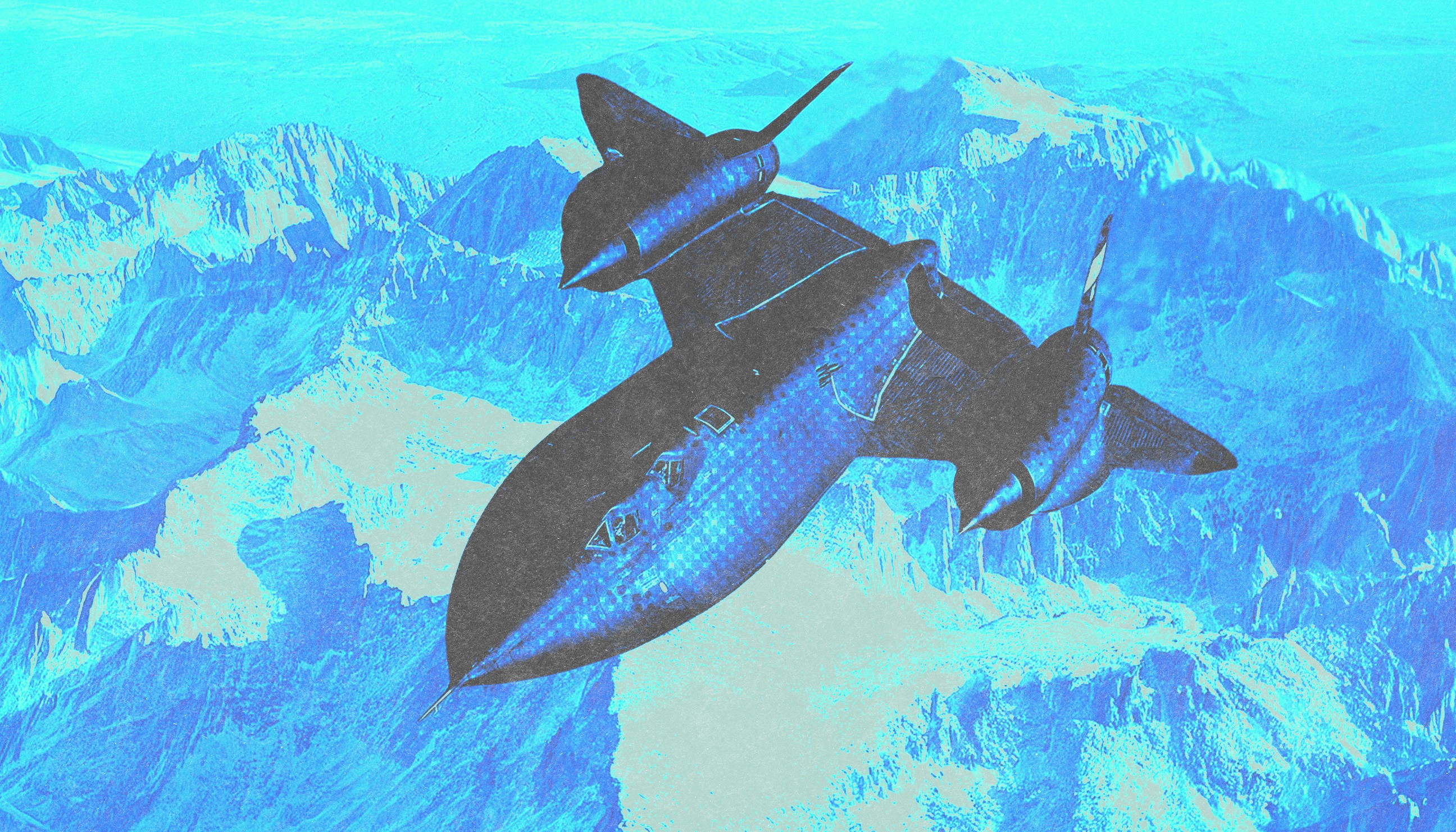
NA: I happened to know him very well from my government years and my involvement with the SR-71. I knew him, Ben Rich, and Sherman Mullin, who ran it more recently and was actually a classmate of mine in college. All of those guys, particularly Kelly, had a huge impact. It was lasting. A lot of what he did was hard to carry over into the rest of the company, but there was great pride in all of his accomplishments. There was a lot of pride in the company.
Kelly lived in a different world than we live today, but he was a highly admired guy. He told me that he had worked on 32 different airplanes that flew, some within six months of the time they first drew the centerline on graph paper. He was doing things nobody else — certainly not at Lockheed — but nowhere else in the world could do at that time.
CB: Following the end of the Cold War, and with the resulting decline of the defense budget, why did the Department of Defense decide to force or encourage the consolidation of the defense primes? We went from dozens of major contractors to five.
NA: The place to start here is a little before that, when we had the Reagan buildup. Defense spending had been increasing for a number of years, and an awful lot of people got used to it and thought that was going to go on forever. I guess I can say I was not one of those people. I'm kind of a history buff, and I knew it wasn't going to happen.
The Cold War suddenly ended. None of us expected it, and within about four years the defense industry lost 40% of its employees and about 75% of its companies, all totally unexpected, and I'm not aware of any other industry that went through that sudden and unexpected change.
I say that because it was an existential and a very challenging and surprising time for the defense industry. The defense industry is known for its ups and downs, but few downturns had this impact, in terms of loss of employment, companies disappearing, the public environment, the congressional environment, and the media environment. The mood at the time, I might say, was “Russia's over.” Nobody had ever heard of China at that time. That's an exaggeration, but my first visit to China was 1978, and at that time there was just no threat from China, and by 2000 there still wasn't much of one. So it didn't look like there was going to be any real need for defense, and the United States has a long history of immediately getting out of a war, shutting down the military a few years later, then wishing it hadn't done that.
It goes all the way back to Tonkin Gulf. Suddenly, there was Tonkin Gulf, and all of a sudden we needed to build up for Vietnam. World War I: some guy gets shot on the streets in Europe, and suddenly there's a big war in Europe going on. Japan, suddenly out of the blue, attacked Pearl Harbor. So when the Cold War ended, the feeling was that there wouldn’t be much of a military for a while, for probably a long while, and so there was really no demand. We decided we were going to have what the nation called a “defense dividend,” and that dividend was going to come from cutting the size of our military forces and cutting the size of our industrial base.
At that time, Bill Perry was Deputy Secretary of Defense, and John Deutch was an undersecretary — they were the ones who were really in charge of the Pentagon part of the world. They were all conscious of the history of suddenly rolling back the defense industry and the active-duty military. At that time there was also an understanding that nobody wanted to spend much money — we wanted a peace dividend from the Cold War. Congress didn't want to spend more money, the public didn't for sure.
So the guys running the Pentagon now had a choice. The choice was to try to keep all the companies going that were alive at that time —depending on how you define the defense industry, it might have been 15 companies, covering everything from tanks to ships to airplanes, you name it. That choice was to try to keep them all going in case they were needed in the future. The other was to recognize the fact that nobody wanted to spend any money on them. If you kept all 15 going, you were paying for a CEO of 15 companies, a CFO of 15 companies, factories for 15 companies that were only about 80% full. When you go through, and you add up all these costs, you were paying a lot for no output. If you argued for defense spending at that time, you were basically arguing for a very inefficient industry: overstaffed, empty factories, too many people, high overhead.
So, in my view, SecDef Aspin and DepSecDef Perry had no choice. Keep all the companies going and throw away a ton of money that people felt was needed for other purposes, or they could try to trim down the size of the industry to make it more efficient. They chose the latter.
In my view, that was the only choice they had. I was out in the industry at the time and I didn't like that choice, obviously, but I tried to put myself in their shoes. I made the point in many speeches at that time that I'd much rather have 15 strong companies in the defense space than two, or three, or four, but I'd much rather have four strong companies than 15 weak companies. So I could get with the program. But it wasn't my first choice, because I'm a big history buff. I know that there's always a threat out there. You just don't realize how quickly it could appear. Ever since the first cavemen threw rocks at each other, humans haven't got along very well.
I was fully prepared for whoever emerged next, and having traveled some in China, I thought that might be China — but I didn't know that yet. And anyway, Bill Perry decided that we would have to downsize the industry.
So with all that as preface: one day, about 20 or so CEOs of major defense companies each got a letter inviting them to dinner at the Pentagon, in the Secretary's dining room. As far as I know, that had never happened before — there was a lot of curiosity about why we were going. The evening of the dinner comes, and they happened to seat me next to Secretary Les Aspin. I said, “These are really tough times in the defense industry, and we all like a free meal, but why are we here?” And he said to me, “If you wait a few minutes we're going to tell you — and I don't think you're going to like it.” That was my first inkling of where the Defense Department was going to step into this morass — which, to my knowledge, it generally had not done in the past, not in my lifetime. And so we had a nice dinner.
CB: What did you have for dinner?
NA: I've been asked that a bunch of times; I can't remember. Anyway, we have dinner, and afterwards, we all go into the next room, which is a room between the SecDef’s conference room and his office. It's a small room, and there were metal folding chairs lined up for about 20 or 25 of us, whatever it was, no seating assignments.
Everybody just sort of sat down, and the Secretary said that the Defense Department had some news they had to share with us, and that Deputy Secretary Bill Perry was going to do that. Bill gave the presentation, and the presentation involved a number of slides, which he projected on the screen. There were probably 10 of them, and Bill went through sort of what I just went through: that there's no fervor in the public at all to support defense spending, that the Defense Department was not going to pay for a bunch of empty factories, nor for every one of us in there to continue being a CEO. It’s a hard decision for all of us, but the defense industry was going to have to downsize — and the Defense Department was not going to do the downsizing.
He said, “You guys are all well paid, it's up to you to figure out who survives, and we're not going to get involved, but it's going to have to happen, and so you better start figuring out what your strategy is.”
I had been worried about this kind of thing for a while. I’d been saying there were only three main options: consolidate, deconsolidate, or diversify. I made the comment at that time — which I shouldn't have made — that the record of the defense industry diversifying in the past was a record unvarnished by success. We almost always failed, and this industry is just so different that it's hard to do something else. Without getting into what I was thinking at that time, the meeting ended with the comment: “You guys are going to have to do this — get on with it, and don't expect us to figure out who survives.”
As we left the room, it was kind of funny. The reaction of the group was, “Wow, that's going to really be tough on you guys.” And nobody said, “It’s going to be tough on me.” I guess that's the way CEOs are.
One of the charts had three columns and, as I recall, 16 rows — different kinds of defense equipment, fighter aircraft, submarines, tanks, you go down the list. The first column was the name of the product. The next column was the number of companies that at that time served the DoD in that category. The third column was the DoD's view of how many companies it could afford to sustain in that category. This is what really startled me. Tanks, it was maybe three in the first column, of how many they had, and how many they could sustain was one. There were four, five, six columns of the products where the number was one. That really stunned me. I believe in free enterprise and competition. I've worked in the government, I've studied other governments. Government — just like most things — is just not as efficient as industry, where you can get fired tomorrow, and where you have competitors who are very competent, and you have incentives, financial and otherwise. So, when I saw those ones there, I thought, "Oh my gosh.” And even then, it occurred to me: the next thing that will happen after one is that the government nationalizes that industry, and it becomes part of the government — and that's the worst of all possible worlds, because governments aren't very good at running factories, and there's no competition.
I was distressed by that. The next day I went back to the Pentagon and stopped by the controller's office — they had apparently prepared the charts — and I asked if I could have a copy of that chart, because I thought it was going to be a historical document. They said, "Well, it wasn't classified, so sure you could have a copy.” They printed one for me. Leaving the Pentagon, I ran into a reporter who I knew slightly, and he said, "What happened last night at the dinner?” I thought for a second, and I said, “Well, it was the Last Supper.” It just popped into my mind. It was going to be the last time that group would ever meet together, and we had supper together. So it was the Last Supper, literally. The name kind of caught on.
I went back and gathered the team and said, “What are we going to do?” The industry broke up into groups: one was going to do nothing and tough it out, one was going to buy companies, one was going to sell. And we had been worried about this problem for some time in our company — we had a head start on most folks. We had decided we wanted to buy.
The easy thing at the time was to sell your company. It was obvious the next five years were going to be miserable. And when you sell, you call a bank up in New York, get your big payout, then go to Florida. Most investors thought the defense industry was a terrible place to be, so there were few buyers, quite a few sellers. In our case, we said we're not going to participate in auctions on the advice of a friend, Warren Buffett. We also said we're going to buy quality companies. We're not going to bottom-fish for companies that are really cheap. We'll pay a fair price — not an exorbitant price, but a fair price — and we won't be at auctions, so we'll make you one offer. And nobody believed us about the one offer or the auctions.
But the companies started talking to each other — a lot of talk, a lot of steak dinners, not much happening, and I think the first deal out of the box was probably when we bought GE Aerospace; I was running Martin Marietta at that time. We put together GE and Martin Marietta, and the industry set out to do what the Defense Department had said. The sad part of the whole story was that the government didn't keep its word and backed out later, as usual. We ran into that early on, on the GE deal — it wasn't Bill Perry and those guys, but the Justice Department and antitrust people. A couple of new people came in, one into Justice and one to DoD — a friend of mine by chance — who didn't like what was going on. The guys who were promoting what we had been told to do had all gone on to jobs outside the government.
Over the several years of major mergers, the country downsized a lot in terms of the defense industry. And the bottom line is there's a lot of criticism today of Perry and Les Aspin. Look at us here — we're facing China and Russia, and we're not prepared, we’re caught today with a terrible lack of equipment, a lack of companies to build it, and a terrible budget problem. But we got there through good intentions. As you can gather, I'm not criticizing those guys. I didn't agree with them at the time — but I think they were right. There was no other choice.
CB: What do you know about the short-lived partnership on vertical takeoff and landing technology between Lockheed and Russia’s Yakovlev Design Bureau?
NA: I can't help you with that because it was before my time at Lockheed. There was a relationship between Lockheed Martin and Krunichev industries in Russia — the Russian company that built most of their ICBMs; Lockheed built some of ours and basically all the SLBMs. We knew about each other, but not a lot — and we viewed each other as enemies, obviously.
The Cold War came to an end, and the space launch vehicle business really cooled off, because foreign governments — particularly the French government, the European governments — had stepped in and begun to subsidize their industries. When that happened, it became very difficult for the US industry to compete in the launch vehicles sphere. Right after Lockheed and Martin Marietta merged — and I don't remember how the first move was made — it was suggested that Krunichev and Lockheed should get together as a launch vehicle business.
We agreed to meet with people from Krunichev somewhere in the US to talk about forming a company that would launch space vehicles. The whole meeting was really weird — we were sitting across from people who were bitter enemies all these years, talking about putting a business together. Anyway, we did put together a little business for a while.
CB: Why did your attempt to acquire Northrop Grumman fall through?
NA: That's the bitterest experience I have in my business career. Northrop was a logical candidate for Lockheed Martin to merge with, because they were in the airplane business when we were trying to horizontally integrate. They had a good reputation, but they hadn't been winning much new business, whereas we had been winning a lot. It looked like a good deal to both companies, and so we put together an arrangement, got our shareholders' approval. We sent our lawyers — 300 lawyers between us and Northrop — to talk to the government lawyers, who told us that there were some problems, but none were a major, deal-ending matter.
The night before the meeting at the Pentagon, we had a meeting in the Northrop Grumman's Rosslyn office. There were about a dozen lawyers from all around the country that worked on this thing for a year. My question to each of them was, “What's the worst thing that could happen to us tomorrow?” They all said, “Well, we'll offsell the infrared business, and maybe this little business or that.” We went into the meeting the next day, chaired by John Hamre, who's a fine gentleman, an honorable man. The Under Secretary of Defense for R&D was brand new to the job, and there was a brand-new Deputy Assistant Attorney General for Antitrust at Justice. Anyway, there's a meeting, and this guy gets up — who's about three levels down in the Justice Department — and says the Justice Department has decided to stop the deal.
We almost died in the room. There was no shouting — it was silent. It was such a stunner. Kent Kresa from Northrop Grumman said, “Why?” And the man said: “Because we think Northrop Grumman has a great future, there's no reason for you to be absorbed.” And Kresa said, “Do you think I'm selling my company because I want to?” He said that the last fighter airplane of the kind Northrop Grumman had built was completed 30 years ago, and “we didn't even bid on the F-35 because we didn't think we were competitive, and the next version of the F-35 will be 30 years from now — and we can't just sit around for 60 years.”
In this case, the government had clearly lied to us. I said, “If you didn't want the merger, you should have told us so. And for the last year, you could have told us so, if not before.” And I said this all very politely. And the meeting ended.
CB: Do you think we've had our Sputnik moment with China?
NA: I think it's near at hand — and if China decides to grab Taiwan, it'll get very interesting. We're doing so many things wrong. I wrote an article two or three years ago trying to list some of the right things to do. We're doing just the opposite when it comes to defense capability. We're on the way down and just beginning to wake up — but this time it's a lot harder. It's a different problem this time. There were signs of this problem at the time of the Last Supper — that was one of the reasons I was worried, and why I think Deputy Secretary Perry did the right thing in downsizing somewhat. The big thing that we face, which we haven't faced before at this level, is the federal debt.
We either have to gut the Social Security budget, or the public social budgets, or the defense budget, or we have to borrow a ton of money — which makes it worse — or we have to make the GDP grow by a huge factor that we've never come close to. We really are headed toward a train wreck. I hate to leave the story in those terms. We can always hope that China implodes like the Soviet Union did. Maybe it will, maybe it won't — but counting on your enemy to cave in is probably not a good strategy.
CB: What was the greatest aircraft that Lockheed Martin ever built?
NA: The SR-71. Not only because of the impact it had geopolitically, but because of the technology of the airplane. It was 15 years ahead of what anybody anywhere on this planet was trying to do, and they did it.
This interview has been lightly edited for length and clarity.
Greatness
•
The Man Who Merged Lockheed and Martin
An interview with the former chairman and CEO of Lockheed Martin, Norman Augustine
In 1993, shortly after the end of the Cold War, Secretary of Defense Les Aspin and Deputy Secretary William Perry gathered the leaders of America’s major aerospace and defense contractors at the Pentagon to inaugurate the end of an era. After years of elevated defense spending initiated in 1981 by President Reagan to meet the Soviet threat, the sudden and unforeseen collapse of the Warsaw Pact and the Soviet Union itself just a decade later meant that the vast defense budgets sustaining these companies had run their course. Lacking both Congressional and public approval, the political mandate to reduce the defense budget in favor of the so-called peace dividend was clear. The defense industry was to consolidate.
At the center of this history was Norman Augustine. One of the defense industry’s major figures of the late 20th century, he merits a lengthy introduction: Raised in Colorado during World War II and educated in the aeronautical engineering department at Princeton University, he began his career at the Douglas Aircraft Corporation in 1958. He entered government service in 1965, serving as assistant director of defense research and engineering under Secretary Robert McNamara. In this capacity, Augustine wrote the approval papers for several weapons systems that remain in regular use today, including the Patriot missile and the Airborne Warning and Control System (AWACS).
After leaving government, Augustine joined LTV in Texas, where he expected to remain. But he was approached about returning to the Pentagon as Assistant Secretary of the Air Force for Research and Development in 1973. After initially refusing, he met Defense Secretary James Schlesinger, who instead steered him toward the Army; Augustine was persuaded by Army Secretary Howard 'Bo' Callaway to accept the role of Assistant Secretary of the Army for Research and Development. There, he championed the Army's "Big Five" modernization programs — Patriot, Abrams, Bradley, Apache, and Black Hawk. He earned a reputation for pushing troubled programs through development rather than canceling them, leading Callaway to promote him to Under Secretary and ultimately positioned him to become acting Secretary of the Army in 1975.
Augustine joined Martin Marietta corporation in 1977, becoming CEO in 1987 and chairman in 1988. After the “Last Supper” at the Pentagon in 1993, he served as chief architect of the merger between Lockheed and Martin Marietta, forming the Lockheed Martin Corporation, America’s largest defense contractor, in 1995. Augustine retired as chairman and CEO in 1997. During his tenure, he initiated Lockheed’s bid to acquire Northrop Grumman, which was blocked by the DOJ on antitrust grounds in 1998. In 1999, shortly after retiring, Augustine was recruited by Director George Tenet to co-found In-Q-Tel, the venture arm of the Central Intelligence Agency, which has invested in hundreds of early-stage startups including Palantir and Databricks. He has also served on various corporate boards including Procter & Gamble and ConocoPhillips, in addition to Lockheed Martin. He is the author of several books, including Augustine’s Laws and The Defense Revolution.
In order to better understand the state of the American defense primes and the litany of challenges that the industry faces, I sat down with Norman Augustine, now 90 years old, to discuss one of the most distinguished careers that the US aerospace and defense industry has ever seen. What follows is a transcript of our conversation.
CB: What impact did World War II have on you, growing up as you did in Colorado during the 1930s and 1940s?
NA: I was 10 years old when World War II ended, and so I was old enough to understand. We played soldiers all the time. We had a victory garden in the yard where we grew vegetables, and we saved newspapers and tin. You couldn't get gasoline, and the number one thing you couldn't get when you were a kid was bubble gum, for some reason. I grew up at the foothills, or actually on the high prairie next to the foothills, and the mountains were a big thing in my life. I spent a lot of time there as a youth. I was raised as an only child because my sister had died.
My memory of when World War II started: I would have been six years old. It was a Sunday morning. My father and mother and I were at a restaurant in a little town called Louisville, Colorado, and there were a bunch of people there having brunch. Somebody burst in the door of the restaurant and yelled. I still remember it like it just happened. “The Japs bombed Pearl Harbor,” and he slammed the door, went running down the street like Paul Revere.
At the end of the war, my parents took me into downtown Denver, because they thought this would be a historic event. Down there they were celebrating, the streets were full of people. Then, of course, my father worked for Remington Arms.
CB: Your father was also in the defense industry?
NA: No, he was working at the fruit and vegetable market, but during the war, Remington opened a huge plant outside of Denver, and it paid an awful lot better. A lot of people quit and went to work for Remington as long as the war lasted. Then they all left, but Dad was in wholesale fruit and vegetables on the old Wazee Market in Denver. He had fought in World War I.
CB: Do you know what weapons your father was building at the Remington plant?
NA: I think they were just bullets.
CB: Was he furloughed or let go after the war ended?
NA: He was. Everybody was. The whole plant disappeared, gone. America has its habits. We always think that when there's a war that there's going to be peace forever after, and then a surprise happens.
CB: How did you end up at Princeton University from Colorado?
NA: It's like most everything else in my life — because it was a random event, an accident — and the only credit I can take is that I took advantage of it. My family didn't have very much money, there was a question of whether I was going to be able to go to college or not.
I had wonderful parents, loving parents — hardworking, decent people that taught me all the things that were important. My dad only went up to eighth grade, and he used to help me with my math in high school. How he did that, I can't imagine, but he did, and he just never had the same opportunities. He had to go to work when he was in eighth grade, and his father only got through fourth grade. My dad was born in 1894, my mother in 1893. Those were pretty tough times. Mom grew up in Denver, which was a pretty wild western town. And my father grew up in a little mountain town about 10,000 feet up on the mountain. It was 200 people, a mining town — really a wild town up there. His stories are something else.
CB: There were some very interesting people orbiting Princeton in the 1950s when you studied there, especially around the Institute for Advanced Studies, you had Albert Einstein and Robert Oppenheimer, among others. Did you ever encounter them?
NA: I passed by Einstein on the street, but never knew him, never met him, really. Some of my classmates were recently telling a story that they had some question they wanted to ask Einstein. They walked down to his house and rang the doorbell, and he invited them in to talk. My freshman physics teacher was a fellow by the name of John Wheeler. Wheeler was Einstein's main colleague — though I didn't know that at the time. He was my physics teacher and put on the greatest demonstrations of physical principles.
One thing that was really funny: my roommate and I were in the physics lab, freshman physics, and we were making what was called a rheostat, which measures electric charge. The way it measures it is that it has two little pieces of gold leaf that are suspended together at one point on a little wooden stand, and these two little pieces of gold leaf, depending on the amount of charge you put on them, would move further and further apart. So, depending on the angle between them, you could determine how much the charge was on the gold leaf, and it was a way to make a measurement. Our assignment was to make a rheostat. We were there for hours trying to make a rheostat. Gold leaf is only a couple of atoms thick, and it’s so thin that if you barely touch it, certainly with a pair of scissors, it just cuts apart, sort of floats away. It will eventually settle on the ground in a perfectly still room, but in a room with any air at all, it just floats around the room — little pieces of gold.
We were having a terrible time, and there was a janitor in the room who was moving tables and chairs around in the room. And after a little while— we were struggling mightily — he came up to us and asked if we would help to move a couple tables. We were ready for a break anyway, so we said, "Sure.” We helped him move a couple tables, and at the end of that, he came up to us and he said, "You did me the favor, now I'll do you a favor.” He said, "I see you're having trouble making your rheostat. What you do is get your sheet of gold leaf and make a sandwich out of it between two pieces of notebook paper, and then you can cut it with your scissors. It will tear up the gold, and then you can peel the notebook paper away very carefully, and it'll work well.”
It worked like a charm, and so we went away thinking that even the janitors at Princeton are pretty smart. About a week later, there was a lecture in Alexander Hall. We went to the lecture, and when we came into the room, up on the stage, seated in one of two chairs up there was the janitor — and we both thought, "What’s he doing up there?” It was supposed to be a lecture by Oppenheimer. Well, it turned out that the janitor was Oppenheimer.
CB: You had told me when we last spoke that there was a sort of caste within the US aerospace industry which formed out of Princeton’s Engineering department. Could you tell me a little bit more about that?
NA: It was Princeton Aeronautical Engineering at the time. In my class, there were eight students, and it had a large faculty. It was one of the better aeronautics programs of the country, with a faculty much larger than the student body. Over the years a pretty good collection of people that graduated from Princeton Aeronautical Engineering. If there was anything unique about us, I think it was that Princeton taught engineering in a liberal arts environment. They would ask us: can you do this — some technical problem — but they would also ask, should you do this, and why? We had to take liberal arts courses, quite a few of them. For most of us that was kind of a pain, but it had a very good effect — it broadened us a whole lot. And Princeton didn't have a law school, didn't have a medical school, and no business school.
Years later, at the end of the Cold War, when the aerospace industry had to consolidate, that little group of people from Princeton had become, just by chance, a whole group of us who were running companies and knew each other. The Boeing CEO was from Princeton, Lockheed, Martin, Grumman. The Hughes CEO, just retired, was a Princeton guy; Westinghouse was a Princeton guy; McDonnell Douglas was led by Princeton guys for two generations of CEOs. We all knew each other well, and we sort of knew who you could trust, which was most everybody.
CB: That's a very interesting network effect.
NA: I don't know anybody who's ever told that story. It's just kind of interesting.
CB: You wrote your thesis on vectored slipstream aircraft. What is that?
NA: That's correct. Vertical takeoff and landing was kind of a big deal in those days. Helicopters were great, but couldn't carry very much and couldn't go very fast. The idea was to build regular airplanes that could hover, some hybrid of the two. And today the V-22, the Air Force and Marine airplane, is an example, much more advanced than what we were thinking of. The idea was you would have a regular airplane, but with big propellers, and you would have flaps on the wings — very complicated flaps, far more complicated than today.
The one I worked on was called a double-slotted flap, and when you put these flaps down, with a great big windmill, or a propeller blown in front of them, it would blow the air downward, and if you could make the air go downward, it would build a pressure to push the aircraft upward. If you got it just right, you could hover in the air; but if you wanted to act like an airplane, you raise the flap up, and then you could go forward — nothing spectacular, but at forward speed. That was all I worked on, my thesis. It involved a lot of wind tunnel testing, some theoretical work. My thesis advisor was Professor David Hazen, who was really a great guy, I thought he was old then. He was probably 35.
CB: The year before you started your career was 1957, the year of Sputnik, and I wonder what kind of an impact the Sputnik moment had on your generation of engineers.
NA: Huge, huge. It was late ‘57, I was studying engineering, and the United States was on top of the world in terms of technology. Russia was not much of anything in terms of technology, they had large forces in terms of numbers of tanks and things, but pretty primitive technology. The United States was king of the hill when it came to technology, particularly military technology. We were so confident, so sure of ourselves. Then, one day, Sputnik goes up. The way I heard about it was I was walking into the graduate school entryway, and somebody passed me and said, "The Russians just put up Sputnik.”
I didn't know what Sputnik was, but I found out pretty quickly. It was a shock to the technical community, as well as the country, that these sleepy Russians put up a spacecraft before we did. And then they had this whole history: they put up a person before we did, and it was a huge wake-up call to the country writ large, but particularly to the aerospace industry, which during World War II had really risen to the occasion, more so in production than in technology.
The Germans probably had better technology, but we were vastly superior as an industry, building 100,000 airplanes in one year. The record for putting out destroyers was three days from going down the ways into the water, from the time they laid the keel, if you could imagine that. Sputnik came all of a sudden. It's a little like now, when China is suddenly waking up and our problems with Iran, where they're producing somewhat of a wake-up call.
Sputnik was the trigger that caused a lot of good things to be done in this country. We created ARPA, we raised the defense budget and became more serious about higher education, particularly technical education. And thank goodness we brought in a lot of foreign individuals through our graduate schools in science and technology. Had we not done that, we probably still wouldn't have caught up — and that's not a view that's widely held, but it's true. That was kind of the story of what it was like when Sputnik went up: The space race was suddenly on, and anybody who could spell “space” had all kinds of opportunities.
CB: You arrived at the Pentagon not too long after Robert McNamara did, if I'm not mistaken.
NA: McNamara was a business-focused guy. He was not happy with the way programs were getting started and canceled over the years — there had been a lot of that — and he wanted a new way of starting programs. It just happened that Patriot was one of my assignments. I worked in the Office of Defense Research and Engineering, which was a fairly small group of fairly young guys with a remarkable amount of authority, scarily so. Some of the programs I was responsible for were Patriot, AWACS, and a couple of space programs.
The army was really pushing to build Patriot — it was called SAM-D at the time, for surface-to-air missile development, SAM-D. McNamara had started a little outfit called Systems Analysis, which I'm sure you heard all about. They were the “whiz kids.” We were the dumb guys — it was a really smart, young, totally inexperienced group of often fairly arrogant guys. I was one of the few at DoD who managed to make friends with a number of them. Still am to this day. They had a lot of power, and they were deeply opposed to Patriot.
To settle the battle, McNamara told my boss, who told me — this was on a Friday — on Monday, McNamara wants a paper no more than 20 pages long, that goes through all the issues in a very balanced fashion of whether we should develop Patriot. At the end of it, there should be a place for the Secretary of the Army, the Deputy Secretary of Defense, and so on, to sign which option — there should be a group of options — that they wanted to support, then give it to McNamara. I spent the whole weekend, day and night, working on this paper. I'm pretty sure it's classified, because I remember having trouble with the classified printer that Saturday night. I was alone in the Pentagon, working on it much of the night. The paper went up to McNamara, who gave the go-ahead to build Patriot. This probably would have been 1966. That's how it got started. And if you think about it, that was 57 years ago from today. I just did the arithmetic.
Recently, the President of Ukraine said the biggest thing the United States could do was to “give them us Patriots.” Well, the Patriot is 57 years old. If you think of the commercial consumer technology in 1966 compared to today, it's laughable. The Patriot was upgraded along the way, but I've often said you can't turn a Volkswagen into a Maserati. You could make it a little better, but there's a limit. So much of the equipment we're fighting with today was developed back in those days when I happened to be in the Pentagon.
CB: I read that you were sent on a special mission to Vietnam, in uniform, on behalf of David Packard, the famous Hewlett-Packard co-founder. What was your Vietnam mission?
NA: The Army had developed a fighting vehicle. They were very sensitive. I keep wanting to call it a mini tank. It weighed 17 tons, whereas the main battle tanks weighed 60 tons. The Army was very sensitive when somebody referred to these things as tanks. But anyway, it looked like a tank, it had a big cannon on it, a machine gun, and a crew of, I think, four.
CB: Was this the one with aluminum armor, the Sheridan?
NA: The Sheridan was the infantry fighting vehicle. This was a lightweight tank. They had just finished building it — and there were some already in Vietnam — and it could be carried in a C-5A, as I recall. It was having a bad time in Vietnam. The armor wasn't strong enough to counter anti-tank weapons, and its reputation wasn't very good, and Dave Packard was DepSecDef, had been one of the founders of Hewlett-Packard, was kind of a business guy like myself; I was junior to him in the pecking order, but David and I had worked together a fair amount, just because we were both interested in the business and engineering and manufacturing stuff. So he asked that we set up a group of experts from outside of the Pentagon who could go to Vietnam.
There were about eight or nine who were to go to Vietnam, tour around, and look at the equipment and see what the problem was, what should be done. The guy who we chose to lead it was the head of Caterpillar Tractors, and I was sort of the Pentagon representative in charge of this study. We all spent, I guess, two weeks in Vietnam. It was a couple months before the Tet offensive.
The group of us wandered around to different places in the field to find these vehicles. We talked to people, found a bunch of problems with the vehicles, and learned a lot about why they're different from tanks. We flew around in helicopters, landing out in the middle of the jungle, and talked to soldiers. We were in Army uniforms, but no rank or unit signature. So we did our job, then we came back to Washington.
I happen to remember that when we got back to Washington, we landed at Andrews. That was always a dreadful experience, because invariably, when you landed at Andrews, there was an aircraft coming back with soldiers to be taken to Walter Reed, or worse, who’d been shot up in Vietnam. On my way home, I decided to stop at the Pentagon, because I hadn't been there in two weeks. When I walked through the halls, there were troops from the 82nd Airborne sitting on the floor through many of the halls of the Pentagon, sleeping up against the walls. That was when the riots were going on in Washington. They had war riots, and very quietly, they brought in a lot of troops from 82nd and had them hidden in the Pentagon and the courtyard in the middle of the Pentagon, in case things really blew up in Washington. Ultimately they weren't needed or they weren't used — and anyway, I was shocked by that. I thought there were more troops here than there were in Vietnam. I went home, and that was the end of most of my Vietnam experience.
CB: You're a co-founder of In-Q-Tel, the CIA’s venture arm. I believe George Tenet personally reached out and requested you help set that up.
NA: I had just left Lockheed Martin; I took early retirement. George asked that I come by and visit, and he said that their organization was facing a real problem: it was dependent upon the very leading edge technology, and that the leading edge of technology was no longer governmental — it was in Silicon Valley and Boston. The problem was that people in Boston and Silicon Valley wanted nothing to do with the government in terms of business, and even less to do with his organization. He said that it was a real problem — that these people won't even talk to us, and yet they control the throttle on the technology we need to do our job.
He said we’ve got to figure out a way to get the most advanced technology without having to develop it all ourselves. He said he had a little group there thinking about it — would I go off and think about it, and let him know what I came up with? This other group would come up with a similar idea. The problem with why Silicon Valley didn't want to deal with the government was the toilet seat rolls of tape kind of problem — they just couldn’t waste their time on this, and so they wouldn't talk to the government. The question was how to arrange things so that they'll deal with you.
The basic idea we came up with was for the government to own, but not control, an independent company that was not for sale to the private sector in any way. The purpose of this company was to promote technologies important to the Agency’s capabilities. We did set that up, and George asked me if I would be chairman or hire a board. We put together a fabulous board. George was a big help at doing this. Bill Perry was on it. Paul Kaminski, all names you’ve probably run across. Any Fortune 100 company would have loved to have that board.
The first year and a half, we spent being investigated by everybody you could think of in Washington. They were asking what we were up to — creating a business that was going to get money from the government, but didn't have to produce a profit for the government or anything. The basic idea was that we would follow all the laws of the land, but none of the government's procurement regulations — we decided we would not build things ourselves, but we would go out and talk to people. We could find people with new ideas and give them contracts overnight, or we could give them a grant overnight, or we could take an equity position overnight — whereas the government probably couldn't do that at all, but if they did, it would take two years. So people liked to deal with us, and within a very short period of time we had 500 startups, coming to us with their ideas — one of which was Palantir. It worked beautifully. It's been a huge success, and I stayed for a few years.
CB: What does the name mean?
NA: “In” stood for information. “Q” was the name of the guy from James Bond, and “Tel” was for telecommunications.
CB: When you were chairman and CEO of Lockheed Martin, to what extent did the ghost of Skunk Works’ Kelly Johnson continue to haunt the company? What kind of impact did those men have on the company?
NA: I happened to know him very well from my government years and my involvement with the SR-71. I knew him, Ben Rich, and Sherman Mullin, who ran it more recently and was actually a classmate of mine in college. All of those guys, particularly Kelly, had a huge impact. It was lasting. A lot of what he did was hard to carry over into the rest of the company, but there was great pride in all of his accomplishments. There was a lot of pride in the company.
Kelly lived in a different world than we live today, but he was a highly admired guy. He told me that he had worked on 32 different airplanes that flew, some within six months of the time they first drew the centerline on graph paper. He was doing things nobody else — certainly not at Lockheed — but nowhere else in the world could do at that time.
CB: Following the end of the Cold War, and with the resulting decline of the defense budget, why did the Department of Defense decide to force or encourage the consolidation of the defense primes? We went from dozens of major contractors to five.
NA: The place to start here is a little before that, when we had the Reagan buildup. Defense spending had been increasing for a number of years, and an awful lot of people got used to it and thought that was going to go on forever. I guess I can say I was not one of those people. I'm kind of a history buff, and I knew it wasn't going to happen.
The Cold War suddenly ended. None of us expected it, and within about four years the defense industry lost 40% of its employees and about 75% of its companies, all totally unexpected, and I'm not aware of any other industry that went through that sudden and unexpected change.
I say that because it was an existential and a very challenging and surprising time for the defense industry. The defense industry is known for its ups and downs, but few downturns had this impact, in terms of loss of employment, companies disappearing, the public environment, the congressional environment, and the media environment. The mood at the time, I might say, was “Russia's over.” Nobody had ever heard of China at that time. That's an exaggeration, but my first visit to China was 1978, and at that time there was just no threat from China, and by 2000 there still wasn't much of one. So it didn't look like there was going to be any real need for defense, and the United States has a long history of immediately getting out of a war, shutting down the military a few years later, then wishing it hadn't done that.
It goes all the way back to Tonkin Gulf. Suddenly, there was Tonkin Gulf, and all of a sudden we needed to build up for Vietnam. World War I: some guy gets shot on the streets in Europe, and suddenly there's a big war in Europe going on. Japan, suddenly out of the blue, attacked Pearl Harbor. So when the Cold War ended, the feeling was that there wouldn’t be much of a military for a while, for probably a long while, and so there was really no demand. We decided we were going to have what the nation called a “defense dividend,” and that dividend was going to come from cutting the size of our military forces and cutting the size of our industrial base.
At that time, Bill Perry was Deputy Secretary of Defense, and John Deutch was an undersecretary — they were the ones who were really in charge of the Pentagon part of the world. They were all conscious of the history of suddenly rolling back the defense industry and the active-duty military. At that time there was also an understanding that nobody wanted to spend much money — we wanted a peace dividend from the Cold War. Congress didn't want to spend more money, the public didn't for sure.
So the guys running the Pentagon now had a choice. The choice was to try to keep all the companies going that were alive at that time —depending on how you define the defense industry, it might have been 15 companies, covering everything from tanks to ships to airplanes, you name it. That choice was to try to keep them all going in case they were needed in the future. The other was to recognize the fact that nobody wanted to spend any money on them. If you kept all 15 going, you were paying for a CEO of 15 companies, a CFO of 15 companies, factories for 15 companies that were only about 80% full. When you go through, and you add up all these costs, you were paying a lot for no output. If you argued for defense spending at that time, you were basically arguing for a very inefficient industry: overstaffed, empty factories, too many people, high overhead.
So, in my view, SecDef Aspin and DepSecDef Perry had no choice. Keep all the companies going and throw away a ton of money that people felt was needed for other purposes, or they could try to trim down the size of the industry to make it more efficient. They chose the latter.
In my view, that was the only choice they had. I was out in the industry at the time and I didn't like that choice, obviously, but I tried to put myself in their shoes. I made the point in many speeches at that time that I'd much rather have 15 strong companies in the defense space than two, or three, or four, but I'd much rather have four strong companies than 15 weak companies. So I could get with the program. But it wasn't my first choice, because I'm a big history buff. I know that there's always a threat out there. You just don't realize how quickly it could appear. Ever since the first cavemen threw rocks at each other, humans haven't got along very well.
I was fully prepared for whoever emerged next, and having traveled some in China, I thought that might be China — but I didn't know that yet. And anyway, Bill Perry decided that we would have to downsize the industry.
So with all that as preface: one day, about 20 or so CEOs of major defense companies each got a letter inviting them to dinner at the Pentagon, in the Secretary's dining room. As far as I know, that had never happened before — there was a lot of curiosity about why we were going. The evening of the dinner comes, and they happened to seat me next to Secretary Les Aspin. I said, “These are really tough times in the defense industry, and we all like a free meal, but why are we here?” And he said to me, “If you wait a few minutes we're going to tell you — and I don't think you're going to like it.” That was my first inkling of where the Defense Department was going to step into this morass — which, to my knowledge, it generally had not done in the past, not in my lifetime. And so we had a nice dinner.
CB: What did you have for dinner?
NA: I've been asked that a bunch of times; I can't remember. Anyway, we have dinner, and afterwards, we all go into the next room, which is a room between the SecDef’s conference room and his office. It's a small room, and there were metal folding chairs lined up for about 20 or 25 of us, whatever it was, no seating assignments.
Everybody just sort of sat down, and the Secretary said that the Defense Department had some news they had to share with us, and that Deputy Secretary Bill Perry was going to do that. Bill gave the presentation, and the presentation involved a number of slides, which he projected on the screen. There were probably 10 of them, and Bill went through sort of what I just went through: that there's no fervor in the public at all to support defense spending, that the Defense Department was not going to pay for a bunch of empty factories, nor for every one of us in there to continue being a CEO. It’s a hard decision for all of us, but the defense industry was going to have to downsize — and the Defense Department was not going to do the downsizing.
He said, “You guys are all well paid, it's up to you to figure out who survives, and we're not going to get involved, but it's going to have to happen, and so you better start figuring out what your strategy is.”
I had been worried about this kind of thing for a while. I’d been saying there were only three main options: consolidate, deconsolidate, or diversify. I made the comment at that time — which I shouldn't have made — that the record of the defense industry diversifying in the past was a record unvarnished by success. We almost always failed, and this industry is just so different that it's hard to do something else. Without getting into what I was thinking at that time, the meeting ended with the comment: “You guys are going to have to do this — get on with it, and don't expect us to figure out who survives.”
As we left the room, it was kind of funny. The reaction of the group was, “Wow, that's going to really be tough on you guys.” And nobody said, “It’s going to be tough on me.” I guess that's the way CEOs are.
One of the charts had three columns and, as I recall, 16 rows — different kinds of defense equipment, fighter aircraft, submarines, tanks, you go down the list. The first column was the name of the product. The next column was the number of companies that at that time served the DoD in that category. The third column was the DoD's view of how many companies it could afford to sustain in that category. This is what really startled me. Tanks, it was maybe three in the first column, of how many they had, and how many they could sustain was one. There were four, five, six columns of the products where the number was one. That really stunned me. I believe in free enterprise and competition. I've worked in the government, I've studied other governments. Government — just like most things — is just not as efficient as industry, where you can get fired tomorrow, and where you have competitors who are very competent, and you have incentives, financial and otherwise. So, when I saw those ones there, I thought, "Oh my gosh.” And even then, it occurred to me: the next thing that will happen after one is that the government nationalizes that industry, and it becomes part of the government — and that's the worst of all possible worlds, because governments aren't very good at running factories, and there's no competition.
I was distressed by that. The next day I went back to the Pentagon and stopped by the controller's office — they had apparently prepared the charts — and I asked if I could have a copy of that chart, because I thought it was going to be a historical document. They said, "Well, it wasn't classified, so sure you could have a copy.” They printed one for me. Leaving the Pentagon, I ran into a reporter who I knew slightly, and he said, "What happened last night at the dinner?” I thought for a second, and I said, “Well, it was the Last Supper.” It just popped into my mind. It was going to be the last time that group would ever meet together, and we had supper together. So it was the Last Supper, literally. The name kind of caught on.
I went back and gathered the team and said, “What are we going to do?” The industry broke up into groups: one was going to do nothing and tough it out, one was going to buy companies, one was going to sell. And we had been worried about this problem for some time in our company — we had a head start on most folks. We had decided we wanted to buy.
The easy thing at the time was to sell your company. It was obvious the next five years were going to be miserable. And when you sell, you call a bank up in New York, get your big payout, then go to Florida. Most investors thought the defense industry was a terrible place to be, so there were few buyers, quite a few sellers. In our case, we said we're not going to participate in auctions on the advice of a friend, Warren Buffett. We also said we're going to buy quality companies. We're not going to bottom-fish for companies that are really cheap. We'll pay a fair price — not an exorbitant price, but a fair price — and we won't be at auctions, so we'll make you one offer. And nobody believed us about the one offer or the auctions.
But the companies started talking to each other — a lot of talk, a lot of steak dinners, not much happening, and I think the first deal out of the box was probably when we bought GE Aerospace; I was running Martin Marietta at that time. We put together GE and Martin Marietta, and the industry set out to do what the Defense Department had said. The sad part of the whole story was that the government didn't keep its word and backed out later, as usual. We ran into that early on, on the GE deal — it wasn't Bill Perry and those guys, but the Justice Department and antitrust people. A couple of new people came in, one into Justice and one to DoD — a friend of mine by chance — who didn't like what was going on. The guys who were promoting what we had been told to do had all gone on to jobs outside the government.
Over the several years of major mergers, the country downsized a lot in terms of the defense industry. And the bottom line is there's a lot of criticism today of Perry and Les Aspin. Look at us here — we're facing China and Russia, and we're not prepared, we’re caught today with a terrible lack of equipment, a lack of companies to build it, and a terrible budget problem. But we got there through good intentions. As you can gather, I'm not criticizing those guys. I didn't agree with them at the time — but I think they were right. There was no other choice.
CB: What do you know about the short-lived partnership on vertical takeoff and landing technology between Lockheed and Russia’s Yakovlev Design Bureau?
NA: I can't help you with that because it was before my time at Lockheed. There was a relationship between Lockheed Martin and Krunichev industries in Russia — the Russian company that built most of their ICBMs; Lockheed built some of ours and basically all the SLBMs. We knew about each other, but not a lot — and we viewed each other as enemies, obviously.
The Cold War came to an end, and the space launch vehicle business really cooled off, because foreign governments — particularly the French government, the European governments — had stepped in and begun to subsidize their industries. When that happened, it became very difficult for the US industry to compete in the launch vehicles sphere. Right after Lockheed and Martin Marietta merged — and I don't remember how the first move was made — it was suggested that Krunichev and Lockheed should get together as a launch vehicle business.
We agreed to meet with people from Krunichev somewhere in the US to talk about forming a company that would launch space vehicles. The whole meeting was really weird — we were sitting across from people who were bitter enemies all these years, talking about putting a business together. Anyway, we did put together a little business for a while.
CB: Why did your attempt to acquire Northrop Grumman fall through?
NA: That's the bitterest experience I have in my business career. Northrop was a logical candidate for Lockheed Martin to merge with, because they were in the airplane business when we were trying to horizontally integrate. They had a good reputation, but they hadn't been winning much new business, whereas we had been winning a lot. It looked like a good deal to both companies, and so we put together an arrangement, got our shareholders' approval. We sent our lawyers — 300 lawyers between us and Northrop — to talk to the government lawyers, who told us that there were some problems, but none were a major, deal-ending matter.
The night before the meeting at the Pentagon, we had a meeting in the Northrop Grumman's Rosslyn office. There were about a dozen lawyers from all around the country that worked on this thing for a year. My question to each of them was, “What's the worst thing that could happen to us tomorrow?” They all said, “Well, we'll offsell the infrared business, and maybe this little business or that.” We went into the meeting the next day, chaired by John Hamre, who's a fine gentleman, an honorable man. The Under Secretary of Defense for R&D was brand new to the job, and there was a brand-new Deputy Assistant Attorney General for Antitrust at Justice. Anyway, there's a meeting, and this guy gets up — who's about three levels down in the Justice Department — and says the Justice Department has decided to stop the deal.
We almost died in the room. There was no shouting — it was silent. It was such a stunner. Kent Kresa from Northrop Grumman said, “Why?” And the man said: “Because we think Northrop Grumman has a great future, there's no reason for you to be absorbed.” And Kresa said, “Do you think I'm selling my company because I want to?” He said that the last fighter airplane of the kind Northrop Grumman had built was completed 30 years ago, and “we didn't even bid on the F-35 because we didn't think we were competitive, and the next version of the F-35 will be 30 years from now — and we can't just sit around for 60 years.”
In this case, the government had clearly lied to us. I said, “If you didn't want the merger, you should have told us so. And for the last year, you could have told us so, if not before.” And I said this all very politely. And the meeting ended.
CB: Do you think we've had our Sputnik moment with China?
NA: I think it's near at hand — and if China decides to grab Taiwan, it'll get very interesting. We're doing so many things wrong. I wrote an article two or three years ago trying to list some of the right things to do. We're doing just the opposite when it comes to defense capability. We're on the way down and just beginning to wake up — but this time it's a lot harder. It's a different problem this time. There were signs of this problem at the time of the Last Supper — that was one of the reasons I was worried, and why I think Deputy Secretary Perry did the right thing in downsizing somewhat. The big thing that we face, which we haven't faced before at this level, is the federal debt.
We either have to gut the Social Security budget, or the public social budgets, or the defense budget, or we have to borrow a ton of money — which makes it worse — or we have to make the GDP grow by a huge factor that we've never come close to. We really are headed toward a train wreck. I hate to leave the story in those terms. We can always hope that China implodes like the Soviet Union did. Maybe it will, maybe it won't — but counting on your enemy to cave in is probably not a good strategy.
CB: What was the greatest aircraft that Lockheed Martin ever built?
NA: The SR-71. Not only because of the impact it had geopolitically, but because of the technology of the airplane. It was 15 years ahead of what anybody anywhere on this planet was trying to do, and they did it.
This interview has been lightly edited for length and clarity.
About the Author
Carson Becker is Editor-at-Large at Arena Magazine. He is on X @carsonjbecker