tt
tt
tt
tt
tt
tt
Science
•
Cold Passage
The open sea holds the pharmaceutical industry’s most precious cargo hostage.


On November 30, 1803, the Maria Pita, a 160-ton corvette, sailed from the port of La Coruña into the Galician fog. It carried twenty-two orphans, boys between the ages of three and nine. The ship was bound for Venezuela, carrying medical cargo that could not be bottled, frozen, or dried. The cargo was the cowpox virus, the world’s first vaccine against smallpox, and it required the warmth of a human body to survive the crossing. To keep the virus alive, the expedition’s director, Francisco Javier de Balmis, engineered a biological relay. Every few days, he took a lancet, sliced into the arms of two uninfected boys, and rubbed the wounds with the lymph weeping from the pustules of the previous pair. As one set of sores healed into scabs, a new set developed. Balmis built a living chain of immunity. This relay eventually vaccinated hundreds of thousands of people across the Spanish Empire, reaching as far as Mexico and Saint Helena.
A virus is a pure opportunist, indifferent to geography. To cross an ocean, it requires only the steady incubator of a living host. That biological imperative has not changed. But where these microbes once hitched rides within the warmth of a child’s arm, the world’s most valuable medicines now require their own synthetic ecosystems — fragile glass enclosures meticulously maintained between two and eight degrees Celsius, preserving their microscopic cargo across 10,000 miles of tarmac, ocean, and atmosphere.
The most valuable pharmaceuticals in the world are biologics. These include monoclonal antibodies, mRNA vaccines, and peptides like GLP-1 agonists — all of which are manufactured in bioreactors, industrial vessels in which living cells are cultured to produce complex proteins. A biologic is an intricate lattice of proteins held together by weak chemical bonds. Its three-dimensional shape is its function. Disrupt the shape and you destroy the drug. Leave a vial of insulin on a sunny windowsill, and within hours the proteins unfold. The liquid still looks clear, but the proteins have unfolded into useless tangles. The drug is gone. By contrast, a chemical like aspirin is a small, sturdy molecule. You can leave it on a hot loading dock and it will be fine.
Because the Goldilocks zone for the climate stability of many medicines is so narrow, the industry regulates not just the packaging but the route itself. The European Union’s Good Distribution Practices require that every shipping lane be thermally validated before use. Prior to approval, a logistics manager must map the complete temperature profile of a specific journey — Dublin to Singapore, say — accounting for summer heat, port congestion, vessel swaps, and the brief intervals when a refrigerated container is unplugged. Pharmaceutical companies must prove that the packaging for their drugs can withstand the worst case. Change the ship, and the testing starts over. Change the port of entry, and the validation is void.
At Sea.
Subscribe and add Issue 008.
Add both to cart
Why rely on the ocean at all to transport such delicate cargo? Until recently, much of the industry did not. Cheap, sturdy drugs — like generics, over-the-counter medicines, and raw ingredients — have always traveled by sea. But biologics and vaccines, which are light and enormously profitable, flew. In 2024, US trade data showed that by dollar value, 80 percent of pharmaceutical exports traveled by air. But by weight, the ratio inverted: more than 80 percent moved by sea. For decades, that division served as a kind of “insurance.” Because the highest-value drugs were also the most temperature-sensitive, the industry’s willingness to pay for air freight effectively shielded them from the risks of ocean transit. The drugs most vulnerable to heat were the drugs most likely to be loaded onto a plane.
In recent history, that insurance has been fraying. Over the past decade, the cost of air freight nearly tripled, rising from $700 to over $2,000 per ton of drugs. As a result, these economics have forced the fragile cargo onto the water. AstraZeneca, the Anglo-Swedish pharmaceutical giant, shipped just five percent of its products by sea in 2012; but by 2024, that figure had risen to 64 percent, with a stated target of 70 — part of a deliberate cost-reduction and decarbonization strategy. Eli Lilly and Merck, two of the largest US drug manufacturers, have reported similar shifts. As of 2025, maritime analysts estimate that 3.5 million tons of pharmaceuticals move by sea annually, against half a million by air — and an increasing share of that seaborne cargo is the kind most vulnerable to the journey.
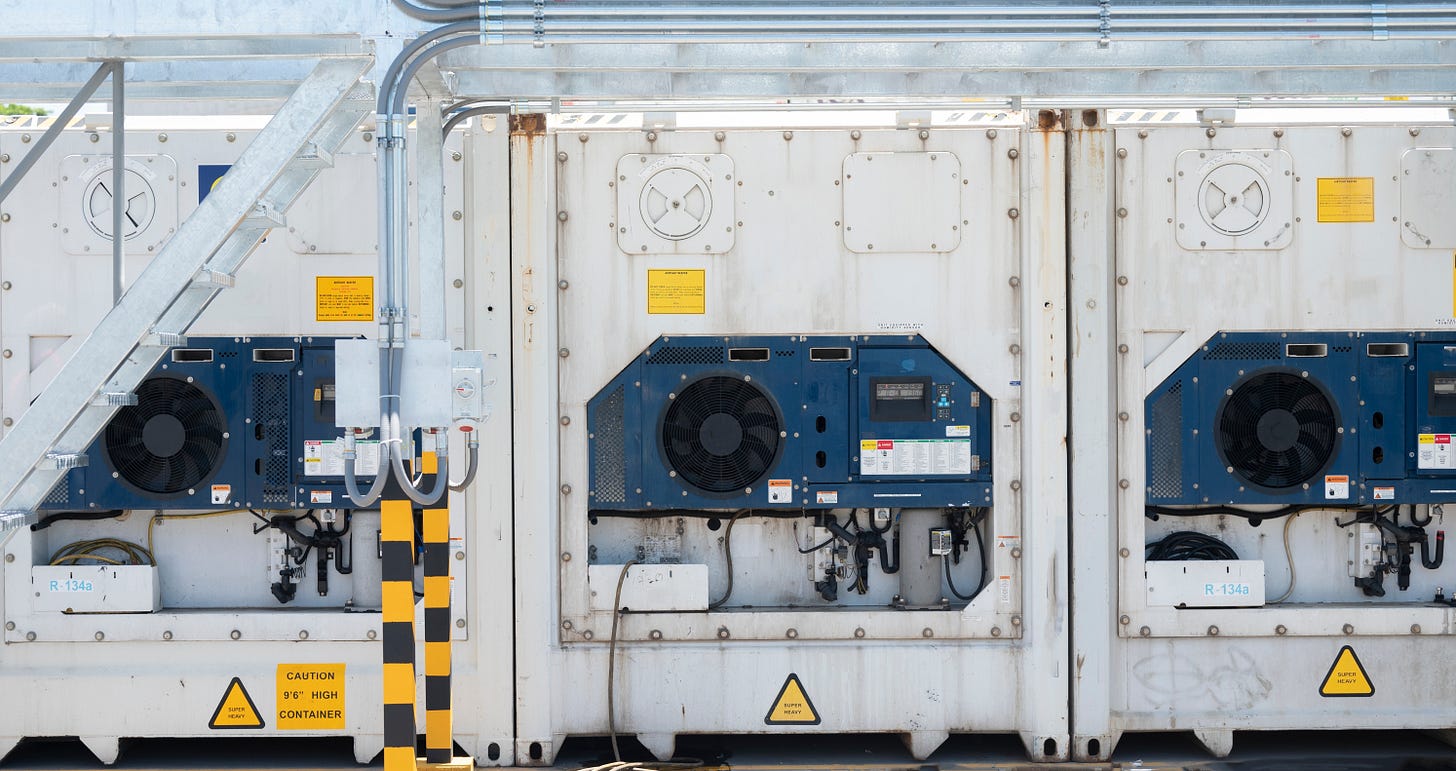
A cargo ship takes five weeks to travel from Shanghai to Rotterdam. During that voyage, a refrigerated container might lose power half a dozen times — waiting on the dock, moving between trucks, or sitting in customs. And every disconnection is a window in which the temperature inside the container drifts away from the two-to-eight degree safe zone that most biologics require and toward whatever is outside it.
The routes themselves pass through some of the most geopolitically volatile water on earth -— straits and canals that sit between rival states, under the flight paths of military aircraft, within range of shore-launched missiles. For years, those vulnerabilities were entirely theoretical. Freight rates were predictable, the major chokepoints were open, and the few disruptions that occurred could be absorbed by buffer stock and rerouting. But in the past five years alone, the pharmaceutical cold chain has been seriously threatened three times.
The first crisis was the coronavirus pandemic. While the virus did not physically block the shipping lanes, it paralyzed the labor force that loads, unloads, and routes the containers that keep those lanes moving. Beginning in early 2020, ports closed, dockworkers fell ill, and shipping containers piled up in the wrong terminals. The pharmaceutical cold chain, now tasked with distributing billions of vaccine doses in addition to its normal cargo, had to compete for cargo space with every other industry on earth trying to restock at once. Freight rates quadrupled: the most critical medicines got priority, and everything else had to wait on the tarmac. In a survey by the Association for Accessible Medicines, a US trade group representing generic manufacturers, companies reported an average 224 percent increase in shipping costs during this period — compounded by the fact that the passenger flights that normally carry 70 percent of airborne medical cargo were grounded. The pandemic has not been a one-off shock. Instead, it revealed that the cold chain was built for a world of predictable schedules and open routes -— a world that no longer exists.
Just as the pandemic ebbed, the Red Sea — the corridor through which roughly 12 percent of global trade passes via the Suez Canal — suddenly became a hazard. In late 2023, Houthi militants in Yemen, an Iranian-backed armed group fighting a civil war, began attacking commercial vessels near the Bab el-Mandeb Strait, the narrow southern entrance to the Red Sea. By early 2024, Maersk, Hapag-Lloyd, and other major container shipping lines had abandoned the route entirely. Their ships diverted south around the Cape of Good Hope, adding seven thousand miles and two weeks of transit time under the equatorial sun to the route. Under normal regulatory rules, every one of those new routes should have been thermally revalidated. Instead, companies filed risk assessments and kept shipping, paying a $450 surcharge per container.
The industry had barely absorbed the Red Sea rerouting when a far larger disruption arrived. On February 28, 2026, the United States and Israel launched air strikes against Iran. Iran retaliated with missile and drone attacks across the region — and closed the Strait of Hormuz. The Strait of Hormuz is not the Red Sea. It is a separate, more consequential chokepoint roughly 1,500 miles to the east, a 21-mile-wide corridor between Iran and Oman that connects the Persian Gulf to the open ocean. A fifth of the world’s crude oil and natural gas passes through it. It is also the primary artery of pharmaceutical trade between Asia, the Middle East, and Europe — and unlike the Red Sea, there is no detour. A ship rerouted around the Cape of Good Hope can still reach its destination. A ship trapped inside the Persian Gulf by a closed Strait of Hormuz simply cannot leave.
Within days of the strait’s closure, commercial traffic through it dropped by more than 90 percent. By mid-March 2026, roughly 170 vessels were trapped in the Persian Gulf, including ships carrying pharmaceutical cargo. Insurance providers pulled war-risk coverage for the region entirely, which forced Maersk to suspend all refrigerated container bookings through the Gulf — reserving the small amount of reefer capacity on ships already en route, before the closure, for essential medical supplies only. Air freight, the obvious alternative, was no longer available either: the strikes had shut down Dubai, Abu Dhabi, and Doha airports, the three cargo hubs that link Europe with Asia and Africa. Global air-cargo capacity dropped 79 percent in the Gulf region within the first week of the war, driving a 22 percent reduction worldwide. Air freight prices quadrupled.
Pharmaceutical companies began rerouting shipments through Jeddah, Riyadh, Istanbul, and Oman, finishing the last leg by truck. Temperature-sensitive cancer treatments and monoclonal antibodies bound for the Middle East were among the cargo stranded. German multinational BASF, one of the world’s largest suppliers of active pharmaceutical ingredients and excipients, announced a global price increase of up to 20 percent, effective March 30, citing an energy cost spike from the Hormuz closure.
Of course, the price cascade did not stop at shipping. Oil above $120 a barrel raised the cost of the petrochemicals that are themselves raw materials in drug manufacturing — the solvents, the polymers used in packaging, the lipid excipients in mRNA vaccines. QatarEnergy declared force majeure on exports of polyethylene and polypropylene, plastics foundational to pharmaceutical packaging and delivery systems. Nearly half of all generic prescriptions sold in the United States come from India, which depends on the Strait of Hormuz for roughly 40 percent of its crude oil imports. Indian API manufacturers began reporting tightening supplies of solvents and key starting materials.
And the damage has extended beyond marketed drugs. A report by clinical data analytics firm Phesi found that 6.7 percent of all active clinical trials worldwide — 4,361 studies across nearly 8,000 investigator sites — have been disrupted by the conflict. Oncology trials are being hit hardest, particularly for non-small cell lung cancer and breast cancer. Most of the affected sites are in Turkey, Israel, and Egypt — and all ten of the world’s largest pharmaceutical companies have clinical trial operations in the region. For the pharmaceutical sponsors of these clinical trials, their delay does not merely reflect a financial loss, but also a delay in knowing whether a drug works which will, on the other end of the trials, mean a delay in patients receiving it.
For wealthy countries, these disruptions are expensive but survivable. The United States has reported no drug shortages directly attributable to the conflict. Large pharmaceutical companies can absorb surcharges, maintain buffer inventories, and reroute through alternative corridors. The head of NHS England said publicly in late March that he was “really worried” about medicine supplies — but the UK, too, has the purchasing power and logistics infrastructure to manage a temporary squeeze. For poor countries, the same disruption is lethal. They generally have no buffer stock to draw down, little leverage to bid for scarce air-freight capacity, and no credit to absorb a sudden spike in the price of generics. Generic drugs operate on single-digit margins: a 55-to-70-percent increase in freight rates, which is what manufacturers reported in early March, cannot be absorbed — it is passed on, first to patients at the pharmacy counter and then to the health ministries, whose procurement budgets have no slack to absorb it. And when a country’s entire public-sector spending on medicines is below two dollars per person, there is nowhere for the cost to go — except to empty shelves.
In some African countries, fewer than 10 percent of health facilities stock a complete basket of essential medicines for noncommunicable diseases. A recent USAID study of Zambia found that in normal periods, stockouts — periods during which a health facility has run out of a medicine entirely — occur 12 percent of the time across 10 essential products, lasting an average of 14.5 days. That was the baseline in Zambia, before any of the current maritime disruption. In Dubai, $600,000 worth of essential medicines destined for Sudan now sit, trapped, on the docks. 90 humanitarian organizations, which together serve around 400,000 patients, said in a joint humanitarian appeal that they will face empty shelves within two weeks.
Better routing cannot solve a supply chain that is already failing at rest. So efforts have turned to the drugs themselves: engineering molecules that can survive what the supply chain no longer can.
Engineering medicines to survive the journey, rather than engineering the journey to protect the medicines, has already been done once, at scale. In 2010, a meningitis A conjugate vaccine called MenAfriVac — a biologic of the kind that would ordinarily require unbroken refrigeration from factory to clinic — was deployed across sub-Saharan Africa’s “meningitis belt” — twenty-six countries stretching from Senegal to Ethiopia where cyclical meningitis epidemics had killed or disabled hundreds of thousands of people, most of them children. Funded by Western philanthropy and manufactured in India, the vaccine was designed to be lyophilized — freeze-dried into a powder — so it could be reconstituted with water. In 2012, regulators approved the new vaccine to be kept at 40 degrees Celsius for four days. MenAfriVac was the first vaccine to break the cold chain, and removing the need for constant refrigeration cut the delivery cost in half. By 2024, MenAfriVac had already reached 400 million people. Today, meningitis A has essentially vanished from the region.
The current goal is to engineer that same stability into the rest of the world’s medicines. A British company called Stablepharma is running clinical trials in Southampton, attempting to make existing vaccines heat-resistant. Their first human trial started in April 2025: for a fridge-free tetanus and diphtheria vaccine called SPVX02. In preclinical work, the vaccines remained fully potent after two years at 30 degrees Celsius and survived three cycles of temperature swings from negative 20 degrees Celsius to 40 degrees Celsius. Stablepharma claims to have 60 more vaccines in development, similarly engineered to sit on a shelf for four years. If their promise holds, a vial of a vaccine like SPVX02 could sit on a shelf in Juba or Aden for the better part of a presidential term and still work.
Other stable vaccine approaches want to abandon the vial entirely. Micron Biomedical, an Atlanta-based company backed by the Gates Foundation, has developed a small adhesive patch studded with hundreds of dissolving microneedles — each needle made of dried vaccine embedded in a solid matrix. Press the patch against the skin for a few minutes, and the needles dissolve, releasing the antigen directly into the dermis — no syringe needed. This design, in addition to being shelf-stable, removes the need for a trained professional, or for the safe disposal of used needles. The thermostable design of the patch is derived from the same principle as lyophilization: the vaccine is locked in a solid state, so there is no liquid medium for the proteins to unfold in. In a Phase 1/2 trial published in The Lancet in 2024, a measles-rubella version of the patch was tested on 285 participants in The Gambia, across age cohorts ranging from adults down to infants as young as nine months. Over ninety percent of infants in the trial achieved seroprotection -- comparable to a conventional injection. If those results remain in later trials, the logistical implications are dramatic: a nurse in rural South Sudan could carry a sheet of these patches in a bag.
None of these technologies have yet replaced the cold chain. MenAfriVac still required reconstitution and a four-day window; Stablepharma is only in Phase 1 trials; and the microneedle patch has not yet reached Phase 3. But the direction of this research — toward medicines that hold their structure outside a fridge — is clear, and it is the same direction Balmis intuited on the deck of the Maria Pita: if the journey is too perilous for the cargo, then perhaps it would be wise to make the cargo itself more stable. For Balmis, “making the cargo more stable” meant incubating the smallpox vaccine inside a living body. Today, a growing number of researchers believe they can design a molecule that can survive, on its own, the worst the journey will throw at it — one whose every shock has already been absorbed before the vial ever leaves the factory.
Science
•
Cold Passage
The open sea holds the pharmaceutical industry’s most precious cargo hostage.
On November 30, 1803, the Maria Pita, a 160-ton corvette, sailed from the port of La Coruña into the Galician fog. It carried twenty-two orphans, boys between the ages of three and nine. The ship was bound for Venezuela, carrying medical cargo that could not be bottled, frozen, or dried. The cargo was the cowpox virus, the world’s first vaccine against smallpox, and it required the warmth of a human body to survive the crossing. To keep the virus alive, the expedition’s director, Francisco Javier de Balmis, engineered a biological relay. Every few days, he took a lancet, sliced into the arms of two uninfected boys, and rubbed the wounds with the lymph weeping from the pustules of the previous pair. As one set of sores healed into scabs, a new set developed. Balmis built a living chain of immunity. This relay eventually vaccinated hundreds of thousands of people across the Spanish Empire, reaching as far as Mexico and Saint Helena.
A virus is a pure opportunist, indifferent to geography. To cross an ocean, it requires only the steady incubator of a living host. That biological imperative has not changed. But where these microbes once hitched rides within the warmth of a child’s arm, the world’s most valuable medicines now require their own synthetic ecosystems — fragile glass enclosures meticulously maintained between two and eight degrees Celsius, preserving their microscopic cargo across 10,000 miles of tarmac, ocean, and atmosphere.
The most valuable pharmaceuticals in the world are biologics. These include monoclonal antibodies, mRNA vaccines, and peptides like GLP-1 agonists — all of which are manufactured in bioreactors, industrial vessels in which living cells are cultured to produce complex proteins. A biologic is an intricate lattice of proteins held together by weak chemical bonds. Its three-dimensional shape is its function. Disrupt the shape and you destroy the drug. Leave a vial of insulin on a sunny windowsill, and within hours the proteins unfold. The liquid still looks clear, but the proteins have unfolded into useless tangles. The drug is gone. By contrast, a chemical like aspirin is a small, sturdy molecule. You can leave it on a hot loading dock and it will be fine.
Because the Goldilocks zone for the climate stability of many medicines is so narrow, the industry regulates not just the packaging but the route itself. The European Union’s Good Distribution Practices require that every shipping lane be thermally validated before use. Prior to approval, a logistics manager must map the complete temperature profile of a specific journey — Dublin to Singapore, say — accounting for summer heat, port congestion, vessel swaps, and the brief intervals when a refrigerated container is unplugged. Pharmaceutical companies must prove that the packaging for their drugs can withstand the worst case. Change the ship, and the testing starts over. Change the port of entry, and the validation is void.
At Sea.
Subscribe and add Issue 008.
Add both to cart
Why rely on the ocean at all to transport such delicate cargo? Until recently, much of the industry did not. Cheap, sturdy drugs — like generics, over-the-counter medicines, and raw ingredients — have always traveled by sea. But biologics and vaccines, which are light and enormously profitable, flew. In 2024, US trade data showed that by dollar value, 80 percent of pharmaceutical exports traveled by air. But by weight, the ratio inverted: more than 80 percent moved by sea. For decades, that division served as a kind of “insurance.” Because the highest-value drugs were also the most temperature-sensitive, the industry’s willingness to pay for air freight effectively shielded them from the risks of ocean transit. The drugs most vulnerable to heat were the drugs most likely to be loaded onto a plane.
In recent history, that insurance has been fraying. Over the past decade, the cost of air freight nearly tripled, rising from $700 to over $2,000 per ton of drugs. As a result, these economics have forced the fragile cargo onto the water. AstraZeneca, the Anglo-Swedish pharmaceutical giant, shipped just five percent of its products by sea in 2012; but by 2024, that figure had risen to 64 percent, with a stated target of 70 — part of a deliberate cost-reduction and decarbonization strategy. Eli Lilly and Merck, two of the largest US drug manufacturers, have reported similar shifts. As of 2025, maritime analysts estimate that 3.5 million tons of pharmaceuticals move by sea annually, against half a million by air — and an increasing share of that seaborne cargo is the kind most vulnerable to the journey.
A cargo ship takes five weeks to travel from Shanghai to Rotterdam. During that voyage, a refrigerated container might lose power half a dozen times — waiting on the dock, moving between trucks, or sitting in customs. And every disconnection is a window in which the temperature inside the container drifts away from the two-to-eight degree safe zone that most biologics require and toward whatever is outside it.
The routes themselves pass through some of the most geopolitically volatile water on earth -— straits and canals that sit between rival states, under the flight paths of military aircraft, within range of shore-launched missiles. For years, those vulnerabilities were entirely theoretical. Freight rates were predictable, the major chokepoints were open, and the few disruptions that occurred could be absorbed by buffer stock and rerouting. But in the past five years alone, the pharmaceutical cold chain has been seriously threatened three times.
The first crisis was the coronavirus pandemic. While the virus did not physically block the shipping lanes, it paralyzed the labor force that loads, unloads, and routes the containers that keep those lanes moving. Beginning in early 2020, ports closed, dockworkers fell ill, and shipping containers piled up in the wrong terminals. The pharmaceutical cold chain, now tasked with distributing billions of vaccine doses in addition to its normal cargo, had to compete for cargo space with every other industry on earth trying to restock at once. Freight rates quadrupled: the most critical medicines got priority, and everything else had to wait on the tarmac. In a survey by the Association for Accessible Medicines, a US trade group representing generic manufacturers, companies reported an average 224 percent increase in shipping costs during this period — compounded by the fact that the passenger flights that normally carry 70 percent of airborne medical cargo were grounded. The pandemic has not been a one-off shock. Instead, it revealed that the cold chain was built for a world of predictable schedules and open routes -— a world that no longer exists.
Just as the pandemic ebbed, the Red Sea — the corridor through which roughly 12 percent of global trade passes via the Suez Canal — suddenly became a hazard. In late 2023, Houthi militants in Yemen, an Iranian-backed armed group fighting a civil war, began attacking commercial vessels near the Bab el-Mandeb Strait, the narrow southern entrance to the Red Sea. By early 2024, Maersk, Hapag-Lloyd, and other major container shipping lines had abandoned the route entirely. Their ships diverted south around the Cape of Good Hope, adding seven thousand miles and two weeks of transit time under the equatorial sun to the route. Under normal regulatory rules, every one of those new routes should have been thermally revalidated. Instead, companies filed risk assessments and kept shipping, paying a $450 surcharge per container.
The industry had barely absorbed the Red Sea rerouting when a far larger disruption arrived. On February 28, 2026, the United States and Israel launched air strikes against Iran. Iran retaliated with missile and drone attacks across the region — and closed the Strait of Hormuz. The Strait of Hormuz is not the Red Sea. It is a separate, more consequential chokepoint roughly 1,500 miles to the east, a 21-mile-wide corridor between Iran and Oman that connects the Persian Gulf to the open ocean. A fifth of the world’s crude oil and natural gas passes through it. It is also the primary artery of pharmaceutical trade between Asia, the Middle East, and Europe — and unlike the Red Sea, there is no detour. A ship rerouted around the Cape of Good Hope can still reach its destination. A ship trapped inside the Persian Gulf by a closed Strait of Hormuz simply cannot leave.
Within days of the strait’s closure, commercial traffic through it dropped by more than 90 percent. By mid-March 2026, roughly 170 vessels were trapped in the Persian Gulf, including ships carrying pharmaceutical cargo. Insurance providers pulled war-risk coverage for the region entirely, which forced Maersk to suspend all refrigerated container bookings through the Gulf — reserving the small amount of reefer capacity on ships already en route, before the closure, for essential medical supplies only. Air freight, the obvious alternative, was no longer available either: the strikes had shut down Dubai, Abu Dhabi, and Doha airports, the three cargo hubs that link Europe with Asia and Africa. Global air-cargo capacity dropped 79 percent in the Gulf region within the first week of the war, driving a 22 percent reduction worldwide. Air freight prices quadrupled.
Pharmaceutical companies began rerouting shipments through Jeddah, Riyadh, Istanbul, and Oman, finishing the last leg by truck. Temperature-sensitive cancer treatments and monoclonal antibodies bound for the Middle East were among the cargo stranded. German multinational BASF, one of the world’s largest suppliers of active pharmaceutical ingredients and excipients, announced a global price increase of up to 20 percent, effective March 30, citing an energy cost spike from the Hormuz closure.
Of course, the price cascade did not stop at shipping. Oil above $120 a barrel raised the cost of the petrochemicals that are themselves raw materials in drug manufacturing — the solvents, the polymers used in packaging, the lipid excipients in mRNA vaccines. QatarEnergy declared force majeure on exports of polyethylene and polypropylene, plastics foundational to pharmaceutical packaging and delivery systems. Nearly half of all generic prescriptions sold in the United States come from India, which depends on the Strait of Hormuz for roughly 40 percent of its crude oil imports. Indian API manufacturers began reporting tightening supplies of solvents and key starting materials.
And the damage has extended beyond marketed drugs. A report by clinical data analytics firm Phesi found that 6.7 percent of all active clinical trials worldwide — 4,361 studies across nearly 8,000 investigator sites — have been disrupted by the conflict. Oncology trials are being hit hardest, particularly for non-small cell lung cancer and breast cancer. Most of the affected sites are in Turkey, Israel, and Egypt — and all ten of the world’s largest pharmaceutical companies have clinical trial operations in the region. For the pharmaceutical sponsors of these clinical trials, their delay does not merely reflect a financial loss, but also a delay in knowing whether a drug works which will, on the other end of the trials, mean a delay in patients receiving it.
For wealthy countries, these disruptions are expensive but survivable. The United States has reported no drug shortages directly attributable to the conflict. Large pharmaceutical companies can absorb surcharges, maintain buffer inventories, and reroute through alternative corridors. The head of NHS England said publicly in late March that he was “really worried” about medicine supplies — but the UK, too, has the purchasing power and logistics infrastructure to manage a temporary squeeze. For poor countries, the same disruption is lethal. They generally have no buffer stock to draw down, little leverage to bid for scarce air-freight capacity, and no credit to absorb a sudden spike in the price of generics. Generic drugs operate on single-digit margins: a 55-to-70-percent increase in freight rates, which is what manufacturers reported in early March, cannot be absorbed — it is passed on, first to patients at the pharmacy counter and then to the health ministries, whose procurement budgets have no slack to absorb it. And when a country’s entire public-sector spending on medicines is below two dollars per person, there is nowhere for the cost to go — except to empty shelves.
In some African countries, fewer than 10 percent of health facilities stock a complete basket of essential medicines for noncommunicable diseases. A recent USAID study of Zambia found that in normal periods, stockouts — periods during which a health facility has run out of a medicine entirely — occur 12 percent of the time across 10 essential products, lasting an average of 14.5 days. That was the baseline in Zambia, before any of the current maritime disruption. In Dubai, $600,000 worth of essential medicines destined for Sudan now sit, trapped, on the docks. 90 humanitarian organizations, which together serve around 400,000 patients, said in a joint humanitarian appeal that they will face empty shelves within two weeks.
Better routing cannot solve a supply chain that is already failing at rest. So efforts have turned to the drugs themselves: engineering molecules that can survive what the supply chain no longer can.
Engineering medicines to survive the journey, rather than engineering the journey to protect the medicines, has already been done once, at scale. In 2010, a meningitis A conjugate vaccine called MenAfriVac — a biologic of the kind that would ordinarily require unbroken refrigeration from factory to clinic — was deployed across sub-Saharan Africa’s “meningitis belt” — twenty-six countries stretching from Senegal to Ethiopia where cyclical meningitis epidemics had killed or disabled hundreds of thousands of people, most of them children. Funded by Western philanthropy and manufactured in India, the vaccine was designed to be lyophilized — freeze-dried into a powder — so it could be reconstituted with water. In 2012, regulators approved the new vaccine to be kept at 40 degrees Celsius for four days. MenAfriVac was the first vaccine to break the cold chain, and removing the need for constant refrigeration cut the delivery cost in half. By 2024, MenAfriVac had already reached 400 million people. Today, meningitis A has essentially vanished from the region.
The current goal is to engineer that same stability into the rest of the world’s medicines. A British company called Stablepharma is running clinical trials in Southampton, attempting to make existing vaccines heat-resistant. Their first human trial started in April 2025: for a fridge-free tetanus and diphtheria vaccine called SPVX02. In preclinical work, the vaccines remained fully potent after two years at 30 degrees Celsius and survived three cycles of temperature swings from negative 20 degrees Celsius to 40 degrees Celsius. Stablepharma claims to have 60 more vaccines in development, similarly engineered to sit on a shelf for four years. If their promise holds, a vial of a vaccine like SPVX02 could sit on a shelf in Juba or Aden for the better part of a presidential term and still work.
Other stable vaccine approaches want to abandon the vial entirely. Micron Biomedical, an Atlanta-based company backed by the Gates Foundation, has developed a small adhesive patch studded with hundreds of dissolving microneedles — each needle made of dried vaccine embedded in a solid matrix. Press the patch against the skin for a few minutes, and the needles dissolve, releasing the antigen directly into the dermis — no syringe needed. This design, in addition to being shelf-stable, removes the need for a trained professional, or for the safe disposal of used needles. The thermostable design of the patch is derived from the same principle as lyophilization: the vaccine is locked in a solid state, so there is no liquid medium for the proteins to unfold in. In a Phase 1/2 trial published in The Lancet in 2024, a measles-rubella version of the patch was tested on 285 participants in The Gambia, across age cohorts ranging from adults down to infants as young as nine months. Over ninety percent of infants in the trial achieved seroprotection -- comparable to a conventional injection. If those results remain in later trials, the logistical implications are dramatic: a nurse in rural South Sudan could carry a sheet of these patches in a bag.
None of these technologies have yet replaced the cold chain. MenAfriVac still required reconstitution and a four-day window; Stablepharma is only in Phase 1 trials; and the microneedle patch has not yet reached Phase 3. But the direction of this research — toward medicines that hold their structure outside a fridge — is clear, and it is the same direction Balmis intuited on the deck of the Maria Pita: if the journey is too perilous for the cargo, then perhaps it would be wise to make the cargo itself more stable. For Balmis, “making the cargo more stable” meant incubating the smallpox vaccine inside a living body. Today, a growing number of researchers believe they can design a molecule that can survive, on its own, the worst the journey will throw at it — one whose every shock has already been absorbed before the vial ever leaves the factory.
Science
•
Cold Passage
The open sea holds the pharmaceutical industry’s most precious cargo hostage.
On November 30, 1803, the Maria Pita, a 160-ton corvette, sailed from the port of La Coruña into the Galician fog. It carried twenty-two orphans, boys between the ages of three and nine. The ship was bound for Venezuela, carrying medical cargo that could not be bottled, frozen, or dried. The cargo was the cowpox virus, the world’s first vaccine against smallpox, and it required the warmth of a human body to survive the crossing. To keep the virus alive, the expedition’s director, Francisco Javier de Balmis, engineered a biological relay. Every few days, he took a lancet, sliced into the arms of two uninfected boys, and rubbed the wounds with the lymph weeping from the pustules of the previous pair. As one set of sores healed into scabs, a new set developed. Balmis built a living chain of immunity. This relay eventually vaccinated hundreds of thousands of people across the Spanish Empire, reaching as far as Mexico and Saint Helena.
A virus is a pure opportunist, indifferent to geography. To cross an ocean, it requires only the steady incubator of a living host. That biological imperative has not changed. But where these microbes once hitched rides within the warmth of a child’s arm, the world’s most valuable medicines now require their own synthetic ecosystems — fragile glass enclosures meticulously maintained between two and eight degrees Celsius, preserving their microscopic cargo across 10,000 miles of tarmac, ocean, and atmosphere.
The most valuable pharmaceuticals in the world are biologics. These include monoclonal antibodies, mRNA vaccines, and peptides like GLP-1 agonists — all of which are manufactured in bioreactors, industrial vessels in which living cells are cultured to produce complex proteins. A biologic is an intricate lattice of proteins held together by weak chemical bonds. Its three-dimensional shape is its function. Disrupt the shape and you destroy the drug. Leave a vial of insulin on a sunny windowsill, and within hours the proteins unfold. The liquid still looks clear, but the proteins have unfolded into useless tangles. The drug is gone. By contrast, a chemical like aspirin is a small, sturdy molecule. You can leave it on a hot loading dock and it will be fine.
Because the Goldilocks zone for the climate stability of many medicines is so narrow, the industry regulates not just the packaging but the route itself. The European Union’s Good Distribution Practices require that every shipping lane be thermally validated before use. Prior to approval, a logistics manager must map the complete temperature profile of a specific journey — Dublin to Singapore, say — accounting for summer heat, port congestion, vessel swaps, and the brief intervals when a refrigerated container is unplugged. Pharmaceutical companies must prove that the packaging for their drugs can withstand the worst case. Change the ship, and the testing starts over. Change the port of entry, and the validation is void.
At Sea.
Subscribe and add Issue 008.
Add both to cart
Why rely on the ocean at all to transport such delicate cargo? Until recently, much of the industry did not. Cheap, sturdy drugs — like generics, over-the-counter medicines, and raw ingredients — have always traveled by sea. But biologics and vaccines, which are light and enormously profitable, flew. In 2024, US trade data showed that by dollar value, 80 percent of pharmaceutical exports traveled by air. But by weight, the ratio inverted: more than 80 percent moved by sea. For decades, that division served as a kind of “insurance.” Because the highest-value drugs were also the most temperature-sensitive, the industry’s willingness to pay for air freight effectively shielded them from the risks of ocean transit. The drugs most vulnerable to heat were the drugs most likely to be loaded onto a plane.
In recent history, that insurance has been fraying. Over the past decade, the cost of air freight nearly tripled, rising from $700 to over $2,000 per ton of drugs. As a result, these economics have forced the fragile cargo onto the water. AstraZeneca, the Anglo-Swedish pharmaceutical giant, shipped just five percent of its products by sea in 2012; but by 2024, that figure had risen to 64 percent, with a stated target of 70 — part of a deliberate cost-reduction and decarbonization strategy. Eli Lilly and Merck, two of the largest US drug manufacturers, have reported similar shifts. As of 2025, maritime analysts estimate that 3.5 million tons of pharmaceuticals move by sea annually, against half a million by air — and an increasing share of that seaborne cargo is the kind most vulnerable to the journey.
A cargo ship takes five weeks to travel from Shanghai to Rotterdam. During that voyage, a refrigerated container might lose power half a dozen times — waiting on the dock, moving between trucks, or sitting in customs. And every disconnection is a window in which the temperature inside the container drifts away from the two-to-eight degree safe zone that most biologics require and toward whatever is outside it.
The routes themselves pass through some of the most geopolitically volatile water on earth -— straits and canals that sit between rival states, under the flight paths of military aircraft, within range of shore-launched missiles. For years, those vulnerabilities were entirely theoretical. Freight rates were predictable, the major chokepoints were open, and the few disruptions that occurred could be absorbed by buffer stock and rerouting. But in the past five years alone, the pharmaceutical cold chain has been seriously threatened three times.
The first crisis was the coronavirus pandemic. While the virus did not physically block the shipping lanes, it paralyzed the labor force that loads, unloads, and routes the containers that keep those lanes moving. Beginning in early 2020, ports closed, dockworkers fell ill, and shipping containers piled up in the wrong terminals. The pharmaceutical cold chain, now tasked with distributing billions of vaccine doses in addition to its normal cargo, had to compete for cargo space with every other industry on earth trying to restock at once. Freight rates quadrupled: the most critical medicines got priority, and everything else had to wait on the tarmac. In a survey by the Association for Accessible Medicines, a US trade group representing generic manufacturers, companies reported an average 224 percent increase in shipping costs during this period — compounded by the fact that the passenger flights that normally carry 70 percent of airborne medical cargo were grounded. The pandemic has not been a one-off shock. Instead, it revealed that the cold chain was built for a world of predictable schedules and open routes -— a world that no longer exists.
Just as the pandemic ebbed, the Red Sea — the corridor through which roughly 12 percent of global trade passes via the Suez Canal — suddenly became a hazard. In late 2023, Houthi militants in Yemen, an Iranian-backed armed group fighting a civil war, began attacking commercial vessels near the Bab el-Mandeb Strait, the narrow southern entrance to the Red Sea. By early 2024, Maersk, Hapag-Lloyd, and other major container shipping lines had abandoned the route entirely. Their ships diverted south around the Cape of Good Hope, adding seven thousand miles and two weeks of transit time under the equatorial sun to the route. Under normal regulatory rules, every one of those new routes should have been thermally revalidated. Instead, companies filed risk assessments and kept shipping, paying a $450 surcharge per container.
The industry had barely absorbed the Red Sea rerouting when a far larger disruption arrived. On February 28, 2026, the United States and Israel launched air strikes against Iran. Iran retaliated with missile and drone attacks across the region — and closed the Strait of Hormuz. The Strait of Hormuz is not the Red Sea. It is a separate, more consequential chokepoint roughly 1,500 miles to the east, a 21-mile-wide corridor between Iran and Oman that connects the Persian Gulf to the open ocean. A fifth of the world’s crude oil and natural gas passes through it. It is also the primary artery of pharmaceutical trade between Asia, the Middle East, and Europe — and unlike the Red Sea, there is no detour. A ship rerouted around the Cape of Good Hope can still reach its destination. A ship trapped inside the Persian Gulf by a closed Strait of Hormuz simply cannot leave.
Within days of the strait’s closure, commercial traffic through it dropped by more than 90 percent. By mid-March 2026, roughly 170 vessels were trapped in the Persian Gulf, including ships carrying pharmaceutical cargo. Insurance providers pulled war-risk coverage for the region entirely, which forced Maersk to suspend all refrigerated container bookings through the Gulf — reserving the small amount of reefer capacity on ships already en route, before the closure, for essential medical supplies only. Air freight, the obvious alternative, was no longer available either: the strikes had shut down Dubai, Abu Dhabi, and Doha airports, the three cargo hubs that link Europe with Asia and Africa. Global air-cargo capacity dropped 79 percent in the Gulf region within the first week of the war, driving a 22 percent reduction worldwide. Air freight prices quadrupled.
Pharmaceutical companies began rerouting shipments through Jeddah, Riyadh, Istanbul, and Oman, finishing the last leg by truck. Temperature-sensitive cancer treatments and monoclonal antibodies bound for the Middle East were among the cargo stranded. German multinational BASF, one of the world’s largest suppliers of active pharmaceutical ingredients and excipients, announced a global price increase of up to 20 percent, effective March 30, citing an energy cost spike from the Hormuz closure.
Of course, the price cascade did not stop at shipping. Oil above $120 a barrel raised the cost of the petrochemicals that are themselves raw materials in drug manufacturing — the solvents, the polymers used in packaging, the lipid excipients in mRNA vaccines. QatarEnergy declared force majeure on exports of polyethylene and polypropylene, plastics foundational to pharmaceutical packaging and delivery systems. Nearly half of all generic prescriptions sold in the United States come from India, which depends on the Strait of Hormuz for roughly 40 percent of its crude oil imports. Indian API manufacturers began reporting tightening supplies of solvents and key starting materials.
And the damage has extended beyond marketed drugs. A report by clinical data analytics firm Phesi found that 6.7 percent of all active clinical trials worldwide — 4,361 studies across nearly 8,000 investigator sites — have been disrupted by the conflict. Oncology trials are being hit hardest, particularly for non-small cell lung cancer and breast cancer. Most of the affected sites are in Turkey, Israel, and Egypt — and all ten of the world’s largest pharmaceutical companies have clinical trial operations in the region. For the pharmaceutical sponsors of these clinical trials, their delay does not merely reflect a financial loss, but also a delay in knowing whether a drug works which will, on the other end of the trials, mean a delay in patients receiving it.
For wealthy countries, these disruptions are expensive but survivable. The United States has reported no drug shortages directly attributable to the conflict. Large pharmaceutical companies can absorb surcharges, maintain buffer inventories, and reroute through alternative corridors. The head of NHS England said publicly in late March that he was “really worried” about medicine supplies — but the UK, too, has the purchasing power and logistics infrastructure to manage a temporary squeeze. For poor countries, the same disruption is lethal. They generally have no buffer stock to draw down, little leverage to bid for scarce air-freight capacity, and no credit to absorb a sudden spike in the price of generics. Generic drugs operate on single-digit margins: a 55-to-70-percent increase in freight rates, which is what manufacturers reported in early March, cannot be absorbed — it is passed on, first to patients at the pharmacy counter and then to the health ministries, whose procurement budgets have no slack to absorb it. And when a country’s entire public-sector spending on medicines is below two dollars per person, there is nowhere for the cost to go — except to empty shelves.
In some African countries, fewer than 10 percent of health facilities stock a complete basket of essential medicines for noncommunicable diseases. A recent USAID study of Zambia found that in normal periods, stockouts — periods during which a health facility has run out of a medicine entirely — occur 12 percent of the time across 10 essential products, lasting an average of 14.5 days. That was the baseline in Zambia, before any of the current maritime disruption. In Dubai, $600,000 worth of essential medicines destined for Sudan now sit, trapped, on the docks. 90 humanitarian organizations, which together serve around 400,000 patients, said in a joint humanitarian appeal that they will face empty shelves within two weeks.
Better routing cannot solve a supply chain that is already failing at rest. So efforts have turned to the drugs themselves: engineering molecules that can survive what the supply chain no longer can.
Engineering medicines to survive the journey, rather than engineering the journey to protect the medicines, has already been done once, at scale. In 2010, a meningitis A conjugate vaccine called MenAfriVac — a biologic of the kind that would ordinarily require unbroken refrigeration from factory to clinic — was deployed across sub-Saharan Africa’s “meningitis belt” — twenty-six countries stretching from Senegal to Ethiopia where cyclical meningitis epidemics had killed or disabled hundreds of thousands of people, most of them children. Funded by Western philanthropy and manufactured in India, the vaccine was designed to be lyophilized — freeze-dried into a powder — so it could be reconstituted with water. In 2012, regulators approved the new vaccine to be kept at 40 degrees Celsius for four days. MenAfriVac was the first vaccine to break the cold chain, and removing the need for constant refrigeration cut the delivery cost in half. By 2024, MenAfriVac had already reached 400 million people. Today, meningitis A has essentially vanished from the region.
The current goal is to engineer that same stability into the rest of the world’s medicines. A British company called Stablepharma is running clinical trials in Southampton, attempting to make existing vaccines heat-resistant. Their first human trial started in April 2025: for a fridge-free tetanus and diphtheria vaccine called SPVX02. In preclinical work, the vaccines remained fully potent after two years at 30 degrees Celsius and survived three cycles of temperature swings from negative 20 degrees Celsius to 40 degrees Celsius. Stablepharma claims to have 60 more vaccines in development, similarly engineered to sit on a shelf for four years. If their promise holds, a vial of a vaccine like SPVX02 could sit on a shelf in Juba or Aden for the better part of a presidential term and still work.
Other stable vaccine approaches want to abandon the vial entirely. Micron Biomedical, an Atlanta-based company backed by the Gates Foundation, has developed a small adhesive patch studded with hundreds of dissolving microneedles — each needle made of dried vaccine embedded in a solid matrix. Press the patch against the skin for a few minutes, and the needles dissolve, releasing the antigen directly into the dermis — no syringe needed. This design, in addition to being shelf-stable, removes the need for a trained professional, or for the safe disposal of used needles. The thermostable design of the patch is derived from the same principle as lyophilization: the vaccine is locked in a solid state, so there is no liquid medium for the proteins to unfold in. In a Phase 1/2 trial published in The Lancet in 2024, a measles-rubella version of the patch was tested on 285 participants in The Gambia, across age cohorts ranging from adults down to infants as young as nine months. Over ninety percent of infants in the trial achieved seroprotection -- comparable to a conventional injection. If those results remain in later trials, the logistical implications are dramatic: a nurse in rural South Sudan could carry a sheet of these patches in a bag.
None of these technologies have yet replaced the cold chain. MenAfriVac still required reconstitution and a four-day window; Stablepharma is only in Phase 1 trials; and the microneedle patch has not yet reached Phase 3. But the direction of this research — toward medicines that hold their structure outside a fridge — is clear, and it is the same direction Balmis intuited on the deck of the Maria Pita: if the journey is too perilous for the cargo, then perhaps it would be wise to make the cargo itself more stable. For Balmis, “making the cargo more stable” meant incubating the smallpox vaccine inside a living body. Today, a growing number of researchers believe they can design a molecule that can survive, on its own, the worst the journey will throw at it — one whose every shock has already been absorbed before the vial ever leaves the factory.
About the Author
Alex Kesin is a biotech strategist and writer focused on the incentives, institutions, and policies shaping drug development. He is on X @alexkesin